
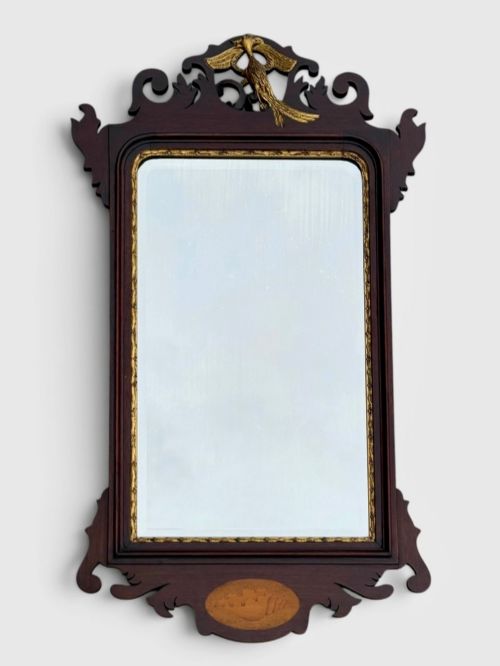
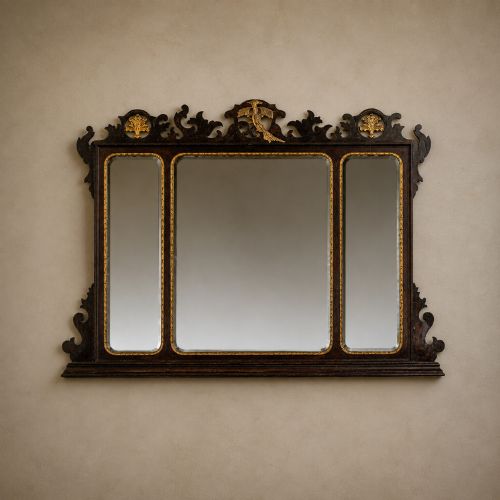
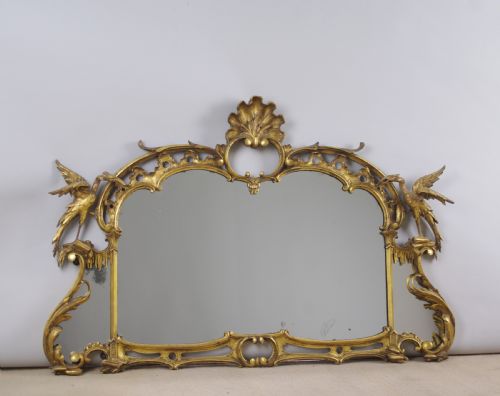
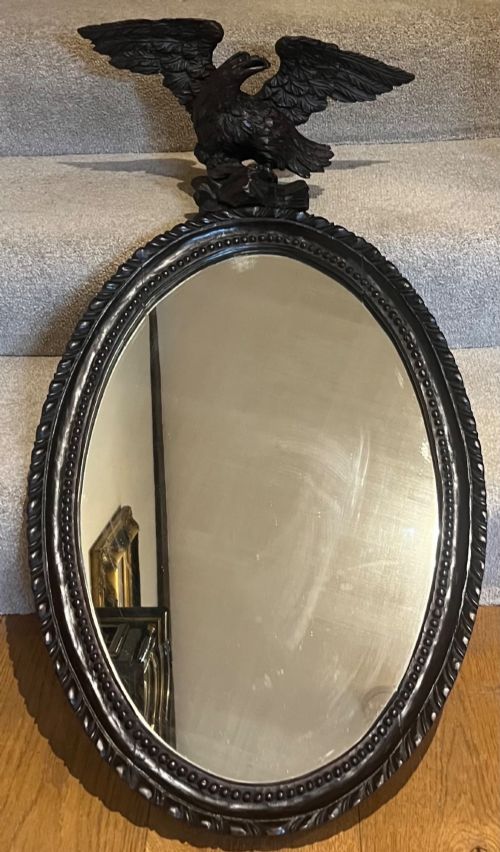






Carved Wood Bird Mirror
A carved wood bird mirror brings sculptural wildlife into a room, featuring perched crests and dramatic avian motifs.
Carved Wood Bird Mirror
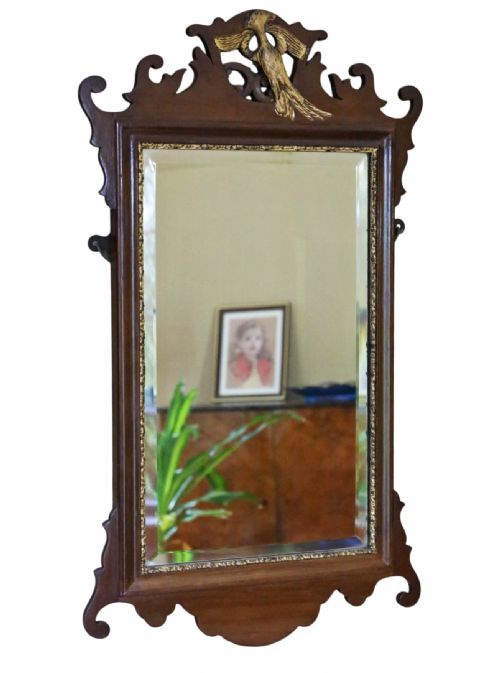
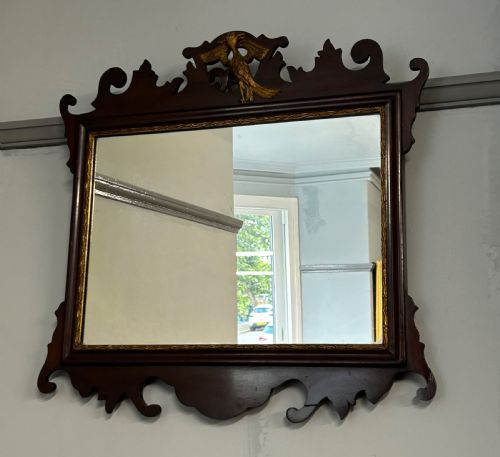
A carved wood bird mirror is a decorative wall or overmantel glass panel framed by avian ornamentation, most frequently encountered in styles like Chinese Chippendale, Black Forest, and Victorian revivals. These pieces draw the eye upward to carved crests depicting iconic subjects such as the Ho-Ho bird, eagles, and birds of prey perched amongst foliage.
The pieces on this page span the Georgian, Victorian, and later nineteenth century periods, utilising mahogany, giltwood, and gesso surfaces to create depth. Buyers will find wall mirrors and grander triptych overmantel formats that anchor a room with classical asymmetry and naturalistic vitality.
How they were made
Makers shaped these frames from solid timbers including mahogany, walnut, and yew wood, cutting intricate fretwork silhouettes by hand before applying decorative gesso layers. Giltwood examples received thin gold leaf applications over prepared surfaces, catching candlelight and natural illumination in period interiors.
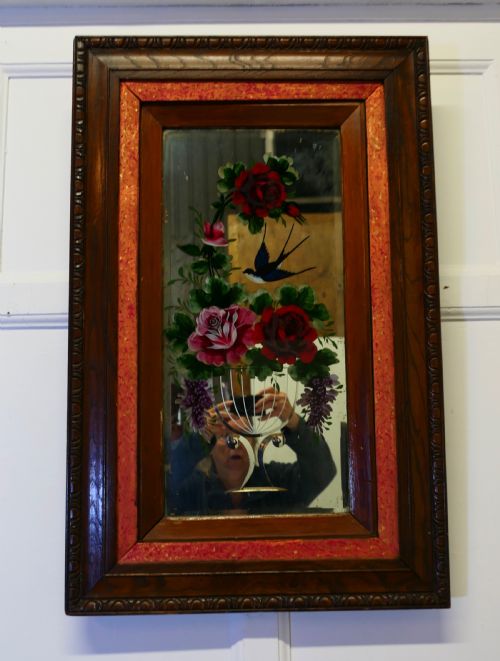
Black Forest pieces utilised deep relief carving directly into native woods to render realistic bird plumage and branch details. Paint and reverse etching were occasionally employed on glass panels and wooden surrounds to introduce contrasting colour and texture.
Listings feature eighteenth, nineteenth, and early twentieth-century examples, incorporating materials such as mahogany, giltwood, and gesso alongside Black Forest and Chippendale revival styles.
What varies in quality
Quality rests entirely in the crispness and depth of the bird carving, distinguishing a piece with lifelike feather articulation from a flat, mechanical reproduction. The finest examples display naturalistic movement in the wings and crest, integrating the avian subject seamlessly into the surrounding fretwork or gesso scrolls.
The choice of primary timber and the integrity of the original gilding or painted surface dictate the upper tier of the market. Secondary elements, such as original bevel-edged glass and uncompromised structural joinery, separate distinguished examples from later revival pieces.
Gabriel Viardot
The Carved Wood Bird Mirror Glossary
- Ho-Ho bird
- A stylized Chinese phoenix frequently carved into the cresting of eighteenth and nineteenth-century mirrors. It is typically depicted with sweeping tail feathers and an expressive, crested head.
- Giltwood
- Timber that has been coated with gold leaf or metallic powder over a prepared gesso base. This technique provides a luminous, reflective surface popular in classical and revival interiors.
- Fretwork
- Openwork ornamentation cut from thin boards using a fretsaw or scroll saw. It creates geometric or organic patterns such as interlaced lattices around the mirror plate.
- Triptych overmantel mirror
- A wide wall mirror divided into three distinct vertical glass panels, often positioned above a fireplace. The central plate is usually flanked by smaller mirrors beneath an elaborate avian crest.
- Gesso
- A plaster-like mixture applied to wooden frames as a smooth base for gilding or painting. It allows carvers to model fine relief details before applying gold leaf.
Carved Wood Bird Mirror: Frequently Asked Questions
Where should I hang a carved wood bird mirror?
These mirrors work best mounted above a fireplace mantel or as a focal point on a principal living room wall where their detailed crests can be fully appreciated. Ensure the wall structure can support the considerable weight of a solid wood and gesso frame.
Keep them away from direct, harsh sunlight and excessive moisture to protect the original giltwood and painted surfaces from deterioration over time.
How do I identify a genuine period piece?
Look closely at the construction methods, tool marks on the reverse of the wood, and the ageing of the mirror plate itself. Hand-carved details on birds and foliage should show natural irregularities distinct from modern moulded resin frames.
Examine the gesso and underlying timbers for age-appropriate shrinkage and oxidation that confirm the piece dates from the nineteenth century or earlier.
What is a Ho-Ho bird?
The Ho-Ho bird is a Western adaptation of the Chinese phoenix, symbolizing virtue and grace in decorative arts. Carvers placed these mythical birds at the top of mirror frames to add height and exotic flair.
They are easily recognised by their distinct crests, flared tails, and lively postures integrated into Chippendale and Regency revival designs.