




Carved Bird Figure
A carved bird figure brings natural form directly into a room, spanning rustic wooden decoys and polished marble eagles.
Carved Bird Figure
A carved bird figure encompasses diverse decorative objects and sculptures ranging from working decoy ducks to detailed stone and marble statues. Buyers searching this phrase encounter avian representations shaped from wood, jade, hardstone, ceramic, and bronze.
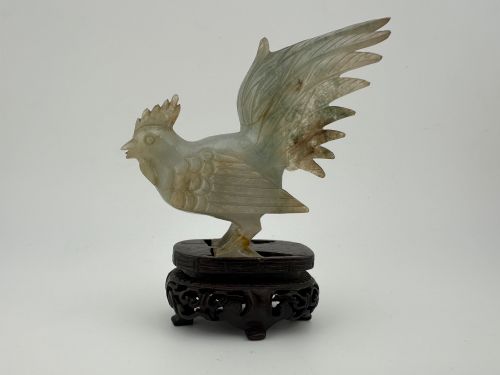
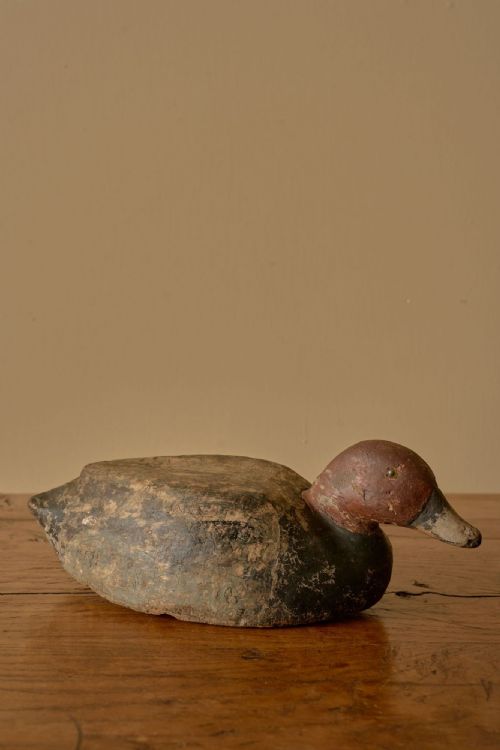
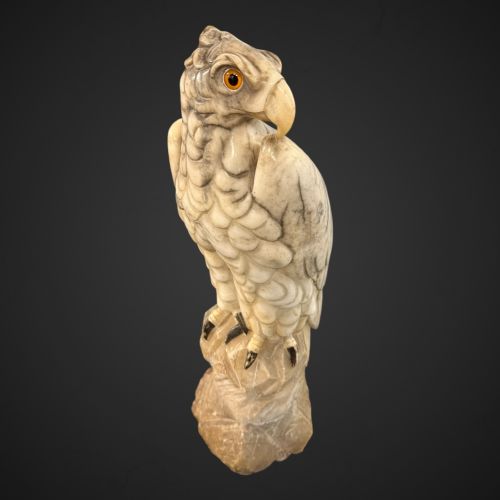
The most common examples on this page are wooden decoys from the nineteenth and early twentieth centuries alongside Asian hardstone carvings and European raptor sculptures. These pieces function primarily as decorative figures within domestic interiors.
Origins span English folk art, Black Forest workshops, Japanese Meiji period studios, and Chinese dynasties. Each region and period brings distinct materials and carving traditions to the depiction of fowl and raptors.
How they were made
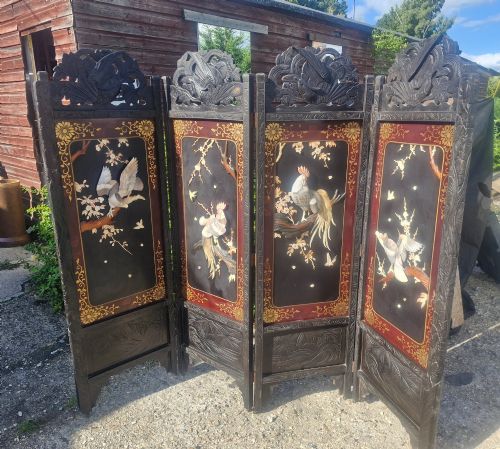
Stone and mineral figures utilise jade, hardstone, and veined Carrara marble, shaped through abrasive cutting and polishing. Selected pieces incorporate mixed media, pairing carved bone elements on folding screens or placing ceramic animals onto ebonised wooden bases.
Carved Bird Figure Retail Price Guide 2026
Typical asking prices for carved bird figure among the pieces listed under this phrase on Sellingantiques today, from the lower quarter to the upper quarter. They describe what is for sale here now, not the wider market.
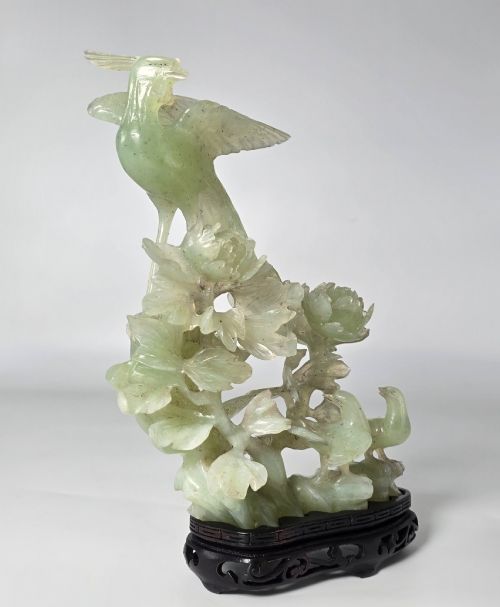
Materials represented include painted wood, Carrara marble, pale green jade, bronze, and giltwood.
What varies in quality
Quality separates through the naturalism of the carving and the fidelity of the bird's posture. Superior examples display precise anatomical observation in the wings, beak, and stance, whether portraying a heron, an eagle, or a decoy duck.
Material selection also dictates distinction, moving from standard pine and painted surfaces to translucent pale green jade, finely veined Carrara marble, or intricate Black Forest woodwork. The integration of original stands, bases, or complementary materials completes the finer pieces.
The Carved Bird Figure Glossary
- Decoy
- A carved and painted representation of a waterfowl utilised by hunters to attract birds, often finished with lead weights or simple wooden bodies.
- Hardstone
- A semi-precious stone category including jade and similar minerals capable of taking a fine polish when carved into small sculptures.
- Black Forest carving
- Woodwork originating from central Europe, typically characterised by deep relief and naturalistic depictions of animals and foliage.
- Giltwood
- Timber treated with a thin layer of gold leaf or gold paint applied over a prepared gesso surface.
- Sancai glaze
- A three-colour ceramic glazing technique traditionally associated with Chinese pottery, producing amber, green, and cream tones.
Carved Bird Figure: Frequently Asked Questions
What were decoy ducks used for?
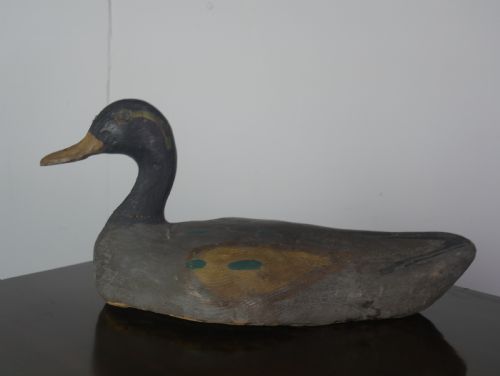
Decoy ducks served as working implements for wildfowlers, placed upon open water to lure migrating flocks within range of a hide. Makers constructed them from buoyant woods to float upright and applied oil paint to mimic natural plumage.
Over decades of use, many acquired layered over-paint and weathering from exposure to the elements. Today, collectors value these working origins and the patinated surfaces left behind by practical service.
How do I identify Black Forest carvings?
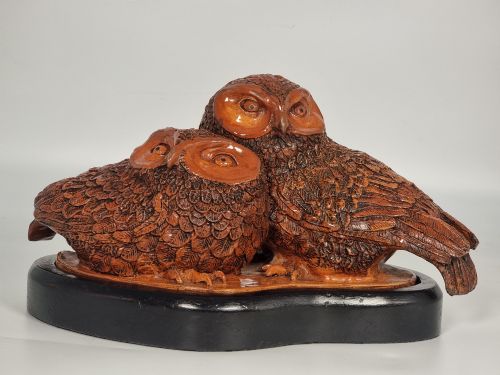
Black Forest carvings emerge from nineteenth-century European workshops, typically rendered in deep brown walnut, lime, or oak. They frequently depict realistic animals such as eagles, hawks, bears, and owls framed by naturalistic foliage.
These pieces often double as functional items like ink stands, wall brackets, or table ornaments. The carving style relies on deep undercut foliage and vigorous textures rather than smooth neoclassical finishes.
What materials are common in Chinese bird carvings?
Chinese bird carvings frequently utilise pale green jade, hardstone, porcelain with sancai glazes, and dense hardwoods like zitan or huanghuali. Artisans selected these durable materials to represent auspicious creatures such as mandarin ducks, cockerels, and herons.
Many of these figural groups rest upon fitted wooden stands designed specifically for the sculpture. The craftsmanship prioritises symbolic harmony and smooth tactile finishes over raw rustic texture.
How should I display a marble eagle statue?
Marble eagle statues require a sturdy weight-bearing surface such as a heavy console table, a pedestal, or a sideboard due to their dense Carrara construction. Their neutral grey and white veining contrasts well against dark wood furniture or panelled walls.
Keep them away from high-traffic walkways where accidental impacts might chip the polished extremities of the wings or beak. Regular dusting with a dry microfibre cloth maintains the smooth stone finish without requiring liquid cleaners.