
Carved Base Console Table
A carved base console table brings substantial architectural presence into a room, combining sturdy structural timber with elaborate decorative carving.
Carved Base Console Table
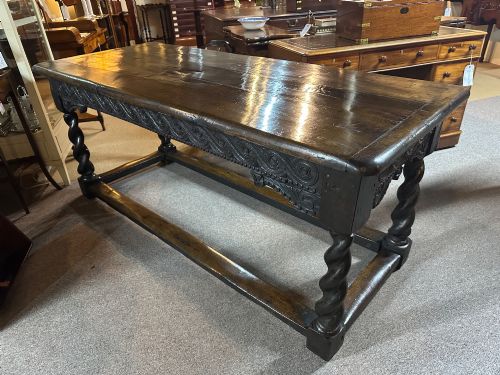
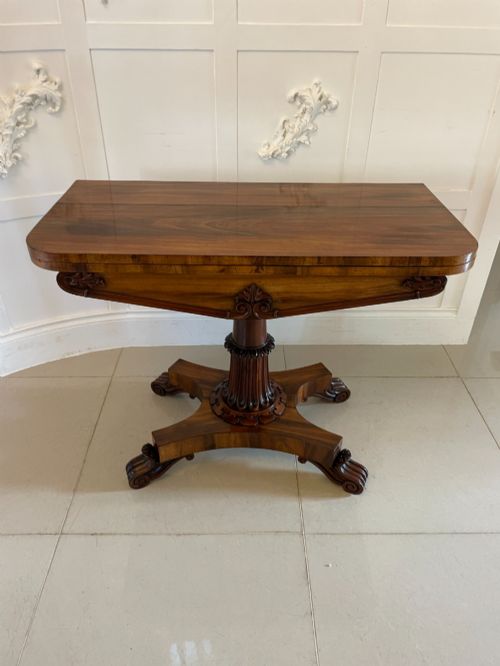
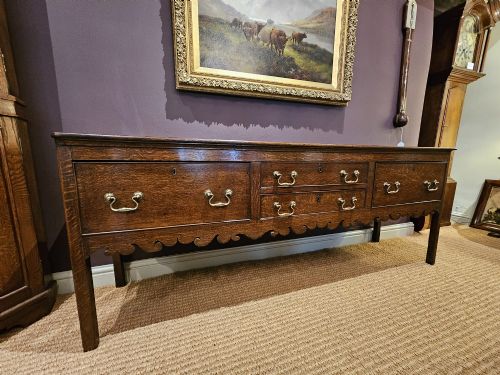
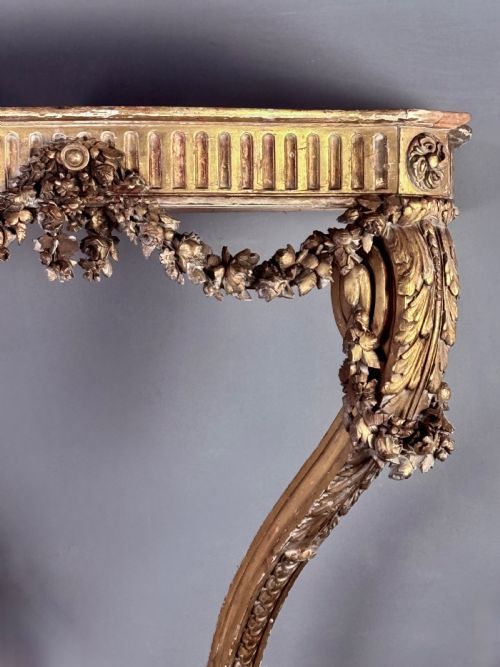
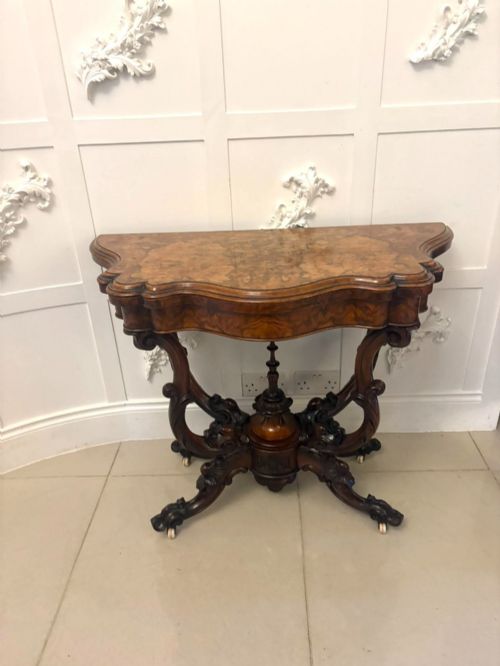
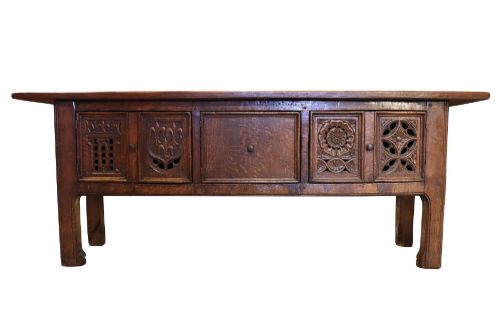
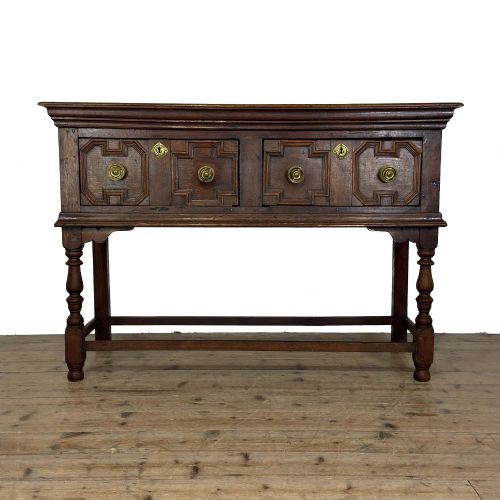
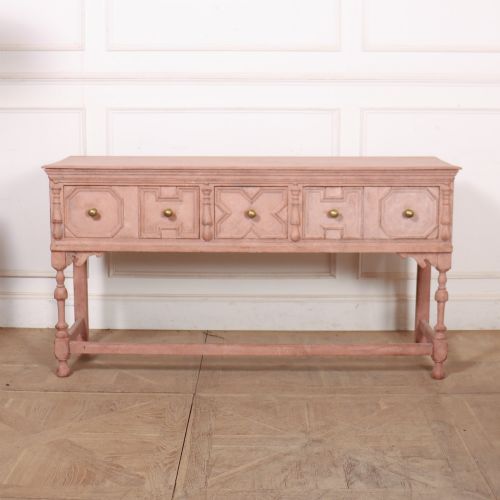
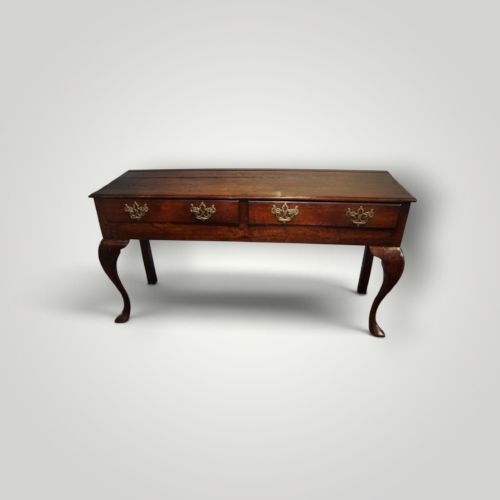
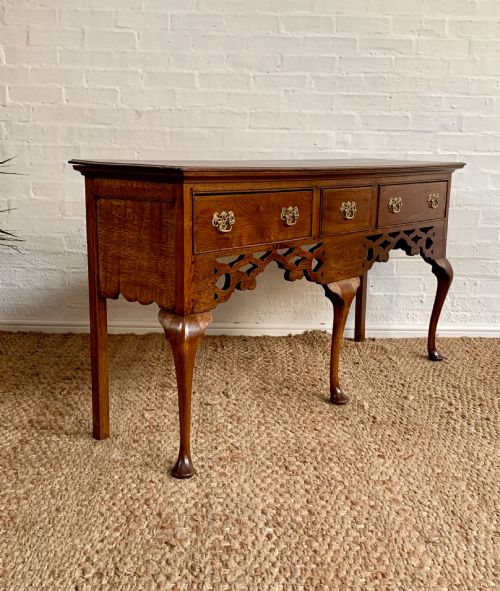
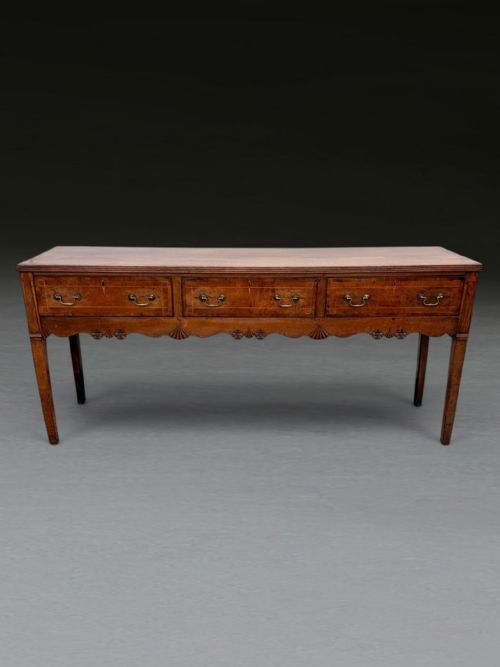
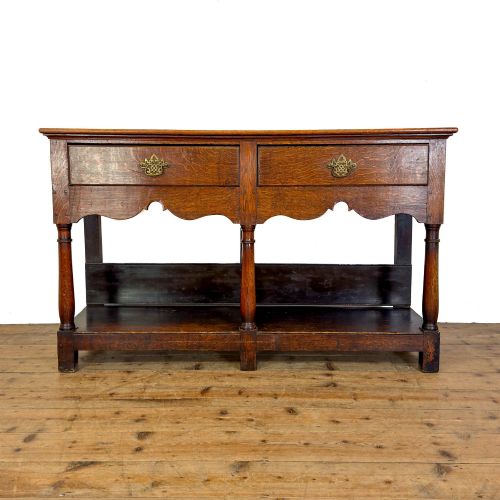
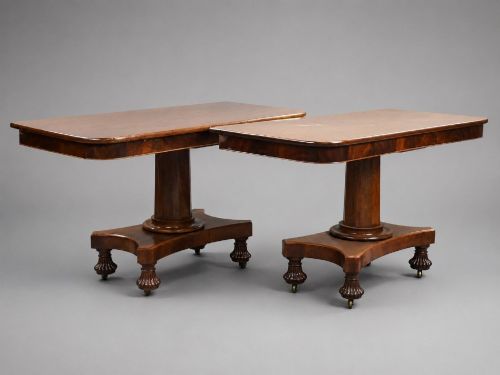
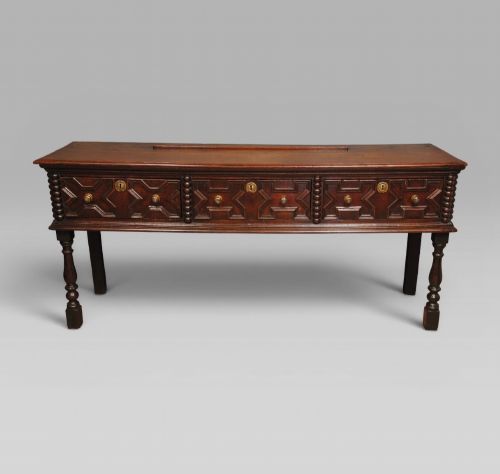
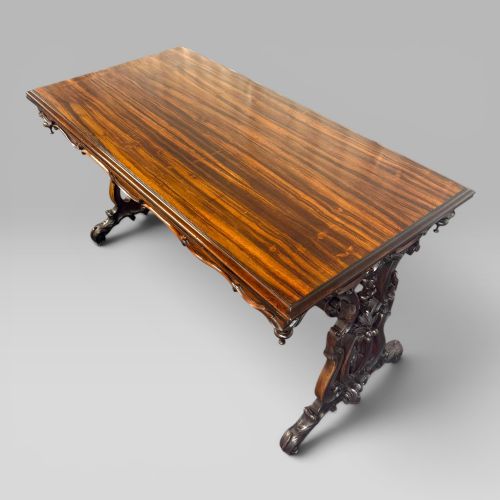
A carved base console table represents a specific form of furniture designed to stand against a wall, frequently appearing across this inventory in 19th Century, Georgian, Regency, and Victorian iterations. These pieces range from dedicated console tables to related side tables, card tables, and dresser bases featuring similarly detailed supports.
The materials span oak, mahogany, rosewood, walnut, and giltwood, with various regional and stylistic influences such as Gothic Revival, Jacobean Revival, and French designs. Buyers searching this phrase encounter numerous oak dresser bases and walnut or rosewood card tables where the carved support forms the primary visual interest.
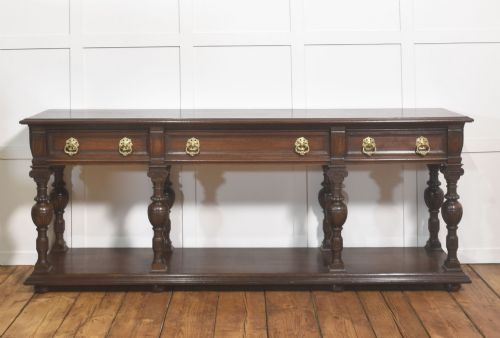
Many examples incorporate specific structural variations like marble tops, fold-over surfaces, or potboards beneath the main surface. The proportions vary from narrow hallway pieces to substantial serving tables designed for dining spaces.
Materials and construction methods
Cabinet makers utilised dense hardwoods such as oak, mahogany, walnut, and rosewood to construct the primary frames and surfaces of these tables. Softer giltwood and specialised veneers like burr walnut, satinwood, and zebrawood appear on more decorative iterations.
Carving was executed by hand directly into the solid timber of the legs, pedestals, or apron bases, utilising motifs ranging from simple geometric panels to elaborate figures like swans, eagles, and dolphins. Joinery typically involved traditional techniques appropriate to the period, securing heavy marble slabs or timber tops to heavily carved underframes.
Listings feature oak, mahogany, rosewood, walnut, and giltwood across periods spanning from the 17th century through the Edwardian era.
Assessing quality in carved supports
The distinction between standard and superior pieces rests largely on the depth, crispness, and execution of the carved base. Skilled carving displays sharp undercut details and proportional balance, whereas inferior work appears flat or perfunctory.
Material selection also dictates quality, with figured timbers such as burr walnut, banded satinwood, or heavy giltwood indicating higher status workshop production. The integration between the upper surface and the carved base reveals the care taken during initial assembly.
Felix Alfred Ternisien
The Carved Base Console Table Glossary
- Console table
- A table designed to stand against a wall, traditionally fixed with brackets but frequently free-standing in later periods. These items often feature decorative carving on the front legs or base while the back remains plain.
- Dresser base
- A low wooden sideboard fitted with drawers or cupboards, frequently constructed from oak during the 17th, 18th, and 19th centuries. They serve as functional storage furniture with sturdy supporting frameworks.
- Giltwood
- Timber that has been coated with a thin layer of gold leaf or gilt paint. This finish appears predominantly on decorative French and Baroque style console tables.
- Potboard
- An open shelf situated near the floor beneath a dresser base or serving table. Historically utilised for storing pots and pans, it adds structural stability to the lower base.
- Sofa table
- A rectangular table fitted with drop leaves at either end, traditionally placed in front of a sofa. They frequently feature twin pillar supports connected by a stretcher.
Carved Base Console Table: Frequently Asked Questions
Where should I place a console table?
These tables sit flush against a wall in hallways, living rooms, or dining spaces where floor space is limited. Their primary purpose is to provide a surface for lamps, decorative items, or serving.
Because many examples feature finished backs or elaborate carved front bases, they command attention as focal points upon entering a room rather than hiding in corners.
What is the difference between a console table and a side table?
Console tables traditionally stood against walls and occasionally required wall fixings for stability, whereas side tables are fully freestanding four-legged items. In modern usage, the terms frequently overlap.
Both categories appear with heavily carved bases, though console tables more commonly feature decorative work concentrated on the front supports.
How do I date a wooden dresser base?
Dating relies on timber choice, construction marks, and hardware styles. Early pieces utilise solid oak with hand-cut joints and simpler panel configurations.
Later Victorian and Edwardian revivals incorporate machine-sawn elements, different secondary timbers, and varied drawer construction methods that distinguish them from 17th or 18th-century origins.
Can these tables be used for everyday dining?
Serving tables and dresser bases were historically built to handle heavy domestic use in dining rooms. Their robust timber construction makes them suitable for daily placement.
Care should be taken with delicate surfaces such as giltwood, marble tops, or polished rosewood to avoid liquid rings and impact damage.