
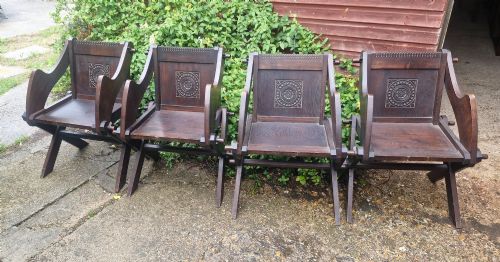
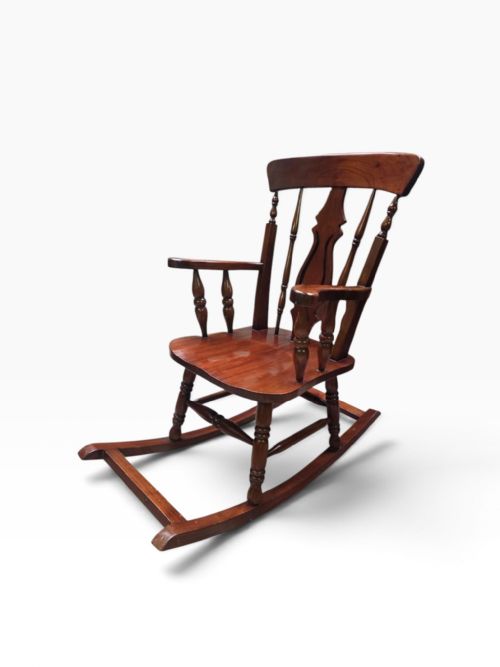
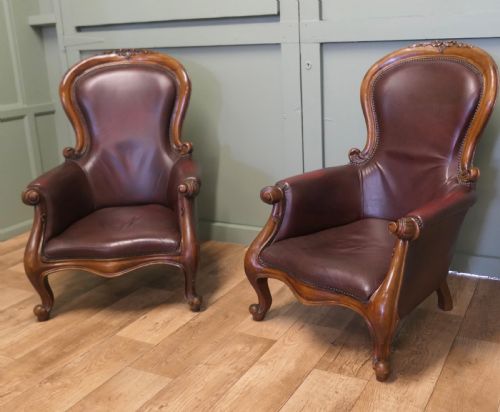
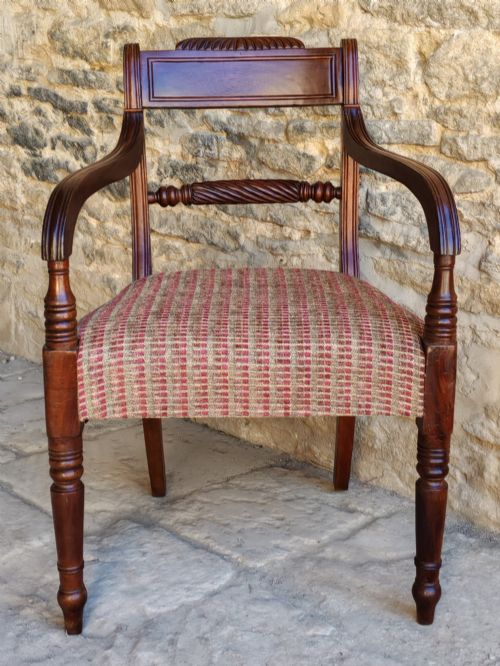
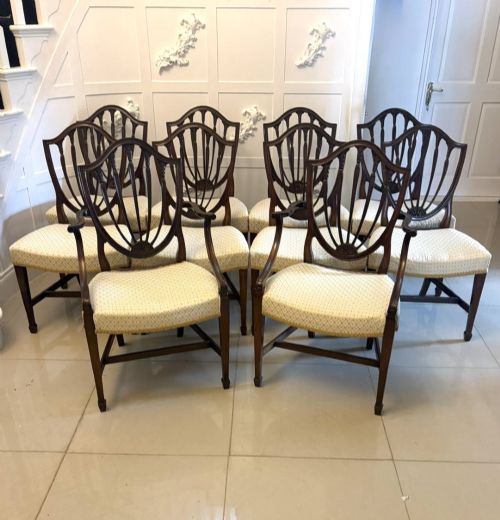
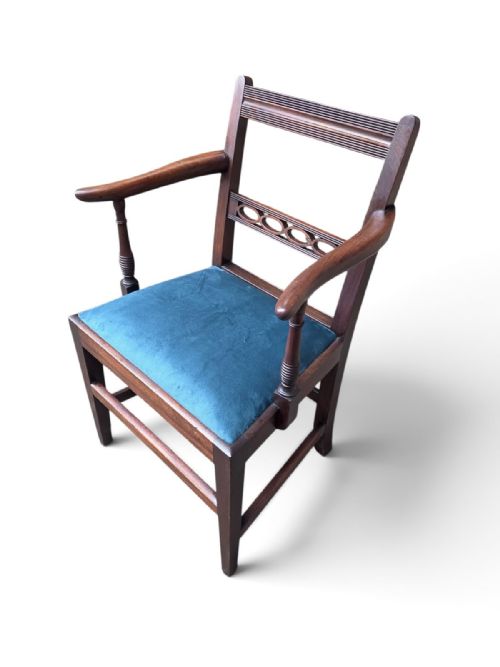
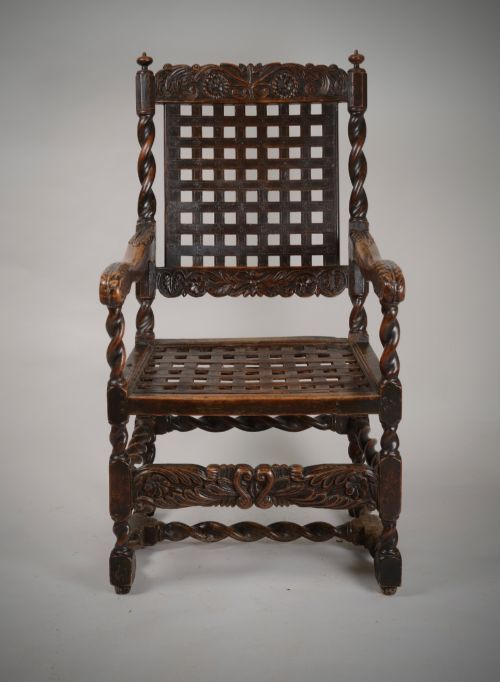
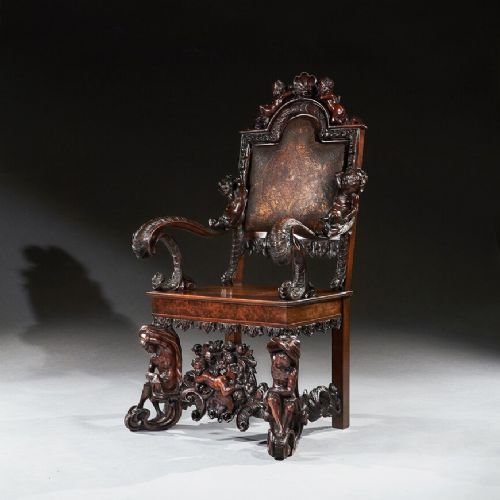
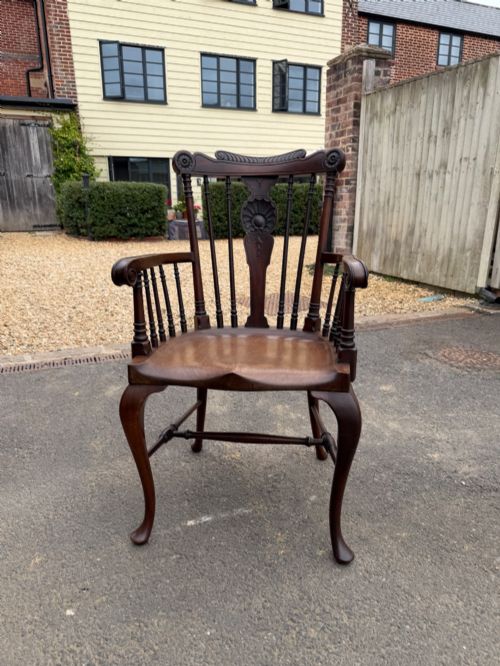
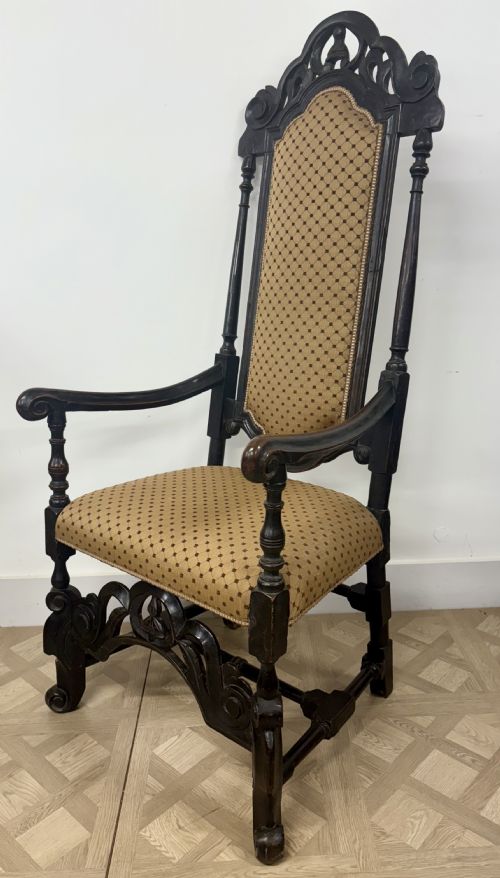
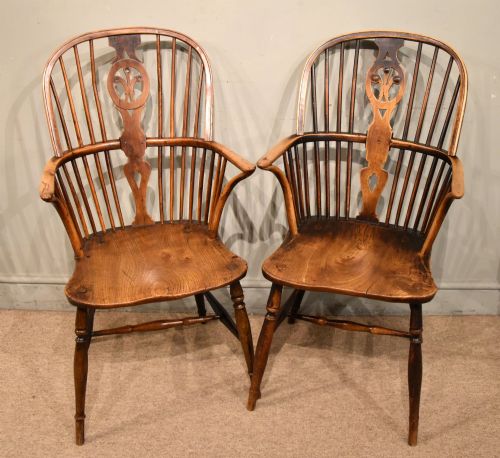
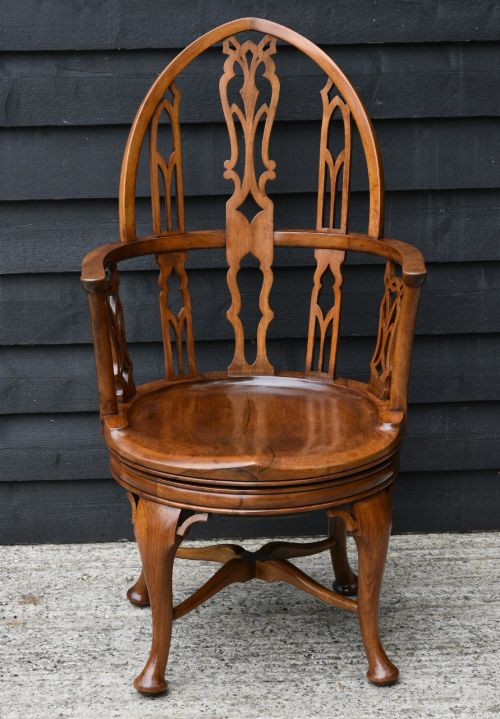
Carved Back Wooden Armchair
A carved back wooden armchair offers substantial seating rooted in centuries of diverse regional design and craftsmanship.
Carved Back Wooden Armchair
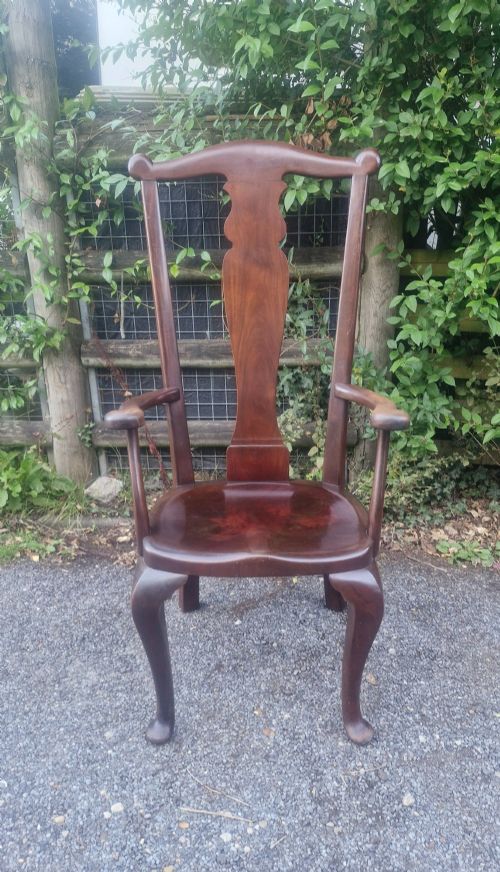
A carved back wooden armchair spans centuries of seating design, ranging from heavy seventeenth-century oak wainscot forms to lighter nineteenth-century mahogany dining carvers. Buyers searching for a carved back wooden armchair encounter pieces originating from Georgian workshops, Victorian parlours, and rural farmhouse kitchens.
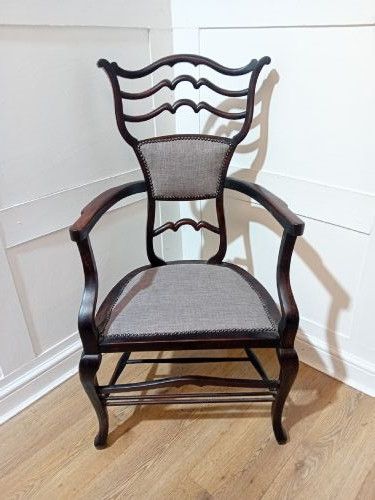
The most frequent examples on this page date from the Victorian era and the turn of the twentieth century, typically constructed in mahogany, oak, or elm. These vary from high-back desk chairs and Windsor rocking chairs to shield-back dining carvers and upholstered easy chairs.
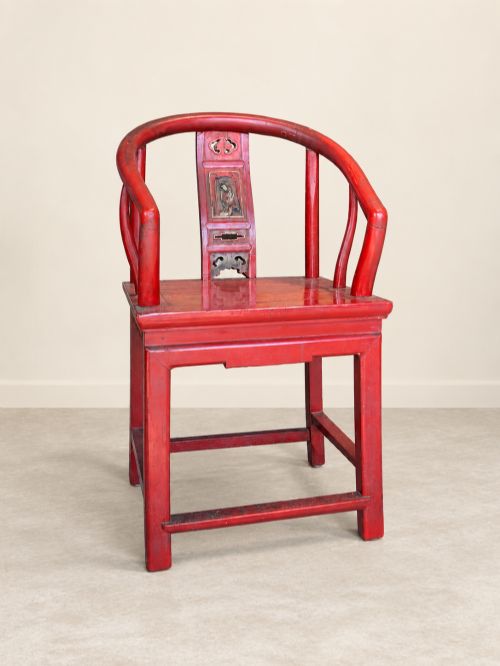
Regional and international influences appear frequently, encompassing English country styles, Scottish Windsors, Welsh elm high-backs, and Chinese horseshoe-back armchairs. Each variant serves a distinct domestic function, from low nursing seats to imposing library and desk armchairs.
Materials and construction methods
Cabinetmakers and joiners utilised native hardwoods such as oak, elm, ash, and walnut, alongside imported mahogany for finer formal seating. Timber selection dictated structural strength, allowing craftsmen to carve deep relief patterns into splats, crest rails, and arm supports.
Joinery methods combined traditional mortise and tenon joints with turned spindles, steam-bent components for Windsor bows, and hand-stitched upholstery webbing where fabric, leather, or needlework covers the wooden frame.
Children get their own miniature seating here, alongside full-scale thrones and drunkards chairs designed for leisurely slumping.
Assessing quality in construction and carving
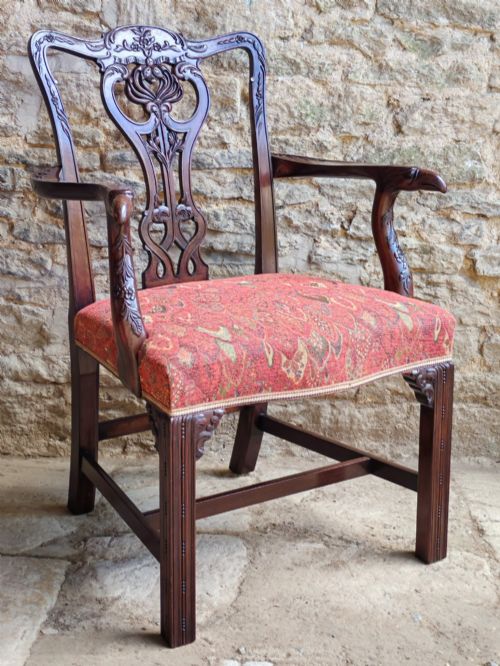
The standard of a carved back wooden armchair rests upon the crispness of the timber carving and the integrity of the frame's joinery. Superior examples display deep, hand-chiselled detail on the backsplat and crest rail rather than shallow machine profiling.
Timber selection and proportional balance distinguish fine workshop production from utilitarian regional output. Well-chosen grain patterns in mahogany or quarter-sawn oak enhance the visual weight of the piece without compromising structural rigidity.
Howard and Sons·Maple and Co·Andrea Brustolon
The Carved Back Wooden Armchair Glossary
- Carver
- An armchair designed to match a set of dining chairs, typically featuring open arms and a carved back.
- Windsor
- A traditional wooden chair constructed with turned legs and spindles inserted into a solid sculpted wooden seat.
- Wainscot
- An early heavy wooden armchair constructed primarily of panelled oak with solid arms and a high panelled back.
- Splat
- The vertical central strip of wood in the middle of a chair back, often intricately carved or pierced.
- Shield-back
- A chair back shaped like a heraldic shield, popular in late eighteenth-century dining and library seating.
Carved Back Wooden Armchair: Frequently Asked Questions
What is a carver chair?
A carver chair is an armchair built to match a set of single dining chairs, positioned at the head of a table.
These pieces share the stylistic motifs and timber of the surrounding dining suite while offering more substantial arm supports.
How do I date an oak armchair?
Dating oak armchairs relies upon examining the joinery marks, panel construction, and the depth of the carved back panel.
Earlier seventeenth-century examples utilise pegged mortise and tenon joints with heavy wainscot frames, whereas later nineteenth-century revival pieces display machine tooling and softer timber grain.
Where were Windsor armchairs made?
Windsor armchairs originated in rural workshops across various regions, including English countryside shires, Wales, and Scotland.
Local timber availability determined the exact wood used, resulting in distinct regional variations in the turned spindles and bow backs.
Can I use an antique armchair at a modern desk?
Many nineteenth-century desk chairs and revolving chairs suit modern workspace heights when paired with appropriate clearances.
Buyers should verify the seat height and arm clearance against their specific desk dimensions before placing the chair into daily service.