
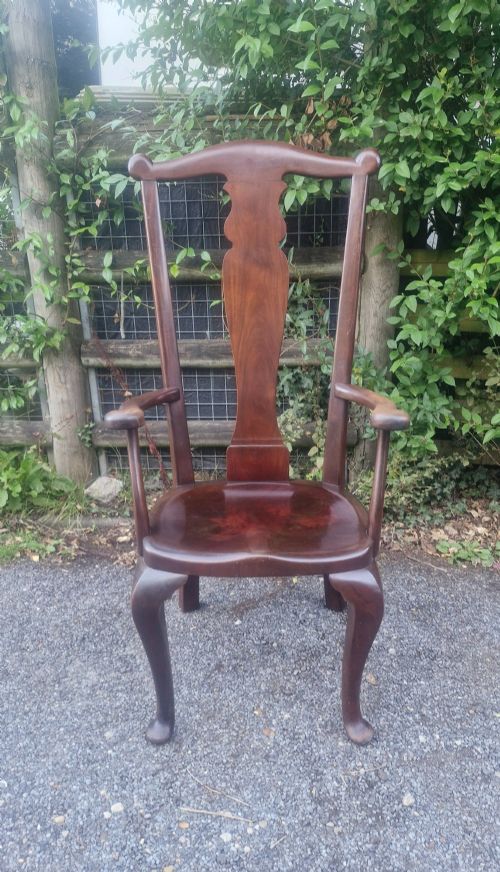
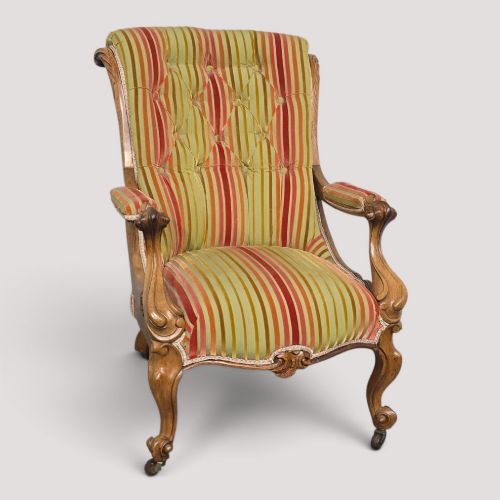
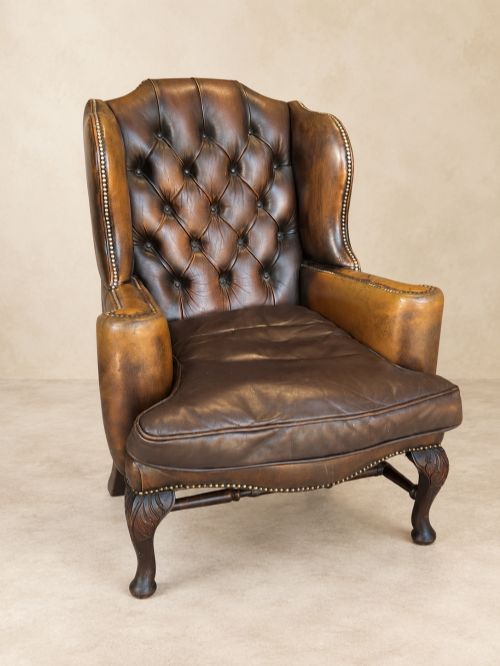
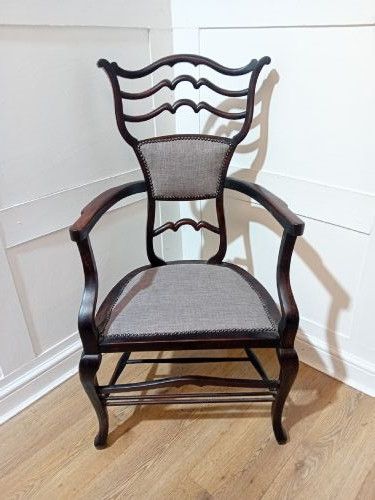

Carved Back Library Chair
A carved back library chair brings substance and comfort to a study, built from solid timbers to serve for generations.
Carved Back Library Chair
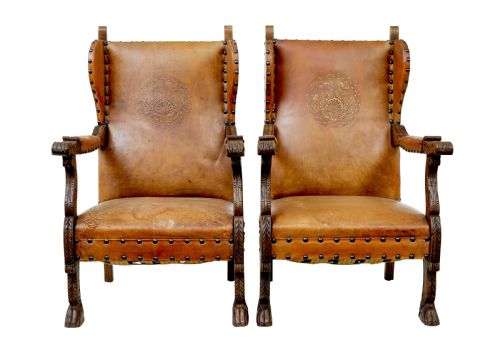
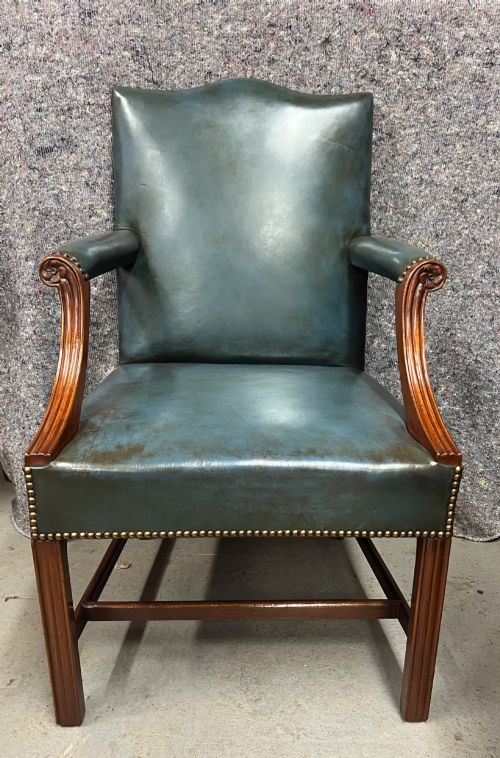
A carved back library chair is a sturdy seat designed for reading rooms, studies, and offices, combining functional support with decorative woodwork. The selection spans the nineteenth century through the Edwardian era, taking forms such as desk armchairs, gainsborough chairs, and wingbacks.
Mahogany and oak dominate the offerings, frequently accompanied by walnut and rosewood frames. Buyers encounter both original period pieces from the Victorian and Regency eras and later revivals executed in the Georgian and Queen Anne manners.
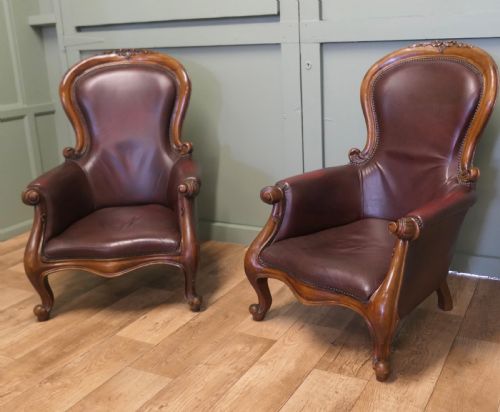
Most examples feature upholstered seats or backs in leather, velvet, or textile, tailored for prolonged reading or desk work. Open armchairs and wing chairs appear regularly alongside specialised desk chairs fitted with swivel or caster mechanisms.
Construction and materials
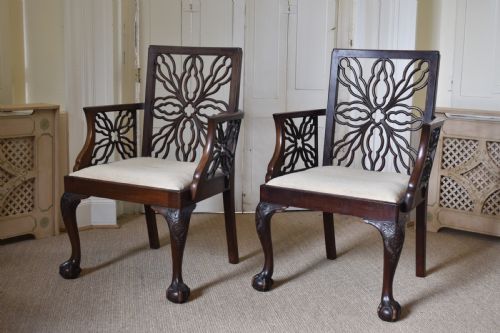
Frames are constructed from dense hardwoods like mahogany, oak, and walnut, chosen for their structural strength and ability to hold crisp carved details along the backrest and arm supports. Joinery relies on traditional mortise and tenon methods to withstand daily weight and movement.
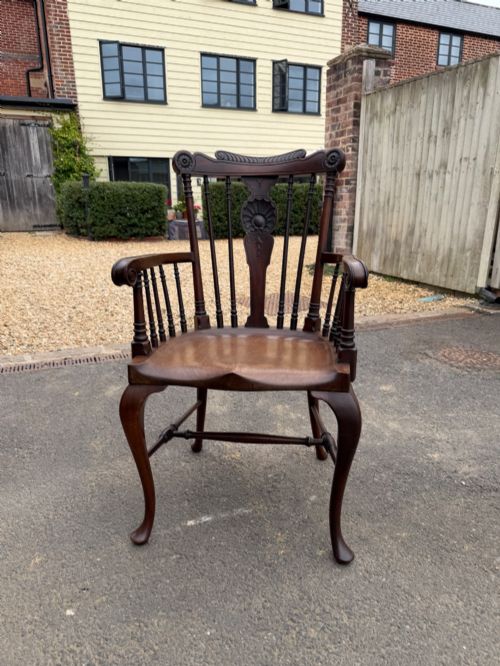
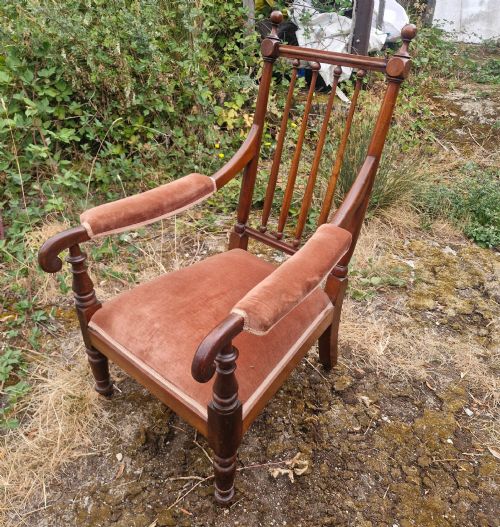
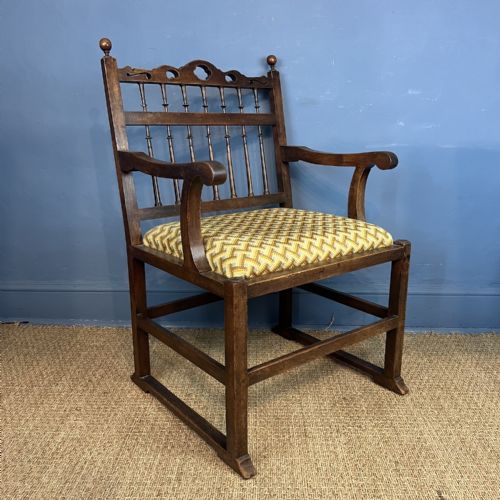
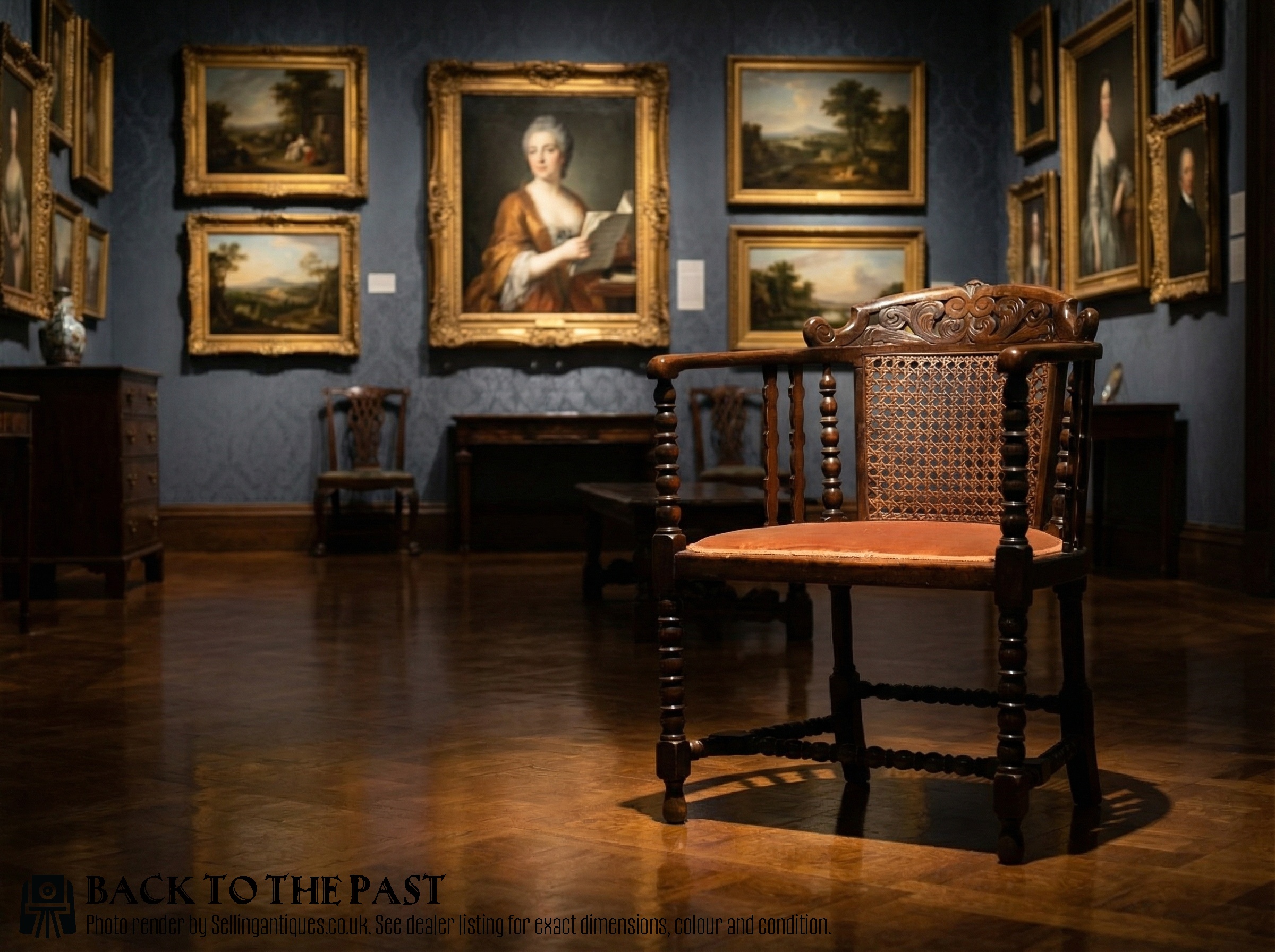
Upholstery materials include buttoned leather, horsehair stuffing, velvet, and woven textiles, secured with brass tacks or webbing. Cabinetmakers shaped the timber by hand, turning spindle backs and carving relief patterns into the wood grain.
Current listings feature mahogany, oak, and walnut frames paired with leather, velvet, and textile upholstery across the nineteenth and early twentieth centuries.
Assessing quality and craftsmanship
The distinction between standard workshop production and exceptional craftsmanship lies in the depth and sharpness of the timber carving. Superior examples display fluid lines in the armrests and backrails without mechanical shortcuts.
The choice of primary wood and secondary framing timber dictates durability, with dense old-growth mahogany and quarter-sawn oak representing the higher end of the scale. Original leather upholstery and intact frame joinery elevate the integrity of a piece.
Hindley & Sons
The Carved Back Library Chair Glossary
- Gainsborough chair
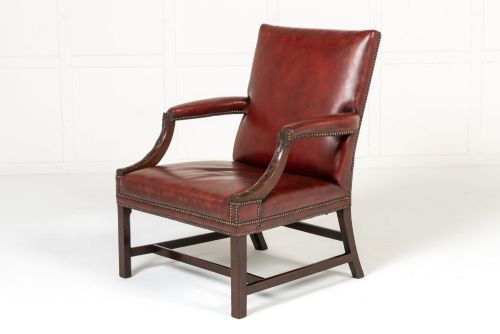
- A type of upholstered armchair with an open-framed wooden arm design, low sides, and a wide seat, popular during the eighteenth century and later revived.
- Bergere
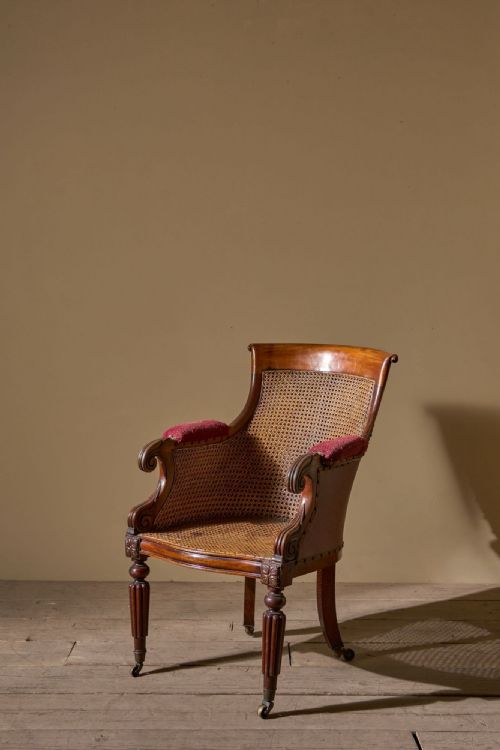
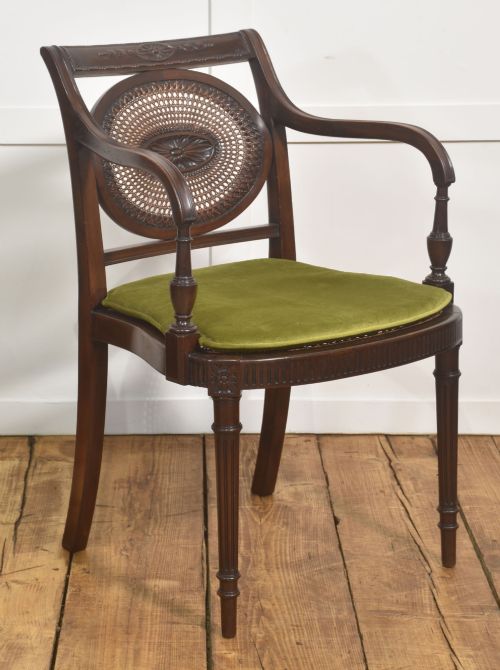
- An enclosed upholstered armchair with a wooden frame where the sides are typically filled with cane or wicker work.
- Spindle back
- A chair back constructed from a series of thin, turned wooden rods or spindles supporting the top rail.
- Wingback
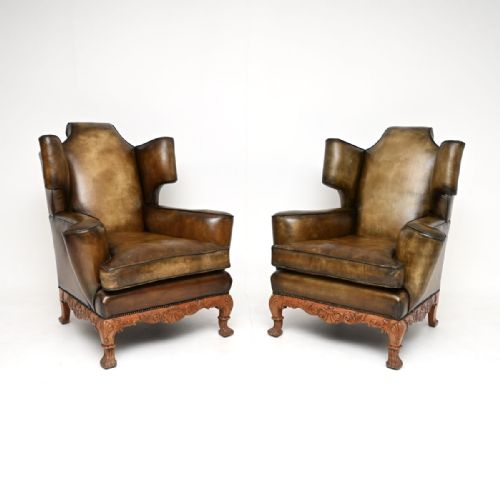
- An armchair with high panels attached to the backrest designed to shelter the occupant from drafts and retain heat.
- Cane
- Woven rattan material used for seats and back panels to provide a lightweight and flexible surface.
Carved Back Library Chair: Frequently Asked Questions
What is a library chair?
A library chair is a sturdy armchair designed for reading rooms and studies, typically featuring a supportive wooden frame and upholstered seat.
These chairs prioritize comfort and durability, often incorporating armrests and ergonomic back heights suitable for long periods of sitting.
How do I date a wooden armchair?
Dating relies on identifying the primary wood, construction techniques, and stylistic revival markers present in the frame and carving.
Nineteenth-century pieces often combine machine assistance with hand-finished joinery, whereas earlier Georgian examples exhibit entirely hand-shaped components and distinct joint patterns.
Where should I place a leather armchair?
Leather armchairs suit studies, home libraries, and living spaces where their robust materials complement desk furniture and bookshelves.
Keep them away from direct sunlight and heat sources to prevent the leather and timber from drying out over time.
What is the difference between a desk chair and a library chair?
Desk chairs often feature specialised bases, lower profiles, or swiveling mechanisms tailored for writing and office work.
Library chairs tend to focus on relaxed reading postures, utilising wingbacks, open arms, or generous padding for comfort.