

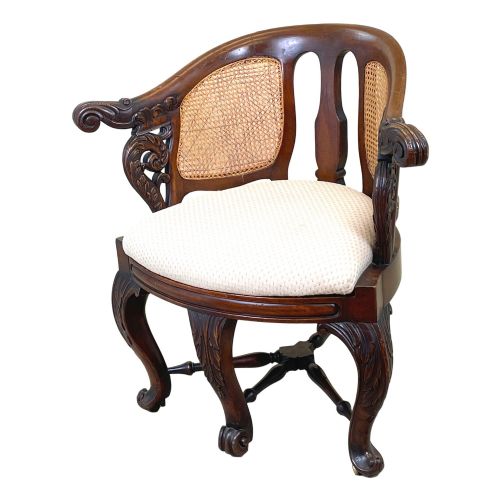
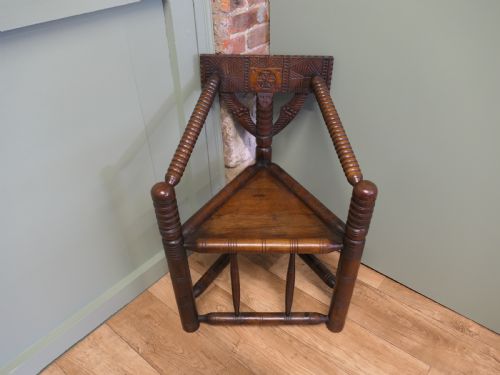
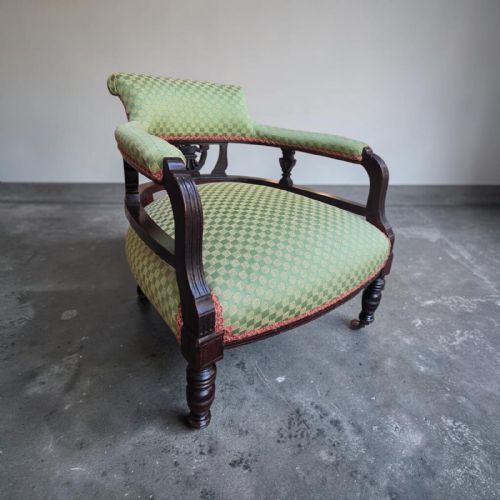
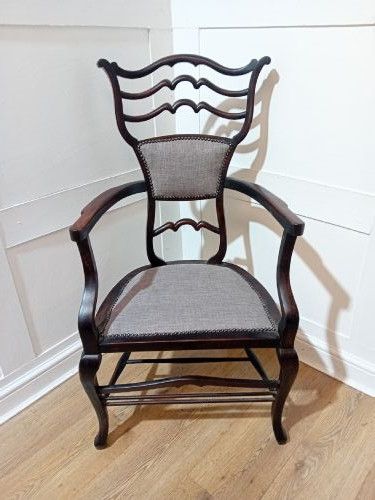
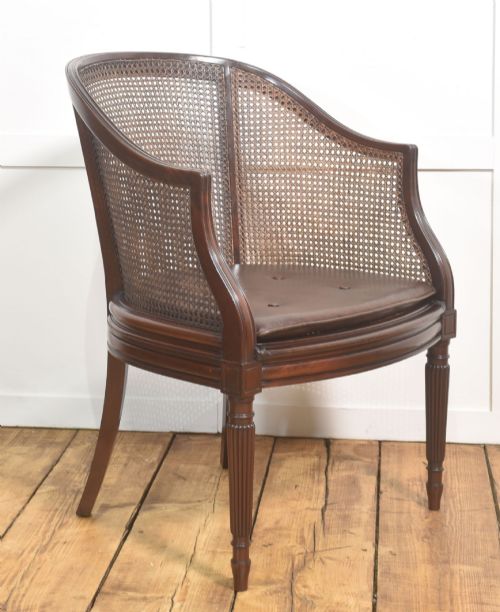
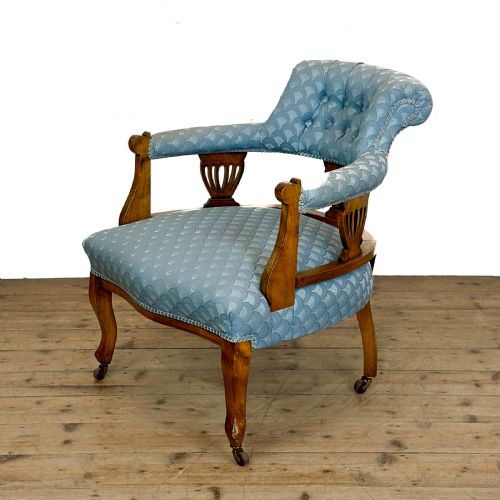


Carved Back Corner Armchair
These carved back corner armchairs offer generous proportions and striking timberwork, making a handsome addition to any study or corner.
Carved Back Corner Armchair
A carved back corner armchair provides a distinctive seating option designed to fit neatly into domestic interiors. These examples span several distinct eras, drawing upon Victorian, Edwardian, and eighteenth-century craftsmanship.
The selection ranges from sturdy oak Turner's chairs to refined mahogany and rosewood variants. Many pieces incorporate supportive tub styles, cane panels, or upholstered seats finished in fabric, damask, or leather.
Originating across British, French, and other continental traditions, these chairs serve multiple functions as accent pieces, desk chairs, or bedroom seating.
Materials and construction methods
Makers relied heavily on solid hardwoods like oak, mahogany, and rosewood to build durable frames capable of supporting intricate hand-carved details. Natural materials such as cane, leather, and brass fittings frequently complement the primary timber structure.
Joinery techniques ranged from traditional turned components in oak Turner's chairs to steam-bent wooden elements forming curved tub backs. Upholstered versions utilised durable fabrics and damask secured with traditional stuffing methods.
Carved Back Corner Armchair Retail Price Guide 2026
Typical asking prices for carved back corner armchair among the pieces listed under this phrase on Sellingantiques today, from the lower quarter to the upper quarter. They describe what is for sale here now, not the wider market.
Current listings feature pieces constructed from mahogany, oak, rosewood, and cane across Victorian and Edwardian periods.
Assessing craftsmanship and execution
The distinction between standard items and finer examples rests upon the crispness of the hand-carved ornament and the selection of timber grain. Deeply articulated mouldings and balanced proportions indicate greater care during manufacture.
Structural integrity depends on the tightness of the joints and the preservation of original turning work. Examples retaining their early cane work or substantial hardwood frames command closer attention from discerning collectors.
S&H Jewell
The Carved Back Corner Armchair Glossary
- Corner chair
- A seating form designed specifically to fit into the angle of a room, featuring a diagonal seat plan and a continuous curved backrest supported by corner posts. This layout provides a compact footprint while offering comfortable arm support.
- Turner's chair
- A sturdy armchair constructed primarily from cylindrical turned wooden spindles and members, often associated with traditional vernacular woodworking. These pieces frequently utilise solid oak and display repetitive geometric turning.
- Bergère
- An enclosed armchair with upholstered sides and back, typically featuring exposed wooden framing and woven cane panels. The wooden frame is often carved with subtle motifs.
- Rosewood
- A dense, heavily figured exotic timber valued for its dark colour and contrasting grain patterns. It lends a smooth finish to finer Victorian and continental seating.
Carved Back Corner Armchair: Frequently Asked Questions
Where should I place a corner armchair?
A carved back corner armchair fits naturally into empty room angles where standard seating proves too cumbersome. They serve well in studies, hallways, or bedrooms as accent seating.
Positioning them away from direct sunlight protects the timber finish and upholstered fabrics from fading over time.
How do I care for antique timber frames?
Maintaining these wooden frames requires simple dusting with a soft, dry cloth and occasional application of appropriate wax polish. Avoid modern liquid polishes containing silicones that can damage historic finishes.
Keep the chairs away from direct heat sources and dramatic humidity shifts to prevent timber splitting.
Are these chairs suitable for daily use?
Most solid hardwood examples remain sturdy enough for regular sitting when checked for structural stability. Lighter decorative variants or pieces with delicate cane panels require more mindful handling.
Regularly inspecting the joints ensures the frame handles daily movement without loosening.
How do I distinguish Victorian from Edwardian pieces?
Victorian examples tend to display heavier proportions, darker finishes, and dense, ornate carving styles such as Gothic Revival motifs. Edwardian variants often feature lighter construction, simpler lines, and inlaid decoration.
Examining the underside and joint construction helps confirm the period manufacturing methods.