




Carved Back Child Chair
A carved back child chair is a diminutive domestic seat built for the young, combining period craftsmanship with domestic utility.

Carved Back Child Chair
A carved back child chair is a small-scale seat produced across multiple centuries, designed specifically for children rather than adults. These pieces appear in forms such as armchairs, rocking chairs, side chairs, and high chairs.
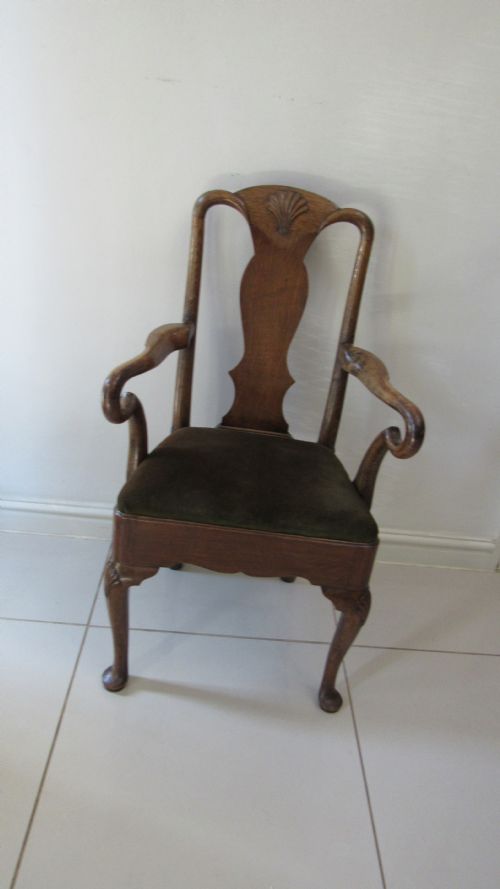
The selections span distinct historical periods including the seventeenth century, Georgian era, and the Victorian period. Styles range from English Country and rustic vernacular to formal interpretations like Queen Anne and Regency styles.
Makers adapted mainstream adult furniture designs into smaller dimensions while retaining traditional joinery. Buyers frequently encounter nineteenth-century examples alongside earlier oak and elm iterations.
Materials and construction methods
Craftsmen shaped these small seats using native and imported timbers such as oak, mahogany, walnut, elm, ash, and pine. Structural integrity relied on traditional pegged joints, turned spindles, and solid wood carved components.
Seating surfaces utilised various traditional methods including rush weaving, cane work, and upholstered leather or fabric panels. Brass hardware occasionally appears on specific Victorian and Regency examples.
Regional vernacular workshops favoured local timbers like elm and ash, whereas urban cabinet makers utilised mahogany and walnut for refined stylistic revivals.
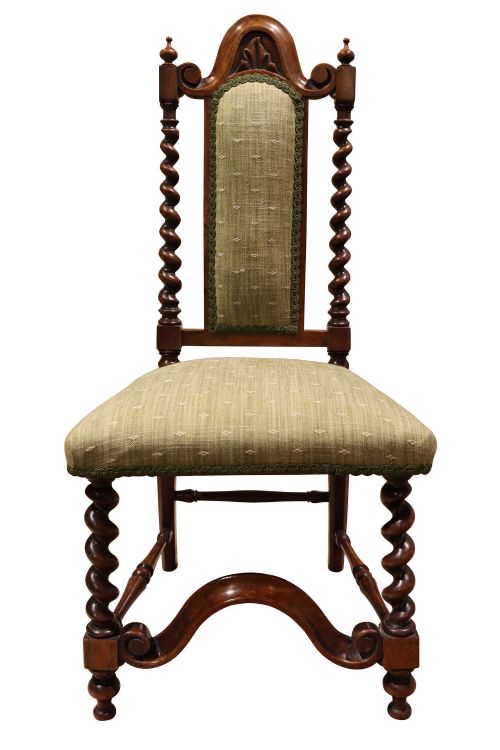
Victorian children sat remarkably straight while pondering their ABCs in miniature barley twist armchairs.
Distinctions in construction and finish
Quality rests on the integrity of the original timber and the crispness of the carved back details. Superior examples retain their original surface patination and structural fastenings without excessive modern intervention.
Finer pieces demonstrate considered proportions that mimic adult seating accurately, whereas lower grades rely on crude scaling. The complexity of the turning on legs and spindles also distinguishes workshop standards.
The Carved Back Child Chair Glossary
- Wainscot chair
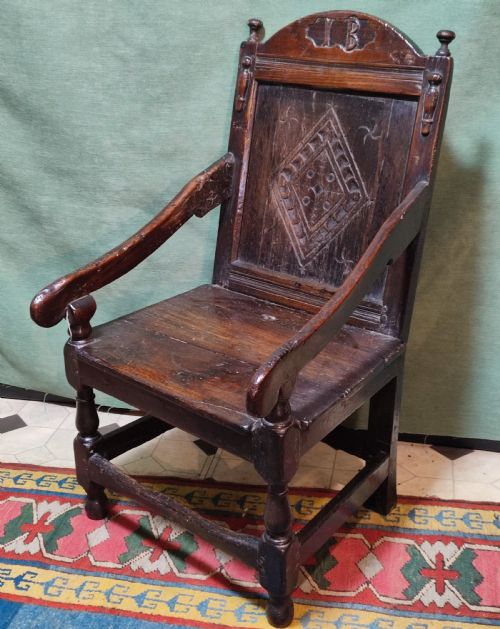
- A heavy wooden armchair originating in the seventeenth century, constructed primarily from oak with panelled backs. These formal seats represent the earliest domestic forms found in child-scale proportions.
- Windsor chair
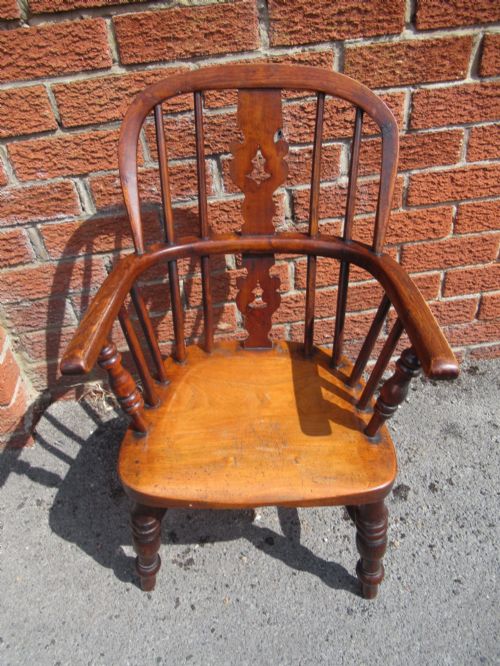
- A chair built with a solid wooden seat into which the legs and back spindles are direct-inserted. Child versions utilise ash or elm to ensure robust daily use.
- Barley twist
- A type of turning shaped to resemble a twisted rope, prominent in Victorian furniture design. This decorative detail adds vertical emphasis to chair uprights and legs.
- Bergere
- An enclosed armchair with cane or wicker work panels on the back and sides. This French-influenced form appears in nineteenth-century interpretations.
- Rush seat
- A seating surface woven from dried marsh grasses twisted into cords. Traditional country chairs frequently employ this natural material for domestic comfort.
Carved Back Child Chair: Frequently Asked Questions
How old is my carved back child chair?
Dating relies on identifying timber species, joinery techniques, and stylistic markers associated with specific periods. Seventeenth-century examples typically feature heavy oak construction and wainscot panels, while Victorian pieces often display machine-turned components or walnut framing.
Comparing the construction against dated stylistic revivals helps clarify whether a piece originates from the primary period or a later nineteenth-century revival.
Were these chairs made for actual children?
Most surviving examples served as functional seating for children within affluent or middle-class households. Their smaller scale mirrored adult parlour or dining furniture to maintain domestic uniformity.
Some sturdier vernacular pieces in elm or ash were built for robust daily use in rural farmhouses and cottages.
How should I care for antique wood furniture?
Maintain stable indoor humidity levels and keep wooden chairs away from direct heat sources and sunlight. Gentle dusting with a dry cloth preserves the historical finish and prevents surface degradation.
Avoid modern liquid polishes containing silicones, opting instead for traditional beeswax applied sparingly when the timber appears dry.
What distinguishes country styles from formal periods?
Country styles utilise accessible local timbers like elm, ash, and pine with simpler vernacular construction. Formal period pieces incorporate imported mahogany or walnut with intricate carving inspired by Queen Anne or Regency designs.
Regional variations reflect the materials available to local joiners rather than metropolitan workshop standards.