

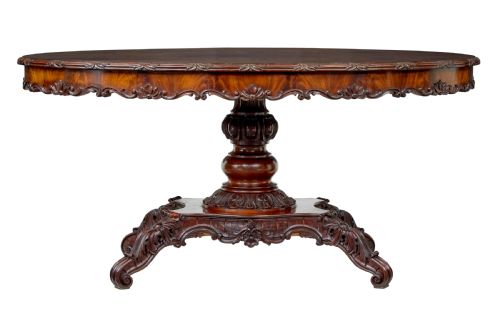


Carved Apron Centre Table
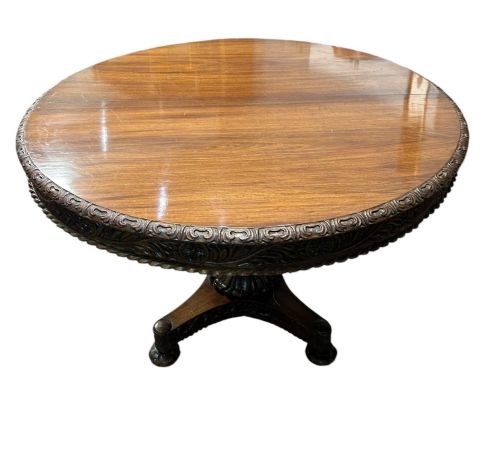
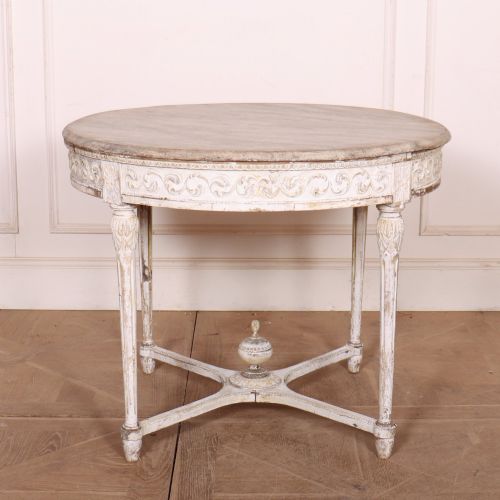
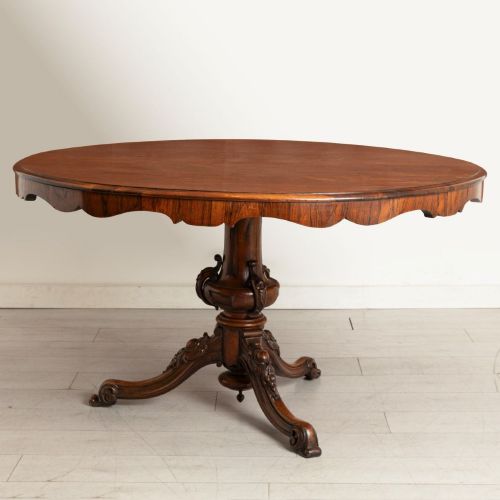
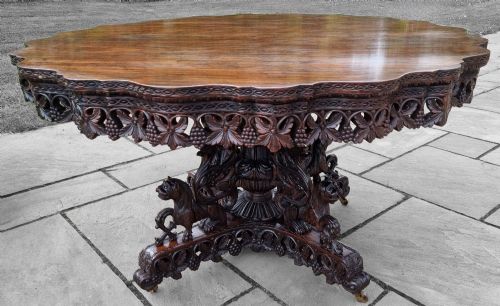
These carved apron centre table pieces stand free in a room, offering ornamental woodwork beneath the top and heavy timber construction.
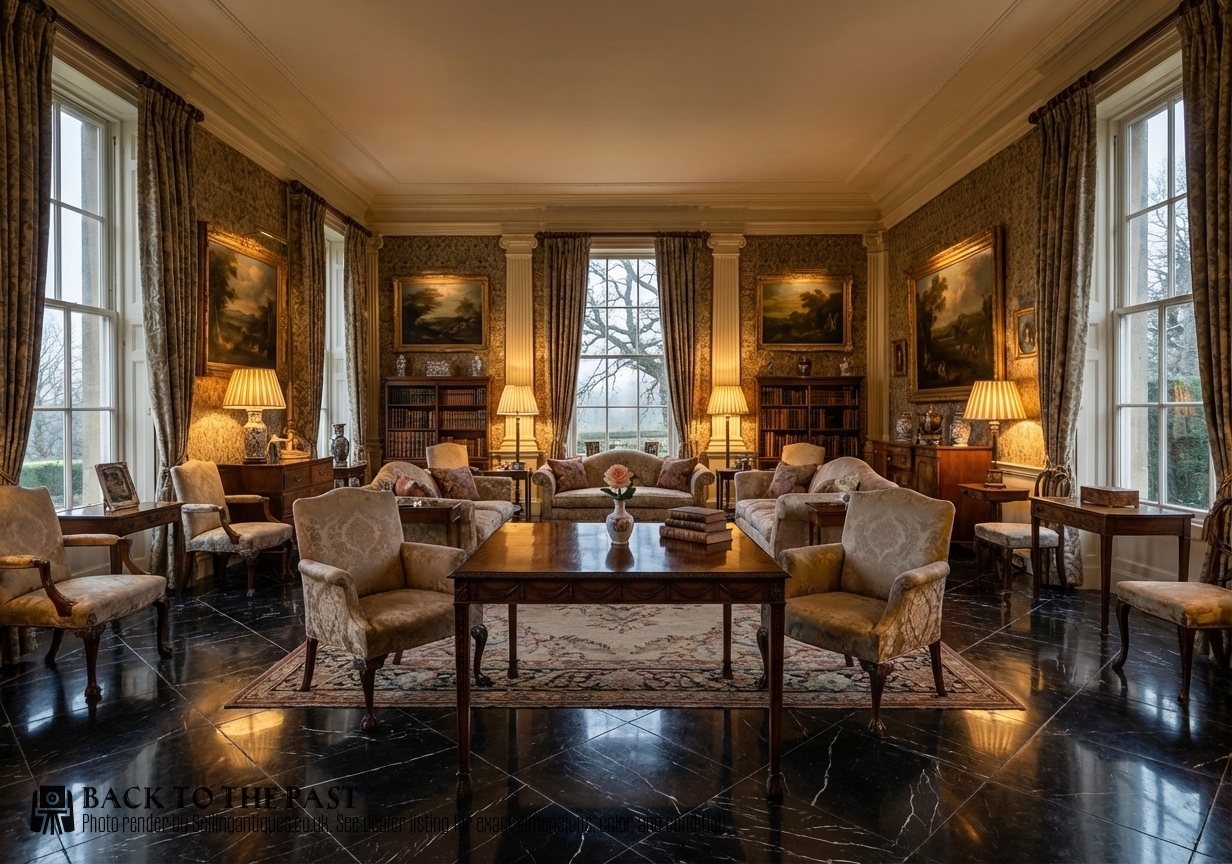
Carved Apron Centre Table
A carved apron centre table sits freestanding in the middle of a room rather than pushed against a wall, finished on all sides for 360-degree viewing. These tables appear across multiple periods including Victorian, Edwardian, and the nineteenth century, taking forms such as occasional, dining, and coffee tables.
The defining feature is the carved apron beneath the tabletop, which frames the structure with detailed woodwork. Examples range from Swedish pine and walnut designs to Anglo-Indian padauk and English mahogany iterations, often featuring circular, oval, or square tops.
How they were made
Cabinetmakers constructed these tables using dense timbers such as mahogany, walnut, rosewood, and oak, frequently adding marble tops or intricate painted finishes. Selected woods provided a stable foundation for deep hand-carving along the frieze and legs.
Joinery techniques included turned pedestals, tilt-top mechanisms, and fitted aprons secured to robust frames. Artisans carved the timber directly by hand to achieve the relief work seen on Renaissance Revival, Regency, and colonial pieces.
Tilt-top mechanisms let owners flip the surface upright to save space, doubling as a wall-facing screen when the room gets crowded.
What varies in quality
The depth and crispness of the hand-carving on the apron separate standard production from superior craftsmanship. Sharp chisel work and well-defined motifs demonstrate an artisan's skill compared to softer, more shallow moulding.
Timber selection and structural integrity dictate the standing of a piece. Dense grains, well-figured veneers like burr birch or walnut, and robust joinery without excessive restoration represent the higher end of the range.
The Carved Apron Centre Table Glossary
- Apron
- The decorative wooden member running beneath the edge of the tabletop between the legs. It often carries the primary hand-carving that defines the style of the piece.
- Centre Table
- A freestanding table designed to be viewed from all sides in the middle of a room rather than placed against a wall.
- Tilt-Top
- A hinged tabletop mechanism allowing the surface to fold vertical when not in use, common on nineteenth-century occasional and dining tables.
- Padauk
- A dense, durable tropical hardwood with a reddish-brown hue, frequently utilised in Anglo-Indian and colonial furniture.
- Frieze
- The horizontal band beneath the tabletop, often synonymous with the apron when decorated with carving or inlay.
Carved Apron Centre Table: Frequently Asked Questions
Where should I place a centre table?
These tables work best positioned in the middle of a room, a hallway, or an open seating area where all sides remain visible.
Because they are finished completely around the frame, they do not need to anchor against a wall.
How do I care for polished mahogany?
Keep the timber away from direct sunlight and strong heat sources to prevent the wood from drying out or splitting.
Dust regularly with a soft cloth and apply traditional beeswax sparingly to maintain the natural sheen.
Can I use a centre table for dining?
Certain larger forms, particularly tilt-top dining tables and robust mahogany versions, suit casual meals or large gatherings.
Check the height and leg clearance beneath the carved apron to ensure comfortable seating before use.
What defines an Anglo-Indian table?
These pieces combine British furniture forms with traditional Indian woodworking techniques, typically utilising dense tropical timbers like padauk.
The carving is often deeply undercut and florid, reflecting regional styles from production centres such as Bombay.