
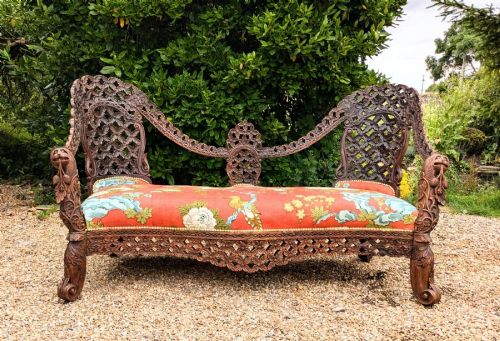
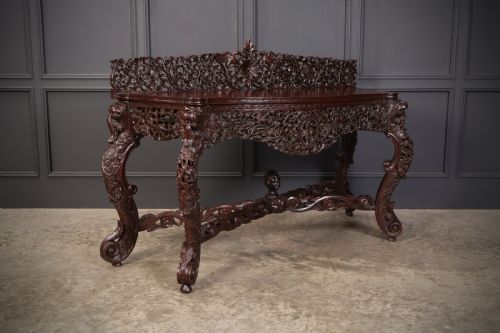


Carved Anglo Indian Sofa
These carved anglo indian sofa pieces combine deep tropical timber with intricate pierced foliage, bringing colonial craftsmanship directly into a modern drawing room.
Carved Anglo Indian Sofa
A carved anglo indian sofa represents a distinct intersection of British colonial comfort and traditional South Asian woodworking techniques. These seating pieces emerge primarily from the nineteenth century, spanning eras from the Victorian period down to specific decades like eighteen eighty and eighteen ninety. The forms range from grand scroll back benches and daybeds to multi-piece suites comprising settees and armchairs.
The version most commonly met on this page is the nineteenth-century hardwood sofa or settee, frequently displaying heavy floral or scroll carving. Alongside traditional sofas, related seating forms such as caned settees and porcupine sofas appear within the wider colonial category. These items reflect a historical dialogue between British domestic requirements and indigenous Indian or Ceylonese craftsmanship.
Materials and construction
Makers utilised dense tropical timbers native to the region, relying predominantly on teak, padauk, rosewood, and ebony for structural integrity and deep relief carving. These hardwoods allowed artisans to execute extraordinarily crisp, undercut foliage and figurative motifs without splintering. Surfaces were often left with a rich natural polish to emphasise the varied grain of the timber.
Seating areas frequently incorporated woven cane or supportive upholstery layers to suit warmer climates. Caning provided breathability, while subsidiary elements sometimes integrated exotic alternatives like porcupine quill work on specific decorative surfaces.
Some nineteenth-century makers let porcupine quills moonlight as decorative furniture accents.
Judging quality in colonial seating
The highest tier of these pieces reveals itself in the depth, crispness, and continuity of the carving across the hardwood frame. Superior examples demonstrate a careful balance between structural proportion and ornamental foliage, where every scroll and motif appears purposeful rather than crowded. The density and selection of the timber, particularly choice rosewood or padauk, further distinguish finer workshop output.
Construction methods and the preservation of original surfaces also dictate standing. Pieces that retain their historic cane work or integrated joinery without excessive modern intervention command greater respect among collectors of colonial furniture.
The Carved Anglo Indian Sofa Glossary
- Padauk
- A heavy, durable tropical hardwood with a reddish-brown hue that darkens with age, frequently utilised in nineteenth-century colonial furniture. It accepts fine, intricate carving exceptionally well.
- Caning
- A seating technique employing woven rattan strips to create a resilient, breathable mesh panel. This method proved essential for comfort in tropical colonial climates.
- Scroll back
- A distinct furniture profile where the upper rail or arms curve outward and backward in a continuous, graceful scroll. This contour is typical of nineteenth-century seating.
- Ceylonese
- Pertaining to colonial furniture originating from Ceylon, known for specific regional timber choices and decorative vocabulary. It shares stylistic roots with broader Anglo-Indian production.
Carved Anglo Indian Sofa: Frequently Asked Questions
How do I care for a hardwood colonial sofa?
Maintain a stable room humidity to prevent the dense tropical timber from drying out or splitting over time. Apply a microcrystalline wax sparingly to nourish the wood surface without building up excessive residue.
Protect the piece from direct sunlight to preserve the natural tone of the rosewood or padauk. Regular dusting with a soft, dry cloth keeps the deep relief carving free from particulate accumulation.
Are these sofas comfortable for daily use?
Many examples feature deep seats and inclined scroll backs designed for relaxed lounging in colonial climates. Caned panels provide a flexible, yielding surface that adapts well to the sitter.
Upholstered variants depend on the internal webbing and padding condition, which may require professional restoration for heavy modern usage. Adding appropriate loose cushions can significantly improve daily seating comfort.
How do I identify a nineteenth-century piece?
Examine the construction joints, tool marks, and the specific density of the timber used in the frame. Nineteenth-century examples often display hand-cut joinery and deep, asymmetrical carving styles characteristic of colonial workshops.
Compare the silhouette against documented forms from the eighteen-eighties and eighteen-nineties to confirm stylistic alignment. The presence of aged patina on the rosewood or padauk further corroborates nineteenth-century origins.
What is a porcupine sofa?
A porcupine sofa is a specialised colonial seating form that incorporates distinctive decorative elements into its wooden framework. These pieces occasionally feature intricate inlay or quill-work motifs derived from regional Ceylonese traditions.
They stand apart from standard carved settees through their unique surface ornamentation and uncommon structural detailing. Collectors prize them for their distinct regional identity within nineteenth-century production.