
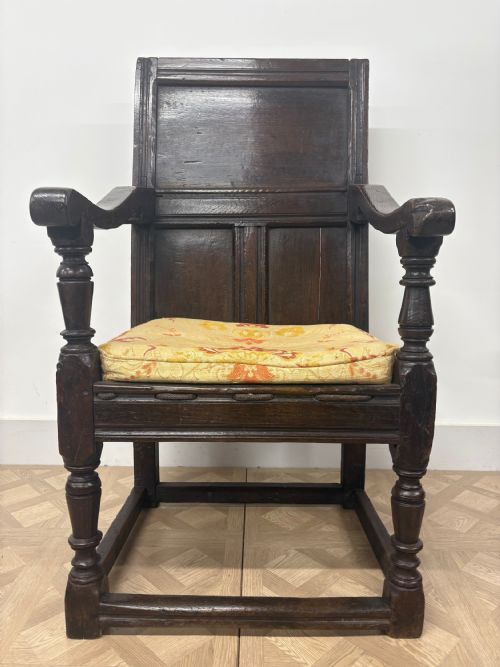
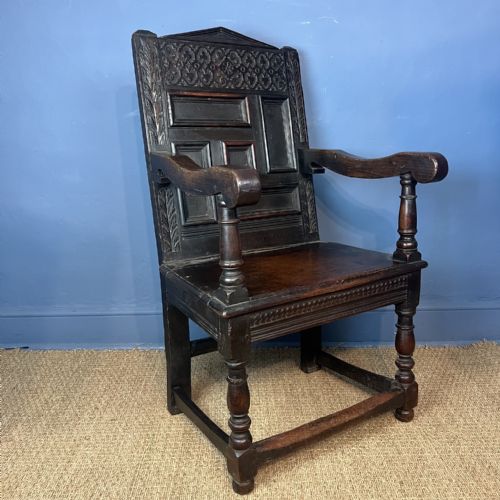


Carolean Wainscot Chair
A carolean wainscot chair brings heavy timber framing and carved back panels straight into a room.
Carolean Wainscot Chair
A carolean wainscot chair is a sturdy timber seating piece built primarily from solid oak during the seventeenth and early eighteenth centuries. These items appear as armchairs and side chairs, often originating from English regional workshops such as the West Country or Lancashire.
The form relies on solid wooden construction rather than upholstery, featuring panelled backs that echo the wall panelling of the period. Buyers most frequently encounter seventeenth-century and early eighteenth-century examples that combine Jacobean heaviness with Charles II carving details.
Regional variations emerge across the listed pieces, ranging from simple joined construction to elaborately carved surfaces. Surviving examples demonstrate the transition from strict seventeenth-century joinery into the later transitional forms of seventeen hundred.
How they were made
Makers utilised solid oak throughout the construction of each carolean wainscot chair, selecting dense timber for both structural frames and decorative panels. Joinery methods relied on traditional mortise and tenon joints secured with wooden pegs rather than metal fastenings.
Carvers decorated the wooden surfaces using hand chisels to create low-relief patterns on the back panels and framing members. The natural grain of the solid oak received hand-finishing rather than heavy modern varnishes.
Listings span seventeenth-century, eighteenth-century, and seventeen-hundred periods, utilising solid oak exclusively.
What varies in quality
Depth and crispness of the hand carving separate standard regional joinery from exceptional workshop output. The complexity of the carved back panel determines the visual weight and sophistication of the piece.
Proportion and timber selection dictate the overall integrity of each chair. Solid oak with consistent grain structure and minimal later timber replacement maintains higher authenticity than examples with extensive structural rebuilding.
The Carolean Wainscot Chair Glossary
- Wainscot chair
- A wooden armchair or side chair constructed with a panelled back, derived from domestic wall panelling. This form represents heavy seventeenth-century joinery traditions.
- Oak
- A dense hardwood utilised extensively in English furniture making for its strength and durability. Solid oak forms the primary material across these seventeenth and eighteenth-century listings.
- Joinery
- The method of connecting pieces of wood using traditional woodworking joints without metal nails. Pegged mortise and tenon joints hold these seventeenth-century frames together.
- Charles II
- The period of the English monarchy spanning the mid to late seventeenth century, associated with the Carolean style of decorative arts. Furniture from this era often displays lively carved enrichment upon solid timber structures.
Carolean Wainscot Chair: Frequently Asked Questions
What is a carolean wainscot chair?
A carolean wainscot chair is a heavy wooden seating piece constructed from solid oak with a panelled back. These chairs date primarily from the seventeenth and early eighteenth centuries.
Makers built them using traditional joinery and hand carving, resulting in sturdy armchairs and side chairs designed for formal domestic spaces.
How were these chairs used?
These chairs served as principal seating in seventeenth-century households, often positioned at the head of a table or within panelled rooms. Their solid construction and imposing height marked the status of the owner.
Unlike later upholstered seating, they relied on cushions for comfort while displaying the wealth and taste of the household through carved decoration.
How do I date a wainscot chair?
Dating relies on examining the construction methods, timber patination, and stylistic carvings found across the frame. Seventeenth-century examples display pegged joints and regional joinery traits.
Later pieces from around seventeen hundred incorporate transitional design elements that distinguish them from earlier Jacobean and Charles II productions.
Are these chairs comfortable?
Original wainscot chairs feature rigid wooden seats and upright panelled backs built for posture rather than lounging. Historic households typically added loose fabric cushions to soften the wooden surface.
Living with one today involves appreciating the architectural presence and historic joinery rather than expecting modern ergonomic padding.