

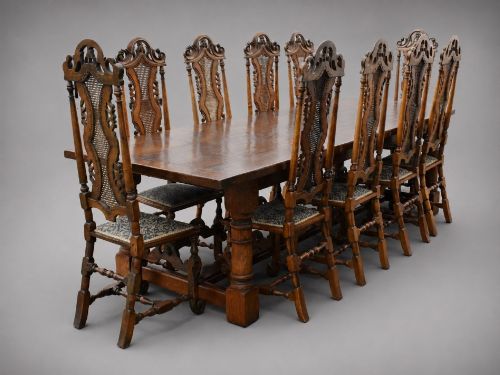
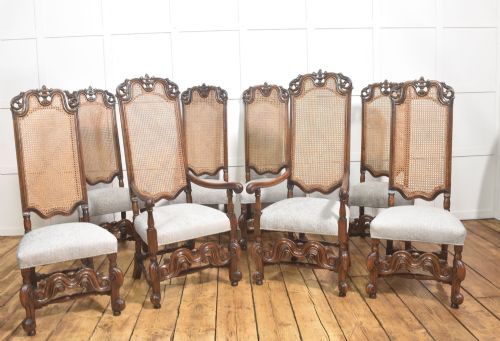
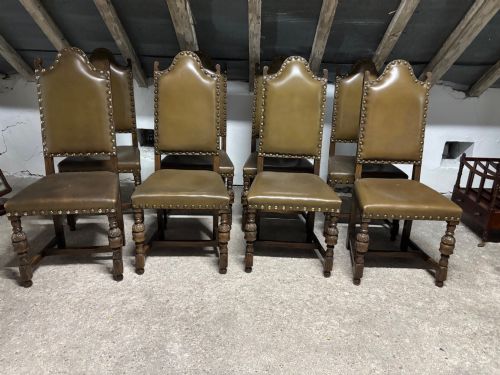
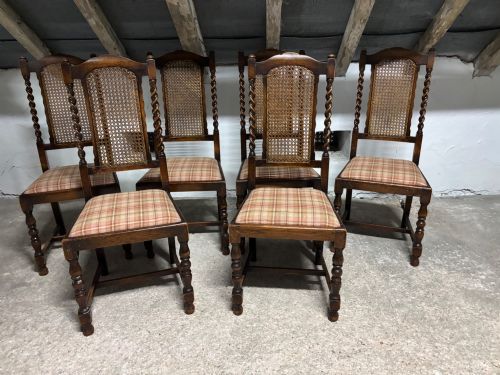




Carolean Style Chair
A carolean style chair brings seventeenth-century drama to any room, offering high backs, rich carving, and generous upholstery.
What a Carolean Style Chair Is
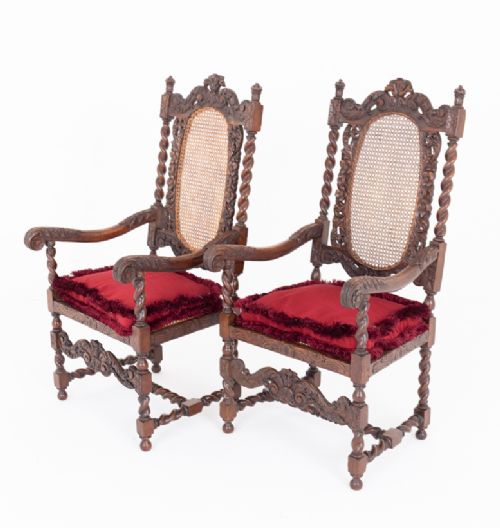
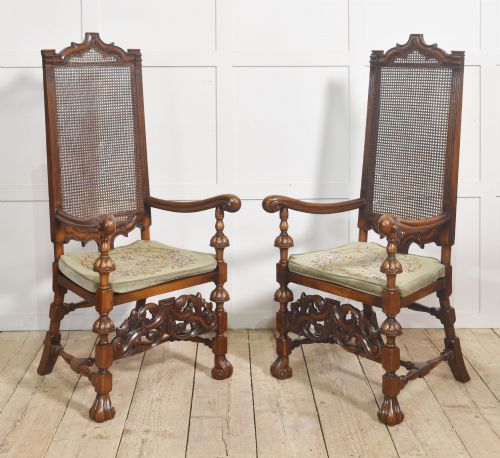
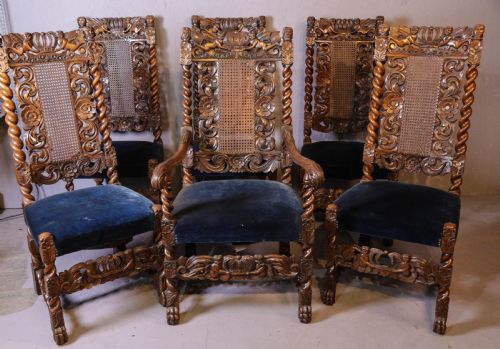
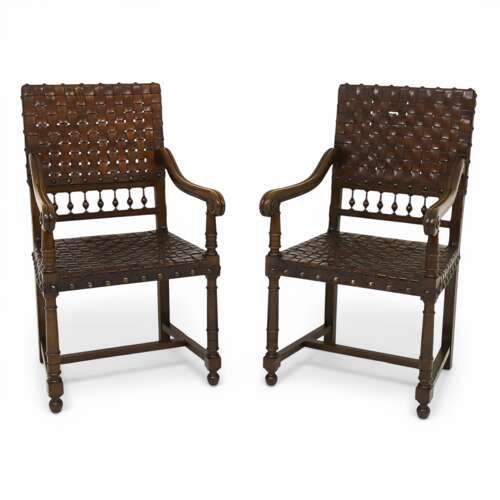
Makers working during the Victorian revival periods and the 1920s drew inspiration from seventeenth-century originals, creating dining chairs, throne chairs, and side chairs. These pieces reproduce the grand proportions and elaborate outlines associated with the Restoration era.
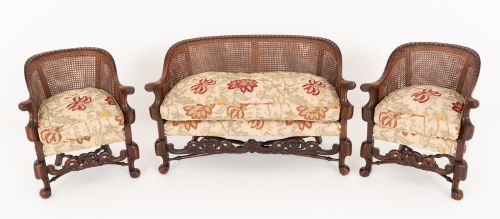
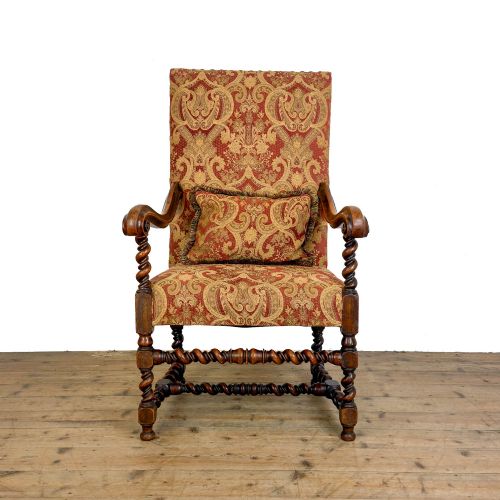
Buyers encounter walnut and oak frames paired with cane panels, paint, or textile upholstery such as damask and needlepoint. Such seating combines decorative woodwork with comfortable support for daily use.

What Varies in Quality
The depth and crispness of the wood carving distinguish exceptional examples from simpler production. Superior pieces exhibit deeply undercut foliage, scrolls, and figures that retain sharp definition across arms, legs, and stretchers.
Choice of materials dictates the standing of a chair, with figured walnut and dense quarter-sawn oak representing the upper tier of construction. The quality of the original or period upholstery, whether intricate needlepoint or heavy damask, further elevates the piece.
Retail Price Guide 2026
Typical UK retail prices for carolean style chair, calculated from the Sellingantiques database of over a million retail prices indexed since 2003. This retail price guide relies exclusively on Sellingantiques data; no external sources or auction records are used, so the figures do not describe the wider market.
One exceptional listing includes built-in steps, proving that seventeenth-century style and library practicality occasionally share a frame.
The Carolean Style Chair Glossary
- Carolean Revival
- A nineteenth-century and early twentieth-century movement reviving seventeenth-century design motifs. Makers during this time produced heavily carved oak and walnut seating.
- High Back Chair
- A seating form featuring an elongated backrest that often extends above the sitter's head. These chairs emphasise vertical proportions and ornate crest rails.
- Cane
- Woven plant material used to form back panels or seats. This technique provides a light, flexible surface within a solid timber frame.
- Needlepoint
- Stitched textile work executed on canvas, commonly utilised as upholstery on period armchairs. It introduces coloured patterns and tactile texture to the seat.
- Stretcher
- A horizontal timber brace connecting the legs of a chair for added structural rigidity. Carolean designs frequently incorporate elaborately carved front stretchers.
Frequently Asked Questions
How do I identify a revival piece?
Revival pieces display nineteenth-century or early twentieth-century manufacturing techniques beneath the seventeenth-century styling.
Examine the timber condition, tool marks, and assembly methods to determine the actual age of the frame.
Where should I place a high back chair?
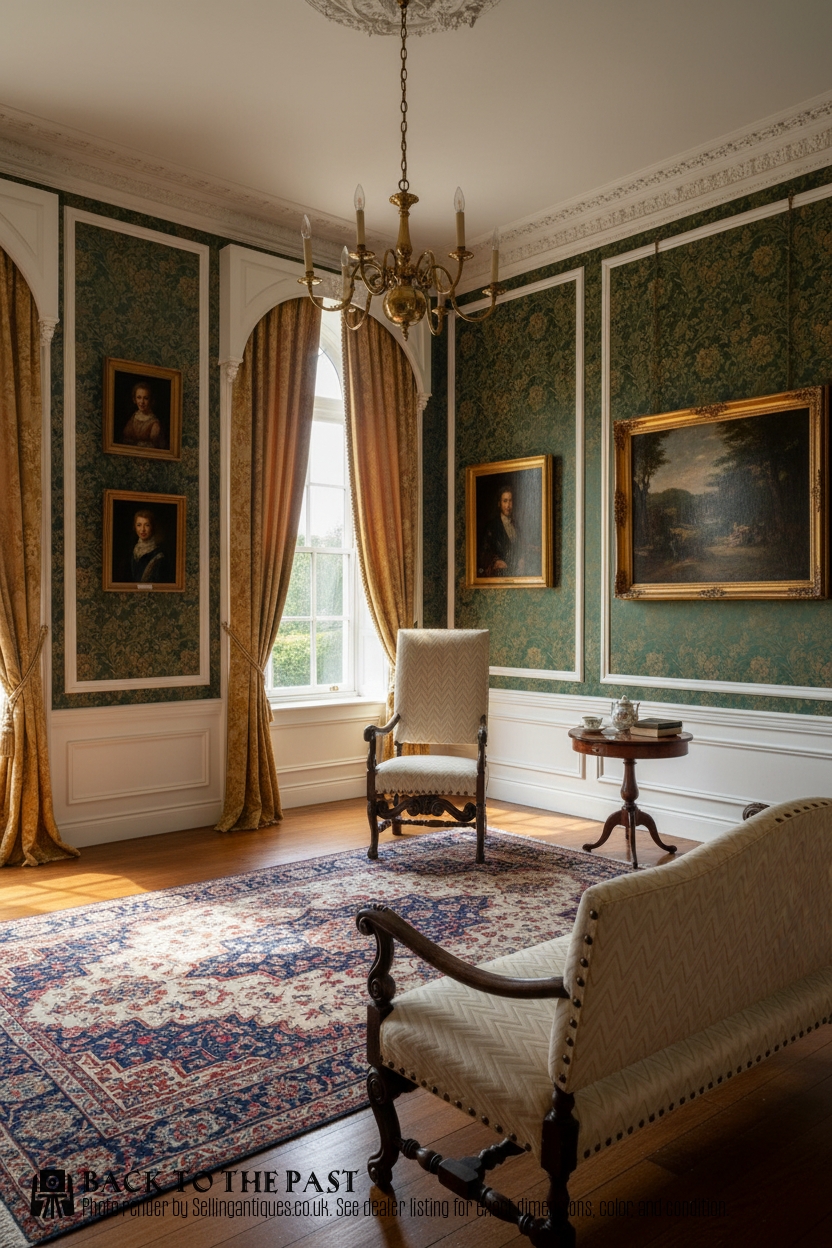
High back chairs suit corners, hallways, or reception rooms where their vertical proportions command attention.
Ensure adequate ceiling clearance and visual space around the piece to let the carved crest rail stand out.
Are these chairs comfortable for daily use?
Many examples provide upright support through padded seats and upholstered backrests.
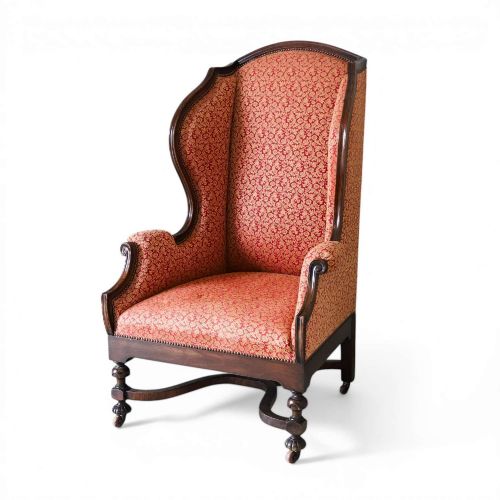
Armchairs and wing back versions offer more relaxed seating compared to rigid side or hall chairs.
How do I care for cane panels?
Cane requires moderate humidity to prevent the plant material from drying out and snapping.
Clean the weave gently with a damp cloth and avoid placing the chair near direct heat sources.