




Carolean Carved Armchair
A carolean carved armchair brings seventeenth-century presence into a room through deep relief work and sturdy timber framing.
Carolean Carved Armchair
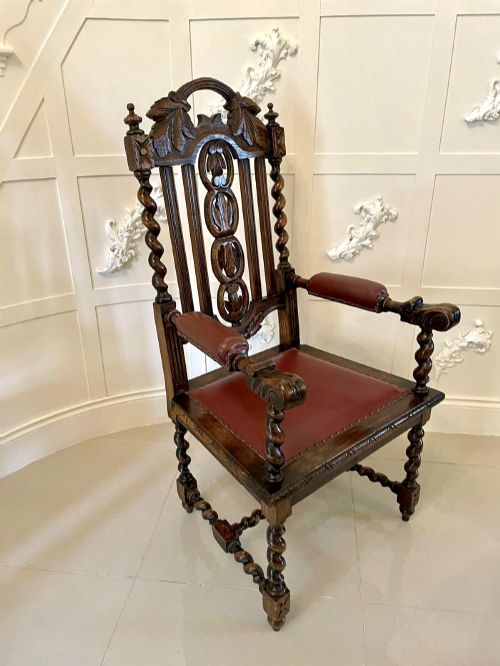
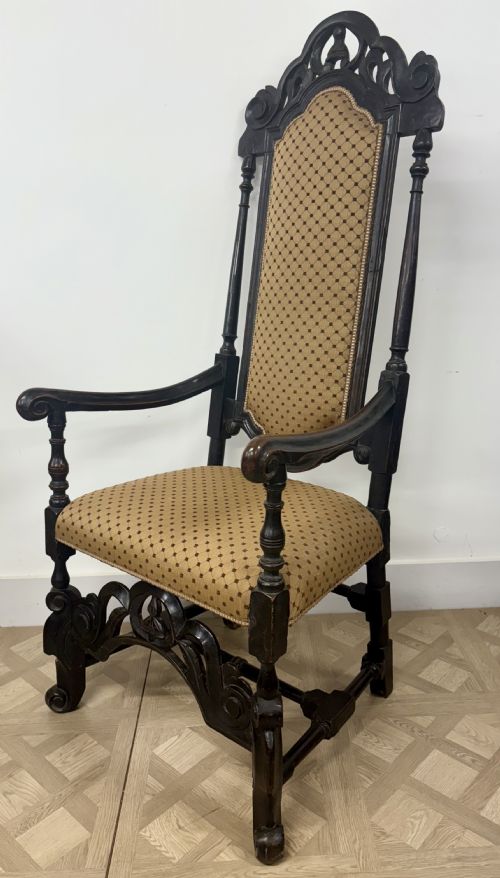
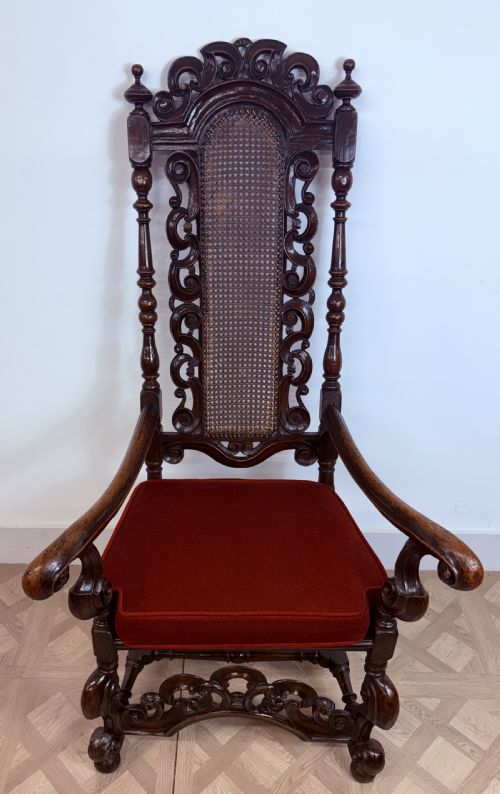
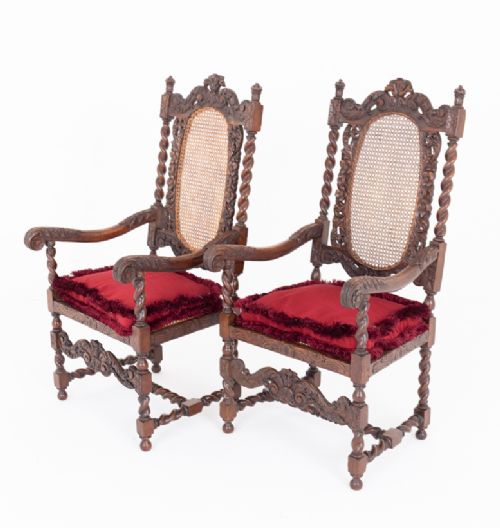
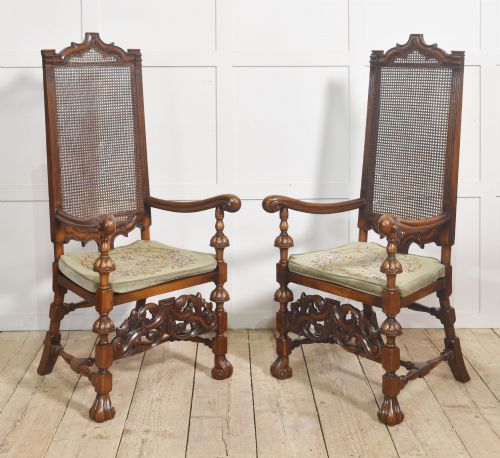
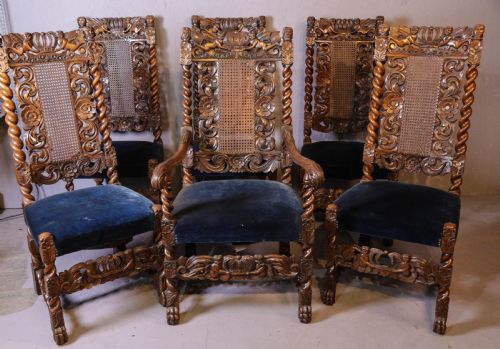
A carolean carved armchair is a substantial seat defined by high backs, scrolling armrests, and ornate woodwork originating in the seventeenth century or recreated during later revival periods. Buyers encounter original seventeenth-century examples alongside nineteenth-century and early twentieth-century revival pieces produced in oak and walnut.
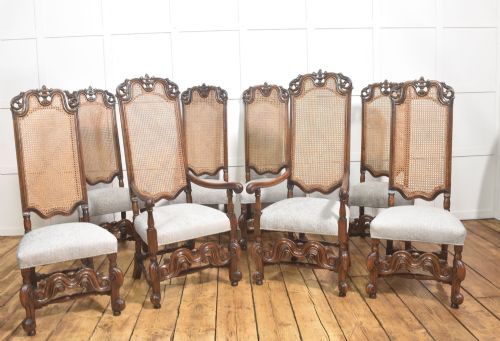
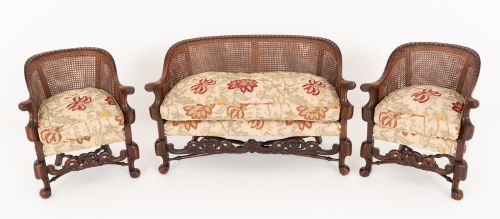
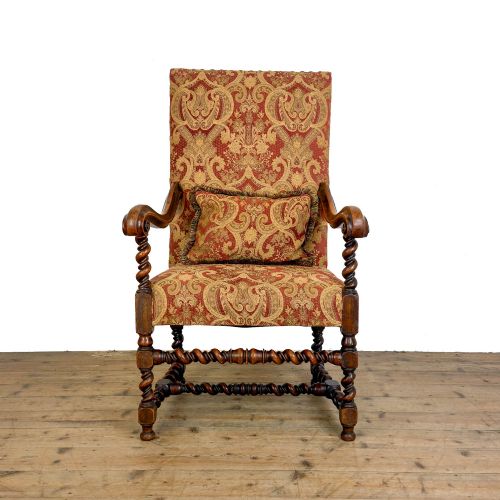
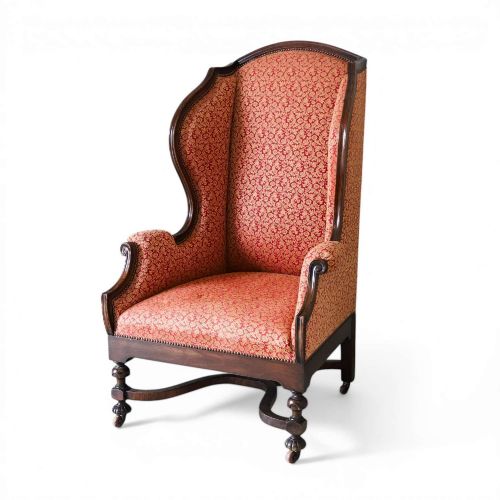
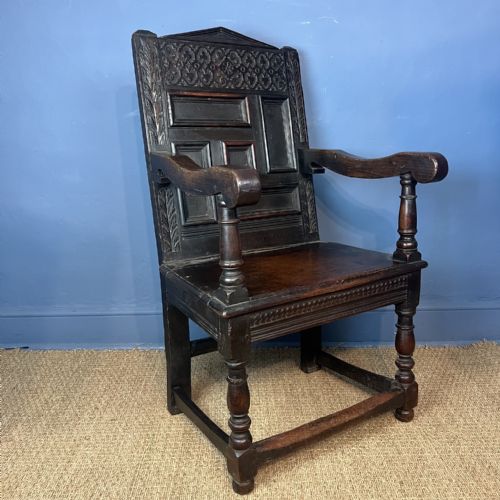
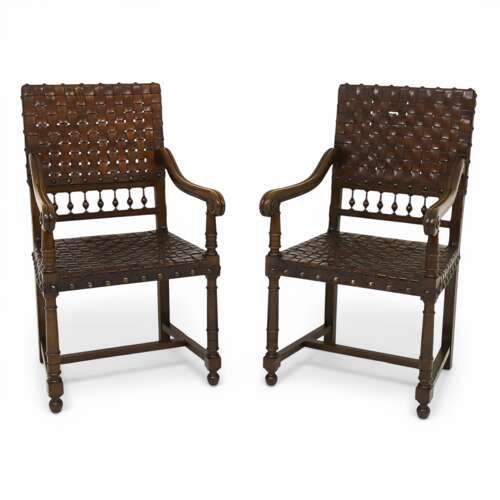
The forms span from high-backed dining chairs and elbow chairs to grand throne chairs, wainscot chairs, and bergere suites. Many feature cane panels to the back and seat, while others incorporate leather, velvet, or woven upholstery fabric.
Original pieces date back to the 1660s through the reign of Charles II, whereas revival iterations emerge across the Victorian era and into the 1920s. These later interpretations adopt the heavy carving and scrollwork of the original Carolean and Jacobean styles for contemporary domestic use.
Materials and Construction
Makers built these chairs using sturdy timbers such as oak and walnut, joined with traditional framing techniques to support the heavy loads of high backs and throne structures. Woodwork surfaces received deep chisel and gouge carving, producing scrolls, foliage, and cresting rails.
Cane work provided a resilient, flexible surface for backs and seats, woven through drilled frames on both seventeenth-century originals and revival pieces. Where cane was omitted, craftspeople utilised brass tacks to secure leather, velvet, and upholstery fabric to the wooden foundation.
Recorded forms include child highchairs on stands, dining sets of eight, wing armchairs, and monumental throne chairs.
Craftsmanship and Integrity
The depth and crispness of the chisel work distinguish master carvers from routine production, separating fluid, undercut foliage from shallow, mechanical incisions. Timber selection also dictates grade, with dense-grained walnut and figured oak holding sharp carved edges far better than softer woods.
Structural preservation governs the standing of older examples, particularly the survival of original joinery beneath later surface coats and the intact state of woven cane panels. Period consistency between the frame timber, the carving style, and secondary elements indicates a cohesive piece rather than a composite assembly.
The Carolean Carved Armchair Glossary
- Carolean
- Pertaining to the reign of Charles II, spanning from 1660 to 1685, characterised by lavish wood carving and ornate scrollwork. This aesthetic resurfaced heavily during nineteenth and twentieth-century revivals.
- Cane
- Strips of rattan or peeled bamboo woven into an open mesh pattern for chair backs and seats. It offers lightweight flexibility while displaying intricate geometric designs.
- Wainscot
- An early wooden chair type constructed from joined oak panels with solid panel backs and box frames. These heavy seats pre-date the lighter upholstered fashions of the late seventeenth century.
- Elbow chair
- An armchair featuring wooden armrests attached to the main uprights, often designed for library or dining use. These frames sit lower and wider than high-backed throne variants.
- Scroll arm
- An armrest curved outward or downward into a tight circular volute. This feature is typical of seventeenth-century seating and its later revivals.
Carolean Carved Armchair: Frequently Asked Questions
How do I spot a seventeenth-century original?
Original pieces display authentic tool marks, oxidation of the timber beneath the surface, and traditional joinery methods appropriate for the 1660 to 1700 window. Close inspection of peg holes and wear patterns reveals age that modern machinery cannot replicate.
Revival pieces from the Victorian era and the 1920s often use machine-cut components or feature timber finishes that lack the deep patina accumulated over centuries of handling.
Where were these chairs placed historically?
Stately homes and grand townhouses utilised heavy throne and wainscot chairs as symbols of authority at the head of long tables or in reception halls. Smaller elbow chairs and dining sets populated parlours and libraries where residents entertained guests.
Today, buyers place them as focal points in studies, hallways, or living rooms to anchor traditional interior schemes with strong historical character.
Are cane seats strong enough for daily use?
Period and revival cane work is surprisingly resilient when taut and maintained with appropriate humidity levels. However, brittle or sagging cane requires careful weight distribution and professional re-weaving to restore structural integrity.
Many owners use scatter cushions to reduce direct pressure on vintage cane mesh while retaining the visual lightness of the open weave.
What is the difference between Carolean and Jacobean styles?
Jacobean furniture generally references the earlier reign of James I, featuring stiffer, more geometric strapwork and rectangular proportions. Carolean design emerges later in the seventeenth century, introducing flowing scrolls, putti, and exuberant floral carving.
Revival makers frequently blended these two vocabularies, applying seventeenth-century motifs interchangeably across late-nineteenth and early-twentieth-century frames.