



Carolean Barley Twist Chair
A carolean barley twist chair brings robust seventeenth-century presence into a room through deep carving and turned uprights.
Carolean Barley Twist Chair
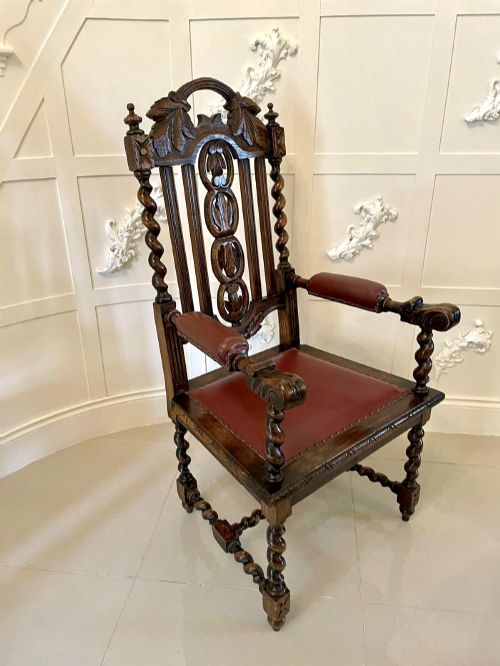
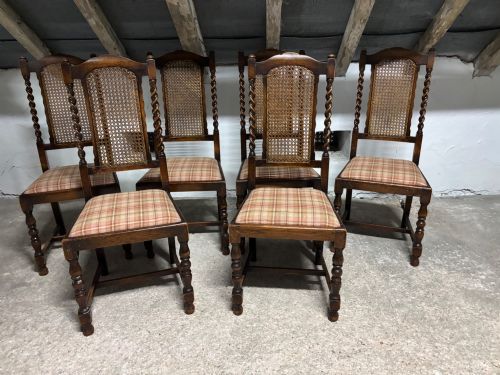
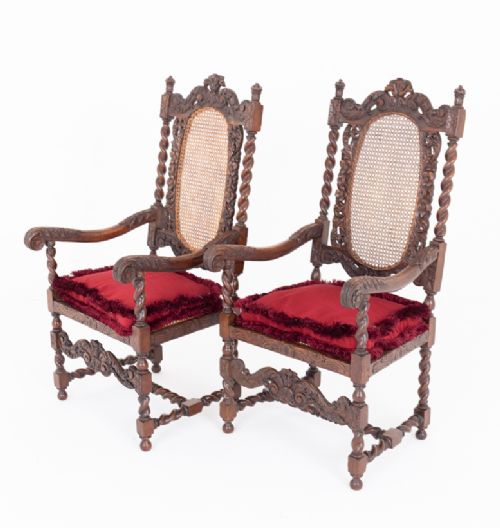
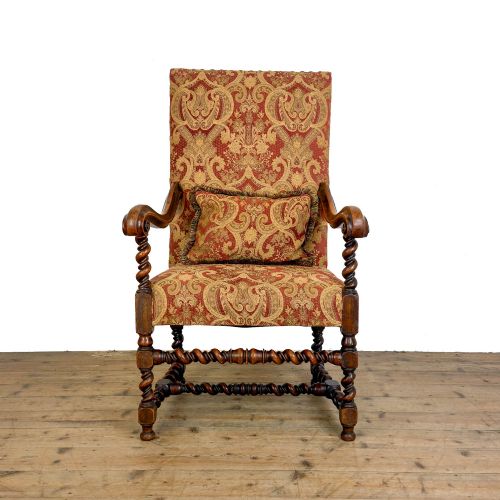
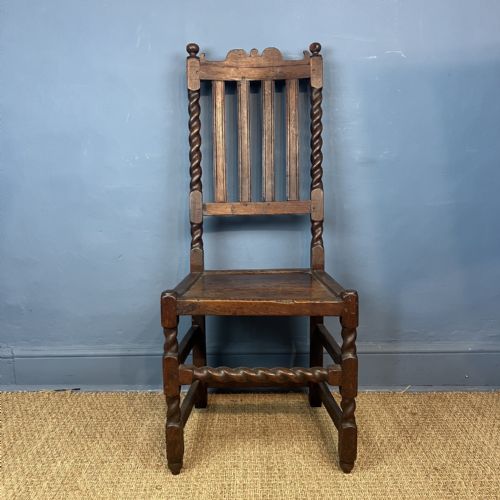
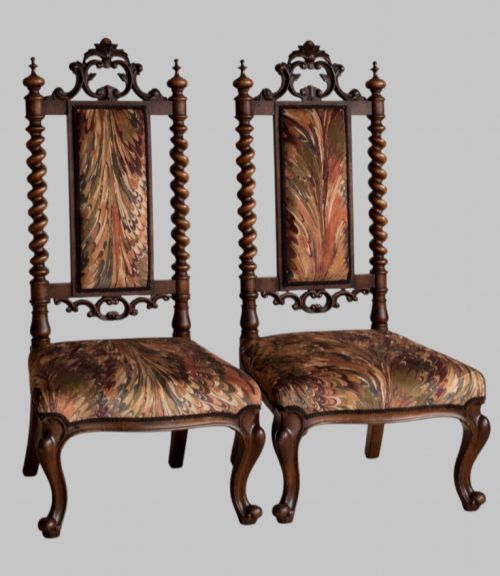
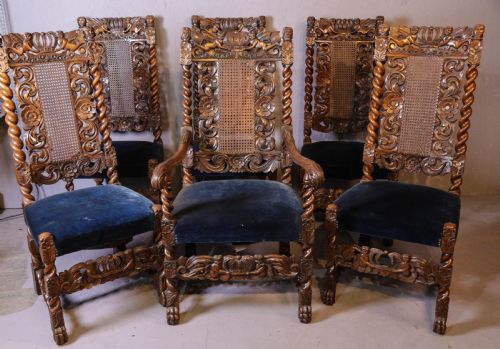
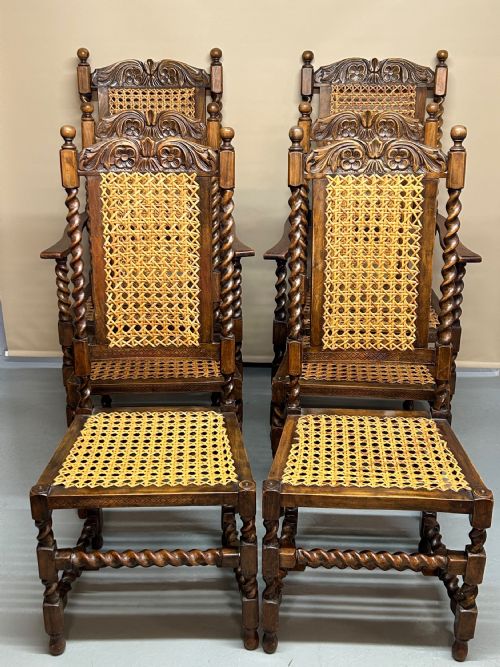
When you search for a carolean barley twist chair, you encounter seating built for formal seventeenth-century interiors alongside revival pieces made during the Victorian era and the early twentieth century. The selection spans sturdy oak and figured walnut frames configured as armchairs, side chairs, dining sets, and even settees. Original seventeenth-century examples sit alongside nineteenth-century revival interpretations that emulate the distinct carved crest rails and spiral turnings.
The physical form relies heavily on upright supports turned in spiral or helical shapes, paired with cane, rattan, fabric, or leather panels. Forms range from simple side chairs to large throne chairs and chair-back settees fitted with brass accents. This combination of turned wood and elaborate carving defines the aesthetic across all recorded periods.
Assessing quality
The distinction between tiers of quality rests on the depth and crispness of the hand carving on the crest rails and front stretchers. Superior examples exhibit sharp, undercut foliage and figures, whereas lesser pieces display shallow, machine-cut or blunt detailing.
Timber selection and structural integrity also dictate standard. Dense, well-figured walnut and heavy quartersawn oak command greater respect than plain, soft secondary woods. Original surfaces and tight, uncompromised joinery separate master workshops from mass-produced revival output.
Frames utilise oak, walnut, laburnum, and bleached oak paired with cane, velvet, leather, and brass.
The Carolean Barley Twist Chair Glossary
- Barley twist
- A type of turning shaped like a spiral, resembling twisted barley sugar. This technique was widely utilised on the legs and stretchers of seventeenth-century and revival furniture.
- Carolean
- Pertaining to the reign of King Charles II, lasting from sixteen-sixty to sixteen-eighty-five. The style is characterised by rich carving, scrolling foliage, and open crowns.
- Cane
- Woven split rattan used for seats and back panels. It provides a resilient, flexible surface that lightens the visual weight of heavy wooden frames.
- Stretcher
- A horizontal wooden rod connecting the legs of a chair to provide structural rigidity. On these chairs, front stretchers frequently mirror the ornate carving of the top crest rail.
- Throne chair
- A large, high-backed armchair designed for a position of authority. These pieces often feature elaborate arm terminals and commanding proportions.
Carolean Barley Twist Chair: Frequently Asked Questions
Are these chairs comfortable to sit on?
Original seventeenth-century and revival chairs were built for posture and formal display rather than lounging. Caned and wooden seats offer firm support, while upholstered examples provide softer seating depending on the padding condition.
Adding loose cushions can improve everyday comfort without altering the historic frame. Most buyers balance daily use against the preservation of delicate cane or antique textiles.
How do I tell an original from a revival?
Distinguishing period pieces from nineteenth-century revivals requires examining tool marks, timber shrinkage, and joinery methods. Seventeenth-century frames show hand-cut peg holes and oxidised oak or walnut surfaces with distinct wear patterns.
Revival pieces from the Victorian era or nineteen-twenty often display machine assistance, standardised turnings, and secondary woods native to later centuries. Comparing the patination and construction details against documented examples clarifies the date.
What is a carolean chair?
A Carolean chair dates from the reign of Charles II and reflects the restoration of the monarchy through lavish decoration. These seats incorporate scrolling wooden frames, crown motifs, and pierced carved crest rails.
The style revived heavily during the Victorian period, producing many dining sets and armchairs that echo these royal motifs.
Can I use these chairs at a dining table?
Dining chairs and sets listed here function well around a dining table provided the seat height matches modern standards. Many nineteenth-century revival sets were built specifically for dining use and offer appropriate proportions.
Care should be taken with fragile cane seats or delicate antique leather during regular meal times. Protective pads can prevent accidental damage while allowing you to enjoy the furniture daily.