

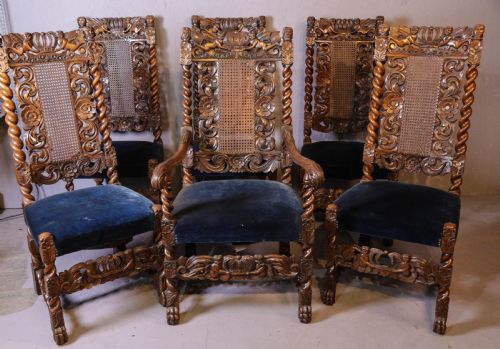


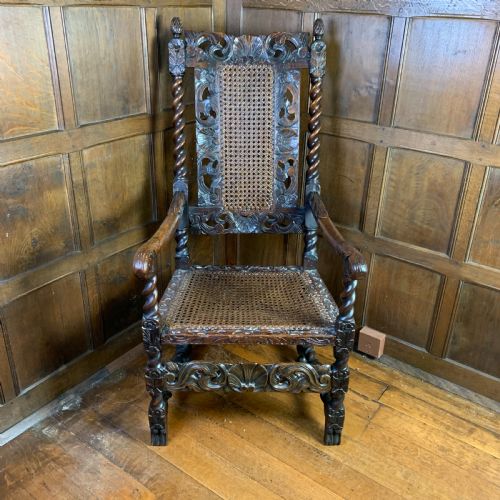


Restoration Caned Armchair
A restoration caned armchair brings robust 17th-century character and woven seating into a room, offering both historic presence and enduring comfort.
Restoration Caned Armchair
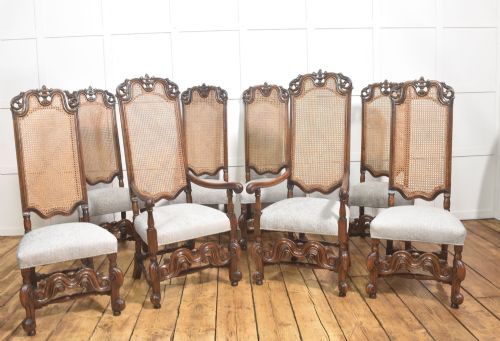
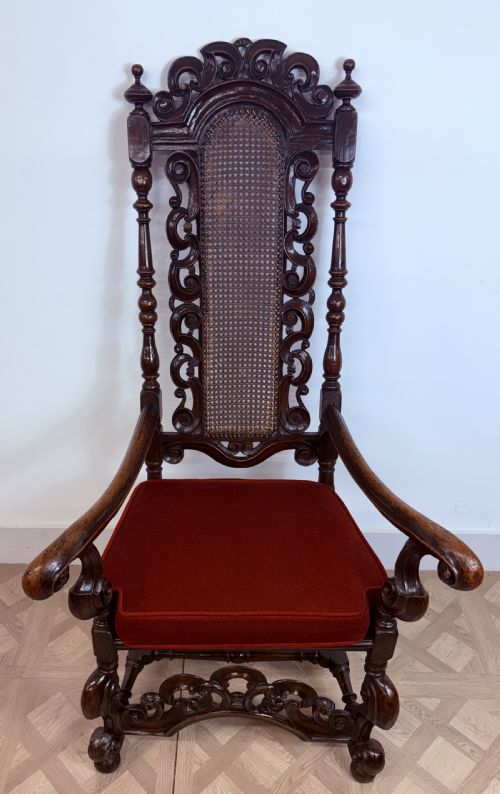
A restoration caned armchair places the buyer in front of substantial seating rooted in seventeenth-century designs, featuring upright proportions and distinctively open woven panels. The items gathered under restoration caned armchair span genuine seventeenth-century examples from the Carolean and Charles II eras alongside later nineteenth-century revivals.
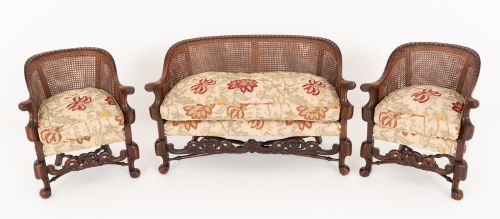
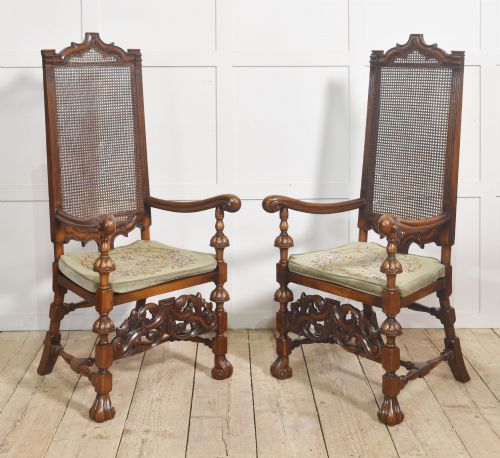
Most pieces encountered on this page display carved timber frames paired with woven cane seats or backrests, often appearing singly or as part of larger dining sets and suites. The forms range from simple farmhouse oak armchairs to heavily carved walnut high-back chairs and grand throne styles.
Origins vary between authentic late seventeenth-century craftsmanship and revival interpretations produced during the Victorian period and early twentieth century. Buyers select these chairs to introduce rich period detail, textured natural materials, and classical silhouettes into traditional or modern interiors.
Materials and construction methods
Makers relied primarily on native timbers, selecting dense walnut and sturdy oak to construct the structural frames of a restoration caned armchair. These woods were chosen for their ability to support intricate hand-carved ornamentation along the crest rails, stiles, and stretcher bases.
The characteristic seating surfaces and back panels utilise woven cane inserted directly into channels or secured through drilled holes within the wooden framework. Artisans completed many examples with supplementary upholstery fabric, tapestry panels, or painted finishes to enhance the decorative scheme.
Throne chairs and heavy dining seats survive to remind us that seventeenth-century household seating doubled as an exercise in royal posture.
Factors that distinguish quality
Quality in a restoration caned armchair rests upon the depth and crispness of the wood carving, distinguishing sharp artisan execution from softer revival mouldings. The proportion of the frame and the tight regularity of the woven cane panels further separate superior examples from standard production.
Material selection also dictates overall merit, with figured walnut frames commanding attention alongside solid oak constructions. The integrity of the structural joints and the harmonious integration of carved scrollwork determine the lasting standing of each piece.
The Restoration Caned Armchair Glossary
- Cane
- Woven material produced from the peeled outer bark of rattan palms. It provides a resilient, breathable surface for chair seats and backs.
- Carolean
- A stylistic period corresponding to the reign of King Charles II. It is defined by exuberant Baroque carvings, scrollwork, and rich textiles.
- Jacobean Revival
- A nineteenth-century movement emulating early seventeenth-century English furniture designs. It emphasises heavy proportions, turned supports, and dark timber.
- Stretcher
- Horizontal wooden bracing connecting the legs of a chair for stability. These components often feature elaborate scroll or turned designs on seventeenth-century seating.
Restoration Caned Armchair: Frequently Asked Questions
How do I spot an original seventeenth-century chair?
Original period pieces display authentic timber ageing, traditional joinery methods such as pegged mortise and tenon joints, and hand-cut carving marks. Closer inspection of the wood reveals natural oxidation and wear patterns consistent with centuries of use.
Revival pieces from the Victorian era or later often utilise more uniform machine production techniques and cleaner wood surfaces. Comparing the structural wear against the stated period helps clarify the true age of the piece.
Are these chairs comfortable for daily sitting?
The supportive upright posture and tensioned woven cane provide a firm, surprisingly comfortable seat. Many examples were designed for formal dining or parlour use rather than lounging, maintaining an upright back support.
Adding a loose cushion can adjust the seating height and softness according to personal preference. The breathable cane surface adapts well to room temperatures during everyday use.
How should I care for the cane panels?
Woven cane benefits from occasional gentle dusting with a soft brush and light moisturising to prevent the natural fibres from becoming brittle. Keeping the chairs away from direct heat sources and excessive moisture preserves the flexibility of the material.
Avoiding heavy weight concentrated on a single spot protects the woven strands from premature snapping. Regular light maintenance ensures the cane remains taut and supportive for years.
What is the difference between Carolean and Jacobean styles?
Carolean design reflects the later seventeenth century under Charles II, showcasing dynamic scrollwork, putti motifs, and open crest rails. Jacobean style points further back to the early seventeenth century, favouring heavier, straighter timber elements and geometric panel carving.
Revival makers often blended these vocabulary elements, creating pieces that borrow heavily from both eras. Examining the specific carving motifs clarifies which stylistic influence dominates the frame.