

Captains Revolving Chair
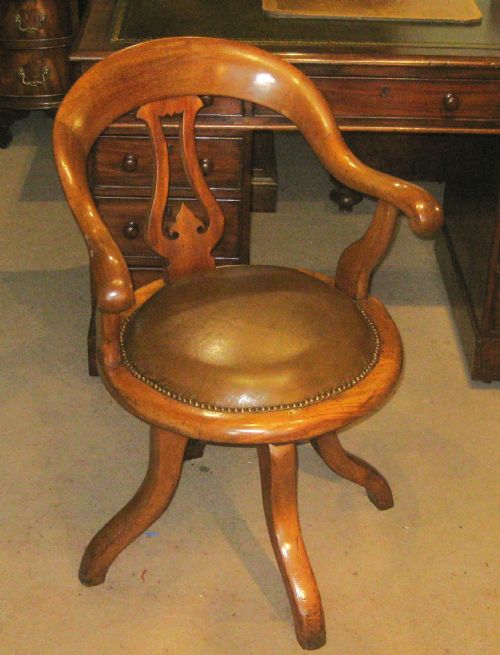
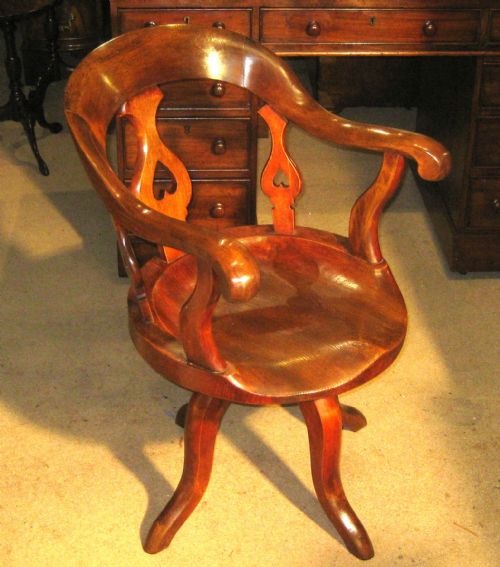
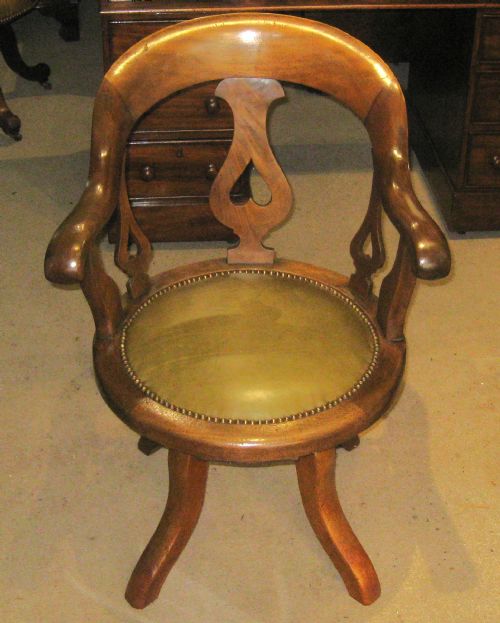
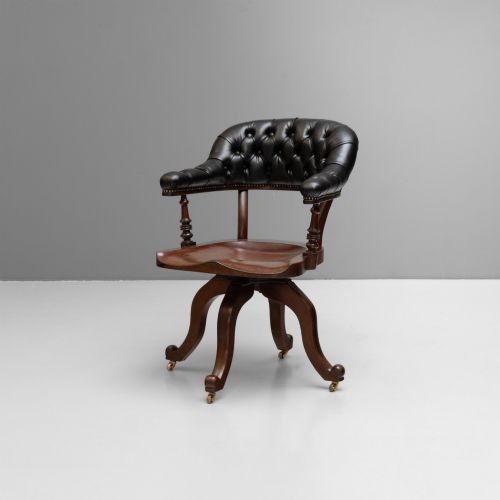
A captains revolving chair brings solid Victorian and Edwardian craftsmanship to the modern desk through sturdy timber and supple leather.
Captains Revolving Chair
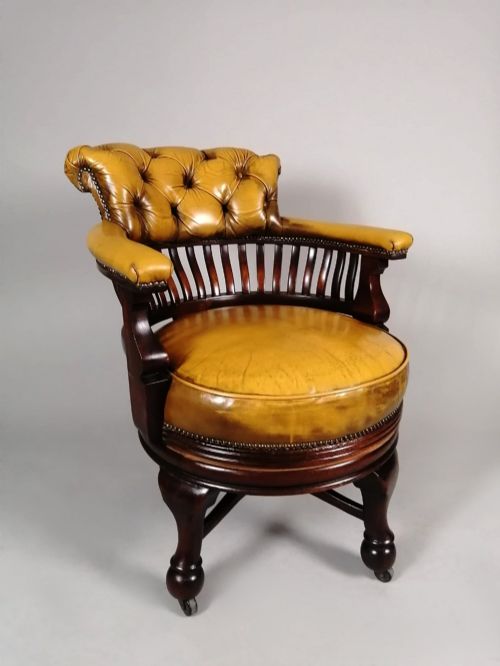
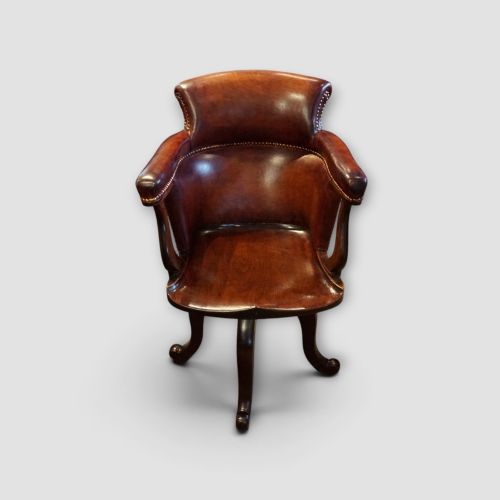
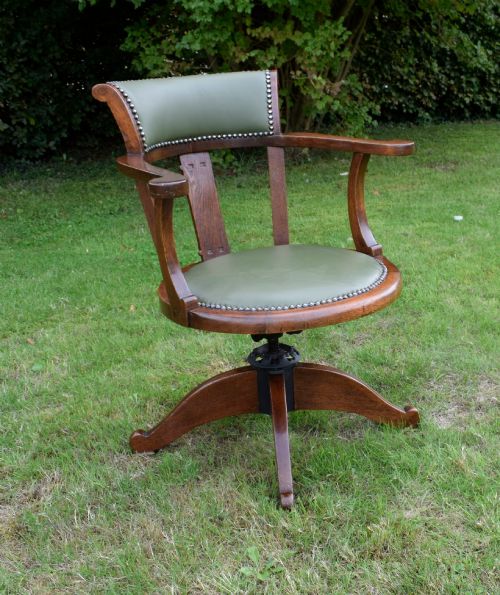
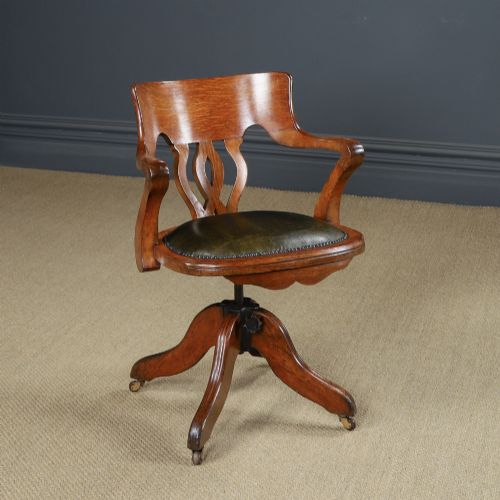
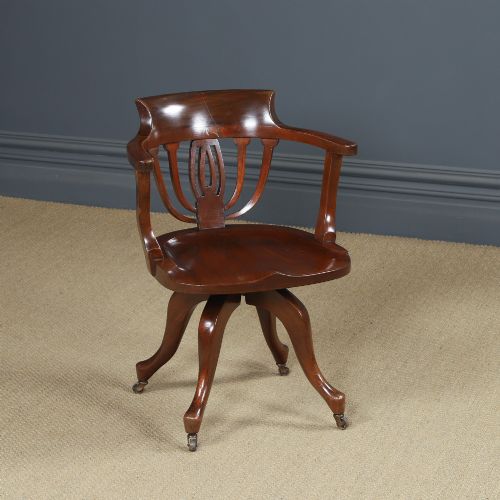
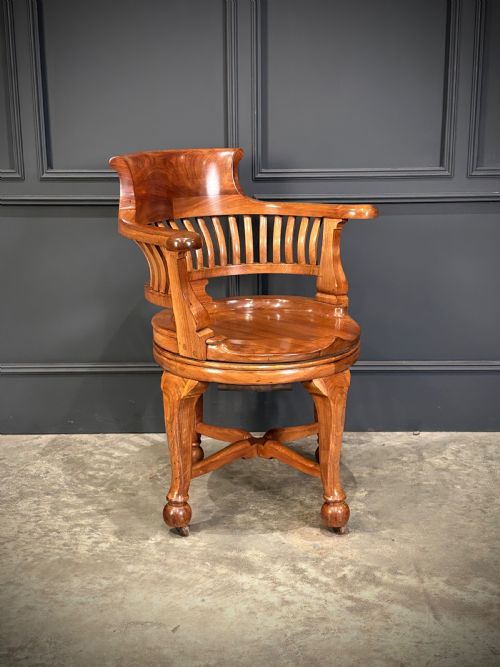
A captains revolving chair is a heavy-duty swivel armchair designed for libraries, offices, and studies during the Victorian and Edwardian periods. These seating forms typically combine a timber frame with a revolving spindle mechanism, allowing the user to turn and tilt at a desk.
Most examples encountered on this page date from the late nineteenth century to the early twentieth century, spanning the Victorian, Edwardian, and Arts and Crafts eras. Forms range from standard desk armchairs to specialised ship chairs and library armchairs constructed in robust hardwoods.
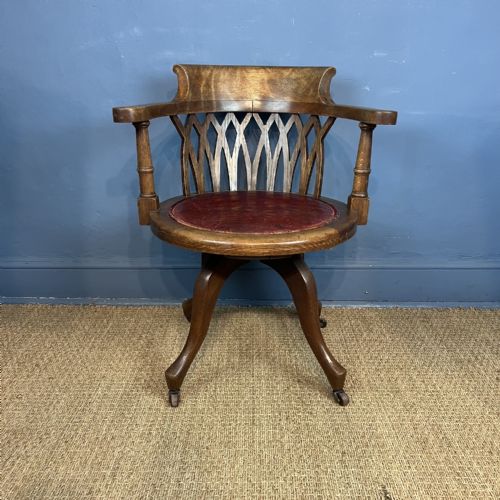
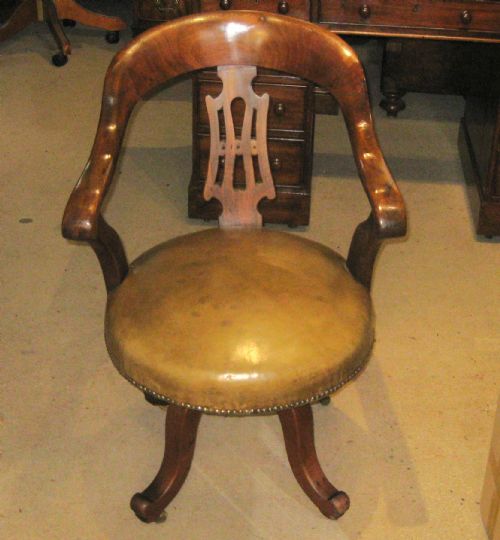
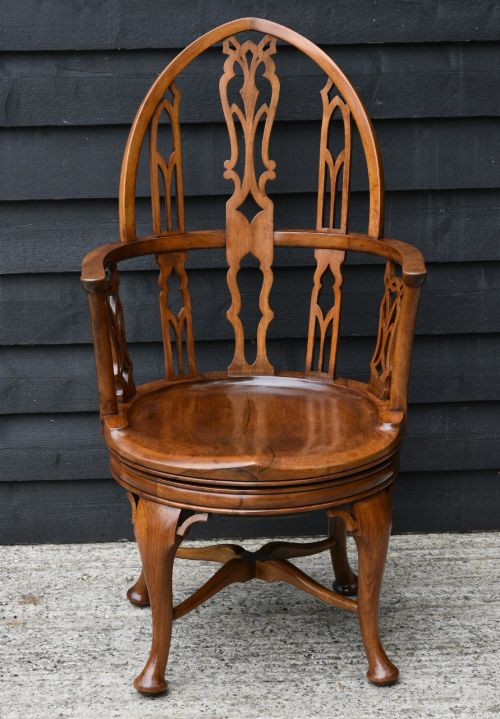
The buyer encounters various configurations, including solid mahogany, oak, and walnut frames paired with leather upholstered seats. Variants incorporate Gothic Revival detailing, ebonised finishes, or bentwood construction alongside standard office desk arrangements.
Materials and Mechanics
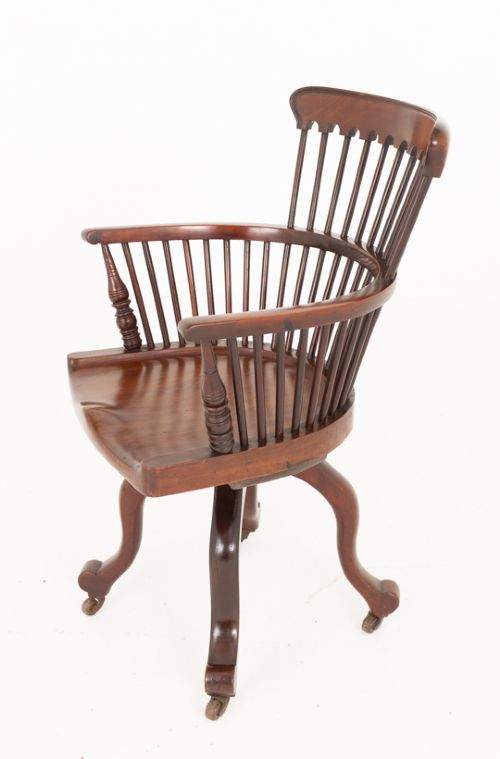
Makers constructed these chairs predominantly from dense hardwoods such as mahogany, oak, and walnut, often selecting rich golden mahogany or dark figured walnut for display pieces. Structural integrity depended on solid timber framing joined by traditional methods to withstand daily twisting and turning.
The swivel mechanism relies on cast iron and brass components, usually featuring a central iron spindle and a wooden or metal spider base with legs. Leather upholstery, secured with brass tacks, covers padded seats and curved armrests designed for prolonged working hours.
Several heavy oak chairs served out their days aboard ocean liners before reaching dry land.
Craftsmanship and Construction
Quality in a captains revolving chair rests upon the substance of the timber frame and the complexity of the carving or joinery. Heavy, solid mahogany or quarter-sawn oak frames with deep mouldings and integral arm supports represent superior workshop production compared to simpler utility models.
The sophistication of the swivel and tilt mechanism dictates the standard of the piece. Robust iron and brass assemblies that operate smoothly without excessive wobble separate standard commercial office seating from finer library armchairs made by recognised makers.
Kendrick & Jefferson·Alfred Allen·Shannon Company·P & O·Shoolbred
The Captains Revolving Chair Glossary
- Swivel
- A mechanism allowing the chair to rotate fully on its base. This relies on an internal iron spindle and threaded column.
- Mahogany
- A durable tropical hardwood prized for its deep reddish-brown colour and fine grain. It forms the primary material for many Victorian desk chairs.
- Gothic Revival
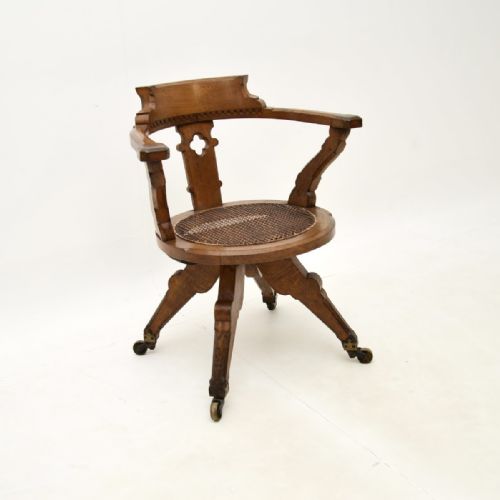
- A nineteenth-century design style incorporating medieval architectural motifs, pointed arches, and heavy carved tracery. Pieces in this style often feature robust oak framing.
- Aesthetic Movement
- A late Victorian design style emphasising artistic value and simplicity over heavy historic ornamentation. Walnut pieces from this era display clean lines and subtle decorative details.
- Bergere
- A type of chair featuring woven cane panels on the back or sides. Oak examples from the early twentieth century occasionally use this airy paneling.
Captains Revolving Chair: Frequently Asked Questions
What is a captains revolving chair?
A captains revolving chair is a sturdy office or library armchair mounted on a swivel base, designed for turning and tilting at a desk.
These pieces date predominantly from the Victorian and Edwardian periods, utilising heavy hardwoods and leather upholstery.
How do I identify a Victorian desk chair?
Victorian desk chairs are identified by dense timber frames, typically in mahogany or oak, combined with heavy cast iron and brass swivel mechanisms.
Stylistic markers such as Gothic Revival carvings or Aesthetic Movement lines help pinpoint the exact era of production.
Are these chairs comfortable for daily work?
These chairs were built for prolonged administrative use, featuring supportive curved armrests and padded leather seats.
The adjustable height and tilting mechanisms found on many Edwardian and late Victorian examples add to their practical comfort.
What woods were commonly used?
Makers relied heavily on dense hardwoods including mahogany, oak, and walnut to ensure the frame could support the twisting motion of the swivel.
Finer models utilised golden mahogany or figured walnut, while utility office chairs often employed standard oak or beech.