






Canvas Seascape Artwork
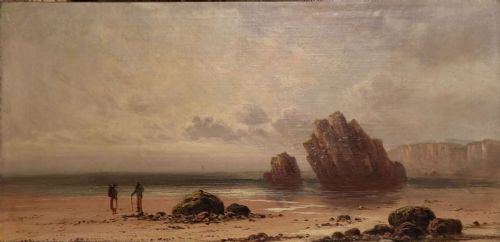
Canvas seascape artwork captures the movement of open water and coastal air through oil paint and wood frames.
Canvas Seascape Artwork
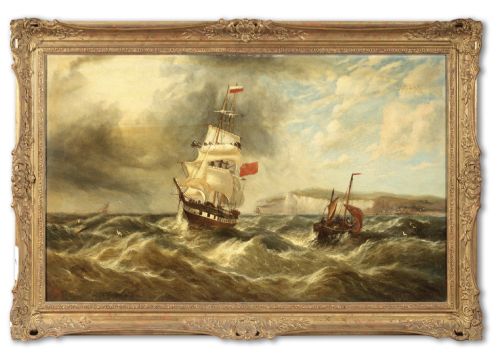
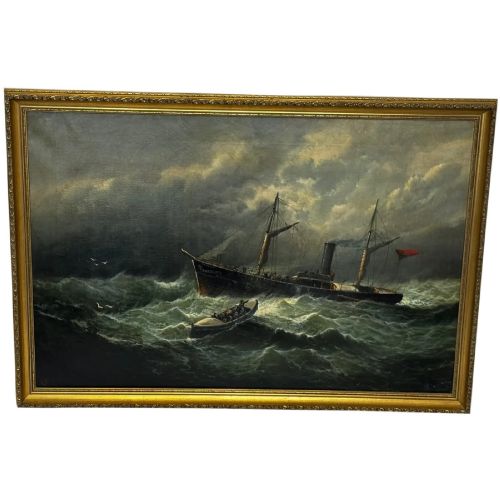
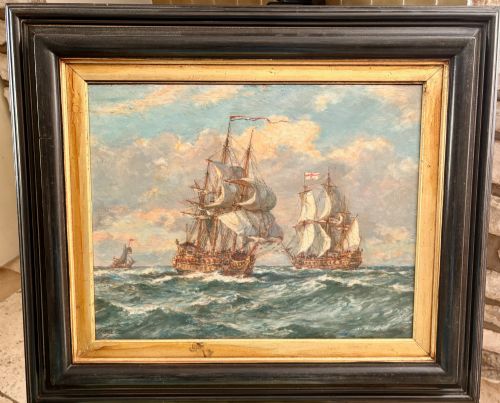
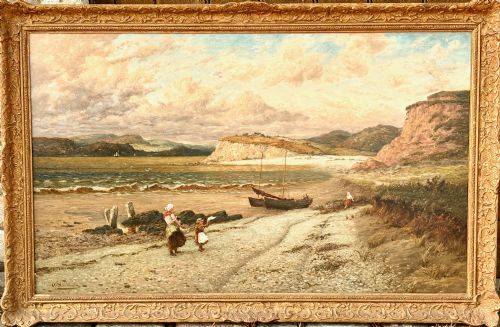
Canvas seascape artwork encompasses maritime scenes, coastal views, and harbour paintings executed primarily in oil on canvas or board. These works range from nineteenth-century Victorian marine art depicting ships in heavy seas to mid-twentieth-century coastal landscapes.
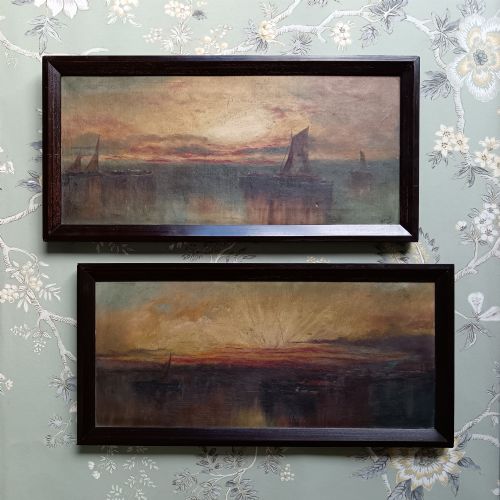
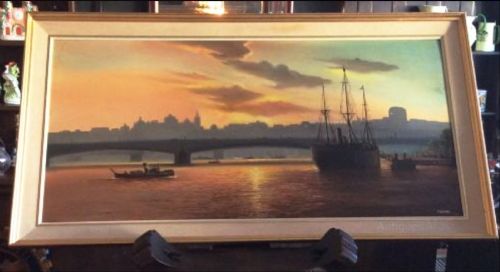
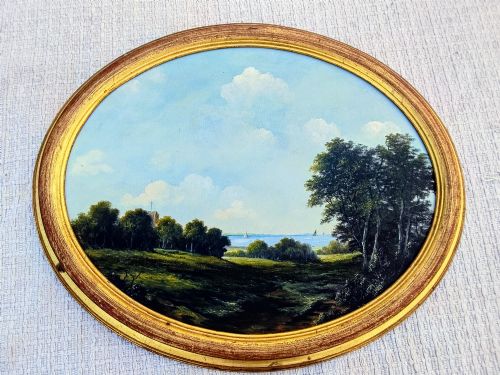
The pieces on this page are most commonly Victorian and Edwardian oil paintings, alongside mid-century interpretations of coastal views and canals. Buyers encounter framed works varying from intimate oval sea views to large panoramic depictions of shipping vessels and Venetian canals.
Materials and Techniques
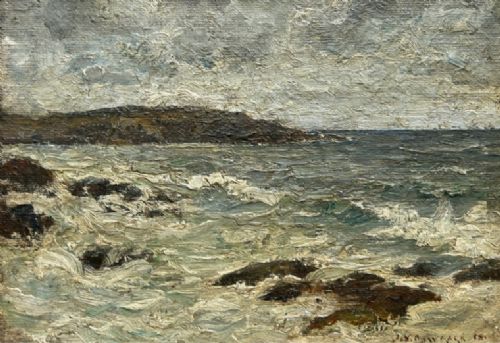
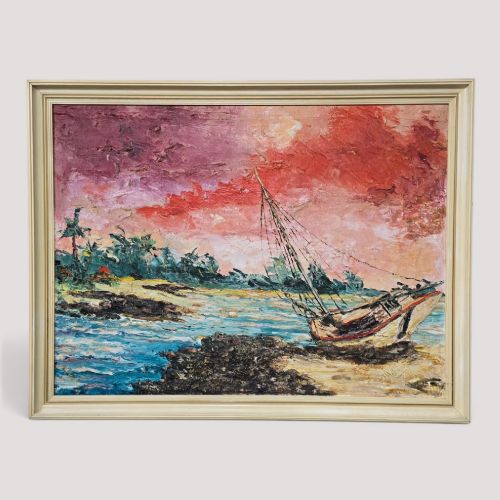
Artists painted these works using oil paint applied to stretched canvas or wooden boards, often building texture with thick impasto brushstrokes. Canvases were then secured within wooden frames, frequently finished with gilt or giltwood moulding.
The combination of oil paint and canvas allowed painters to manipulate light and atmosphere, capturing the transient effects of coastal weather, sunsets, and turbulent seas. Protective varnishes were traditionally applied over the dried oil paint to preserve the pigment depth.
Listings feature works spanning the nineteenth century through the 1960s, executed in oil on canvas or board.
Assessing Quality
Quality in these maritime works rests on the artist's handling of light, atmospheric perspective, and the dynamic movement of water. Superior pieces demonstrate a confident command of proportion in vessel rigging and coastal architecture.
The sophistication of the original framing contributes significantly to the overall standing of a piece, with period giltwood frames enhancing the visual weight and historical context of the canvas.
Eugène Louis Gillot·William McAlpine·James Kay·Bernard Gribble·Bonaventura Peeters·Francis Moltino·John Wilson Carmichael
The Canvas Seascape Artwork Glossary
- Impasto
- Paint applied thickly to a canvas, standing out in relief from the surface and creating a tactile, textured appearance that catches the light.
- Giltwood
- Wood carved and covered with a thin layer of gold leaf or metal gilt, commonly used for traditional picture frames.
- Barque
- A sailing vessel with three or more masts, frequently seen in nineteenth-century historical marine paintings.
Canvas Seascape Artwork: Frequently Asked Questions
How do I hang a heavy oil painting safely?
Large canvases in wooden frames require secure wall fixings, preferably anchored directly into wall studs or masonry using appropriate picture hooks. Professional framing wire and heavy-duty D-rings distribute the weight evenly across the structure.
Ensuring the hanging height places the centre of the canvas at eye level maintains visual balance within a room. Avoid placement in areas subject to direct sunlight or damp conditions to protect the oil paint and canvas.
What defines nineteenth century maritime painting?
Nineteenth-century marine art often focuses on naval history, commercial shipping, and dramatic rescues during storms. Artists aimed for strict accuracy in vessel rigging, navigation, and coastal geography.
Works from this era frequently utilise muted palettes to convey heavy seas and overcast skies, reflecting the romantic and realistic movements of the period.
Why do some seascapes feature gilt frames?
Gilt frames were designed to complement the luminous qualities of oil paintings by reflecting light outwards into the room. The reflective gold surface creates a distinct boundary between the canvas and the surrounding wall.
Many period frames are contemporaneous with the paintings they enclose, serving as integrated components of the artwork's historical presentation.