
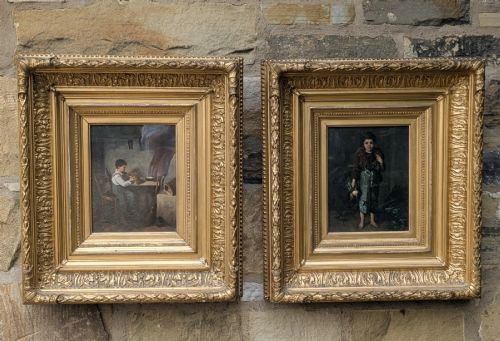
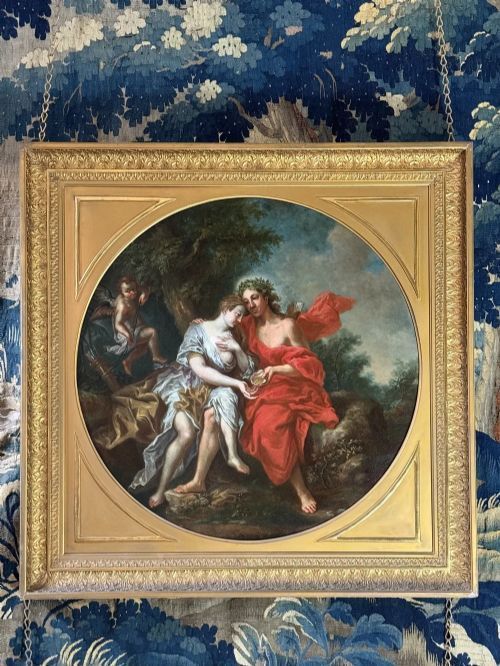
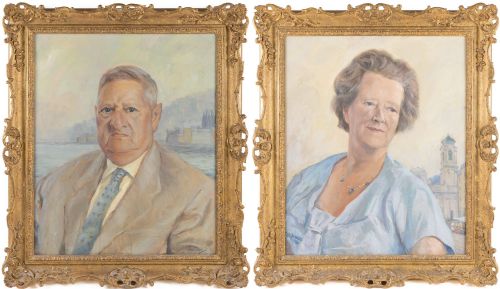
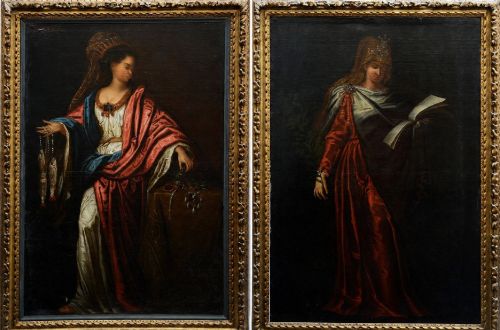
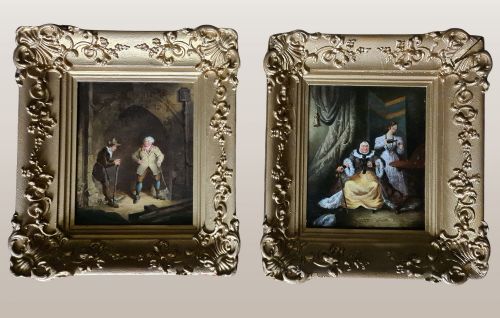
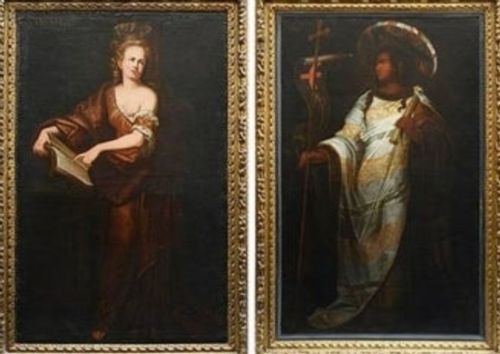
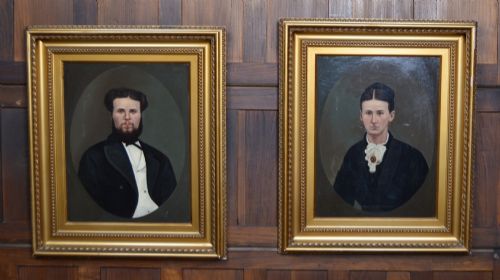
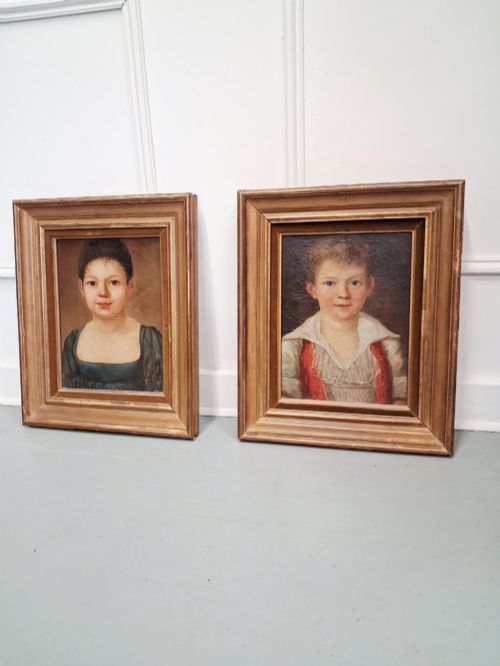

Canvas Oil Portrait Pair
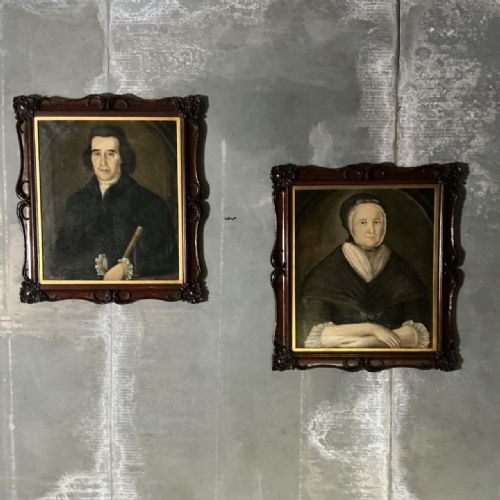
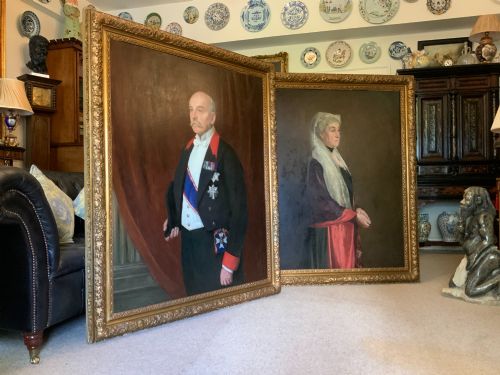
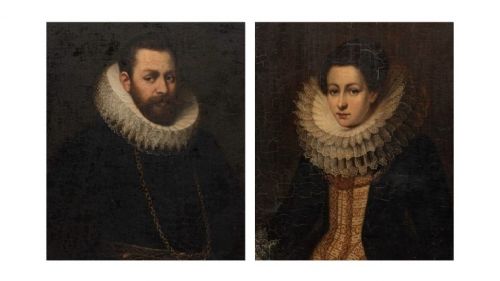
A canvas oil portrait pair brings matched symmetry and historical character to a room, offering two linked faces rendered in oils on woven fabric.
Canvas Oil Portrait Pair
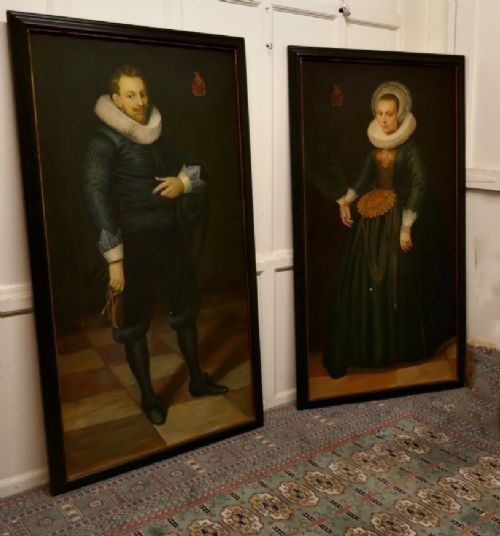
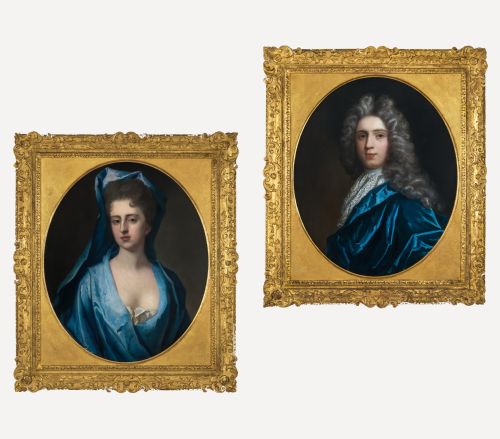
A canvas oil portrait pair consists of two matching artworks created to hang together, most frequently depicting a husband and wife, companion subjects, or matching historical figures. These sets emerge from the 17th, 18th, and 19th centuries, reflecting eras when commissioned pairs recorded lineage, marriage, or social standing.
Buyers browsing this selection will encounter Victorian and Georgian examples alongside earlier Dutch Golden Age pieces and later Edwardian or mid-century interpretations. The subjects range from titled nobility and children to local gentry, all executed in matched frames designed to complement each other.
The format relies on visual balance, where each canvas shares a similar scale, palette, and composition to create a cohesive display. Finding an intact pair ensures that the original curatorial intent or domestic pairing remains unbroken.
Materials and Construction
Artists painted these works using oil paint applied to woven canvas supports, which were then stretched over wooden frames or stretchers. Oil paint allowed for smooth blending of flesh tones, rich depth in garments, and slow drying times that enabled complex layering.
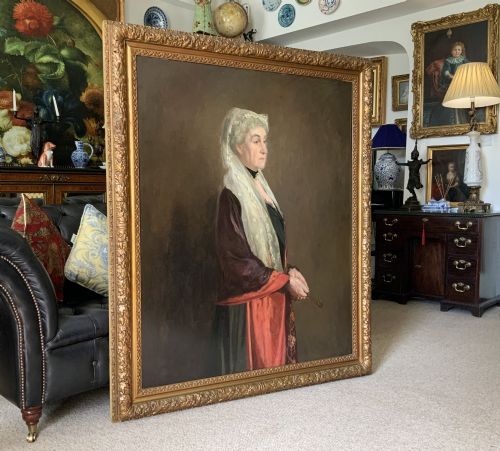
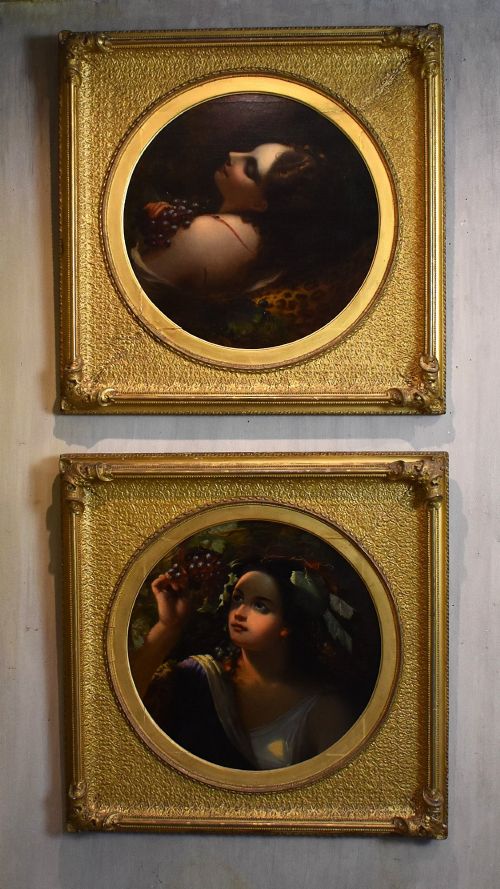
Original surrounds often feature giltwood or gold leaf frames, sometimes ornately carved in swept French Rococo or British Baroque styles. The combination of durable linen or hemp canvas with oil pigment accounts for the longevity of these works across centuries.
Subjects on this page range from aristocratic nobility and children to sporting dogs and historical militia figures.
Distinguishing Quality
The preservation of the original canvas and matching period frames dictates desirability. Works that retain their unlined canvases and contemporary gilt frames hold greater artistic and historical integrity than those subjected to heavy overpainting or mismatched later mountings.
Michael Dahl·Thomas Murray·Charles-Antoine Coypel·Theodore Jensen·Hermann Armin Kern·Federico Andreotti·Francois Boucher·Nicolaes Maes·Henry Frederick Lucas-Lucas·Eva Hollyer·John Mc Ghie
The Canvas Oil Portrait Pair Glossary
- Canvas
- A heavy woven fabric, usually linen or hemp, used as the primary support surface for oil paintings. It provides a textured ground that holds pigment securely when properly primed.
- Giltwood
- Wood carved and covered with a thin layer of gold leaf or metallic powder. It was the standard material for framing fine portraits from the 17th century onward.
- Grisaille
- A painting executed entirely in shades of grey or neutral monochrome, often used to emulate sculpture or as an underpainting for subsequent colour layers.
- Ruff
- A prominent, pleated starched collar worn during the 16th and 17th centuries. Its intricate folds serve as a useful indicator of period costume in early portraiture.
Canvas Oil Portrait Pair: Frequently Asked Questions
How were portrait pairs displayed originally?
Couples or companion subjects traditionally hung on either side of a fireplace, doorway, or central piece of furniture to create formal symmetry in a reception room.
This balanced placement reflected social status and kept related family members visually connected across the domestic interior.
Why were subjects painted as pairs?
Commissioning matched portraits marked significant life events such as marriage, milestone birthdays, or the acquisition of social standing.
Artists painted husband and wife or companion figures on separate canvases of identical dimensions so they could be framed and mounted side by side.
How do I care for old oil paintings?
Keep canvases away from direct sunlight, high humidity, and rapid temperature changes that cause the wood stretchers to warp and the paint to crack.
Dust the surface gently with a soft, dry brush and avoid using chemical cleaners or water on either the paint or the gilt frame.
How can I tell the period of a frame?
Early frames feature hand-carved wooden mouldings and genuine gold leaf applied over a gesso base, often showing shrinkage cracks consistent with age.
Later reproductions or Victorian replacements tend to use composition ornamentation cast in moulds rather than hand-carved relief work.