


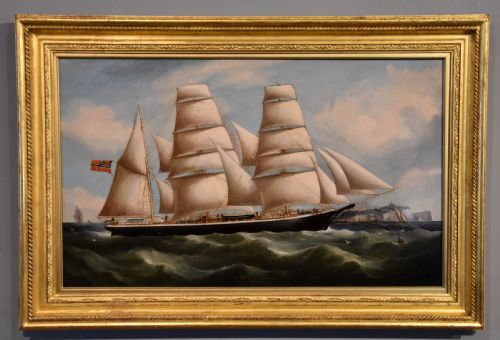
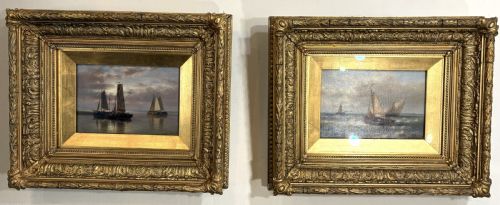


Canvas Boat Fine Art
Canvas boat fine art brings maritime watercraft and coastal harbours into the room through oil paint applied directly to woven fabric.
Canvas Boat Fine Art
Canvas boat fine art encompasses oil paintings on stretched fabric that depict vessels, maritime harbours, and river scenes. Buyers searching this phrase look for historical watercraft captured on the water or resting on shores.
The selections span the nineteenth century through the mid-twentieth century, featuring British, French, and American interpretations. Maritime impressions and coastal landscapes dominate the available range.
Works frequently illustrate specific locations such as Peel Harbour, Polperro Harbour, and the River Mersey. Painters render vessels ranging from humble fishing boats to grand barques against seascapes and coastal backdrops.
Materials and Techniques
Artists painted oil on stretched canvas using pigmented oil paint mixed with drying oils. The woven textile provided a textured ground that held thick brushstrokes and allowed for subtle blending.
Makers housed these works in timber frames, often embellished with gold leaf or giltwood finishes. Gilt framing enhanced the visual impact of the maritime scenes by adding reflective warmth around the composition.
Several canvases record the exact bustle of nineteenth-century river traffic alongside steamships and traditional sailing barques.
Quality Variations
Mastery of light and atmosphere separates accomplished marine painting from basic decorative work. Stronger pieces capture the movement of water and the play of sunlight on vessel hulls with confident brushwork.
Provenance and attribution elevate certain canvases significantly. Paintings documented by known nineteenth and twentieth-century painters command greater attention than anonymous works from provincial schools.
Richard B. Spencer·Abraham Hulk I·William Edward Webb·Jean-Baptiste Olive·Gabriel Dauchot·Stephen J. Renard·George Morland·Benjamin Williams Leader·Consalvo Carelli·Armand Guillaumin·Hendrik Yan Wolter·Henri Ottman·Owen Bowen·James Scrimgeour Mann·John W. Gilroy·Emile A Gruppe·Henri Cadiou
The Canvas Boat Fine Art Glossary
- Impressionism
- A nineteenth-century painting style characterised by relatively small, thin, yet visible brush strokes and an open composition. It prioritises accurate depiction of light in its changing qualities.
- Giltwood
- Wood that has been treated with gold leaf or gold paint to give a metallic sheen. Frames constructed this way surround many period oil paintings.
- Barque
- A sailing vessel with three or more masts having the fore- and mainmasts square-rigged and the mizzenmast fore-and-aft rigged. These ships frequently appear in maritime art.
- Provenance
- The chronology of the ownership or location of a historical object. Documented history establishes authenticity and previous exhibitions.
Canvas Boat Fine Art: Frequently Asked Questions
What is canvas boat fine art?
Canvas boat fine art consists of historical oil paintings depicting watercraft, marine harbours, and coastal scenes upon woven fabric supports.
These works date predominantly from the nineteenth and twentieth centuries, showcasing impressionist and maritime styles from various European and American schools.
How should I display these paintings?
Hang oil paintings away from direct sunlight and damp environments to protect both the canvas and the giltwood frame.
Ensure the wall fixings can support the weight of the timber frame and stretched fabric.
How do I identify the period of a maritime painting?
Examine the style of the vessel rigging, clothing of any figures, and the framing techniques used on the reverse. Victorian and impressionist methods display distinct brushwork and palette choices typical of their decades.
Signatures, dates, and recorded exhibition history on the stretcher bars also clarify the era.
Are these works signed by the artists?
Many of the listed pieces bear signatures or documented attributions to recognised nineteenth and twentieth-century painters. Signatures typically appear discreetly in the lower corners of the canvas.
Attributions without direct signatures rely on stylistic analysis and historical provenance records.