

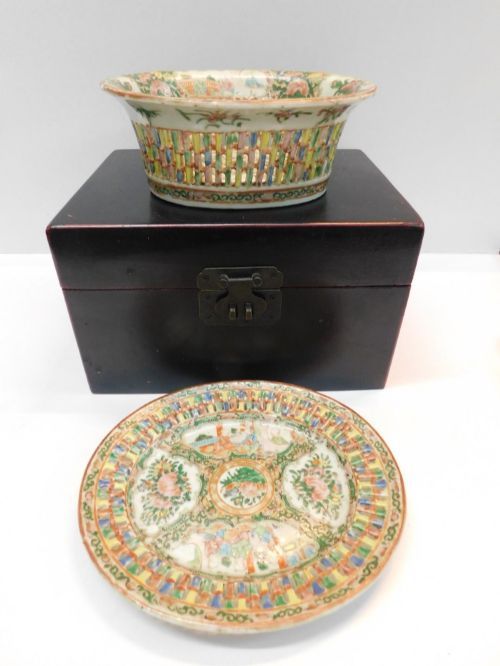


Canton Famille Rose Stand
These canton famille rose stand pieces are striking items of Chinese export porcelain and hardwood made for Western interiors during the nineteenth century.
Canton Famille Rose Stand
A canton famille rose stand brings together traditional Chinese ceramic production and nineteenth century export trade demands. Buyers searching for this phrase seek decorative porcelain vessels, pedestals, and fitted furniture designed to display larger items.
The objects recorded here span the nineteenth century, including specific dates such as 1860, 1870, 1880, and 1920. They take forms ranging from reticulated chestnut baskets and pedestal dishes to monumental floor vases, umbrella stands, occasional tables, and garden seats.
Most items belong to the Qing Dynasty and Chinese Export styles, frequently incorporating the vibrant rose medallion decorative scheme. These pieces function as both standalone furnishings and structural supports for temple jars and decorative bowls.
How they were made
Potters and artisans utilised porcelain as the primary ceramic body, applying overglaze enamel and gold leaf to create the characteristic multicolored and gilded surface patterns. Enamel work requires precise firing techniques to achieve the vivid palette seen on nineteenth century rose medallion pieces.
Hardwood supports and companion tables rely on dense timbers such as padouk wood and giltwood. Cabinetmakers shaped these woods to securely hold heavy ceramic vessels, combining structural stability with carved decorative details.
Canton Famille Rose Stand Retail Price Guide 2026
Typical asking prices for canton famille rose stand among the pieces listed under this phrase on Sellingantiques today, from the lower quarter to the upper quarter. They describe what is for sale here now, not the wider market.
Several umbrella stands in this group double as silent sentries that survived a century of wet canes and muddy boots.
What varies in quality
The distinction between standard and superior pieces rests upon the precision of the overglaze enamel painting and the crispness of the giltwork. Finer examples display meticulous brushwork in the figures and floral motifs, whereas simpler items show more repetitive or hurried application.
In pieces that incorporate wood, the quality depends on the selection of padouk and the joinery used to support heavy porcelain vessels. Well-proportioned stands and tables integrate harmoniously with the ceramics rather than overpowering them.
The Canton Famille Rose Stand Glossary
- Canton
- A major port in southern China from which porcelain was exported to Western markets during the nineteenth century. It designates the regional hub for decoration and trade.
- Famille rose
- A palette of opaque overglaze enamels dominated by pink or rose colours, introduced to Chinese ceramics in the eighteenth century and widely used throughout the nineteenth century.
- Rose medallion
- A specific decorative style featuring panels of figures alternating with birds, flowers, and butterflies, bordered by intricate gilding and colourful enamels. It appears frequently on nineteenth century export wares.
- Padouk wood
- A durable, heavy tropical hardwood used in Chinese furniture and stands. It provides the necessary strength to support substantial porcelain vases and garden seats.
- Reticulated
- Describes ceramic or basketwork featuring an openwork pattern of pierced holes or geometric lattices. This technique demonstrates high skill in handling clay before firing.
Canton Famille Rose Stand: Frequently Asked Questions
What is a canton famille rose stand?
It is a nineteenth century Chinese export porcelain piece or a carved hardwood support designed to display decorative vessels. These items were produced primarily for Western markets during the Qing Dynasty.
The category includes umbrella stands, pedestal dishes, chestnut baskets, and garden seats decorated with bright overglaze enamels and gold leaf.
How were these stands used originally?
They served practical and decorative functions in nineteenth century homes, holding large floor vases, temple jars, or cascading floral arrangements. Some items functioned as umbrella holders in hallways or occasional tables in reception rooms.
Their robust construction in porcelain and padouk wood allowed them to support heavy ceramic objects safely.
How should I live with these items?
These pieces integrate well into traditional and eclectic interiors as focal points or functional stands for plants and decorative bowls. Placed in rooms with stable temperatures, they require minimal intervention beyond dusting.
Their combination of vibrant enamels and dark hardwood allows them to complement various wood finishes and colour schemes.