
Canterbury Music Rack
A canterbury music rack is a compartmented stand designed for scores and periodicals, built across Georgian, Regency, and Victorian periods.
Canterbury Music Rack
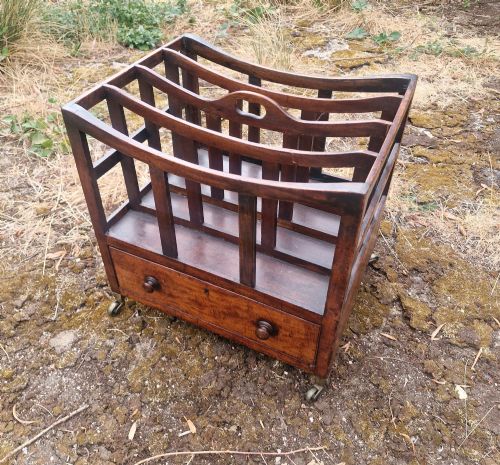
A canterbury music rack is a compartmentalised stand designed to hold scores, folios, newspapers, and magazines. The form usually sits on low legs or castors, making it portable for domestic use.
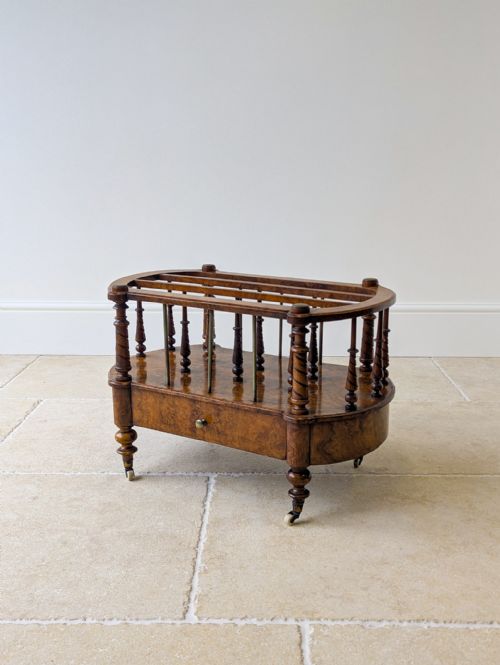
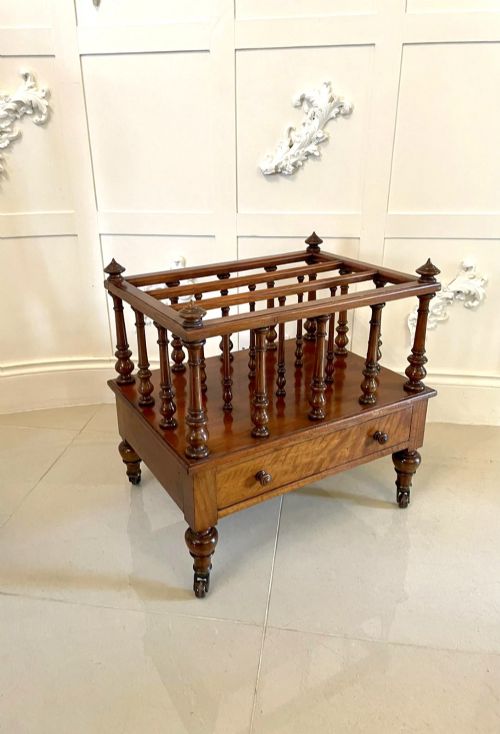
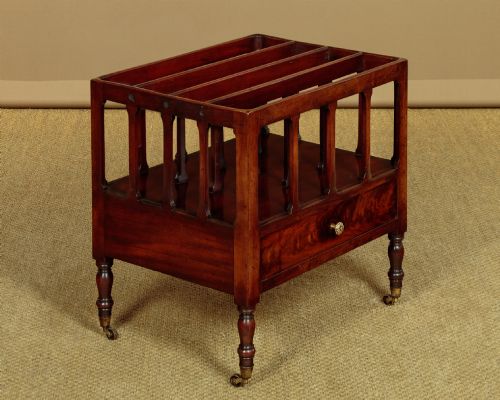
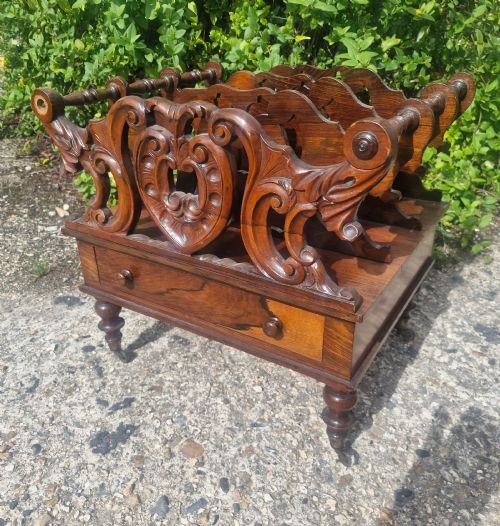
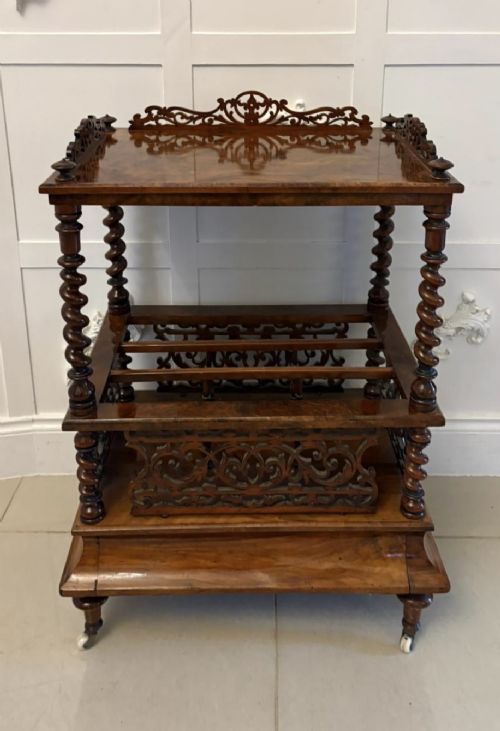
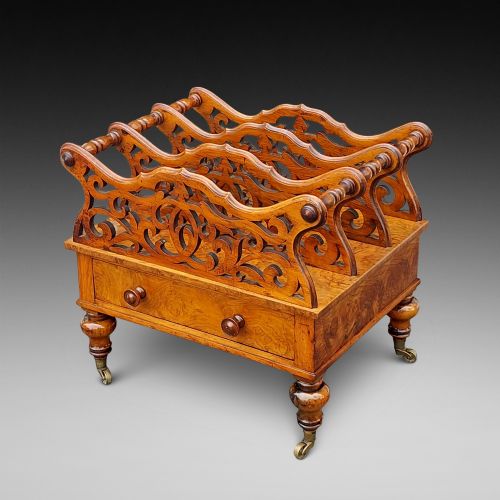
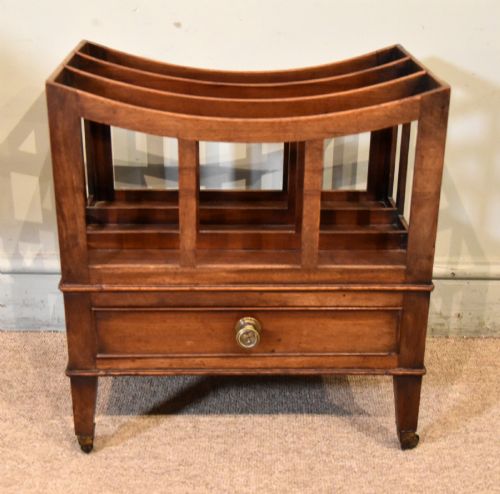
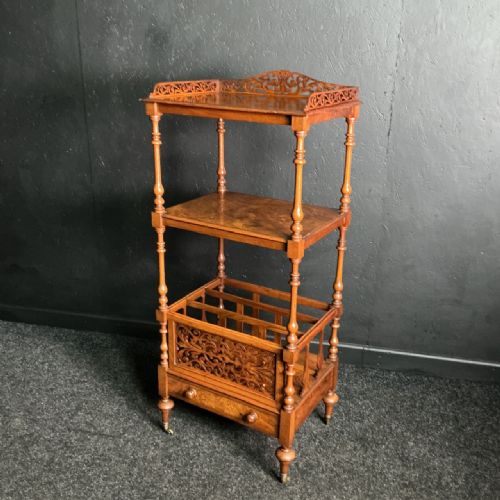
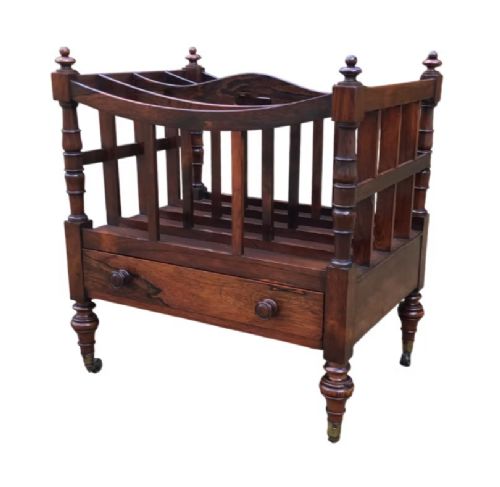
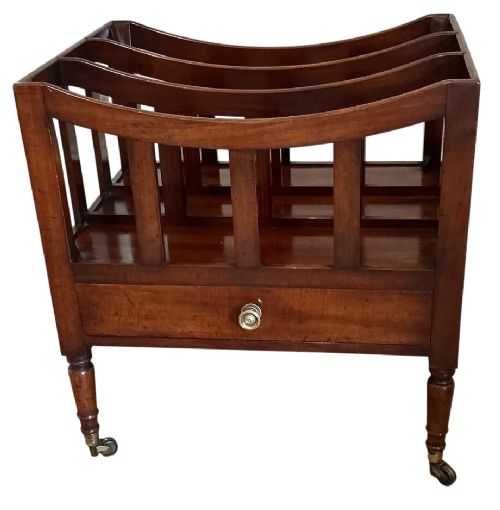
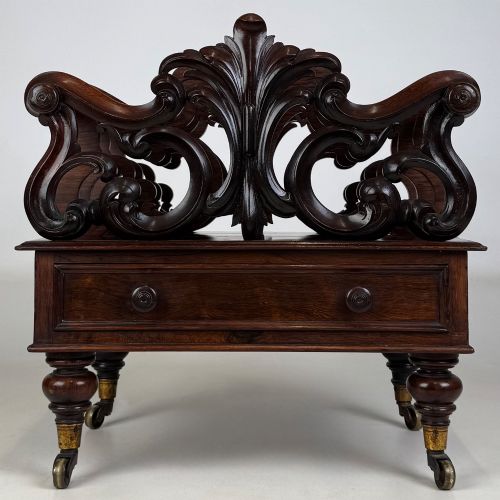
The version most commonly encountered on this page dates from the Victorian and Regency periods, rendered in mahogany or burr walnut. Some examples incorporate a drawer at the base or combine the rack with a small whatnot table or music stand.
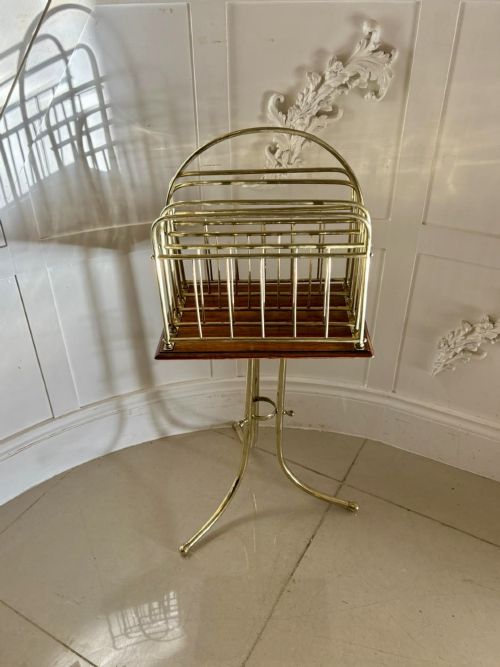
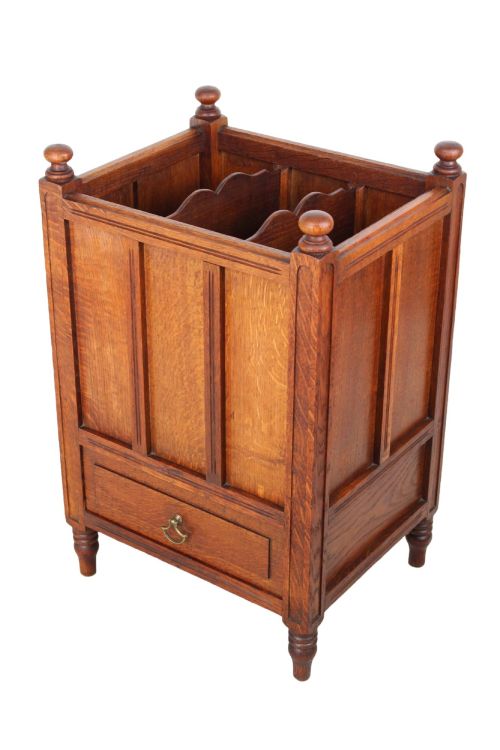
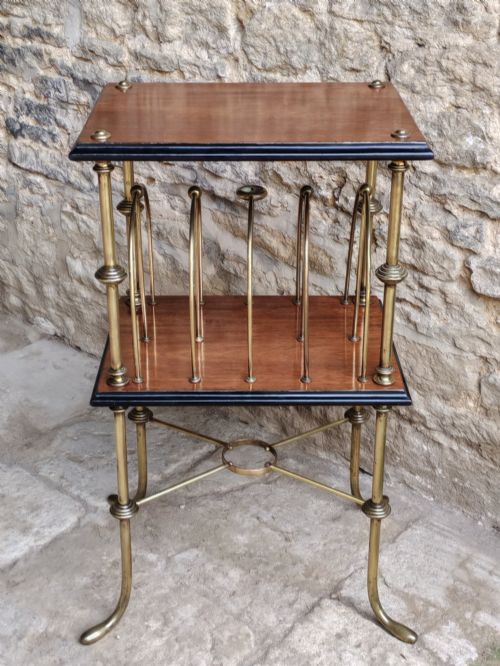
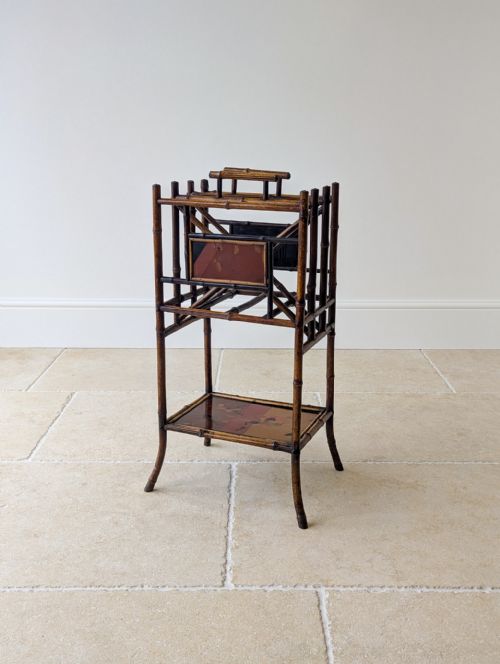
Earlier Georgian specimens lean towards architectural lines in mahogany, while later Edwardian iterations offer simplified mahogany or oak frames. More unusual variants utilise bamboo or incorporate brass details and revolving structures.
How they were made
Cabinetmakers constructed these pieces primarily using solid timbers and veneers of mahogany, walnut, rosewood, and burr walnut. Finer woods were chosen for their rich grain patterns, particularly on serpentine or inlaid shelves.
Slender vertical divisions, which form the compartments for music and papers, are typically shaped from turned wood spindles or pierced flat fretwork boards. Metal components such as brass castors or handles appear on Regency and Victorian models to facilitate movement across the floor.
Listings feature mahogany, walnut, rosewood, burr walnut, bamboo, and brass across Georgian, Regency, Victorian, and Edwardian periods.
What varies in quality
The distinction between tiers of quality rests largely in the choice of timber and the intricacy of the joinery. Burr walnut and figured rosewood veneers require high skill to lay smoothly over serpentine or curved surfaces.
Refinement is evident in the execution of decorative elements, such as fine boxwood stringing, marquetry inlay, and well-turned uprights. Structural integrity relies on tight joints in the slatted divisions and sturdy undercarriages that bear the weight of stacked folios.
Edwards & Roberts
The Canterbury Music Rack Glossary
- Canterbury
- A low stand with upright partitions for holding sheet music or periodicals. The name is said to derive from an Archbishop of Canterbury who commissioned an early version.
- Whatnot
- An open set of freestanding shelves used for displaying or storing small items. Many canterburys incorporate a whatnot tier on top for books or decorative objects.
- Burr walnut
- A veneer taken from the knotted growth of a walnut tree, yielding highly figured, swirling grain patterns. It was favoured by cabinetmakers for grand Victorian tables and stands.
- Fretwork
- Ornamental woodwork perforated with patterns by a saw. It often appears on the partition sides of mid-nineteenth-century racks.
- Serpentine
- A curved line bending outward then inward, creating a gentle undulating edge. This shape appears on the top shelves and bases of finer Victorian stands.
Canterbury Music Rack: Frequently Asked Questions
What is a canterbury music rack?
A canterbury music rack is a freestanding furniture piece featuring vertical partitions designed to store sheet music, folios, and periodicals.
Originally developed in the eighteenth century, the form evolved through the Regency and Victorian eras to include drawers, shelves, and various timber veneers.
How were they used historically?
These stands kept scores and newspapers tidy and accessible near pianos, music stands, and seating areas in domestic drawing rooms.
The partitioned base held unbound music sheets upright, while integrated drawers provided space for smaller accessories like tuning keys and manuscript paper.
How do I identify a Regency model?
Regency examples typically feature rich mahogany timber, saber legs, brass fittings, and boat-shaped or classical proportions.
They often emphasise clean architectural lines and functional elegance compared to the heavier ornamentation found on later Victorian pieces.
Can I use one for magazines today?
These racks suit modern living spaces well for organising contemporary magazines, daily newspapers, and vinyl records.
The vertical partitions prevent soft folios and periodicals from slumping, keeping reading materials neat beside a sofa or desk.