
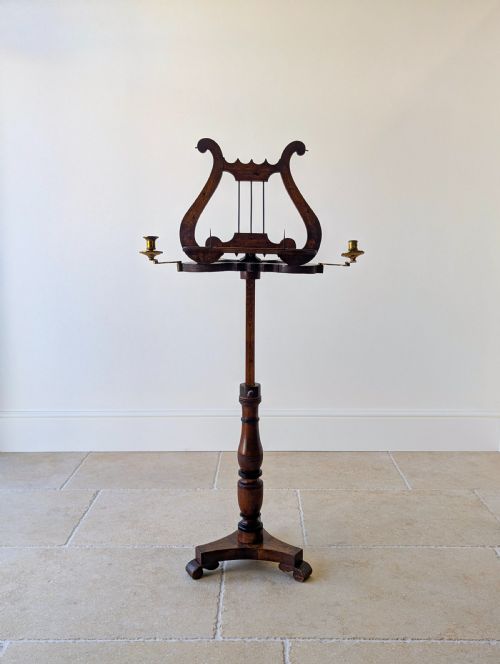


Carved Mahogany Music Stand
A carved mahogany music stand offers practical elegance for holding scores, sheets or folios in a period room.
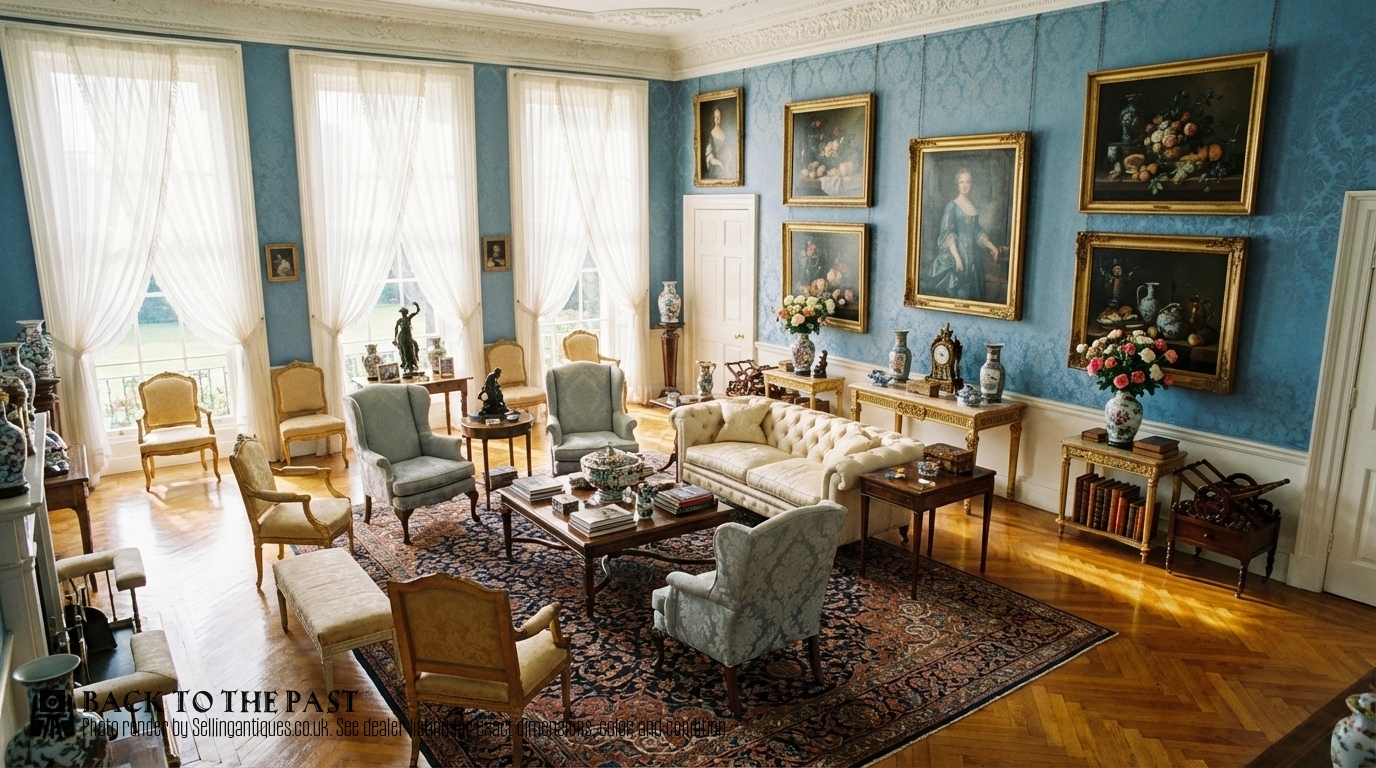
Carved Mahogany Music Stand
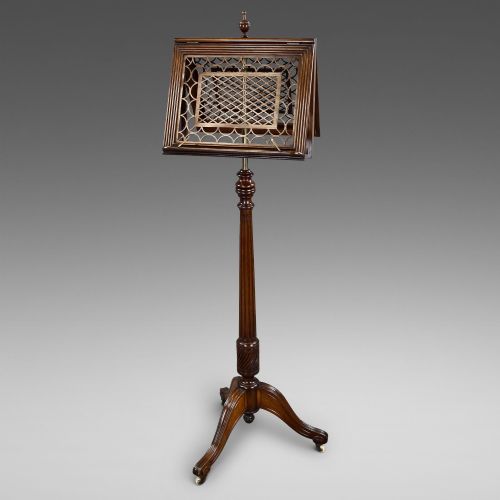
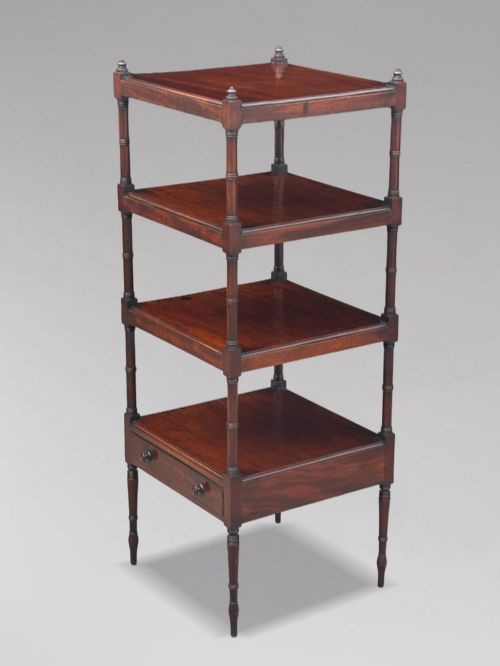
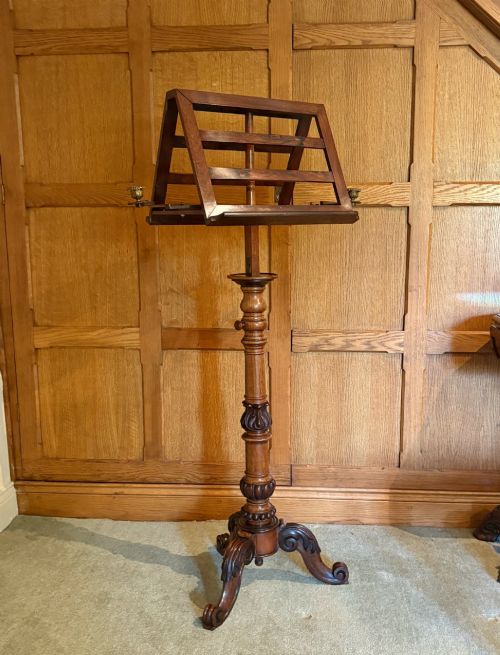
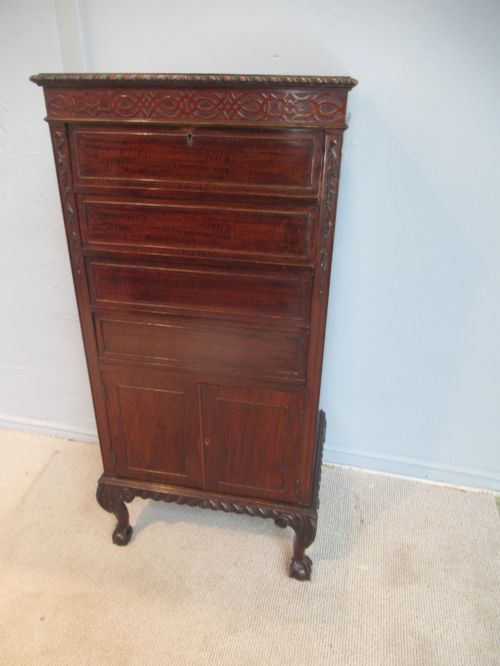
A carved mahogany music stand takes various forms across the Georgian, Regency, William IV, Victorian and Edwardian periods. Collectors encounter reading desks, duet stands on tripod bases, and multifunctional canterburys or music cabinets.
Makers designed these pieces for parlours and drawing rooms to support heavy bound volumes or single sheets. The selection spans straightforward folding reading slopes to elaborate pedestal cabinets and revolving music stands.
Solid mahogany and Cuban mahogany form the primary structural timbers, often augmented by brass fittings and delicate fretwork. Many examples bridge the gap between dedicated music stands and magazine or newspaper racks.
Materials and construction methods
Cabinet makers utilised dense timbers such as mahogany and occasional rosewood to provide the necessary stability for heavy folios. Joinery relied on precise dovetailing, turned columns and secure framing for shelves and partitions.
Carving appears on tripod legs, lyre motifs, and pierced scroll divisions, executed by hand with chisels and gouges. Brass castors, hinges, and patent turning mechanisms added functional longevity to the stands.
One Victorian model includes a patent indispensable music leaf turner, saving musicians from awkward page-turning mid-performance.
Assessing craftsmanship and execution
Quality rests in the depth and crispness of the timber carving, particularly on the tripod bases and reading ledges. Finer examples display well-figured Cuban mahogany with rich natural grain patterns rather than plain secondary woods.
The sophistication of the mechanical joints, brass fittings, and patent turning devices distinguishes standard workshop production from high-end cabinet makers. Well-balanced proportions and intact internal partitions indicate superior original design.
Denby & Spinks·Gillows·J.C.Loudon·Padbury
The Carved Mahogany Music Stand Glossary
- Canterbury
- A low stand with upright divisions designed for holding sheet music, folios or magazines. It often incorporates a single or double drawer beneath the divisions.
- Duet stand
- A music stand wide enough to accommodate two musicians reading from a shared open score. These frequently feature adjustable reading desks on central pillars or tripod bases.
- Lyre-form
- A decorative motif shaped like an ancient musical instrument, frequently incorporated into the central support of music stands and card tables.
- Fretwork
- Openwork ornamentation carved or pierced through thin boards of mahogany, popular in decorative friezes and gallery rails.
Carved Mahogany Music Stand: Frequently Asked Questions
How do I date a music stand?
Dating relies on stylistic markers such as reeded legs from the Regency period or heavy carved scrolls typical of the William IV era. Construction methods and secondary timbers also provide clues to the decade of manufacture.
Cabinet hardware, including brass castors and screw types, helps confirm whether a piece belongs to the Georgian period or later Victorian revivals.
What is the difference between a music stand and a canterbury?
A music stand is built primarily to hold open scores at a readable angle on a desk or pedestal. It prioritises the display and support of active reading material.
A canterbury functions as a storage rack with vertical partitions designed to keep bound music volumes or magazines upright and organised beneath a handle or small shelf.
How should I care for mahogany surfaces?
Mahogany requires minimal maintenance beyond regular dusting with a soft, dry cloth to prevent dust accumulation in carved recesses. Avoiding direct sunlight and maintaining stable room humidity protects the timber from drying and splitting.
Application of traditional beeswax can be used sparingly to nourish the grain and preserve the natural sheen of the wood over time.