
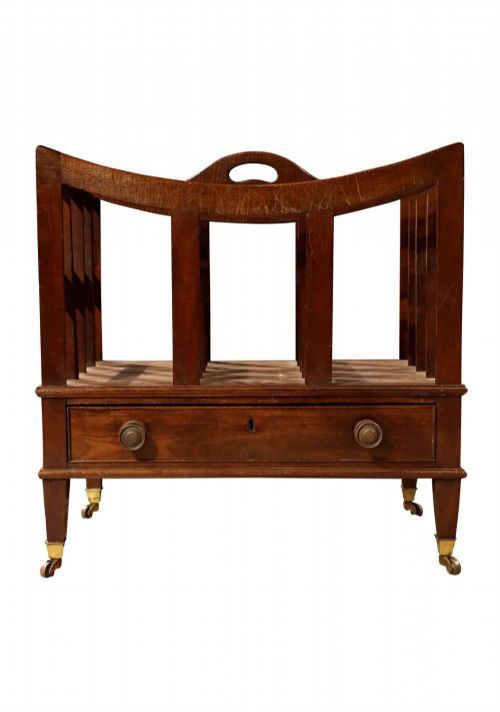


Vintage Music Rack Castors
These vintage music rack castors belong to canterburys and magazine racks, small pieces of furniture built to hold sheets and folios neatly beside the piano.
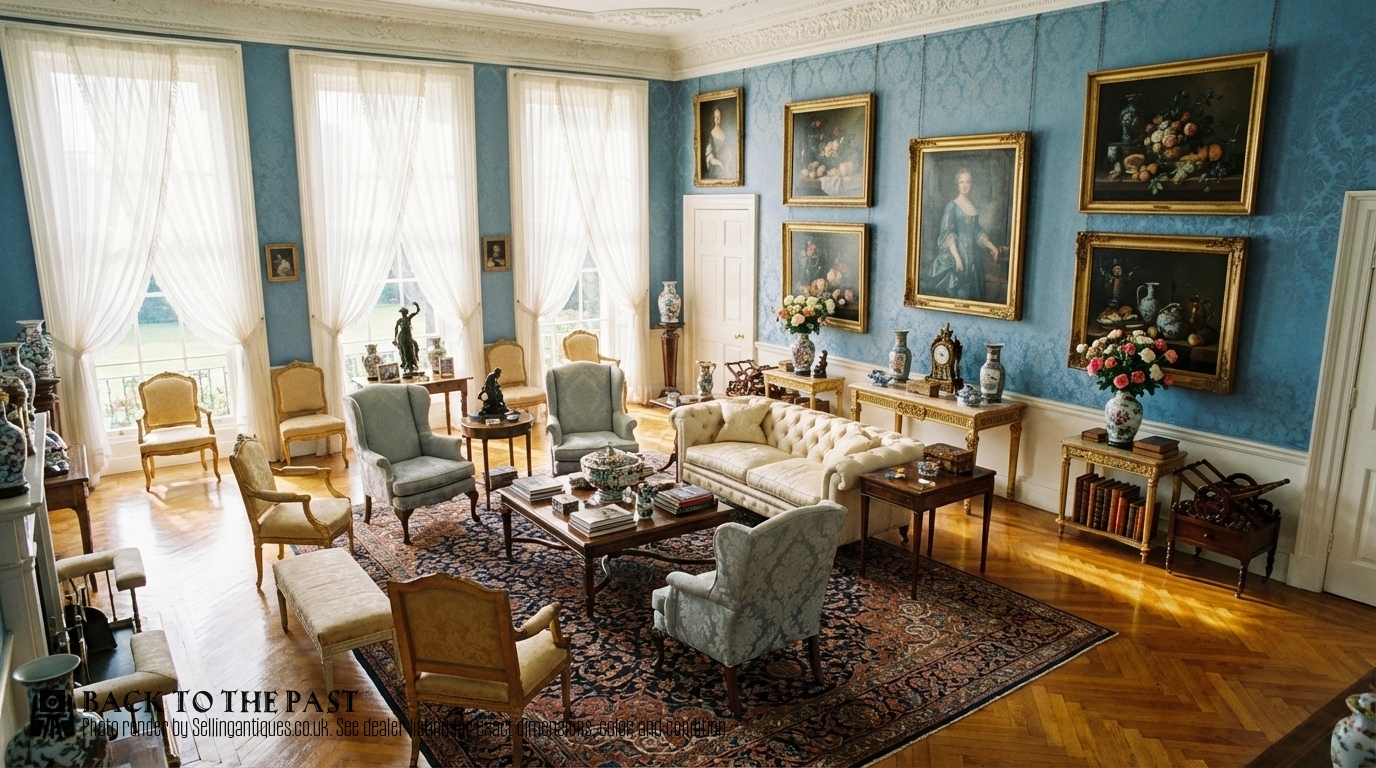
Vintage Music Rack Castors
Vintage music rack castors are small wheels fitted to the base of canterburys and magazine racks to allow the stand to move easily across the floor. They support pieces dating from the Georgian, Regency, William IV, Victorian, and Edwardian periods.
Most examples encountered here appear on mahogany or rosewood canterburys, which serve as compartmented stands for sheet music, newspapers, and folios. These items combine compartmentalised storage with mobility, often featuring turned legs directly above the castors.
How they were made
Makers constructed these canterburys using solid timbers such as mahogany and rosewood, applying turned legs and delicate carving to the framework. Metal castors were then screwed or pegged into the base of each leg.
Joinery techniques matched the demands of heavy timber frames carrying paper loads, ensuring stability while the small brass or metal wheels bore the weight during movement.
Listings feature canterburys spanning the Georgian, Regency, William IV, Victorian, and Edwardian periods in mahogany and rosewood.
What varies in quality
Quality rests upon the refinement of the timber and the crispness of the turning on the legs, distinguishing standard utility pieces from finer cabinet work. The proportion of the divisions and the presence of drawers also influence the overall standard.
The integration of the castors into the legs demonstrates the maker's attention to detail, where neatly fitted hardware sits flush with the turned wood rather than appearing clumsy or disproportionate.
The Vintage Music Rack Castors Glossary
- Castor
- A small swivel wheel attached to the base of a piece of furniture for ease of movement. On these stands, they allow the loaded rack to glide across carpets and floorboards.
- Regency
- An English design period spanning the early nineteenth century. Furniture from this era often displays clean classical lines, dark timbers, and neat turned supports.
Vintage Music Rack Castors: Frequently Asked Questions
What is a canterbury?
A canterbury is a small compartmentalised stand built to hold sheet music, periodicals, and books. It sits low to the floor on legs equipped with castors.
These pieces first appeared in the eighteenth century and remained popular through the Victorian and Edwardian eras for keeping music organised near the piano.
How do I date these pieces?
Dating relies on timber choice, turning style, and overall construction methods. Regency and Georgian examples tend to use dense mahogany with restrained classical turning.
Victorian and Edwardian pieces often incorporate rosewood or feature heavier decorative carving, while brass hardware style also shifts across these decades.
Were these stands only for music?
While originally designed for sheet music and scores, owners quickly adopted them for newspapers and magazines. Larger versions functioned as folio stands for loose prints.
Their open divisions made them versatile for any collection of paper goods kept in a parlour or drawing room.
Do castors affect the value?
Original castors that match the period and wear of the timber enhance the integrity of the piece. Replacements are common since small wheels endured heavy strain.
Collectors look for brass or metal fittings that show appropriate age alongside the legs they support.