
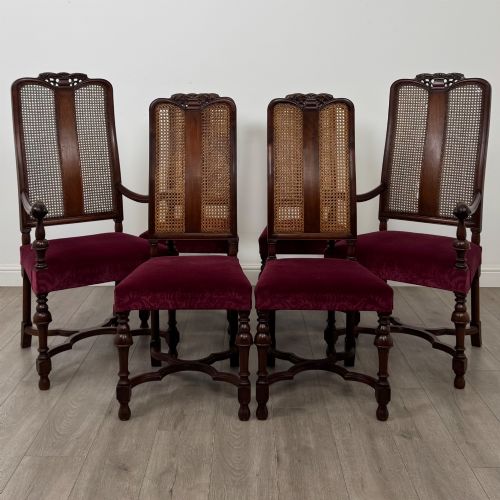
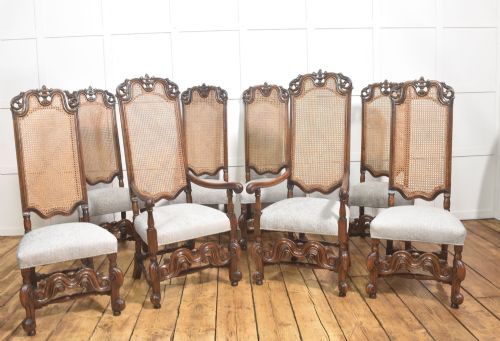

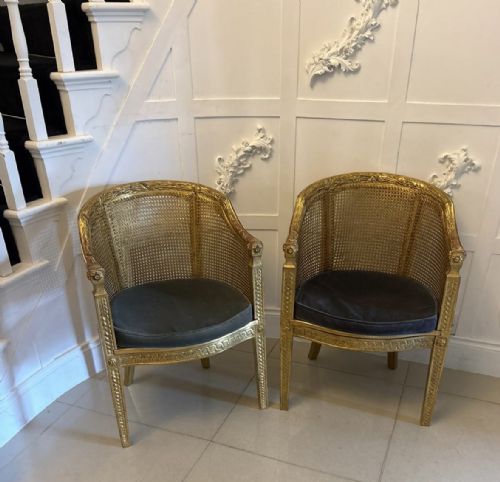
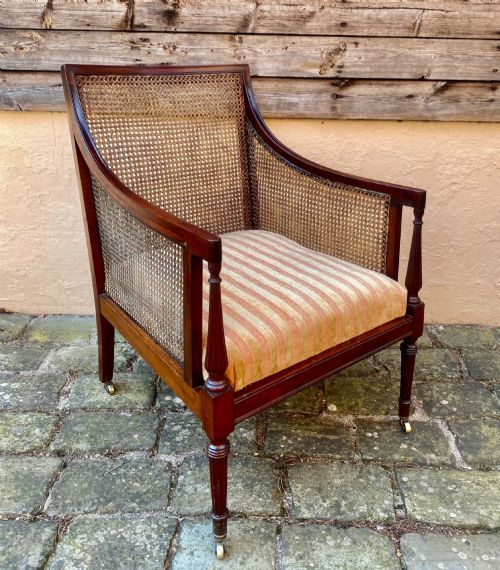
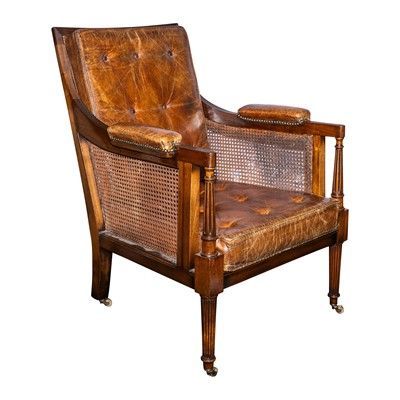


Caned Side Armchair
A caned side armchair brings lightness and texture to a room, offering sturdy timber frames paired with woven panels.
Caned Side Armchair
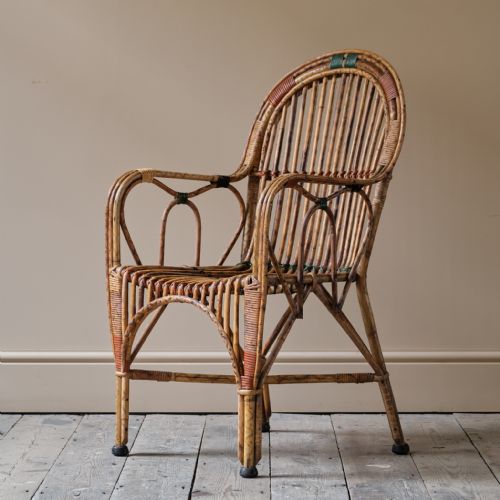
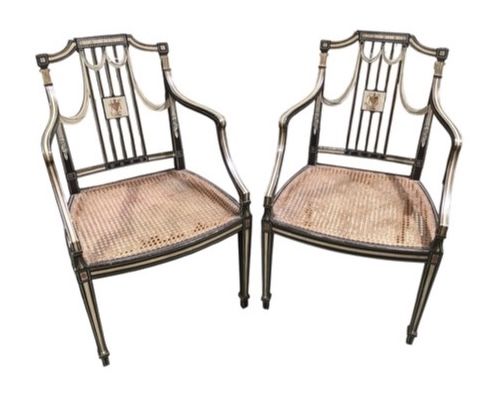
A caned side armchair combines an open wooden frame with woven seating or back panels, appearing across periods from the nineteenth century into the twentieth century. These seating pieces function equally well as library armchairs, drawing room seats or bedroom chairs within various revival styles.
The versions most commonly met here include mahogany and walnut frames with woven cane, alongside painted or carved oak examples reflecting Jacobean, Regency or Edwardian aesthetics. Buyers encounter everything from single library bergères to matched sets intended for dining tables or salons.
Materials and construction methods
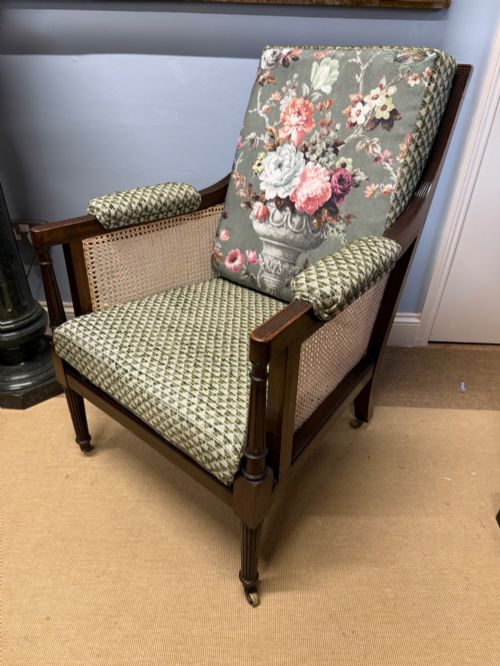
Makers constructed the structural frames from hardwoods such as mahogany, walnut and oak, often shaping the timber into curved armchairs or high-back dining chairs. Brass castors, leather inserts and upholstered fabric or velvet pads frequently supplemented the primary wooden structure.
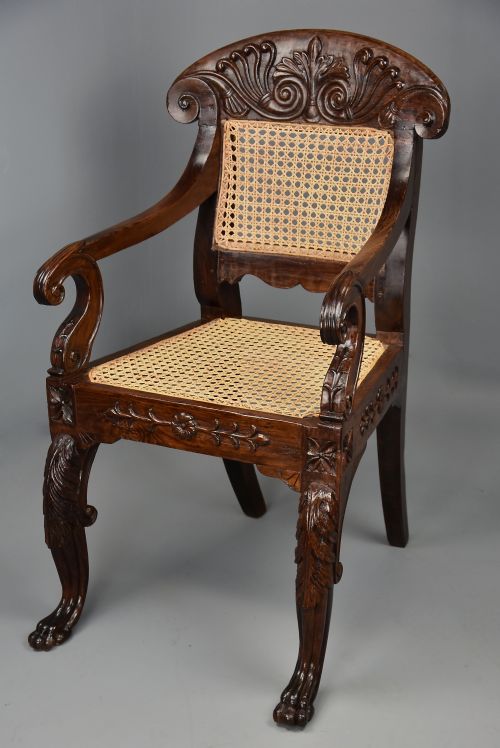
The woven components utilise natural cane and rattan, threaded tightly through drilled holes or channel frames to form resilient panels. Artisans also incorporated hand-carved details, giltwood finishes and lacquer work to align with specific revival periods.
Listings span multiple decades from the mid nineteenth century through to the 1940s, featuring oak, mahogany and walnut.
Distinctions in craftsmanship
Quality rests upon the tightness and regularity of the cane weave, alongside the structural integrity of the timber frame joints. Superior examples display crisp hand-carving and well-seasoned mahogany or walnut rather than superficial surface decoration.
The proportion and balance of the armchair arms relative to the seat depth separate standard production from finer cabinetmaking. Original patination on the timber and intact, undamaged weaving further distinguish higher tier pieces.
The Caned Side Armchair Glossary
- Bergère
- An enclosed upholstered armchair featuring solid sides, often lined with cane panels. These seats frequently include loose squab cushions filled with traditional materials.
- Cane
- Strips of rattan peel woven into a mesh pattern to form flexible backrests or seats. This material provides breathability and structural support.
- Padouk
- A dense tropical hardwood with a reddish hue used in specific nineteenth century imported furniture. Craftsmen valued this timber for intricate carving work.
- Giltwood
- Timber treated with a thin layer of gold leaf or gilt paint for decorative effect. This finish appears frequently on nineteenth century French salon seating.
Caned Side Armchair: Frequently Asked Questions
How do I clean caned panels?
Dust the woven cane gently using a soft brush to prevent dirt buildup within the holes. Wipe the surface occasionally with a damp cloth, ensuring the material dries completely.
Avoid soaking the cane with excess water, which weakens the natural fibres over time. Applying boiled linseed oil sparingly helps maintain flexibility in older panels.
Can I reupholster a bergere chair?
Upholstered squab cushions on these armchairs can be recovered easily to match existing interior schemes. Traditional webbing and interior stuffing materials require professional skill to preserve the original profile.
Consulting a specialist ensures the structural integrity of the frame remains undisturbed during any restorative work. Selecting appropriate fabrics maintains the period character of the armchair.
Are these chairs suitable for daily use?
Sturdy hardwood frames in mahogany and oak provide reliable support for everyday seating requirements. Lighter dining chairs and bedroom variants function best under standard domestic conditions.
Careful placement away from direct heat sources protects the timber and woven panels from drying out. Distributing weight evenly preserves the tension in older cane work.