
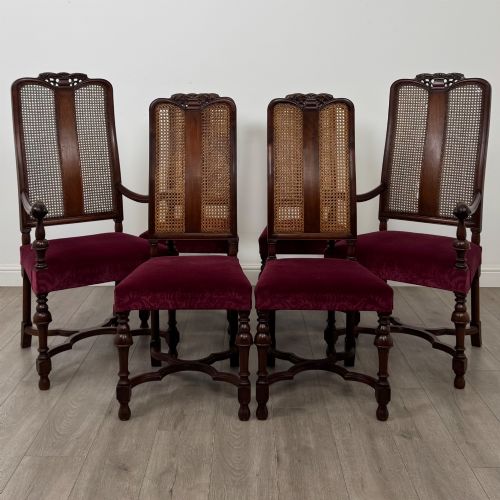
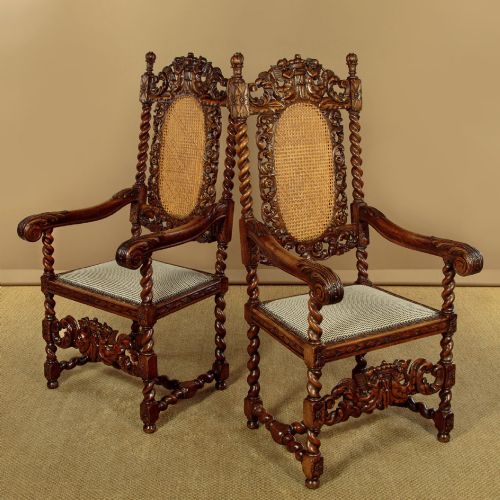


Caned Seat High Chair
When you handle a caned seat high chair, you touch a piece of domestic history shaped by centuries of changing nursery life.
Caned Seat High Chair
A caned seat high chair sits within a broader tradition of children's seating and elevated nursery furniture found across the nineteenth century and earlier revival periods. These infant seats served practical household roles for feeding and tending to young children while matching the formal aesthetic of adult dining furniture.
The versions most common here are nineteenth-century pieces alongside revival interpretations referencing seventeenth-century Carolean, William and Mary, and Jacobean styles. They combine standard child-scale proportions with woven cane panels set into wooden frames made of oak, walnut, beech, or mahogany.
Materials and construction
Makers built the structural frames of these infant seats using solid hardwoods such as oak, walnut, beech, and mahogany, often shaping the timber with turned spindles or carved decorative details. These framing elements provided the structural rigidity required for daily domestic use.
Cane, rattan, and occasional fabric or bergere insertions formed the seated and backrest areas, woven by hand through pre-drilled holes in the wooden surrounds. This flexible plant material offered a resilient yet breathable surface suitable for children's seating.
Listings span from the seventeenth century through the Victorian era and into the early twentieth century, utilising oak, walnut, mahogany, beech, and woven cane.
Judging quality in infant seating
Quality rests on the crispness of the timber carving and the tightness of the cane weaving across the seat frame. Superior examples display refined turning on the legs and uprights, matching the craftsmanship expected of high-end adult chairs of the same period.
The integrity of the joinery and the survival of the original wooden structure determine the standing of a piece. Finer items retain their proportional balance without clumsy timber replacements or slackening in the woven panels.
Waring and Gillow·Dryad of Leicester
The Caned Seat High Chair Glossary
- Cane
- Strips of peeled rattan used for weaving openwork patterns in chair seats and backs. This material provides a light, resilient surface.
- Carolean
- A seventeenth-century English style associated with the reign of Charles II, characterised by rich carving and scrolling motifs. Revival versions appeared frequently in later centuries.
- Bergere
- An upholstered or cane-panelled armchair design with enclosed sides. It frequently appears in nineteenth-century and Edwardian seating.
- Bobbin turned
- A method of woodturning that produces a series of rounded spheres resembling bobbins along a spindle. This technique was popular in seventeenth-century furniture and its later revivals.
- Stick back
- A chair construction method where turned spindles are inserted directly into a solid seat slab or bentwood rail. These provide simple structural support without heavy carving.
Caned Seat High Chair: Frequently Asked Questions
How were these high chairs used?
These seats kept young children elevated to table height during family meals or domestic tasks. They provided a secure perch within the main living spaces of the household.
Over generations, their role shifted from utilitarian nursery equipment to decorative collector items displayed within traditional interiors.
Are these chairs safe for children?
Most antique examples lack modern safety harnesses and feature fragile historic cane work that may sag under weight. They are best regarded as decorative objects or collector pieces rather than functional nursery furniture.
Structural timbers can also dry out over centuries, reducing the load-bearing capacity of the original joints.
How do I clean caned seating?
Dust the woven cane regularly with a soft brush to prevent grit from lodging between the strands. Avoid soaking the material in water, which can make natural rattan brittle.
Applying a damp sponge very sparingly helps maintain flexibility, followed by thorough air drying.
How do I date a caned chair?
Dating relies on identifying the timber species, the turning style of the legs, and the method used to bore holes for the cane weaving. Machine-drilled holes generally point towards later nineteenth-century manufacturing.
Comparing the decorative carving motifs to known historical periods helps distinguish seventeenth-century originals from later nineteenth-century revival pieces.