




Caned Nursery High Chair
These caned nursery high chair pieces offer sturdy seating for young children, combining period timber frames with woven seats.
Caned Nursery High Chair
A caned nursery high chair represents a specialised form of antique children's seating designed to elevate a child to table height. These items appear across the Georgian, Regency, and Victorian periods, reflecting shifting domestic habits in the nursery. Surviving examples encompass dedicated high chairs alongside adaptable rocking armchairs and correction chairs fitted with woven seats.
The predominant examples on this page date from the nineteenth century, including specific Victorian and Georgian iterations. Makers utilised robust timbers like mahogany, walnut, and beech to construct these small seats. The inclusion of caning or bergere work provides a lightweight yet durable surface for daily use.
How they were made
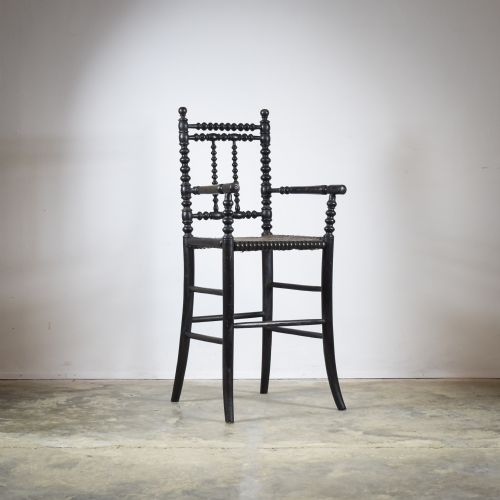
Cabinet makers constructed these frames using dense hardwoods such as mahogany and beech, often employing turned components like bobbin turning. Ebonised finishes and faux bamboo styling also appear among the Victorian examples. Structural integrity was essential to support an active child, leading to solid joinery throughout the underframes.
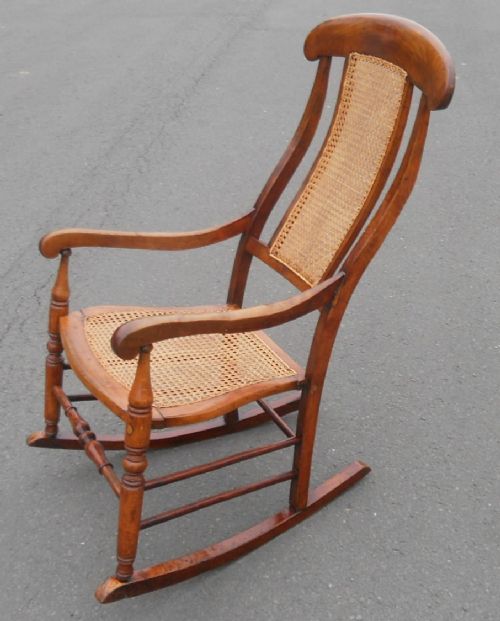
The defining feature of these chairs is the woven cane or bergere seat and back insert. Artisans pierced the wooden frames to thread natural plant material in intricate patterns. This technique provided a flexible, breathable surface that required considerable skill to tension correctly.
Victorian nursery items sometimes include miniature rocking armchairs built precisely like adult pieces, scaled down for tiny occupants.
What varies in quality
Quality in a caned nursery high chair rests upon the choice of timber and the fineness of the frame's construction. Superior pieces display thoughtful proportions and careful turning, such as bobbin work or reeded detailing, rather than plain utility framing. The integrity of the original wood grain and the crispness of any applied ebonising distinguish finer workshop output.
The execution of the weaving marks another division in standard. Tightly woven cane with uniform spacing and intact strand work demonstrates superior craftsmanship compared to loose or uneven repairs. The survival of an unblemished woven panel within an antique hardwood frame elevates the overall execution.
The Caned Nursery High Chair Glossary
- Caned
- Woven from peeled rattan or similar plant material to form a porous panel. This method creates a light, flexible surface used for seats and backs.
- Bergere
- An upholstered or cane-panelled armchair with closed sides. In children's seating, this typically denotes a cane insert framed in solid timber.
- Bobbin turned
- Turned on a lathe to resemble a string of rounded bobbins or spools. This decorative woodworking technique appears frequently on nineteenth-century frames.
- Ebonised
- Wood treated with a dark stain or finish to imitate ebony. This process was particularly popular during the Victorian era for formal or decorative furniture.
- Correction chair
- A nineteenth-century seating form designed to encourage straight posture. These pieces often feature low backs and cane seats.
Caned Nursery High Chair: Frequently Asked Questions
Are these high chairs safe for modern use?
These antique chairs were manufactured to historical safety standards and often lack modern restraints. Buyers typically acquire them for display, collection, or gentle domestic styling rather than daily nursery use.
Securing the piece against tipping requires careful placement, as historical footprints are narrow compared to contemporary infant furniture.
How do I clean caned seats?
Maintaining woven cane involves dusting with a soft brush and occasionally wiping the material with a damp cloth. Avoiding excess moisture prevents the natural fibres from becoming brittle.
Conditioning the wood around the panel with appropriate wax helps preserve the overall structure without harming the woven strands.
How do I date a high chair?
Dating relies upon timber selection, turning styles, and construction techniques visible in the frame. Georgian and Regency examples tend to feature simpler lines or classical proportions, whereas Victorian pieces often showcase bobbin turning or ebonised finishes.
Observing the method used to drill holes for the cane work also offers clues to the period of manufacture.
What is a correction chair?
A correction chair is a specific form of nineteenth-century seating intended to promote good posture in young people. They frequently feature low caned seats and supportive backs.
These pieces formed part of the broader nursery furniture tradition alongside high chairs and rocking chairs.