




19th Century Childs Seat
A 19th century childs seat offers miniature domestic craft, bringing regional vernacular and formal seating down to junior scale.
19th Century Childs Seat
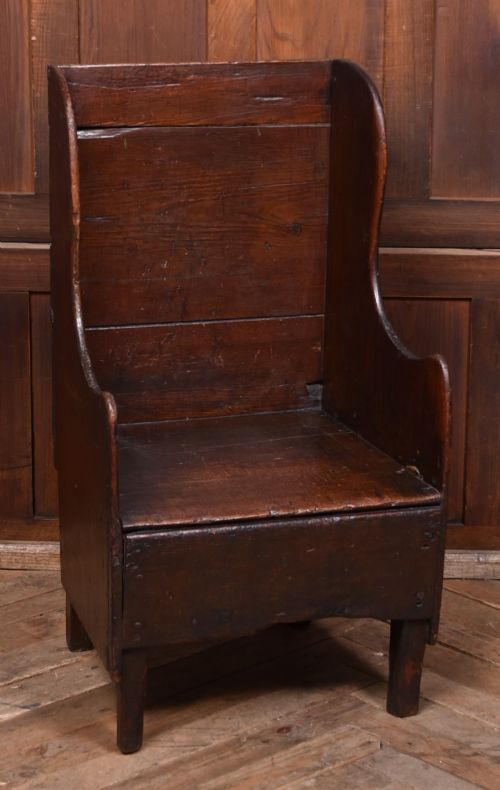
A 19th century childs seat covers a domestic range of miniature chairs, armchairs, high chairs, rocking chairs, and benches made during the Georgian and Victorian periods. Buyers search for these pieces to find smaller equivalents of full-size furniture built with the same regional vernacular or formal design ambitions.
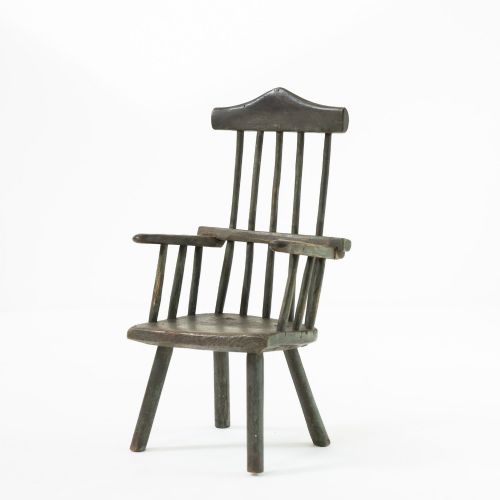
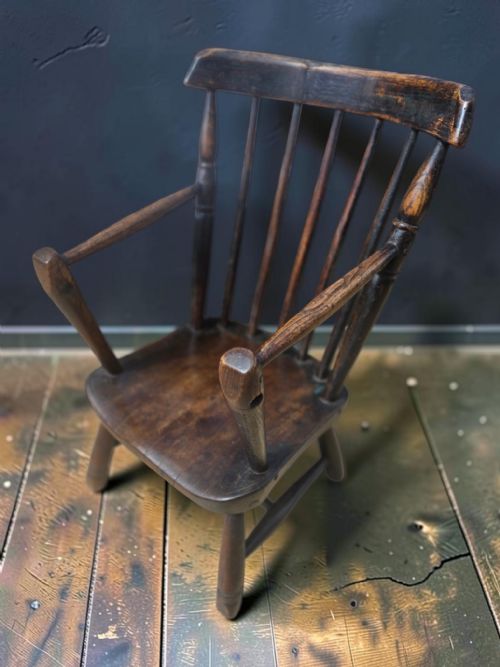
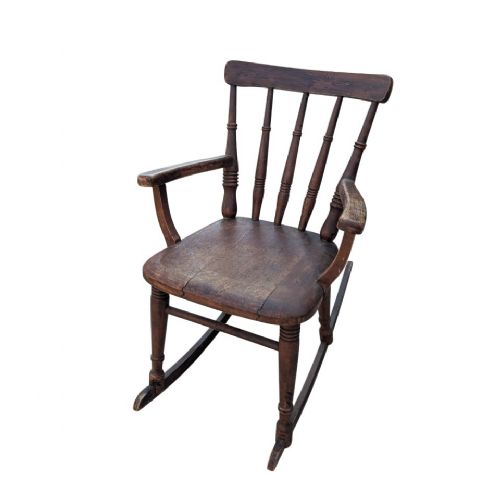
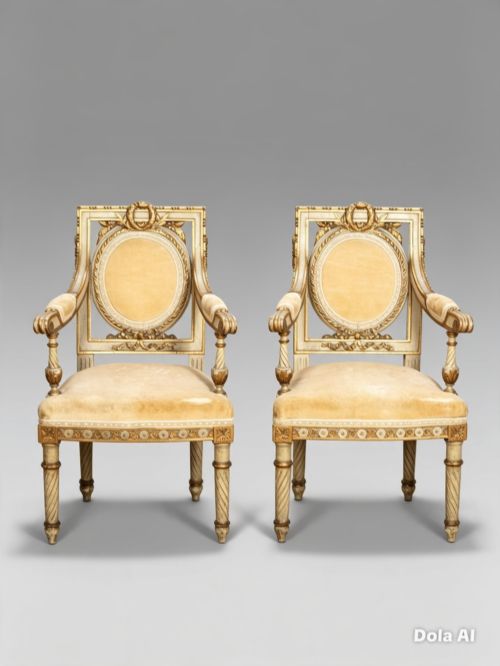
The versions most commonly met on this page include country Windsor armchairs, stick back forms, and cane-seated bergere chairs originating from English, Scandinavian, and European workshops. These pieces span simple elm and oak country seating alongside polished mahogany and walnut examples.
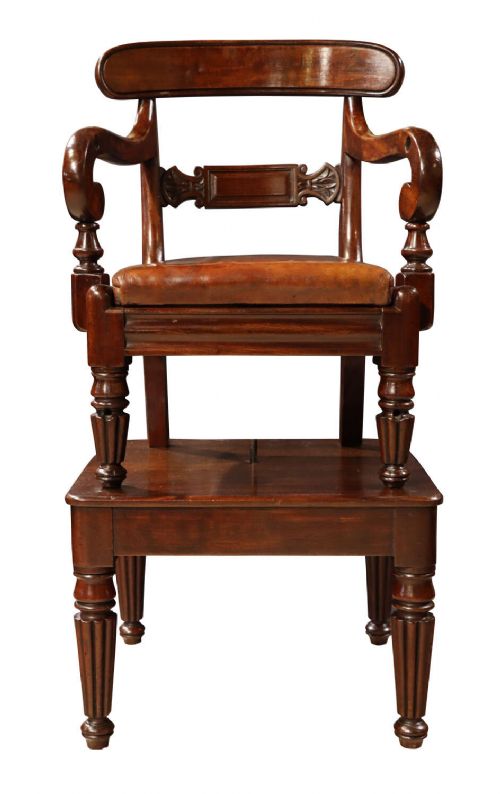
Specialised domestic forms also appear, including metamorphic high chairs that convert for feeding or play, rocking chairs, and posture-correcting correction chairs. Each type reflects the shifting domestic habits and nursery requirements of the nineteenth century.
How They Were Made
Makers utilised native hardwoods such as oak, elm, ash, beech, and yew alongside imported timbers like mahogany and walnut to construct sturdy frames. Joinery methods combined traditional pegged mortise and tenon joints with steam-bent components for Windsor bows and turned spindles.
Surfaces received various treatments, from waxed natural timber and ebonised finishes to painted decoration and gilding. Seat inserts employed woven cane, rush, and leather upholstery buttoned over padded horsehair frames.
Seating inserts recorded on this page include cane, rush, leather upholstery, and solid timber.
What Varies in Quality
Quality rests upon the proportion and fidelity of the miniature scale, distinguishing pieces built specifically for a child from those clumsily reduced from adult dimensions. Finer examples retain original turned members, crisp carving, and untouched timber patination.
The integrity of secondary materials dictates standard, separating loose or replaced cane and rush seating from original woven panels that have survived centuries of nursery use. Maker attribution and unusual metamorphic or functional mechanics elevate specific pieces above standard domestic chairs.
LIBERTY of LONDON·FORD MADDOX BROWN
The 19th Century Childs Seat Glossary
- Bergere
- An upholstered armchair with enclosed sides, where the back and arms are typically panelled in woven cane.
- Windsor
- A chair built with a solid wooden seat into which the legs and back spindles are wedged directly, often featuring a bowed top rail.
- Metamorphic
- Furniture designed to transform into alternative domestic configurations, such as a high chair converting into a low rocker.
- Vernacular
- Local building and furniture traditions shaped by regional materials and practical domestic needs rather than metropolitan academic styles.
- Barley twist
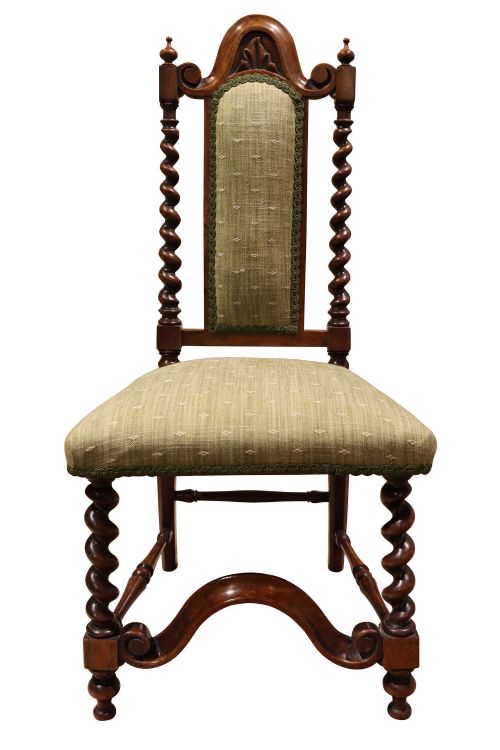
- A decorative turning technique resembling a twisted rope, carved into chair legs and vertical supports during the Victorian period.
19th Century Childs Seat: Frequently Asked Questions
How were high chairs used?
Nineteenth-century high chairs elevated young children to table height for family meals, often incorporating trays or footrests for support.
Some examples utilised clever mechanical designs that allowed the upper chair section to detach from a lower base, creating a low play seat.
What is a correction chair?
Correction chairs were strict seating devices designed in the Victorian period to encourage upright posture and deportment in children.
They typically omitted armrests and featured supportive tall backs with cane seats, enforcing rigid sitting habits during lessons.
Are these chairs safe for children?
These pieces function primarily as historical antiques and decorative objects rather than modern certified nursery furniture.
Buyers living with young children usually display them as collectors' items or utilise them with careful supervision.