


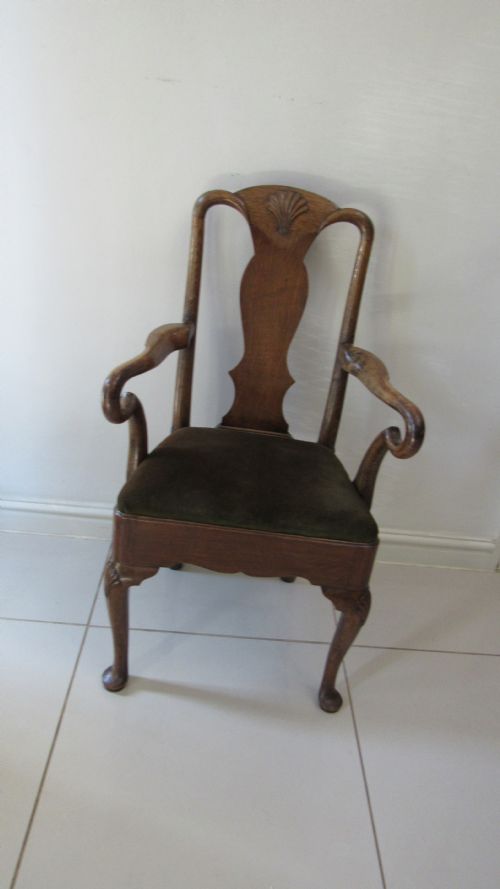

Georgian Style Nursery Chair
A Georgian style nursery chair is a small seating piece built for children, offering period character and scaled-down antique charm.
Georgian Style Nursery Chair
When buyers search for a Georgian style nursery chair, they encounter small seating pieces designed specifically for children during past centuries. These items appear across several historic periods, including the Georgian era, the Regency period, and later revival decades.
The selections available on this page most commonly include low armchairs, open arm carvers, rocking chairs, and high chairs. Makers constructed these diminutive seats in various forms, such as Windsor chairs, corner chairs, and winged armchairs.
Originating from the nineteenth and early twentieth centuries, these items reflect the stylistic preferences of earlier epochs like the Queen Anne and George II eras. Walnut, mahogany, and oak form the primary timber bodies of these miniature domestic furnishings.
How they were made
Craftsmen built these small chairs using robust hardwoods such as mahogany, walnut, oak, and beech. These timbers provided the structural strength required for children's furniture while allowing for traditional joinery and carved details.
Upholstery played a central role in finishing many examples, utilising textiles like damask, tapestry, and general fabric. Artisans also incorporated woven cane panels into backrests and seats for texture and ventilation.
Georgian Style Nursery Chair Retail Price Guide 2026
Typical asking prices for georgian style nursery chair among the pieces listed under this phrase on Sellingantiques today, from the lower quarter to the upper quarter. They describe what is for sale here now, not the wider market.
Someone thought it entirely sensible to scale down a massive wing armchair so a toddler could brood in miniature Victorian comfort.
What varies in quality
The refinement of the timber carving and the fidelity to historical design dictate the upper tier of these pieces. Chairs that exhibit careful proportions and authentic revival styling distinguish themselves from simpler utilitarian items.
The choice of materials and the integrity of the original upholstery influence the standing of an individual chair. Pieces retaining period textiles or high-grade burr walnut demonstrate greater consideration by the original maker.
The Georgian Style Nursery Chair Glossary
- Carver chair
- An open armchair, typically featuring arms and a wooden frame, designed for domestic use.
- Windsor chair
- A wooden seating form constructed with turned spindles inserted into a solid sculpted seat.
- Damask upholstery
- A reversible figured fabric woven on a jacquard loom, frequently used for traditional seat covers.
- Burr walnut
- Timber taken from walnut tree growths, valued for its complex and decorative grain patterns in furniture production.
- Corner chair
- A seating item designed to fit into the angle of a room, featuring a diagonal orientation and a curved back.
Georgian Style Nursery Chair: Frequently Asked Questions
What is a nursery chair?
A nursery chair is a low-seated chair historically used in children's rooms or domestic quarters for sitting close to infants. These pieces are scaled down in height compared to standard adult furniture.
They encompass various forms including rocking chairs, open armchairs, and high chairs, reflecting the domestic needs of past households.
How old are these chairs?
The pieces available span from the Georgian period through the nineteenth century and into the early twentieth century. Many examples date from revival eras when cabinetmakers copied earlier eighteenth-century designs.
Specific dates on listings point to the nineteenth century, nineteen hundred, nineteen ten, and nineteen twenty as common manufacturing windows.
What woods were used?
Makers constructed these chairs predominantly using dense hardwoods suited to durable domestic furnishings. Mahogany, walnut, burr walnut, oak, and beech appear regularly across the recorded pieces.
These timbers offered both structural resilience and surfaces suitable for polishing or carving.
Were they meant for children?
Yes, these items were built specifically with smaller dimensions for the use of children in domestic settings. The category includes high chairs for feeding, rocking chairs for soothing, and small armchairs.
Their miniature scale distinguishes them from full-sized household seating while maintaining period stylistic traits.