


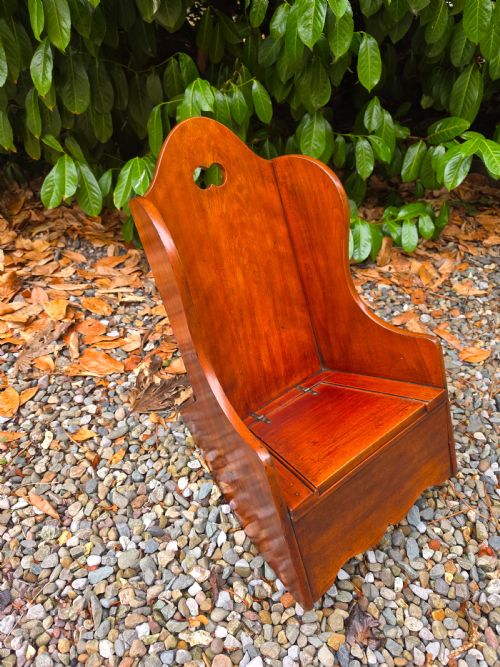


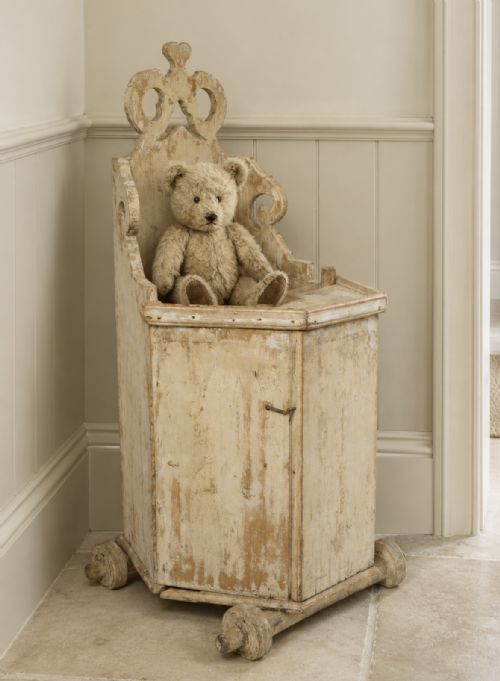


Vintage Country Nursery Furniture
These vintage country nursery furniture pieces are small-scale wooden seats and cradles designed for children, offering tactile rustic charm and centuries of domestic history.
Vintage Country Nursery Furniture
Vintage country nursery furniture comprises seating and sleeping pieces built for children across several centuries, including rockers, highchairs, armchairs, and cradles. These objects emerge from domestic traditions where scaled-down versions of adult furniture were made with the same care as full-sized pieces.
The selections available here lean heavily toward English and Scandinavian country vernacular styles. Pieces take the form of spindle-back Windsors, sturdy ash and elm chairs, and panelled pine or painted cradles.
Most examples date from the nineteenth century, though earlier Georgian and seventeen-hundreds pieces appear alongside Edwardian items. The assortment centres on functional seating and rocking furniture built for daily use in domestic settings.
How they were made
Makers utilised local hardwoods such as elm, ash, beech, oak, yew, fruitwood, and pine, selecting timbers for strength and local availability. Windsor forms employ bowed hoops and turned spindles, while cradles rely on panelled construction or painted pine.
Construction methods combine traditional joinery with rustic ingenuity, utilising pegged joints, solid plank seats, and steam-bent components. Surfaces are often left plain, showing the natural grain of fruitwood and yew, or finished with early painted layers.
Vintage Country Nursery Furniture Retail Price Guide 2026
Typical asking prices for vintage country nursery furniture among the pieces listed under this phrase on Sellingantiques today, from the lower quarter to the upper quarter. They describe what is for sale here now, not the wider market.
A tiny potty rocker ensures that eighteenth-century toddlers tackled bathroom training with appropriate theatrical motion.
What varies in quality
Quality rests in the harmony of proportion and the integrity of the timber. A well-proportioned child's Windsor or rocker balances the miniature scale without looking clumsy or compressed.
The choice of wood alters the character of a piece, with figured yew wood or rich fruitwood marking out finer examples against simpler pine or mixed-wood vernacular builds. Original surfaces, patination, and minimal structural alteration dictate the desirability of each item.
The Vintage Country Nursery Furniture Glossary
- Windsor
- A chair built with a solid wooden seat into which the legs and back spindles are direct-inserted. This construction provides robust strength through pegged joints and shaped components.
- Vernacular
- Objects designed by local tradesmen rather than urban workshops, following regional traditions and practical needs. These pieces reflect the specific timber supplies and social habits of their area.
- Potty rocker
- A low rocking chair adapted with an aperture in the seat for nursery use. They combine infant seating with a rocking mechanism.
- Hoopback
- A chair back formed from a single continuous bent piece of wood that sweeps down to the seat. It offers structural resilience in smaller seating.
- Spindle back
- A chair back filled with turned or shaped vertical wooden rods. This method lightens the weight while supporting the sitter.
Vintage Country Nursery Furniture: Frequently Asked Questions
What is vintage country nursery furniture?
Vintage country nursery furniture encompasses historical children's seating and sleeping items built by regional makers. These include small armchairs, rockers, highchairs, and cradles constructed from solid timbers.
They reflect domestic life from the eighteenth century through the Edwardian period, combining practical utility with scaled-down craftsmanship.
How were children's Windsor chairs used?
These small Windsor chairs served as everyday seating for young children in domestic country settings. Their sturdy construction allowed them to withstand active daily use.
Many incorporate rocking rails or high chair frames to assist parents with feeding and soothing infants.
How can I tell the age of a cradle?
Dating relies on construction methods, timber choice, and surface treatments. Early pieces often feature panelled pine construction or hand-planed boards.
Later examples from the nineteenth century may display turned details or painted finishes typical of Victorian and Edwardian periods.
Can I use these pieces in a modern home?
These items integrate easily into contemporary interiors as decorative display objects or practical low seating. Their compact proportions make them suitable for corners or hallways.
Collectors appreciate them for their honest materials and the warmth of their aged wooden surfaces.