

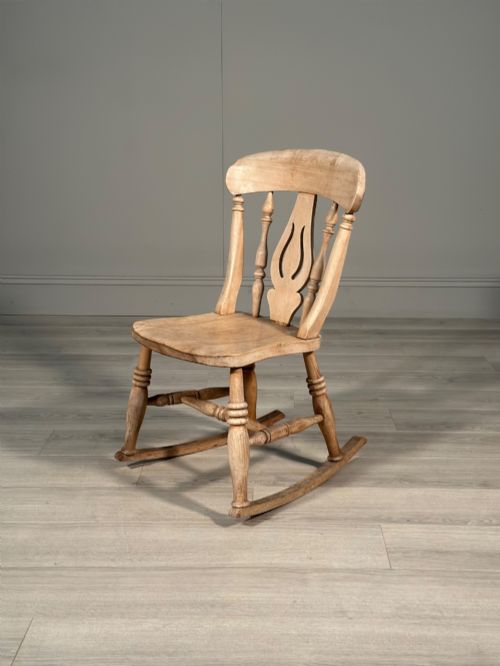
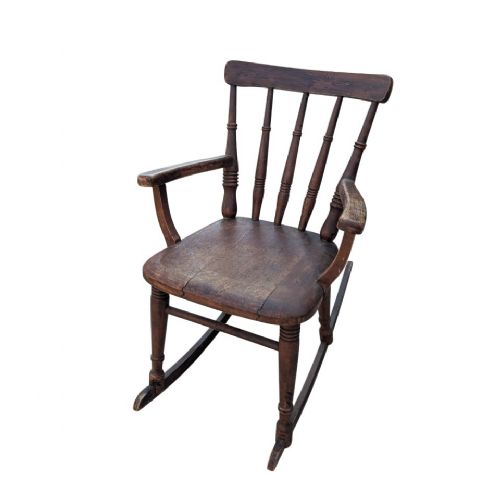


Traditional Childs Rocking Chair
A traditional childs rocking chair brings miniature country charm and practical seating into a room.
Traditional Childs Rocking Chair
A traditional childs rocking chair is a miniature seating form designed for young occupants, combining domestic function with country craftsmanship. These pieces span from the mid-eighteenth century through the nineteenth century, encompassing Victorian and various rustic country styles.
The versions most commonly met on this page belong to the nineteenth century and the Victorian period, frequently showing simple vernacular construction. Regional variations range from English country workshops to Scandinavian country traditions, reflecting local timber supplies and seating preferences.
How they were made
Construction relies heavily on native timbers such as oak, elm, birch, fruitwood, and pine, often finished with wood stain or left in a natural state. Frame construction utilises traditional Windsor methods alongside pegged joints and sturdy turned spindles.
Seating areas sometimes incorporate woven rush or textiles to provide comfort alongside solid wood seats. Makers selected woods based on local availability, employing fruitwood and elm for their bending strength and durability.
Traditional Childs Rocking Chair Retail Price Guide 2026
Typical asking prices for traditional childs rocking chair among the pieces listed under this phrase on Sellingantiques today, from the lower quarter to the upper quarter. They describe what is for sale here now, not the wider market.
Styles represented include English country vernacular, rustic country, Scandinavian country, and Victorian.
What varies in quality
Quality in a traditional childs rocking chair rests upon the harmony of proportions between the miniature scale and the robust rocker curves. Better examples display carefully turned spindles, well-balanced arm supports, and thoughtful timber selection that enhances the grain.
Simpler vernacular pieces show utilitarian construction with heavy staining and plain plank seats, while higher quality items feature refined Windsor forms and superior wood selection such as fruitwood or figured mahogany.
The Traditional Childs Rocking Chair Glossary
- Vernacular
- Everyday furniture made by local craftsmen rather than metropolitan workshops. These pieces prioritise utility and regional traditions over high-style academic design.
- Windsor
- A chair built with a solid wooden seat into which the legs, back spindles, and bow are driven directly. This technique creates a remarkably sturdy yet light frame.
- Fruitwood
- Timber derived from fruit-bearing trees such as apple, pear, or cherry. It offers a dense, close grain that takes a fine polish and works well for turned components.
- Rush
- Marsh grasses twisted into cords and used for bottoming seating frames. This traditional weaving technique provides a flexible and resilient surface.
Traditional Childs Rocking Chair: Frequently Asked Questions
How were these chairs used?
These miniature rocking chairs served as everyday seating for young children in domestic nurseries and parlours. They provided a secure and comforting seat close to the warmth of the hearth.
Over generations, many also functioned as cherished nursery toys and decorative items. Their sturdy construction allowed them to withstand active daily use by children.
How do I date a childs rocking chair?
Dating relies on observing construction methods, timber choices, and stylistic markers such as turned spindle shapes. Eighteenth-century examples often feature simpler Windsor forms and native hardwoods like elm.
Nineteenth-century and Victorian pieces frequently incorporate more varied stains, textiles, or exotic timbers like mahogany. Comparing the wear patterns on the rocker bases also helps indicate the age of the piece.
Can children sit in them today?
Many traditional childs rocking chairs remain structurally sound enough for gentle contemporary use by young children. Examining the stability of the joints and rocker bases ensures safe seating.
Some collectors prefer to treat them primarily as decorative objects or historical display pieces. Proper placement on even flooring prevents excessive strain on the wooden rockers.
What styles are available?
The selection includes English country vernacular, rustic country, and Scandinavian country styles. Each style exhibits distinct regional preferences in timber selection and turning techniques.
Victorian interpretations often bring formal detailing and darker wood stains into the domestic interior. Unpainted fruitwood and elm pieces showcase the natural grain favoured by rural makers.