




Caned Reading Chair
A caned reading chair offers deep-seated comfort for long hours with a book, combining sturdy timber frames with resilient woven seating.
Caned Reading Chair
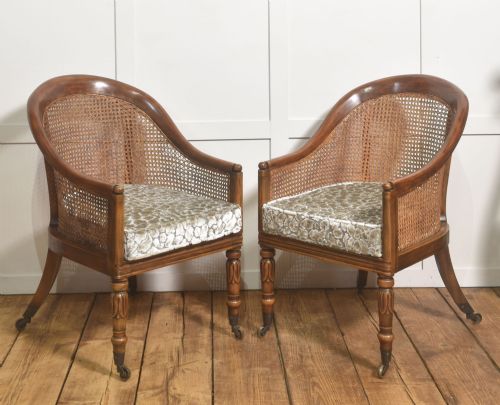
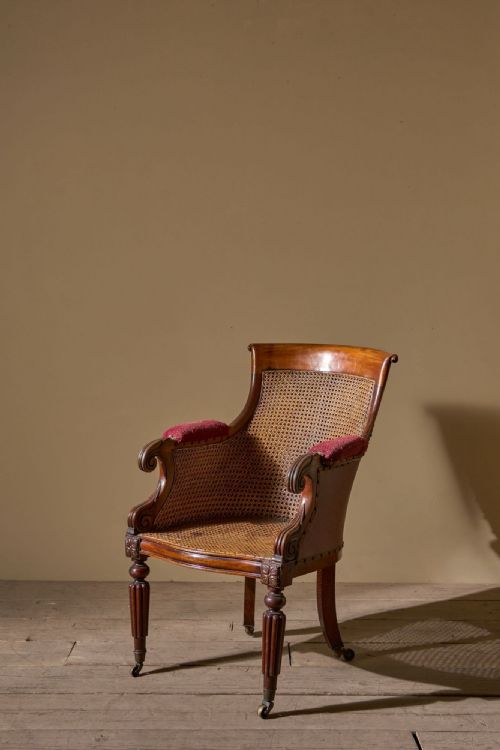
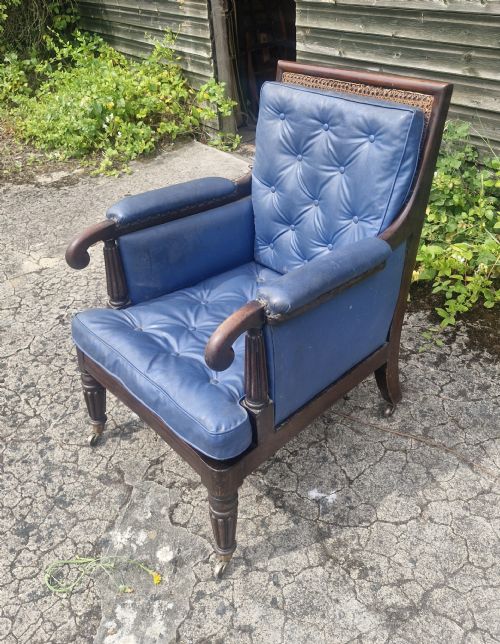
A caned reading chair is primarily designed for the library or study, providing a supportive seat for extended reading. These armchairs appear frequently in Regency, William IV, and Victorian iterations, alongside later Edwardian and 1920s examples.
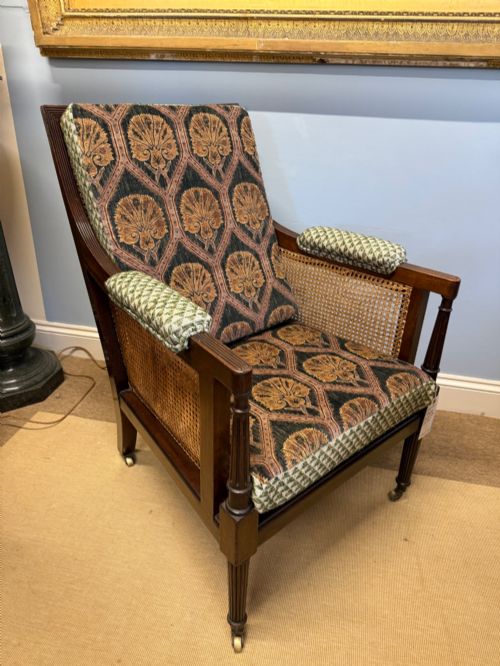
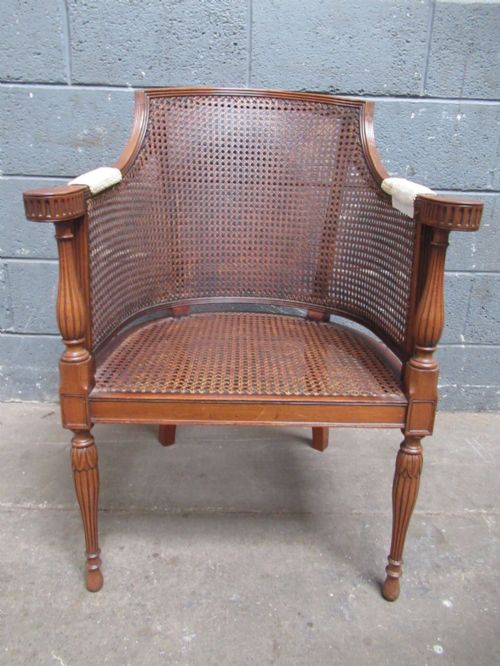
The form typically relies on an armchair structure with a rounded or tub-shaped back, often incorporating low arms to accommodate voluminous nineteenth-century garments. Mahogany is the predominant timber seen across these listings, alongside oak and satinwood.
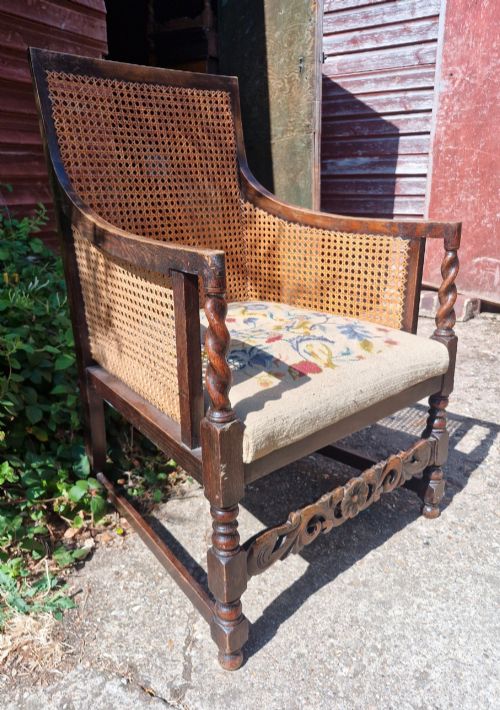
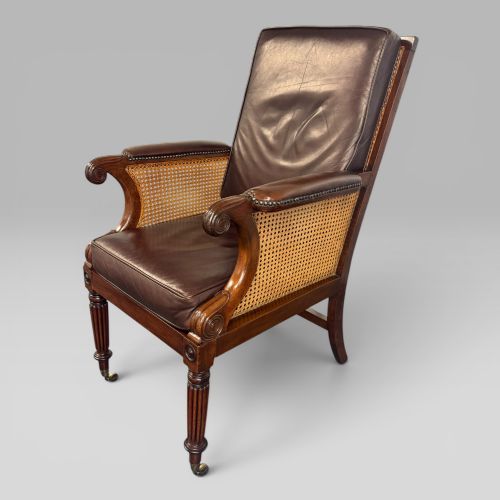
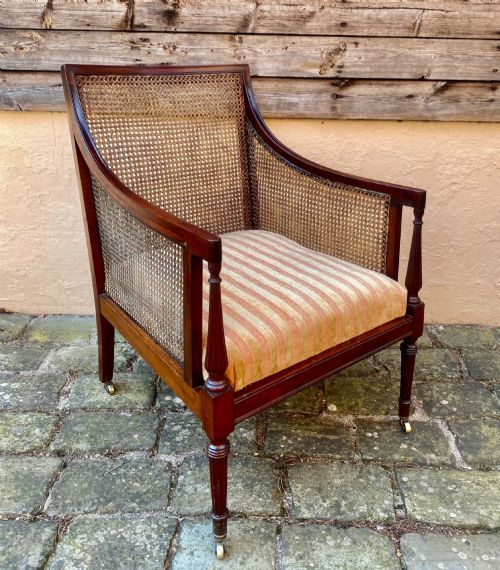
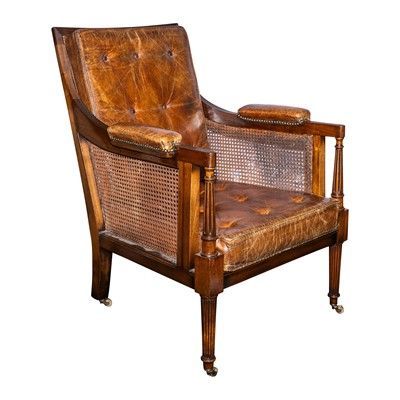
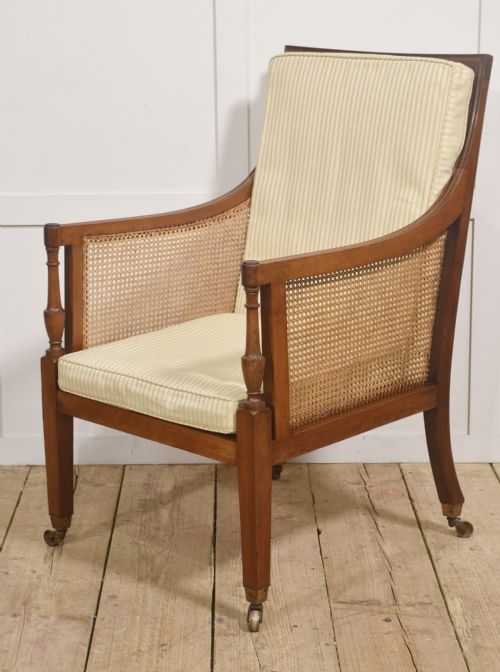
Many examples are designated as bergères, featuring woven cane panels to both the back and seat. Buyers searching this phrase meet everything from formal Regency library chairs to wicker-woven Dryad of Leicester lounge seating.
How they were made
Makers constructed the primary frames from dense hardwoods like mahogany and oak, turning and carving the woodwork to follow prevailing Regency, Victorian, or Jacobean Revival tastes. Caning was woven tightly by hand through drilled holes or channels around the frame edges.
Leather and fabric upholstery frequently appear on squab cushions designed to sit atop the woven cane base. Brass details, faux rosewood finishes, and rattan cane were also utilised by makers to elevate the visual weight of the seating.
Even nineteenth-century scholars needed a sturdy place to sit while pretending to study.
What varies in quality
Quality rests heavily on the tension and uniformity of the cane weave, alongside the crispness of the timber carving on the frame. Well-drawn proportions with generous seating dimensions distinguish finer library pieces from standard domestic armchairs.
The choice of primary wood also dictates the tier, with figured mahogany and satinwood frames sitting at the higher end compared to plain oak or later utility iterations. The presence of original fitted leather squab cushions adds substantial distinction to surviving examples.
Gillows·Dryad of Leicester
The Caned Reading Chair Glossary
- Bergère
- An enclosed upholstered armchair with a wooden frame where the sides and back are typically filled with cane work. This French-inspired form became a staple of British library seating throughout the Regency and Victorian periods.
- Caning
- A method of weaving peeled rattan or cane strips to form a light, supportive mesh for chair seats and backs. It provides flexibility and airflow compared to solid squab upholstery.
- Squab
- A loose, removable upholstered cushion placed directly onto the cane seat base for comfort. These are frequently covered in leather, velvet, or fabric.
- Tub chair
- An armchair featuring a continuous curved back and arms that form a single semi-circular enclosure. This shape wraps around the sitter to block drafts in chilly libraries.
- Regency
- A British design period spanning the early nineteenth century defined by classical restraint and archaeological revival motifs. Furniture from this era often utilises dark mahogany and brass inlay.
Caned Reading Chair: Frequently Asked Questions
What is a bergere chair?
A bergere chair is a fully enclosed upholstered armchair featuring a wooden frame with woven cane panels on the back and sides. They were designed for comfortable lounging in formal sitting rooms and libraries.
These pieces typically require a loose cushion on the cane seat for comfort during long periods of sitting.
How do I date a reading chair?
Dating relies on examining the timber species, joinery methods, and stylistic cues present in the carved woodwork. Regency and William IV pieces often display classical mahogany turns and brass mounts, while later Edwardian and 1920s versions show lighter frames or Arts and Crafts influences.
Comparing the weave style and proportion against documented period examples helps narrow down the decade of manufacture.
Are these chairs comfortable?
These chairs are built for extended seating, traditionally paired with a leather or fabric squab cushion placed over the woven cane base. The springy nature of the cane provides natural give beneath the cushion.
Deep seats and low armrests allow for relaxed postures suited to reading or writing.
Where were these chairs used?
They were historically positioned in country house libraries, studies, and private drawing rooms where residents spent hours reading or studying. Their sturdy wooden frames and breathable cane backs made them practical for daily domestic use.
Today, they function well as accent seating in living spaces or home offices.