
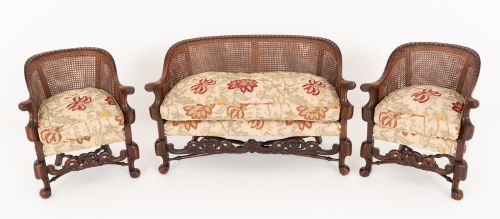

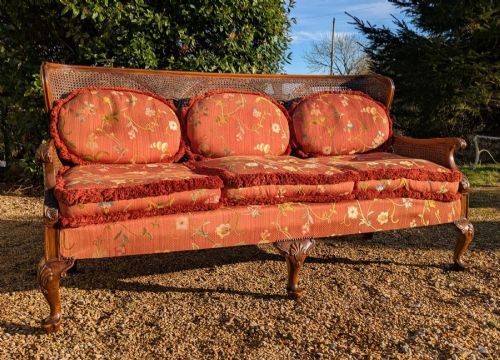
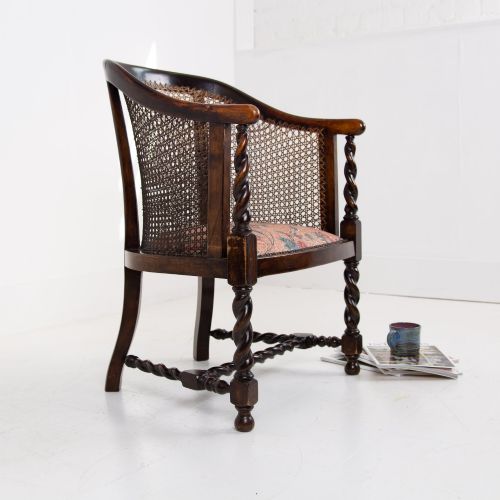
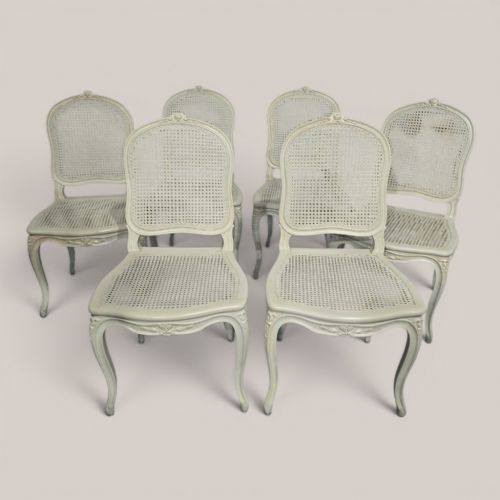
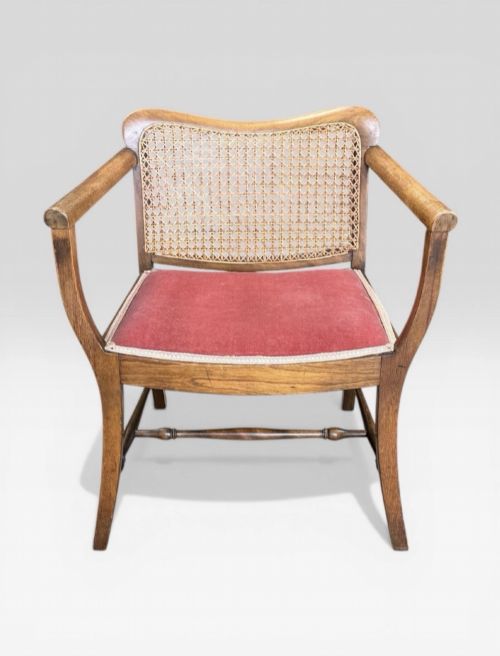


Caned Back Bergere
A caned back bergere brings deep woven comfort and classic wooden framing to a room, offering an enclosed, inviting seat.
Caned Back Bergere
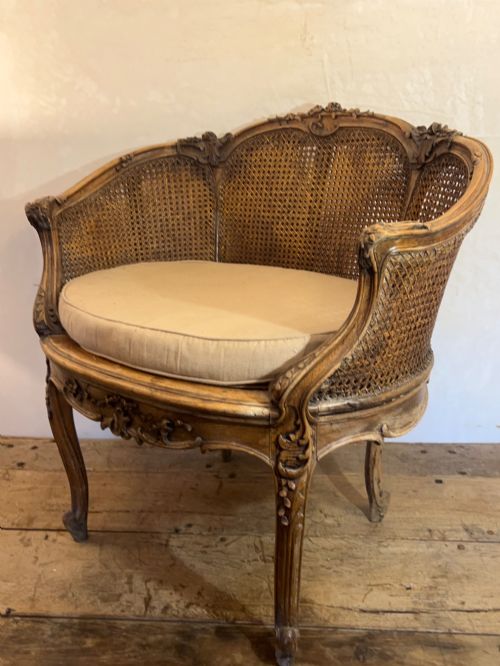
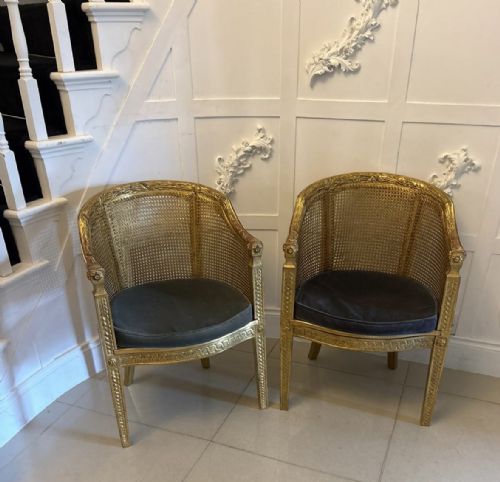
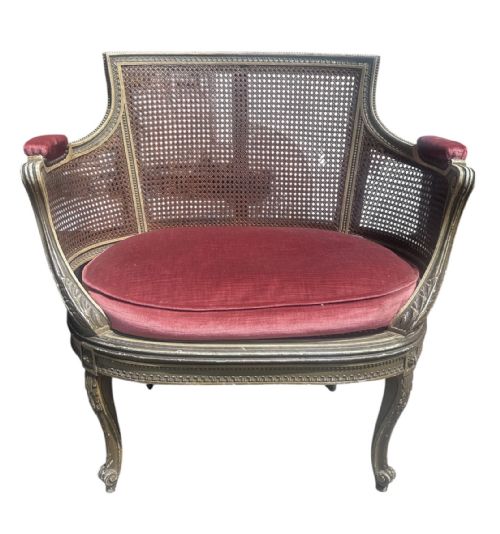
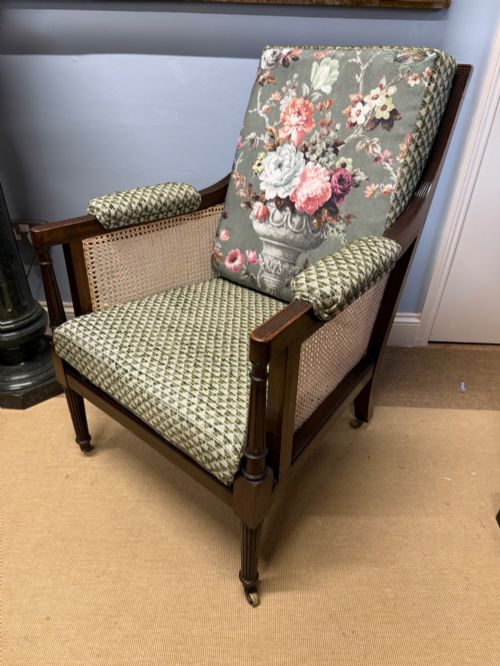
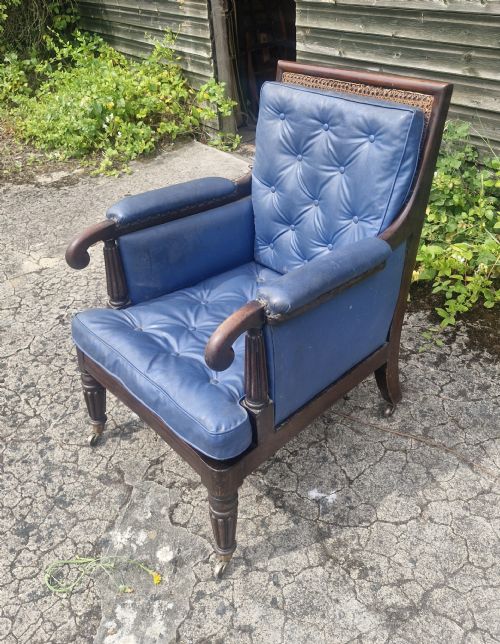
A caned back bergere is a deep, enclosed armchair or sofa designed for relaxation, often featuring solid wooden framing alongside woven panels. These seats appear across multiple periods, with nineteenth-century examples and twentieth-century interpretations dominating the selection.
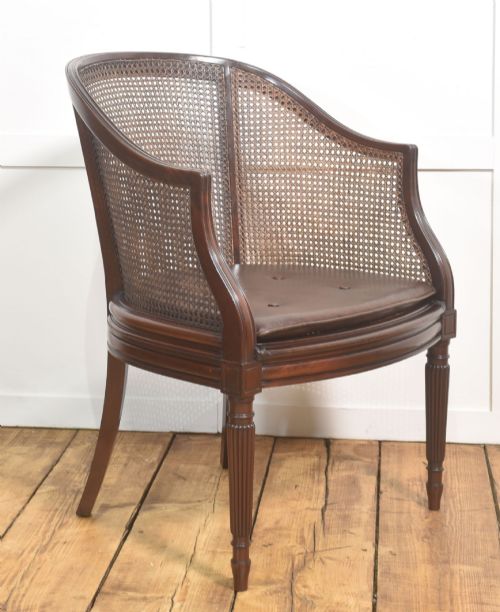
The form stretches from library armchairs and country house seats to full suites, dining chairs, and child's armchairs. Mahogany, walnut, and oak form the primary wooden structures, frequently paired with loose cushions in leather, velvet, or fabric.
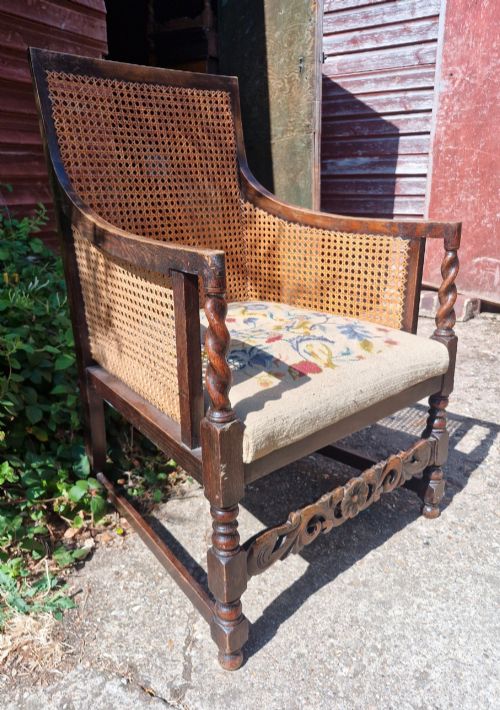
French influences run deep through the selection, with Louis XV style and French Chateau pieces appearing alongside Regency, Victorian, Edwardian, and Jacobean Revival pieces. Buyers meet everything from single tub chairs to matching sets of six dining chairs and three-seater sofas.
Materials and Construction
Frames rely on sturdy timbers such as mahogany, walnut, and oak, shaped through carving, turning, or painting to suit styles ranging from Regency to Carolean. Selected pieces introduce ebonised finishes, faux rosewood, giltwood, or lacquered surfaces.
Cane and rattan cane form the distinctive woven back and seat panels, utilising split cane techniques to create flexible yet supportive surfaces. Cushioning depends on feather fillings or traditional squabs upholstered in leather, velvet, and fabric.
Decorative details incorporate brass accents and detailed woodwork, from simple bobbin turning to elaborate carved motifs.
Listings feature mahogany, walnut, and oak frames paired with rattan cane panels and leather, velvet, or fabric upholstery.
Distinctions in Quality
Quality rests in the crispness of the timber carving and the tightness of the woven cane work. Finer frames display balanced proportions and deep, rich timber grain, whereas simpler versions rely on plainer construction.
The integrity of the woven panels separates ordinary examples from superior ones, as even tension across the split cane indicates skilled handwork. Original frames paired with well-proportioned loose cushions maintain the structural harmony intended by the maker.
James Shoolbred·Gillows
The Caned Back Bergere Glossary
- Bergere
- An enclosed upholstered armchair with wooden sides and a woven cane back. This French form provides a deep, comfortable seat.
- Caning
- The practice of weaving rattan or split cane to form flexible panels for chair backs and seats. This technique allows for breathable, supportive seating.
- Klismos
- An ancient Greek chair design characterised by curved legs and a sweeping concave backrest. Revival pieces adopt this graceful profile.
- Corbeille
- A French term describing a rounded, basket-like chair back that envelops the sitter. It frequently appears on nineteenth-century seating.
- Carolean
- A seventeenth-century English style marked by rich carving, scrolling foliage, and tall backs. Revival versions capture this ornate aesthetic.
Caned Back Bergere: Frequently Asked Questions
What is a caned back bergere?
A caned back bergere is a fully enclosed armchair featuring a woven cane back and sides set within a wooden frame.
These seats are designed for deep lounging and often include loose feather cushions for added comfort.
How were these chairs used historically?
These pieces served as comfortable library chairs, drawing room seats, and parlour furnishings for reading and resting.
Larger versions included sofas and settee suites intended for formal entertaining in country houses.
How do I care for cane panels?
Keep cane panels clean by dusting gently and preventing them from drying out entirely in overly warm rooms.
Avoid placing heavy point loads on the woven surface to maintain the tension of the cane.
How do I identify a Regency bergere?
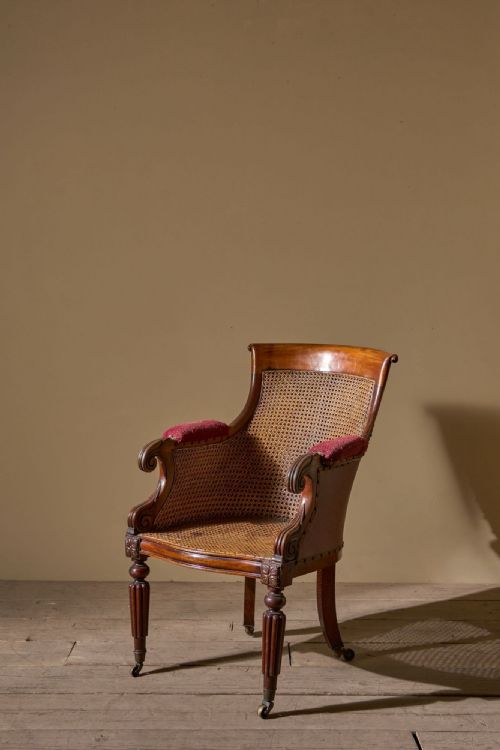
Regency examples often feature dark mahogany timbers, clean architectural lines, and classical brass mounts.
They frequently appear as library armchairs with reeded or sabre legs reflecting early nineteenth-century taste.