



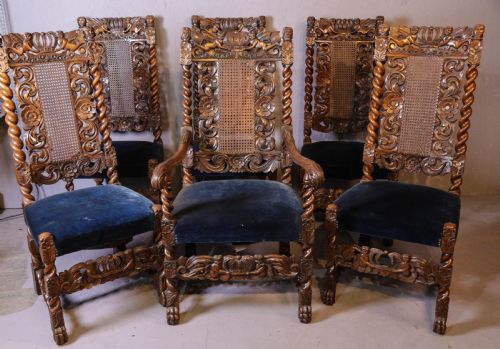


Caned High Chair
A caned antique high chair brings tactile, woven seating to nursery furniture, blending practical child rearing with traditional craftsmanship from past centuries.
Caned High Chair
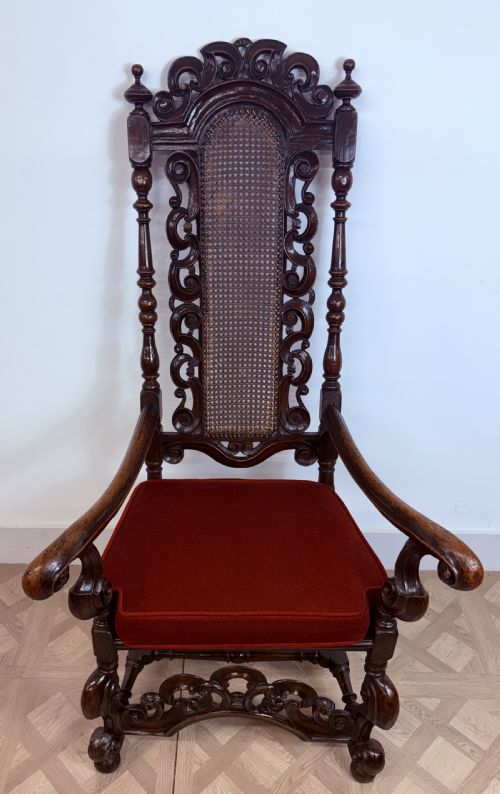
A caned antique high chair is a raised seat designed for children, constructed with woven plant materials in the back or seat panels. These pieces emerge across periods spanning the nineteenth century, the Victorian era, and the early twentieth century.
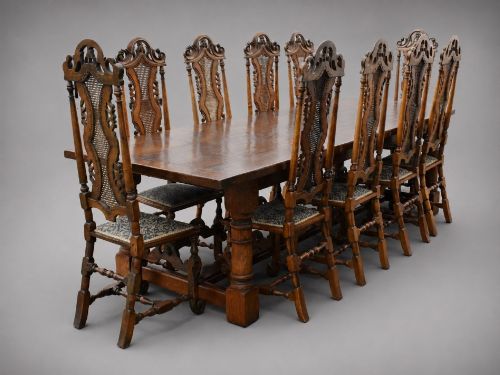
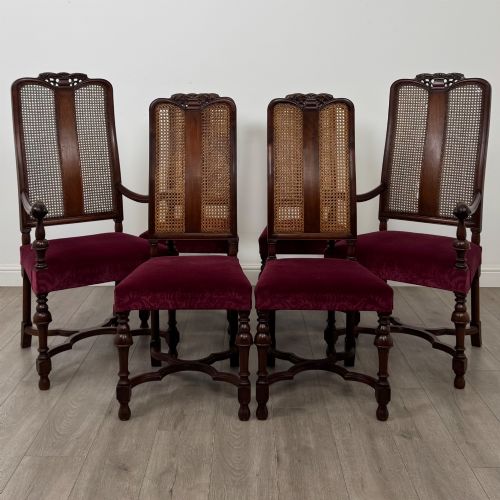
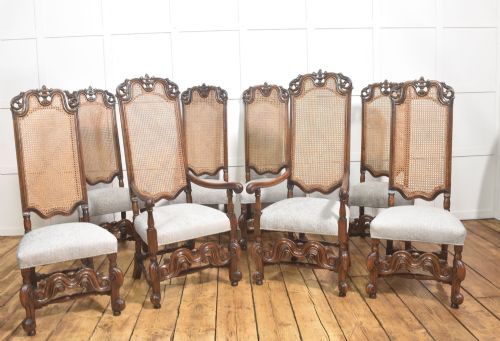
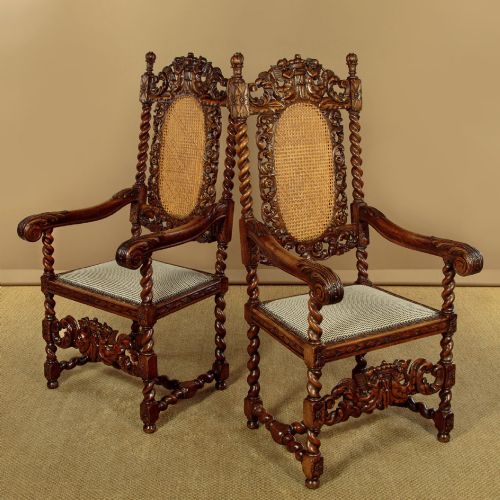
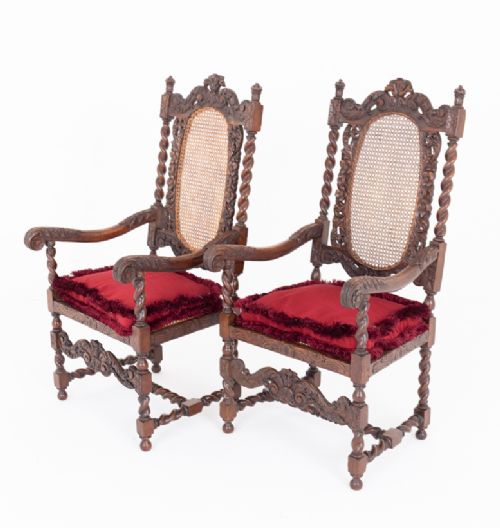
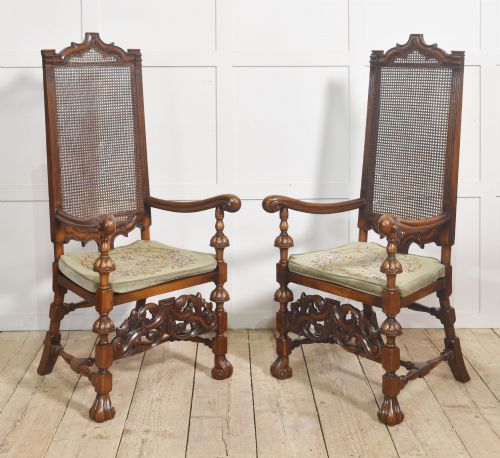
The selections on this page encompass walnut and mahogany childs high chairs alongside broader categories of seated furniture such as armchairs and dining chairs in Carolean, Jacobean Revival, and Victorian styles.
Makers utilised sturdy timbers like oak, walnut, and mahogany to build frames capable of supporting daily domestic use while incorporating woven cane, rattan, and willow elements.
Materials and Construction
Frames rely on hardwoods including oak, walnut, and mahogany, shaped through turning and heavy carving to establish structural integrity. Artisans joined these timbers using traditional joinery methods suited to domestic seating.
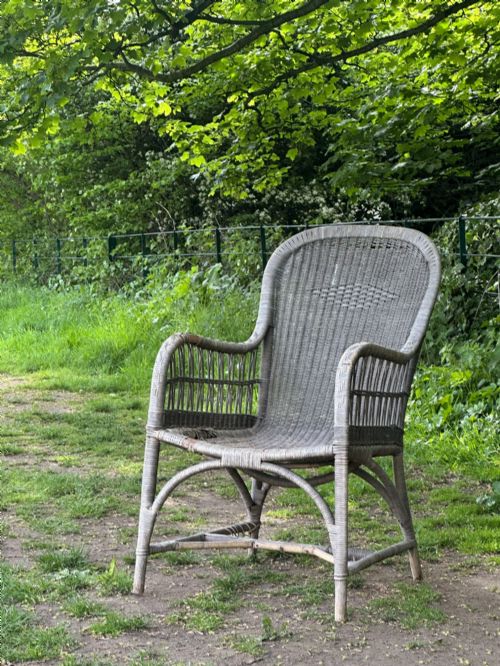
Panels of woven cane, rattan, and willow form the distinctive backrests and seats, fixed into channeled wooden frames by hand. Additional upholstery often includes fabric, velvet, and woven wicker elements.
Certain workshop pieces feature surface treatments such as painted finishes, ebonisation, or bone inlay to enhance the visual depth of the timber.
Listings feature pieces constructed from oak, walnut, and mahogany, incorporating woven cane, rattan, and willow across multiple centuries.
Standards of Execution
The distinction between tiers rests on the crispness of the timber carving and the uniformity of the handwoven cane panels. Deeply sculpted scrollwork and balanced proportions indicate greater workshop skill.
Material selection dictates the baseline of execution, with dense walnut and mahogany frames showing superior durability compared to softer secondary woods. The tightness and regularity of the cane weave reflect the labour invested by the maker.
Dryad of Leicester·Waring & Gillow
The Caned High Chair Glossary
- Cane
- A material derived from the peeled outer bark of rattan palms, pliable enough to be handwoven into open mesh patterns for chair backs and seats.
- Carolean
- A seventeenth-century style associated with the reign of Charles II, characterised by elaborate scrollwork, crown motifs, and turned wooden framing.
- Jacobean Revival
- A nineteenth-century design movement resurrecting seventeenth-century English motifs, notable for dark oak frames, geometric turnings, and stiff upright proportions.
- Bergere
- An enclosed upholstered armchair with a wooden frame where the back and sides are frequently filled with cane or wickerwork.
- Bobbin turned
- A method of woodturning that produces a series of rounded spherical shapes resembling wooden bobbins strung along a spindle.
Caned High Chair: Frequently Asked Questions
What is a caned antique high chair?
A caned antique high chair is an elevated children's seat featuring woven plant fibre panels in the backrest or seat. These pieces combine domestic utility with period woodwork styles.
They reflect the prevailing furniture fashions of their manufacturing eras, utilising woods like oak, walnut, and mahogany alongside traditional joinery techniques.
How were antique high chairs used?
These elevated seats allowed small children to sit securely at table height alongside adults during family meals. They served practical domestic functions in prosperous households.
Over time, many transitioned from everyday nursery furniture into decorative collector's items displayed within period interiors.
How do I identify the period of a chair?
Dating relies on observing structural characteristics, timber choices, and decorative motifs such as Carolean scrollwork or Victorian turning styles. Comparing the joinery methods provides further context.
Reference points include documented workshop production dates and stylistic revivals popular during the nineteenth and early twentieth centuries.
Are caned seats durable for daily use?
Traditional cane weaving offers surprising flexibility and strength when maintained in suitable indoor environments. The plant fibres respond well to gentle cleaning and proper humidity.
Heavier everyday modern usage requires mindful placement to protect older woven panels from sharp impacts or excessive point loading.