






Caned Child Seating
Caned child seating brings miniature 19th-century craftsmanship into domestic spaces, offering sturdy wooden frames and woven rattan seats made for historic nurseries.
Caned Child Seating
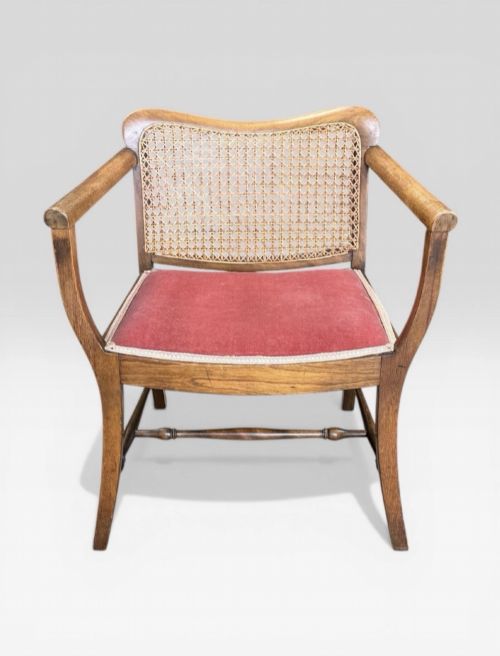
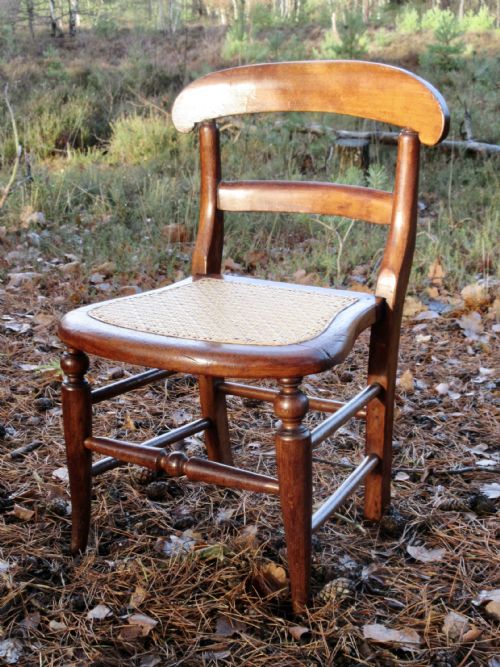
The most common examples on this page are mahogany and beech chairs featuring woven cane seats and backs. Bergere forms and high chairs appear frequently alongside bentwood and bamboo variations.
How they were made
Framing relies predominantly on hardwoods such as mahogany, beech, and oak, shaped into upright supports, tub backs, and turned legs. Cabinetmakers and specialised workshops utilised traditional joinery to build rigid miniature frames.
Seating and back panels utilise natural rattan cane woven through drilled holes in the wooden framework. Steam-bending techniques also appear in later bentwood examples, allowing curved structural components.
Several miniature chairs were made specifically sized for dolls rather than children, confusing generations of tall toddlers.
What varies in quality
Quality depends on the precision of the woodwork and the integrity of the woven cane panels. Finer examples display carefully turned details, well-figured mahogany, and tight, uniform cane weaving.
Proportion and decorative ambition also separate standard utility items from sophisticated miniature versions of adult furniture styles. Pieces exhibiting specific maker attributions or regional stylistic traits command greater interest.
James Shoolbred·Thonet
The Caned Child Seating Glossary
- Bergere
- An upholstered or cane-panelled armchair with enclosed sides. This French-inspired form often appears in miniature proportions for children.
- Cane
- Strips of peeled rattan woven into open mesh patterns. It provides a lightweight, resilient surface for seats and backs.
- Bentwood
- Wood softened by steam and bent into curved shapes. This technique defines the lightweight production associated with later manufacturers.
- Tub highchair
- A high chair featuring a rounded, enclosed backrest resembling a tub. These elevated seats kept young children secure during meals.
- Correction chair
- A historic seating form designed with a tall straight back to encourage upright posture. Examples occasionally incorporate woven cane panels.
Caned Child Seating: Frequently Asked Questions
How are these historic high chairs constructed?
Makers built these elevated seats using hardwoods like mahogany and beech joined to high bases or frames. Rattan cane was woven into the seat and back apertures to provide flexible support.
Additional elements include turned wooden spindles, footrests, and occasional safety rails designed to keep infants secure during use.
What periods do these miniature chairs represent?
The available pieces span the Georgian, Regency, and Victorian eras, extending into the early twentieth century. Each period displays distinct stylistic preferences in turnery and wood choice.
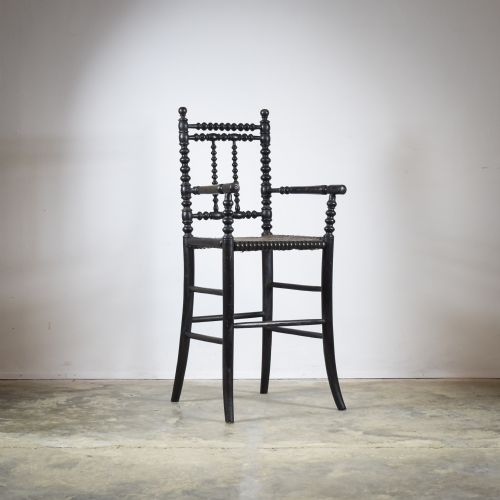
Georgian and Regency items favour mahogany and restrained classical lines, while Victorian examples introduce varied forms including bentwood, bamboo, and ebonised finishes.
How should I care for antique cane seating?
Natural rattan cane requires moderate humidity to prevent the material from becoming brittle and snapping. Avoid placing these chairs near direct heat sources or dry radiators.
Cleaning should involve only a soft brush to remove dust from the woven interstices without dampening the natural fibres.
Can children sit in these antique chairs?
Most of these historic pieces are built from antique timbers and delicate cane work intended for display or gentle domestic use. Their structural integrity varies according to age and past wear.
Buyers often place them as decorative nursery accents or utilise them to display antique dolls and teddies rather than active seating.