


Cane and Umbrella Stand
A cane and umbrella stand tames the hallway clutter while showing off period metalwork or timber.
Cane and Umbrella Stand
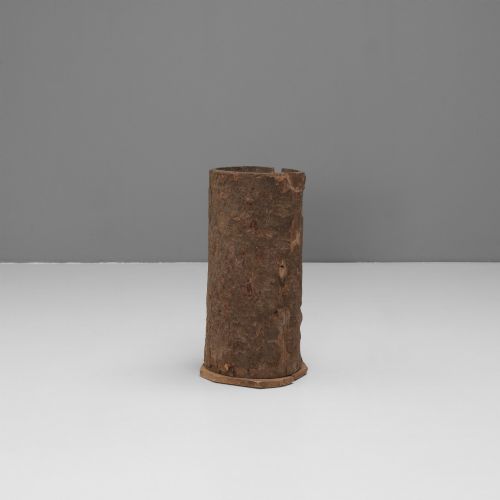
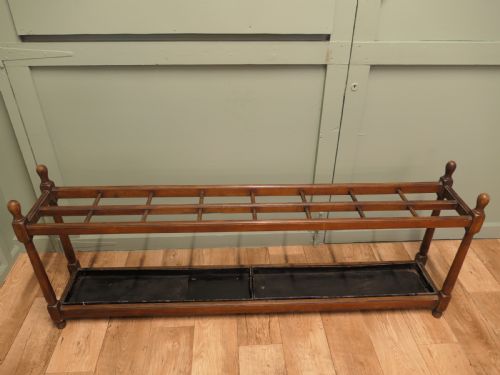
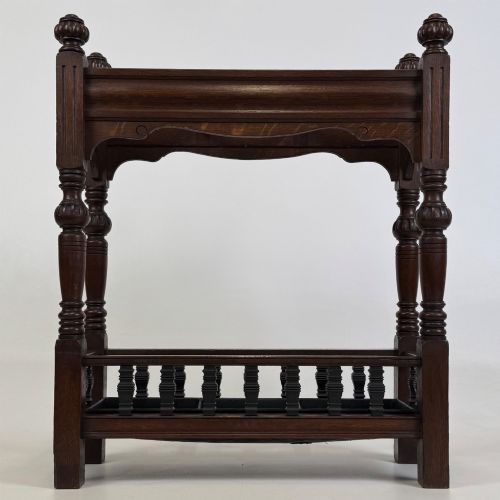
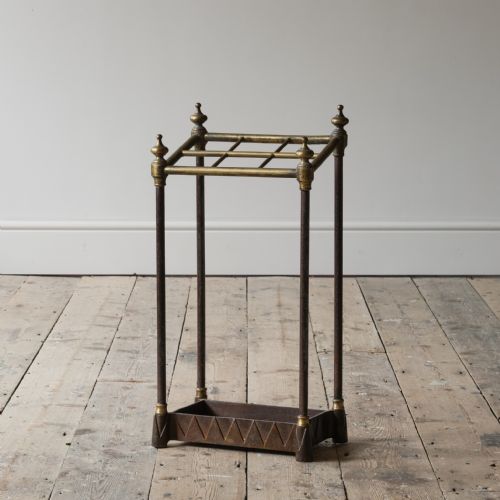
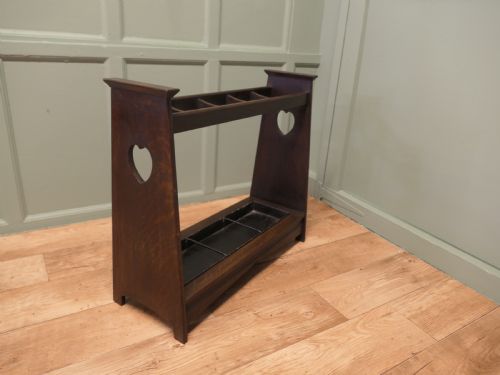
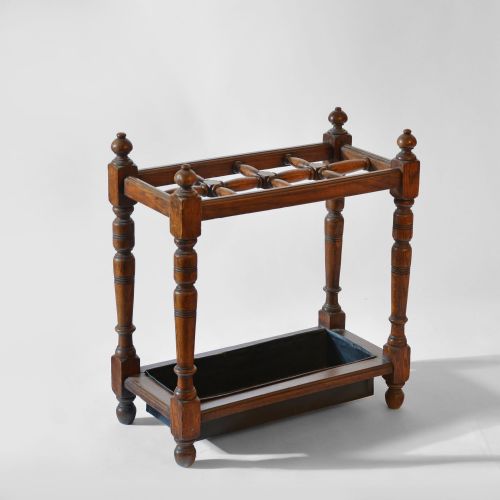
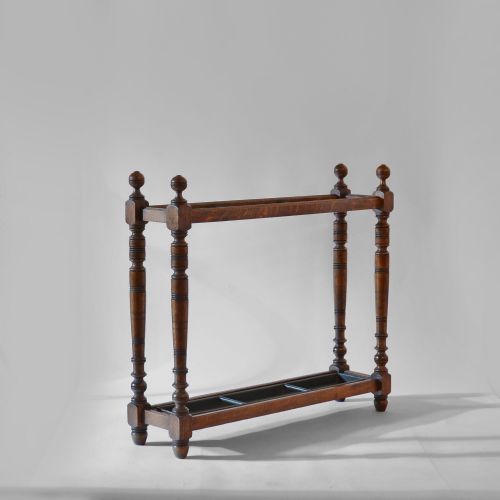
A cane and umbrella stand groups walking aids and wet weather gear near the front door in a practical arrangement. These hallway furnishings appear in various forms, from heavy metal frames to timber barrels and glazed ceramic cylinders.
Victorian and Edwardian examples dominate the selection, spanning cast iron, oak, mahogany, and brass. Makers often shaped these pieces to suit compact corners or long entrance passages in large houses.
The inventory ranges from utilitarian shop displays to decorative domestic hall furniture created during the Arts and Crafts and Aesthetic Movement periods. Buyers frequently encounter cast iron variants alongside coopered oak vessels bound in brass.
Materials and Construction
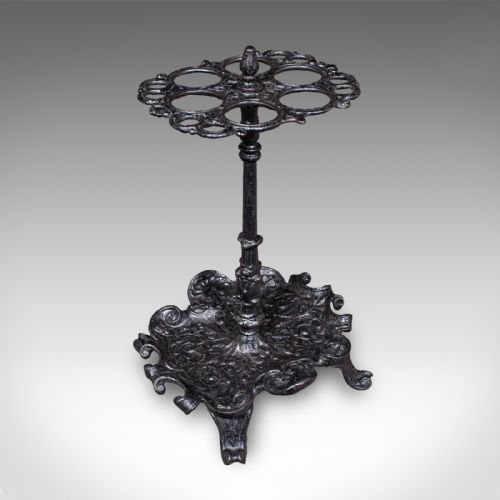
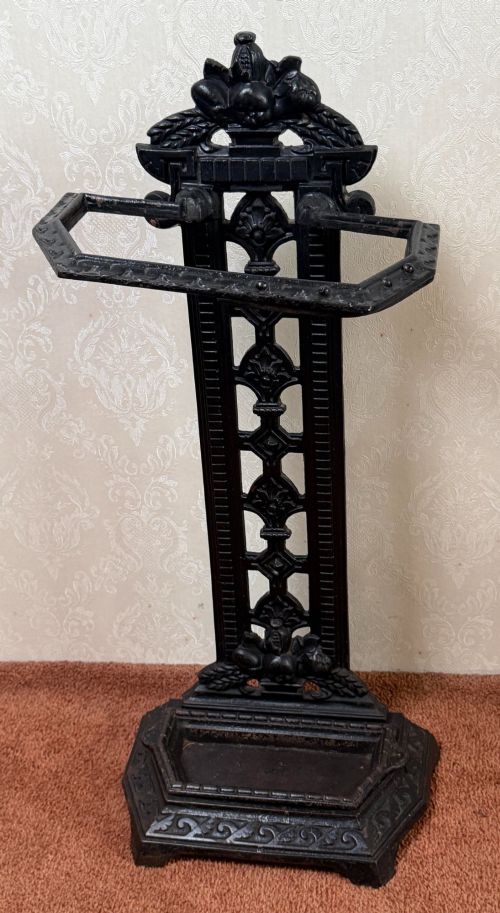
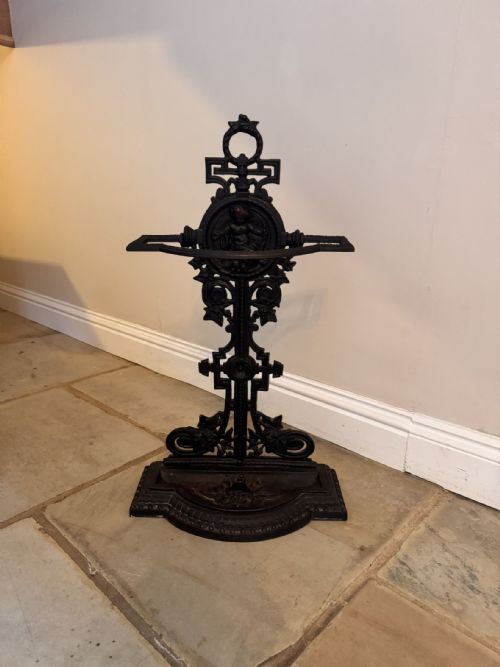
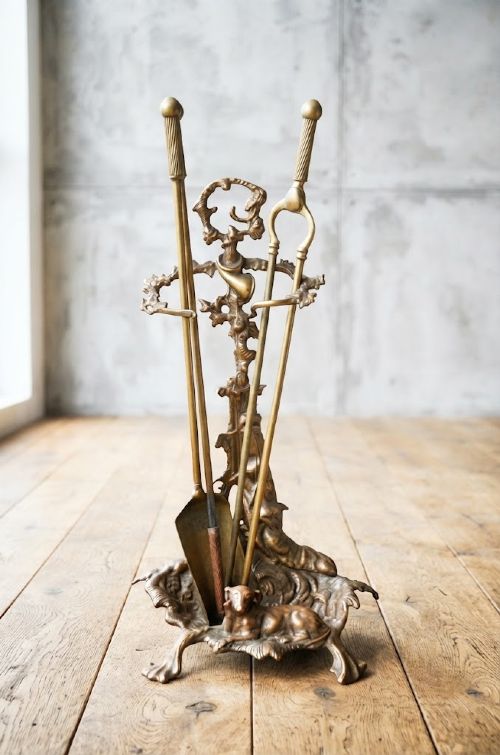
Foundry work defined the metal stands, utilising cast iron moulded into intricate stick loops, scrolling foliage, or figurative designs. Brass components, including decorative ball finials and supportive liner trays, added polished contrast to darker metals.
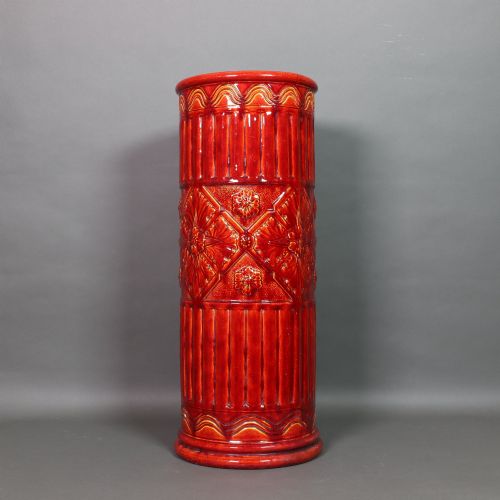
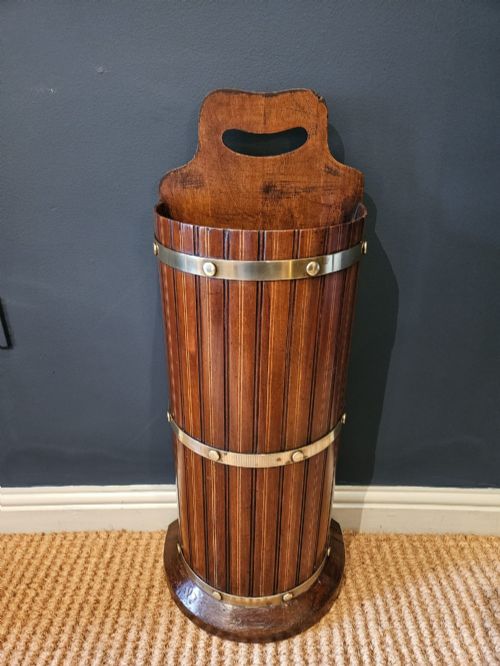
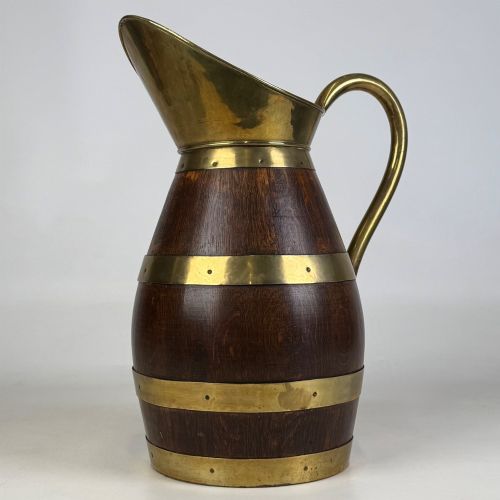
Cabinetmakers constructed wooden versions using solid oak, mahogany, and pine, often employing coopered stave techniques with metal bands for barrel shapes. Ceramic potteries produced glazed earthenware bodies with painted or moulded surface decoration for specialised slip-cast vessels.
Assessing the Standard
Quality rests on the crispness of the casting in ironwork and the integrity of the joinery in timber pieces. Superior cast iron examples display sharp relief in decorative motifs without the blurring found in later or lesser re-casts.
In wooden stands, the tightness of coopered staves and the quality of the brass banding determine durability and finish. Maker attribution and design pedigree, particularly pieces associated with prominent foundries or artistic movements, elevate the standing of an item.
Burmantofts Faience·Théodore Deck·Coalbrookdale·Thomas Jeckyll
The Cane and Umbrella Stand Glossary
- Coopered
- Built from wooden staves fitted together edge to edge and bound with metal hoops, much like a barrel. This technique provided strength for holding damp sticks.
- Demi-lune
- Shaped like a half-circle or crescent, designed to sit flush against a hallway wall. This profile saved valuable floor space in narrow entrances.
- Faience
- Tin-glazed earthenware popularised by art potteries for decorative stick cylinders. It offered a smooth canvas for colourful painted designs.
- Stick loop
- An individual metal ring or division designed to keep walking canes and umbrellas upright and separated. These loops formed the upper framework of iron stands.
- Drip tray
- A metal or ceramic base pan positioned beneath the stand to catch runoff water from wet umbrellas. These trays protected wooden floors and hall carpets.
Cane and Umbrella Stand: Frequently Asked Questions
Where should I place a cane and umbrella stand?
Position the stand near your main entrance hall where wet coats and walking gear accumulate. Ensure there is enough clearance around the piece for daily access.
Keep wooden and unlined metal versions slightly away from direct wet runoff to protect historic flooring materials from sustained moisture exposure.
How do I protect floors from wet umbrellas?
Most period stands include an integrated metal or ceramic drip tray at the base to catch rainwater. Check that this liner is present and water-tight before regular daily use.
If a historic tray has rusted or cracked, place a modern discreet liner inside the base to preserve the original metal or wood from further water damage.
Can these stands hold heavy walking sticks?
Cast iron and heavy oak stands easily accommodate heavy walking sticks, thumbsticks, and umbrellas without tipping. Their substantial weight provides natural stability on flagstone or timber floors.
Lighter brass or wicker designs suit standard umbrellas and lighter canes better, requiring more mindful placement to prevent accidental toppling.
How do I distinguish Victorian from Edwardian stands?
Victorian stands often feature heavier, highly ornate cast iron with deep relief patterns, gothic motifs, or dark mahogany frames. They reflect the period's preference for robust, elaborate hall furniture.
Edwardian examples tend to show lighter construction, brighter brass work, or simpler oak and arts and crafts influences suited to airier entrance halls.