
Candle Arm Sconces
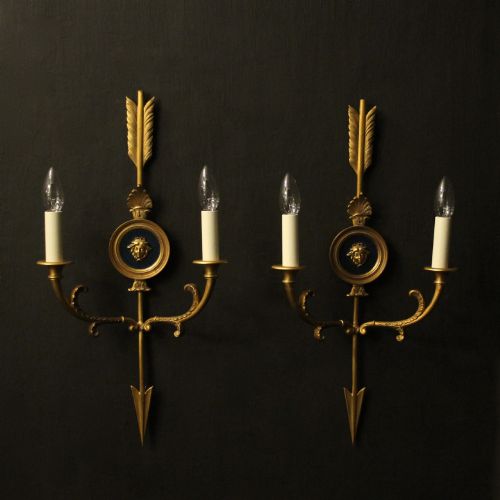
These candle arm sconces bring period illumination to walls, combining cast metals and gilt finishes in pairs and sets.
Candle Arm Sconces
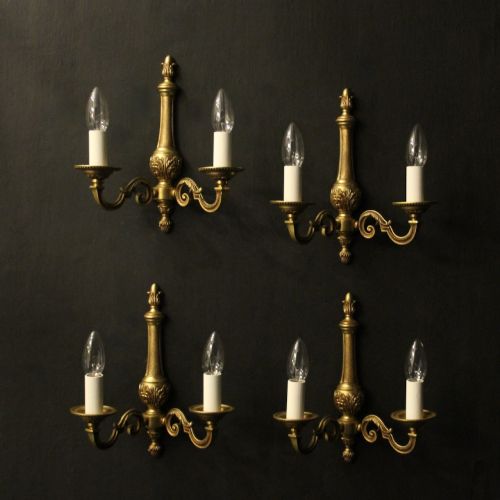
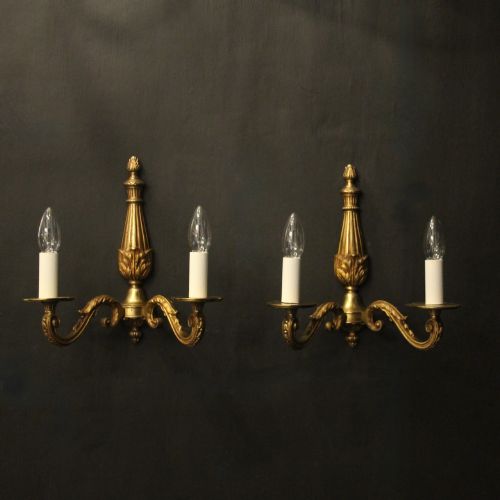
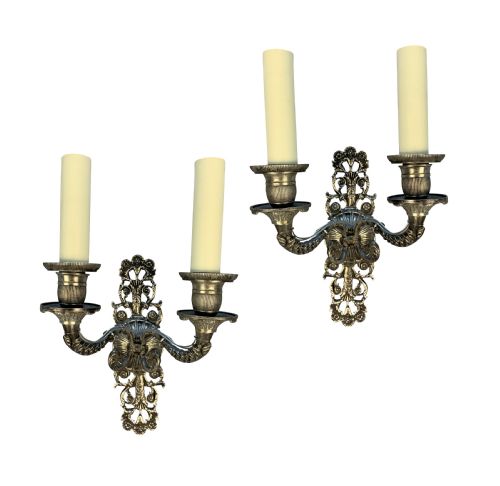
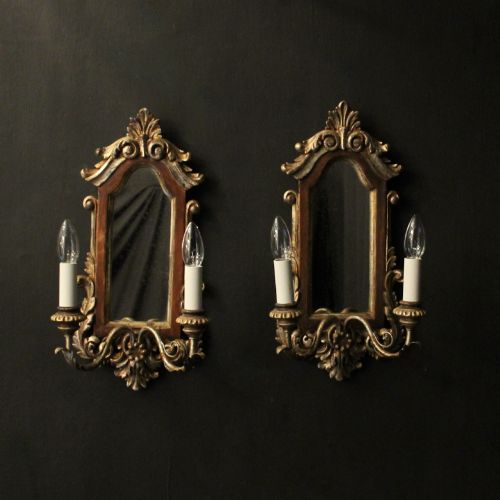
When you search for candle arm sconces, you encounter wall-mounted lighting fixtures designed to hold candles or fitted for electricity, spanning periods from the Victorian era into the early twentieth century. These pieces take the form of wall lights, girandoles, and mirrors equipped with arms that project outward to support candle nozzles.
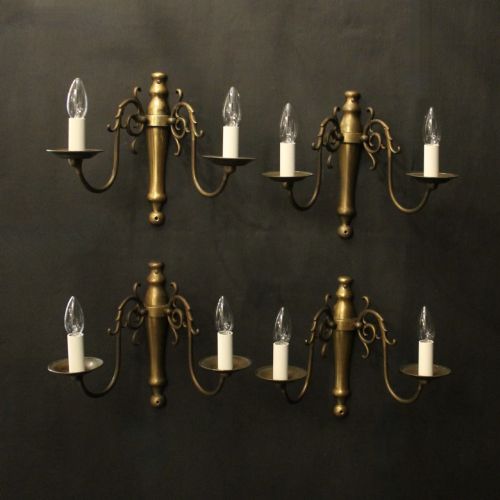
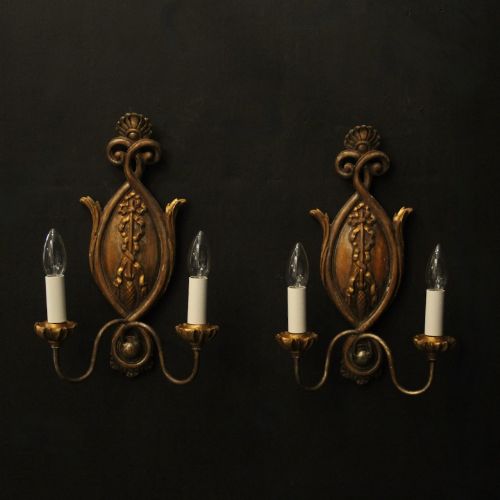
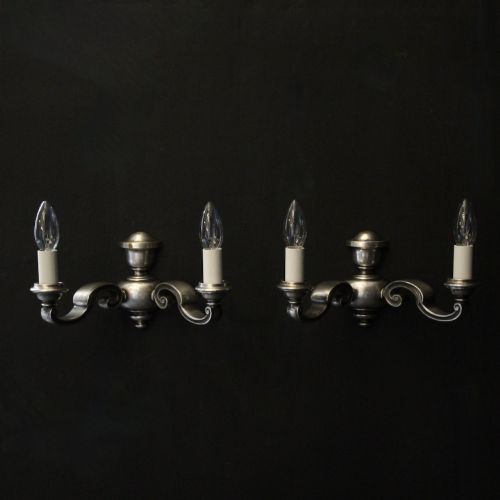
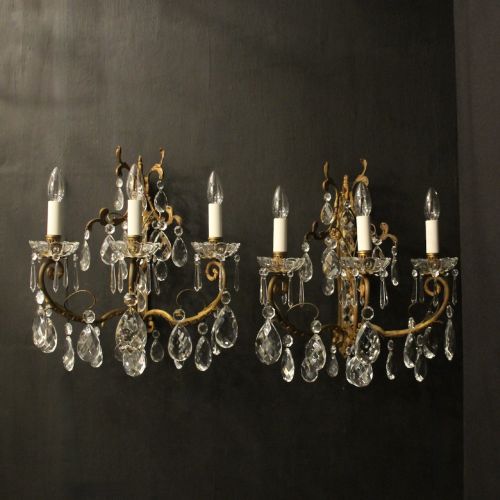
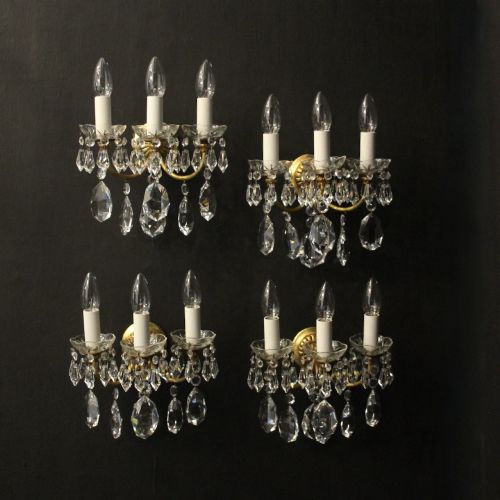
The most common examples on this page are French and English fixtures from the decades around nineteen twenty and nineteen thirty, often fashioned with twin or triple arms. They appear frequently in matched pairs or larger sets, originating from domestic and continental workshops working in revivalist styles.
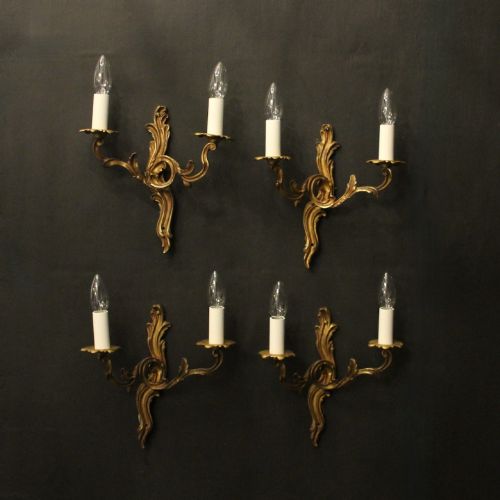
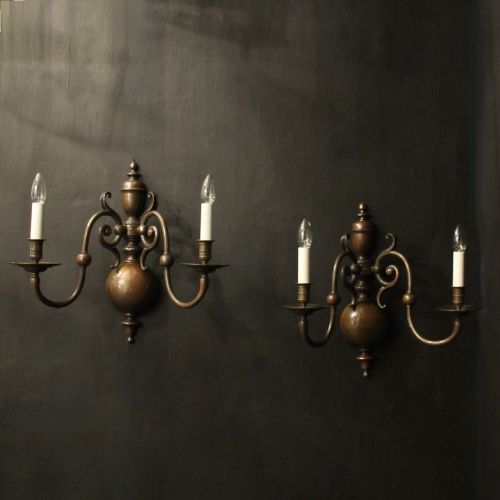
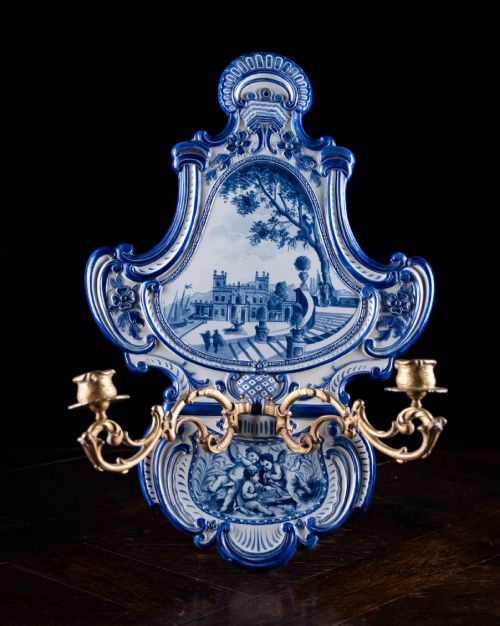
Makers drew upon historical design idioms such as French Rococo, Neoclassical, and Dutch Baroque to create decorative fixtures for period interiors. Alongside standard metal castings, certain examples incorporate ceramic components like Delft or Meissen porcelain, or carved wooden frames.
What varies in quality
Quality in these lighting fixtures rests on the crispness of the metal casting and the depth of the chased detail. Finer examples display sharp relief along the scrollwork and arms, whereas simpler pieces show softer edges and minimal hand-finishing.
The method of gilding and the weight of the metal distinguish standard production from superior workshops. Substantial bronze and fire-gilded ormolu retain their warmth and lustre over decades, unlike thin plated brass that wears down through polishing.
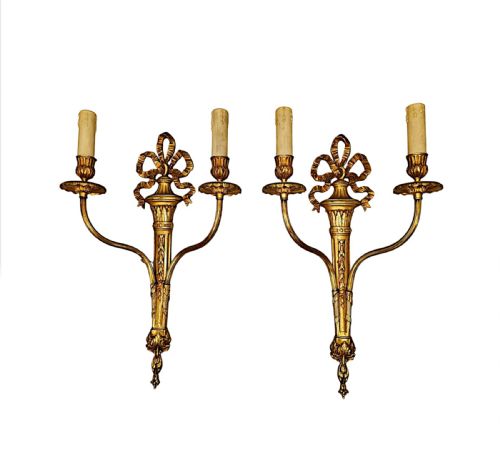
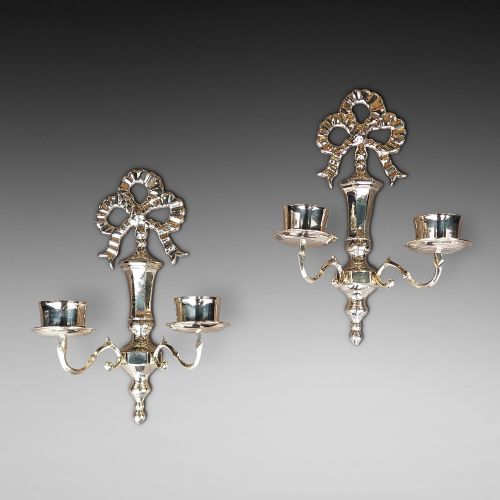
A solitary ribbon motif holds the weight of a French gilt brass wall light, proving that even metalwork sometimes bows to millinery.
Bruce Talbert·Villeroy & Boch·Meissen
The Candle Arm Sconces Glossary
- Ormolu
- Gilded bronze, where finely ground gold is amalgamated with mercury and applied to a bronze base through heat. This French technique yields a durable, deep golden surface characteristic of quality antique lighting.
- Girandole
- A decorative wall sconce featuring a reflective mirror backplate that multiplies the light cast by the candles. They often incorporate multiple branching arms.
- Rococo Revival
- A nineteenth-century style drawing inspiration from the asymmetrical curves, C-scrolls, and naturalistic motifs of the eighteenth-century French rocaille movement. It dominates many of the ornate wall lights found here.
- Backplate
- The flat or shaped section of the sconce that mounts directly to the wall and supports the projecting candle arms. It usually bears the primary decorative ornament of the piece.
Candle Arm Sconces: Frequently Asked Questions
How do I mount candle arm sconces safely?
Sconces mount to walls using sturdy screws and wall plugs matched to the weight of the bronze, brass, or giltwood backplate. Ensure the fixing secures directly into solid masonry or studwork.
Heavier sets featuring multiple arms require robust support to bear the outward leverage of the branching candle holders safely.
Are these wall lights wired for electricity?
Many surviving fixtures undergo rewiring to accommodate internal electrical cabling while retaining their original exterior appearance. Candle tubes often conceal modern lamp holders.
Some pieces remain configured strictly for wax candles, requiring careful consideration before attempting conversion for modern domestic lighting.
How do I clean gilded brass safely?
Dust surfaces gently with a soft, dry brush to remove particles without disturbing delicate gilt layers. Avoid abrasive metal polishes that strip thin gold finishes.
Water and harsh chemical cleaners damage historic patinas, so gentle dusting remains the primary method for routine maintenance.
How do I distinguish Victorian from later pieces?
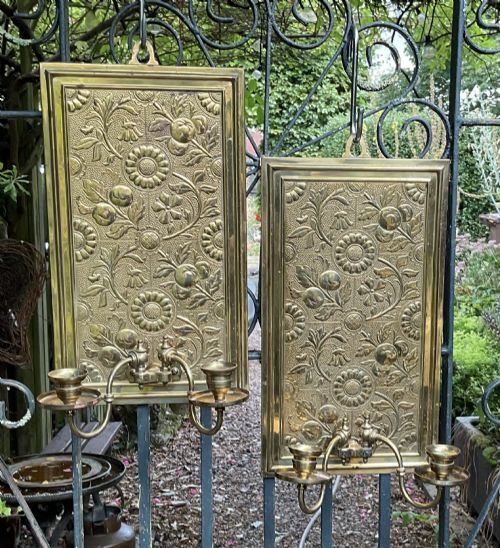
Victorian and nineteenth-century examples often display heavier cast construction and hand-finished chasing typical of earlier workshop practices. Stylistic cues like Aesthetic Movement designs help date pieces from eighteen eighty.
Later items from nineteen twenty and nineteen thirty frequently appear in larger uniform sets reflecting twentieth-century interior trends.