
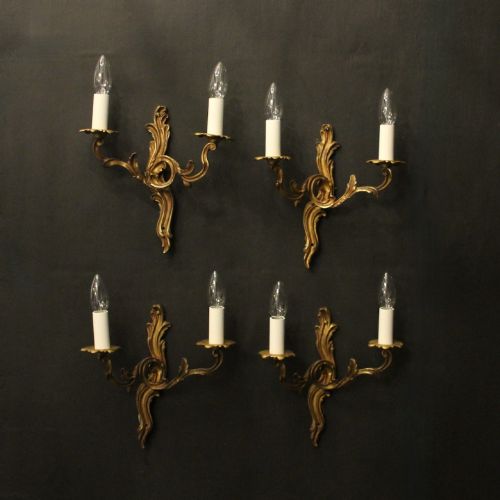
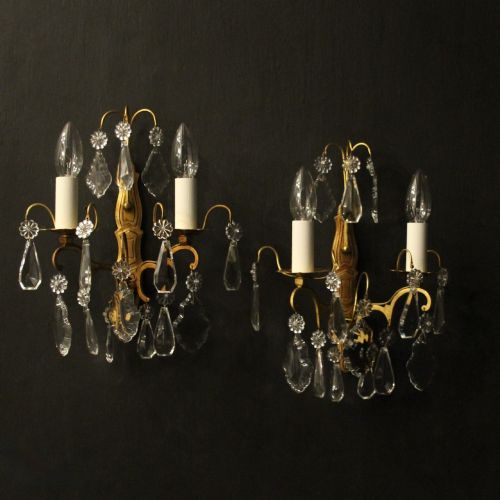
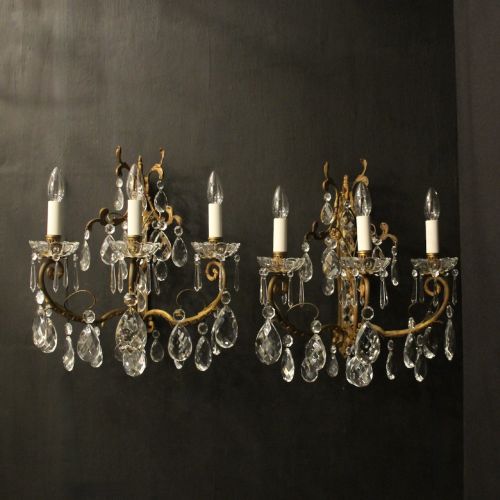
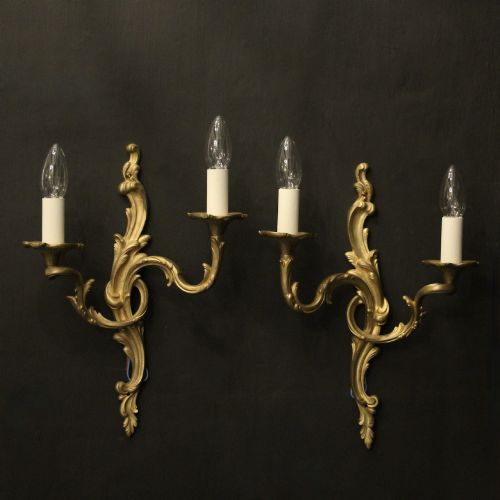
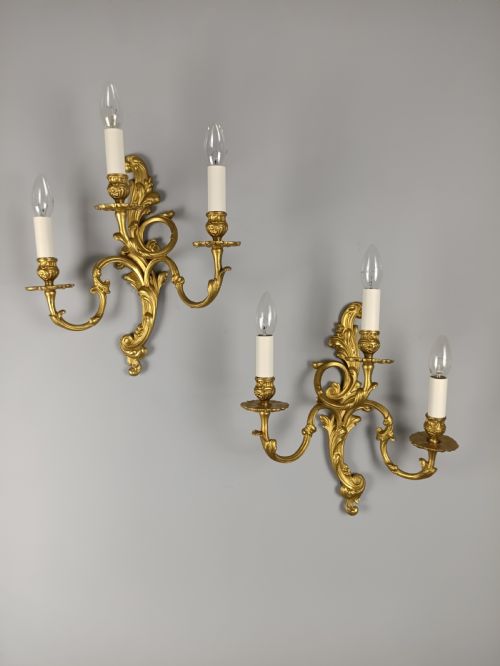
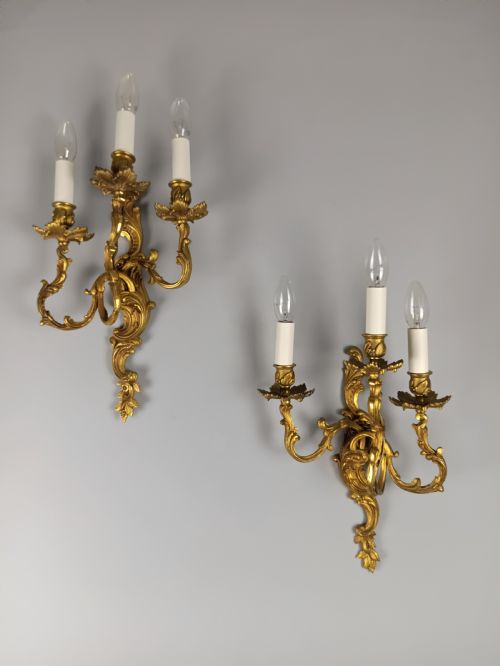
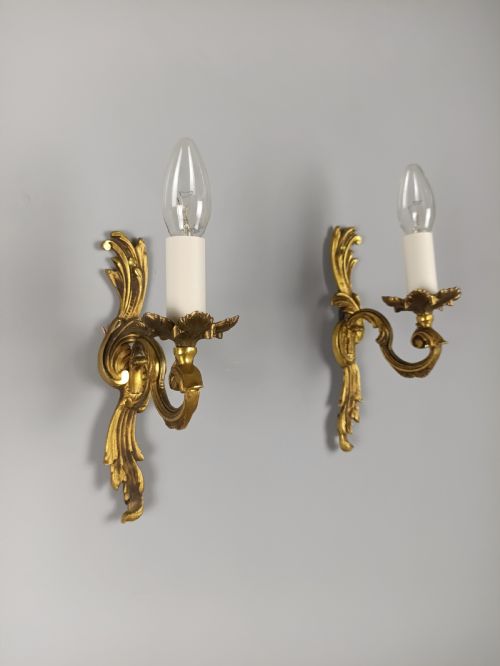
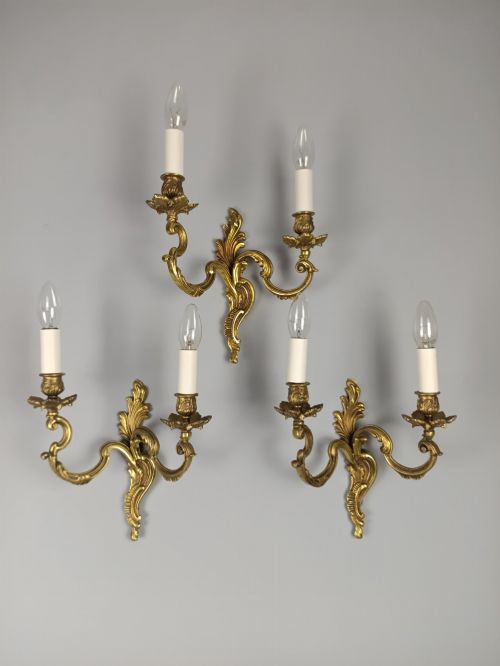
Rococo Gilded Brass Sconces
Rococo gilded brass sconces bring sculpted French warmth to a room through swirling acanthus curves and polished metal surfaces.
Rococo Gilded Brass Sconces
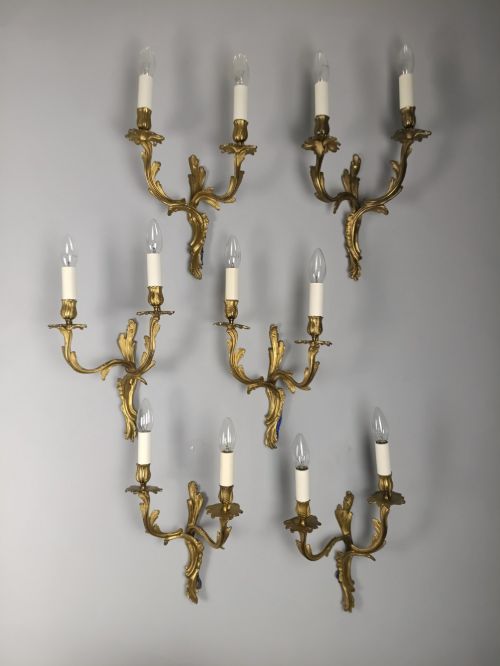
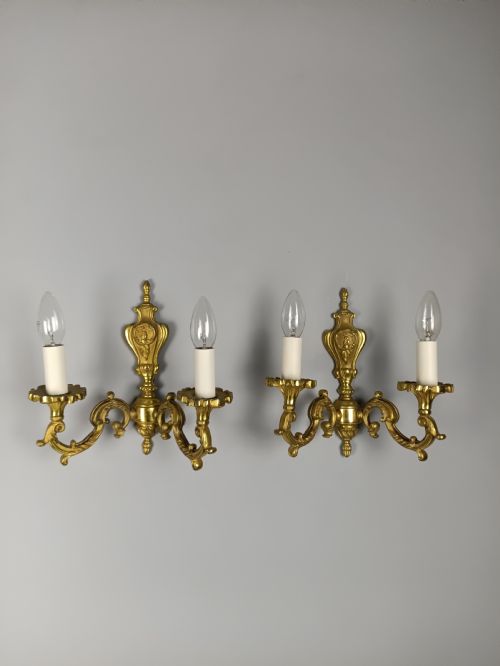
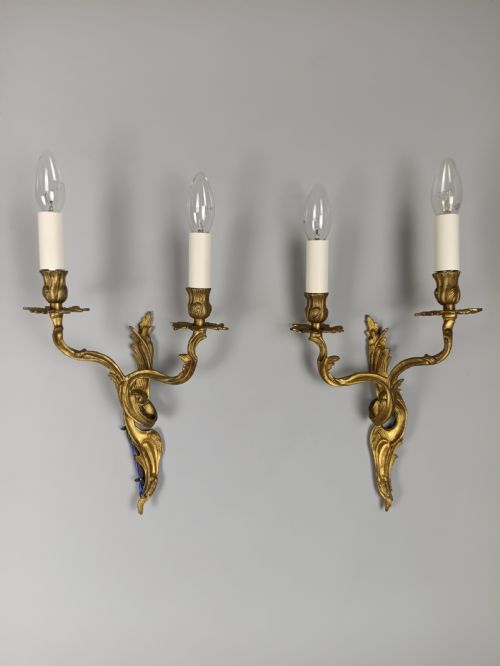
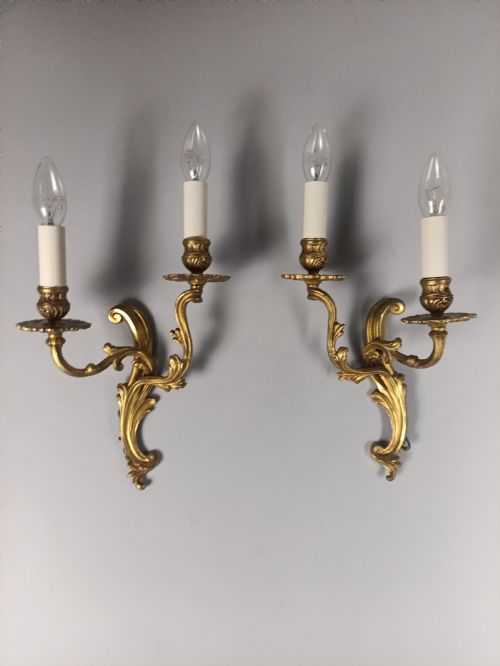
These pieces are decorative wall lights designed to illuminate interiors while adding sculptural depth to vertical surfaces. When searching for rococo gilded brass sconces, buyers encounter lighting fixtures formed with ornate scrolls, asymmetrical motifs, and botanical flourishes characteristic of the eighteenth-century revival. Most examples on this page date from the nineteenth and early twentieth centuries, reflecting renewed interest in French decorative arts.
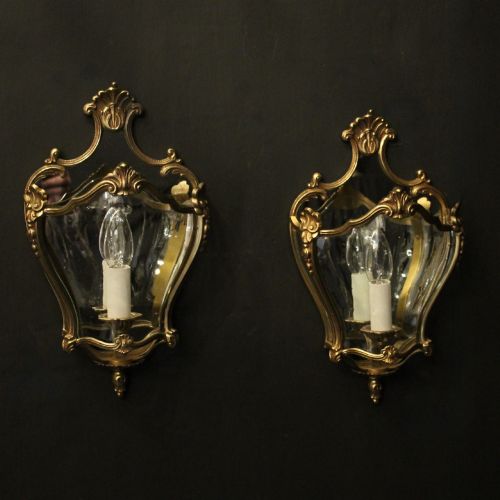
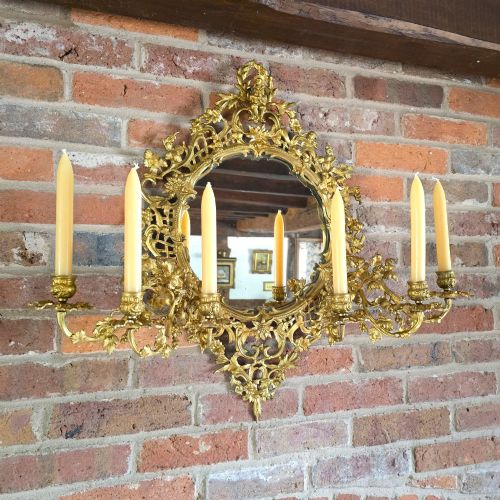
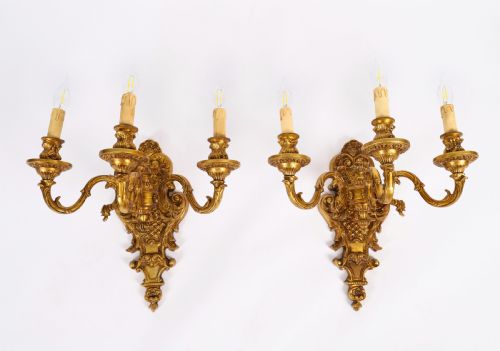
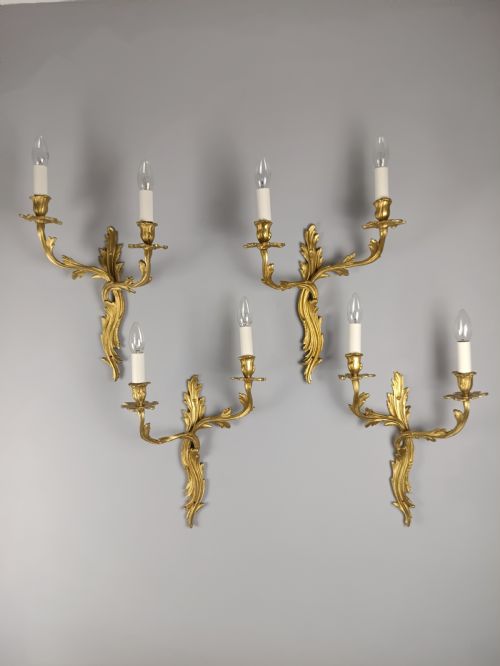
The selection ranges from single-arm fixtures to multi-branch candelabra and wall-mounted chandeliers, frequently wired for modern electrical standards while retaining historical form. Pairs and larger sets predominate, allowing buyers to achieve symmetrical illumination across chimney breasts, hallways, and drawing rooms. The physical presence of these fixtures relies on cast metalwork extending outward from the wall to support candles or electric bulbs in matching drip pans.
How they were made
The foundation of these lighting fixtures is cast metal, primarily brass and bronze, shaped through traditional foundry methods to produce intricate relief patterns. Artisans then applied surface gilding or ormolu to impart a rich golden finish that catches ambient room light. Glass components occasionally supplement the metal armature, appearing in hanging drops or central mirror plates.
Craftsmen utilised assembly techniques that joined cast branches, backplates, and sconce cups via threaded screws or brazed joints. Detail work was frequently hand-chased after casting to sharpen the crispness of the acanthus leaves and scrollwork before the final gilt layer was secured.
Period designations across the inventory stretch from the mid-nineteenth century through the 1930s, capturing sustained revival movements in French design.
What varies in quality
Quality in these lighting fixtures rests upon the crispness of the casting and the depth of the chased surface detail. Superior examples display sharply defined acanthus leaves and fluid asymmetrical scrolls where the metalworker's hand remains evident in the finished texture, whereas lesser pieces exhibit softened contours from worn or secondary moulds.
The durability of the gilded finish further distinguishes the grade of a piece, with uniform application retaining its lustre across high-relief and recessed areas alike. Substantial gauge metal ensures that multi-arm branches and heavy candelabra remain rigid and true over decades of wall mounting.
The Rococo Gilded Brass Sconces Glossary
- Ormolu
- Finely ground high-purity gold amalgamated with mercury, applied to a bronze base through a fire-gilding process that yields a deep, enduring metallic lustre.
- Girandole
- An ornamental branched wall light or sconce, frequently featuring a mirrored backplate to multiply the illumination of candles or lamps.
- Applique
- A decorative wall-mounted lighting fixture designed to direct illumination outward into the space.
- Louis XV Revival
- A nineteenth-century design movement that reinterpreted the asymmetrical curves, naturalistic foliage, and exuberance of the mid-eighteenth-century French court style.
Rococo Gilded Brass Sconces: Frequently Asked Questions
How are these sconces wired?
Many surviving examples arrive professionally rewired with internal electrical cabling routed through the central arms and backplate, making them ready for immediate domestic installation by a qualified electrician.
Buyers should inspect the backplate mounting points and consult local electrical codes to ensure safe attachment to standard wall junction boxes.
Where should wall sconces be hung?
These fixtures are traditionally placed flanking fireplaces, mirrors, or large doorways to provide balanced secondary illumination at eye level.
Spacing pairs at consistent heights ensures the reflected glow from the gilded surfaces distributes evenly across the room.
How do I clean gilded brass?
Dusting gently with a soft, dry microfibre cloth preserves the delicate gilt layer without abrading the metal surface or stripping the finish.
Liquid polishes and chemical cleaners should be avoided entirely, as they strip the historical gilding from the underlying brass or bronze armature.
Are matching sets common?
Pairs appear frequently in historical production, while larger matched sets of three, four, or six pieces are rarer survivals from grander architectural commissions.
Securing a matched set allows for cohesive interior schemes across larger wall expanses or multiple adjoining reception rooms.