

Candelabrum Pair
A candelabrum pair brings balanced illumination and sculptural presence to a room, drawing the eye with matched candle arms.
Candelabrum Pair
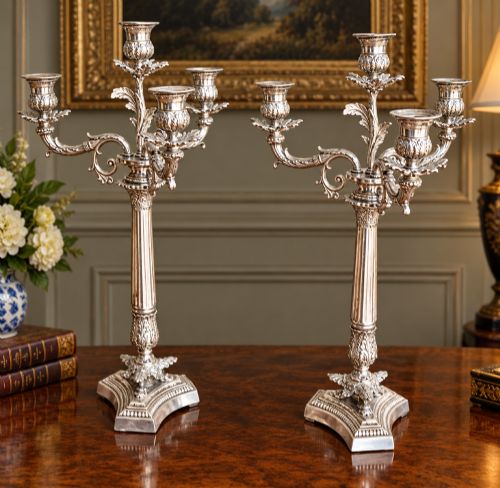
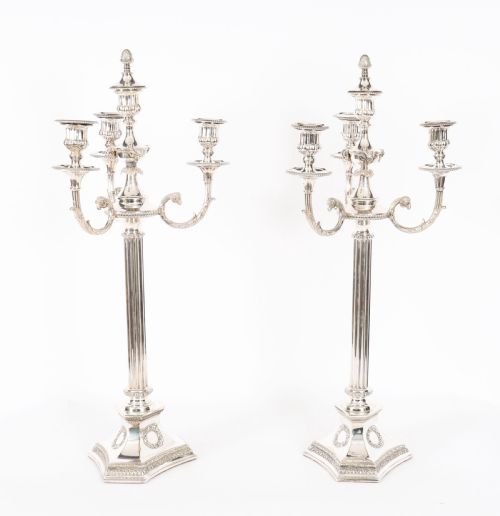
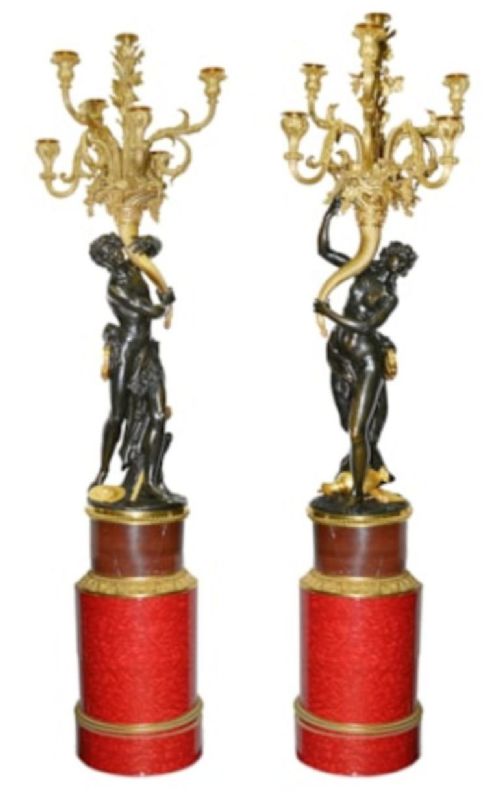
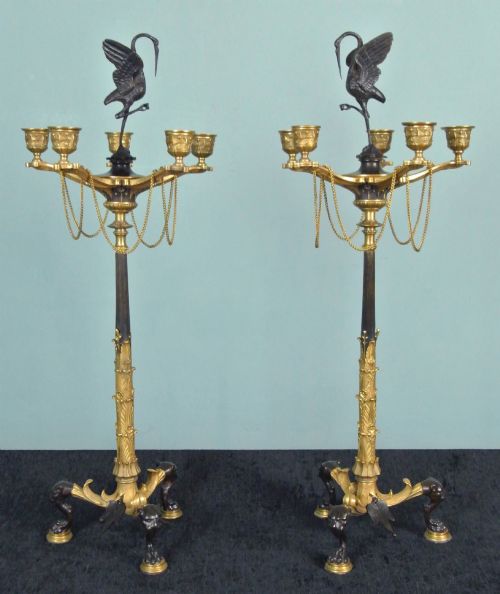
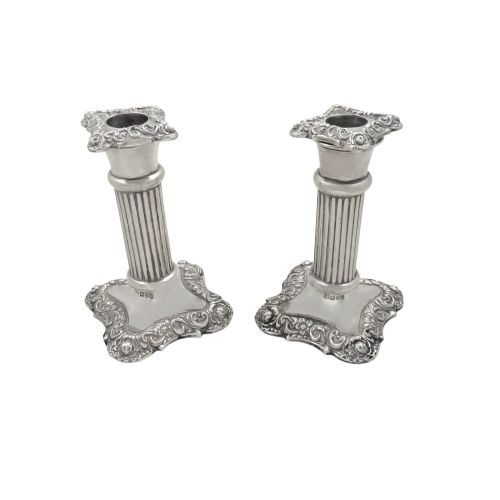
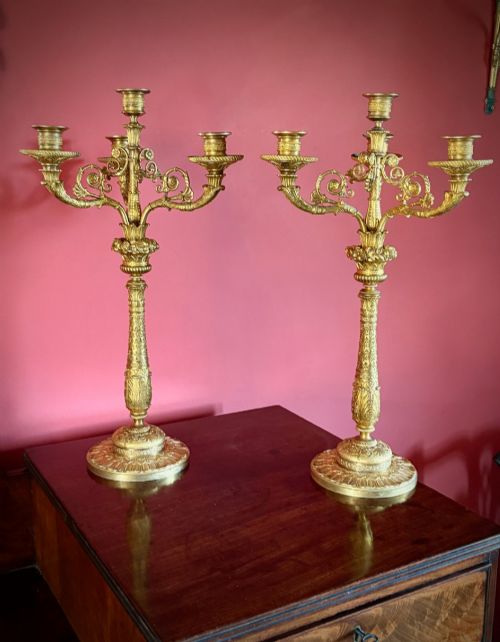
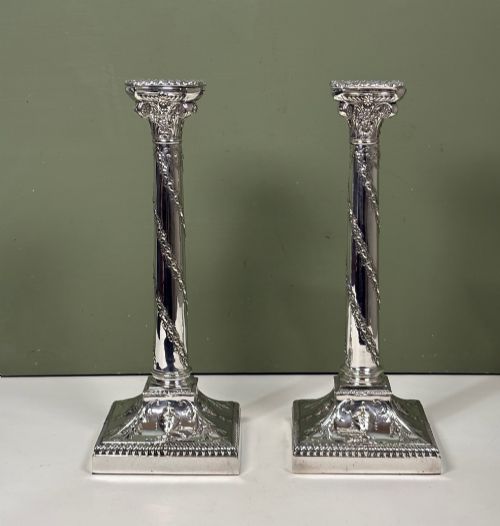
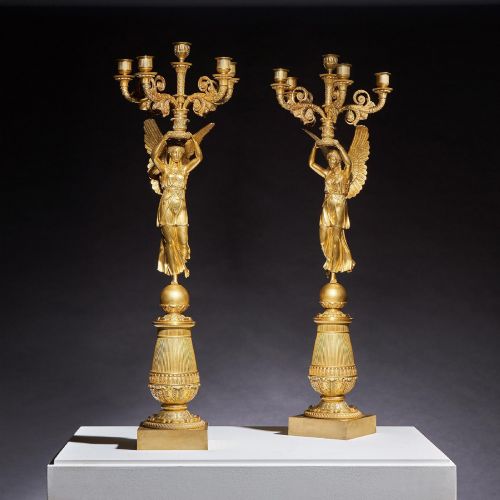
A candelabrum pair consists of two matched branched lighting fixtures designed for ceremonial or domestic illumination. When searching for a candelabrum pair, buyers encounter pieces spanning from the eighteenth century through the twentieth century, with nineteenth-century examples appearing most frequently on this page.
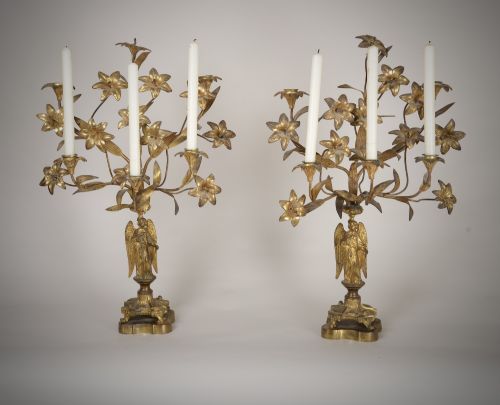
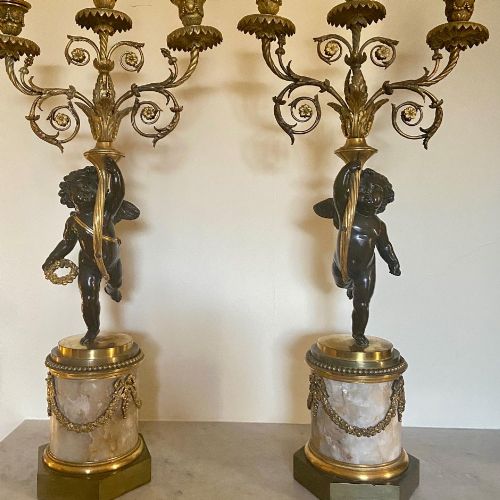
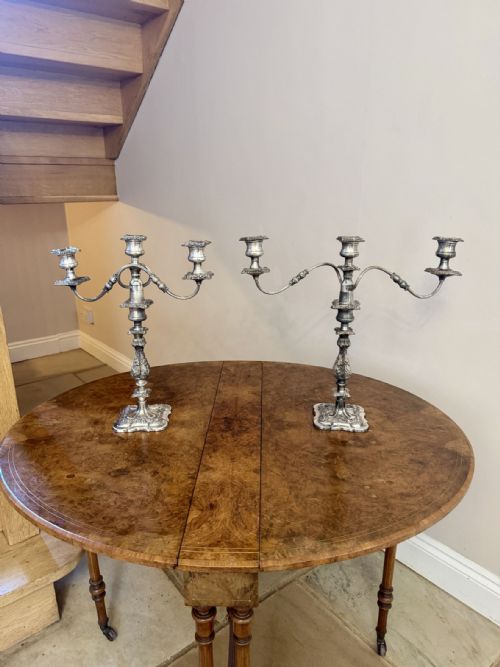
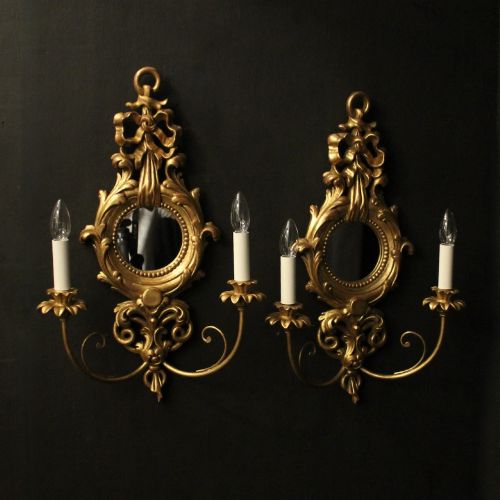
The forms range from heavy bronze and ormolu table centerpieces to silver-plated multi-light candelabra and wall-mounted sconces. Many items reflect distinct historical revivals, including French Empire, Louis XVI, and Gothic styles.
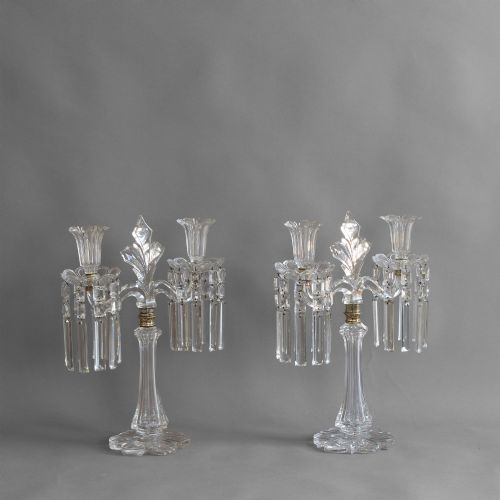
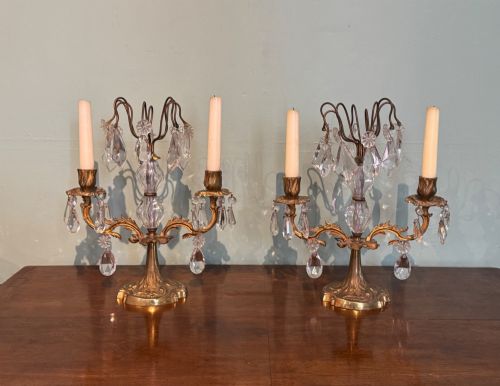
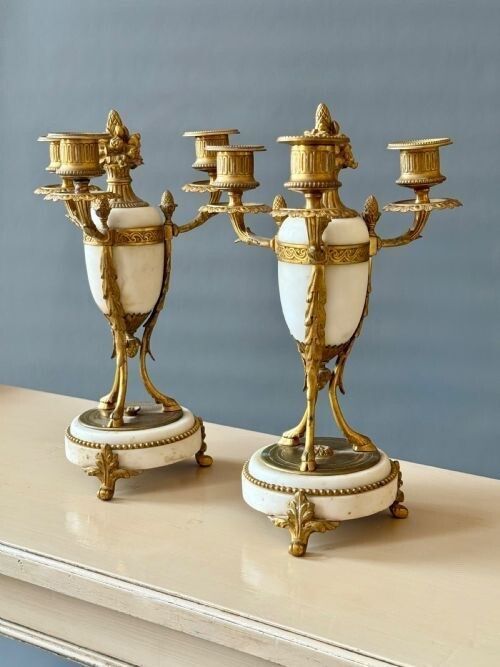
Originating largely from British and continental workshops, these matched pairs frequently incorporate materials like marble, porcelain, and cut glass alongside cast metals. Buyers use them to anchor mantelpieces, sideboards, and dining tables with symmetrical formality.
What varies in quality
The crispness of the cast ornamentation dictates the visual success of the piece, where deeply chased foliage and sharply defined figures separate superior foundry work from soft, blurred reproductions. Heavier gauge metals and substantial marble bases provide structural stability that lighter assemblies lack.
Original mercury gilding displays a warm, matte depth that contrasts with the flat sheen of modern chemical treatments. The retention of matching components across both arms ensures that proportional balance remains intact.
Several Victorian pairs incorporate whimsical animal motifs, including stags, does, and elephants supporting candle sockets.
Barbedienne·Hawksworth Eyre·Garrard and Co·Matthew Boulton·Thomas Hope·Pierre Philippe Thomire
The Candelabrum Pair Glossary
- Ormolu
- Gilded bronze, where a layer of gold amalgam is applied to a bronze base and heated to drive off the mercury. This technique produces a durable, luminous golden finish characteristic of French decorative arts.
- Patinated bronze
- Bronze treated with chemical solutions to produce a specific surface colour, often dark brown or green. It creates contrast against gilt highlights in figural compositions.
- Girandole
- A branched wall sconce featuring a reflective backplate, often made of mirror glass or giltwood. The reflective surface multiplies the candlelight within the room.
- Champlevé
- An enamelwork technique where troughs are dug into a metal surface, filled with vitreous enamel powder, and fired. The resulting coloured patterns sit flush with the surrounding metal borders.
- Fluorspar
- A halide mineral known for its vibrant natural banding and colour variations, used in decorative bases and mounts. It adds translucent mineral depth to classical candelabra designs.
Candelabrum Pair: Frequently Asked Questions
How do I clean antique ormolu safely?
Dust surfaces gently with a soft dry brush to remove particulate matter without disturbing the gilt layer.
Avoid commercial metal polishes entirely, as abrasive compounds will strip away the historic mercury gilding and expose the base bronze.
Were these originally wired for electricity?
Most older examples were built exclusively for wax candles and have been adapted later in their lifespans.
Professional conversions often run internal wiring through the central stem to preserve the external profile of the piece.
How do I spot a marriage pair?
Inspect the casting seams, base dimensions, and minor hand-chasing variances between the two matching objects.
Pairs assembled long after manufacture often show subtle discrepancies in height, weight distribution, or metal alloy composition.
Where should I place a heavy candelabrum pair?
Position them on sturdy surfaces like mantelpieces, sideboards, or heavy console tables that can support considerable metal weight.
Ensure they sit away from foot traffic areas to prevent accidental knocks against delicate branching arms or crystal drops.