


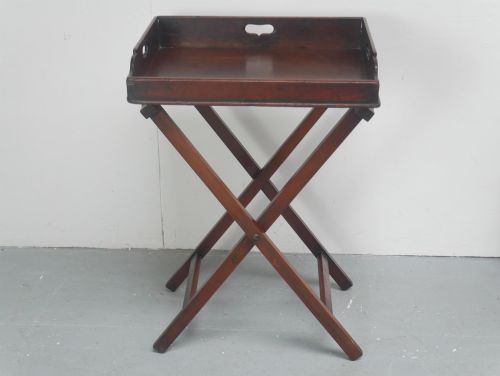
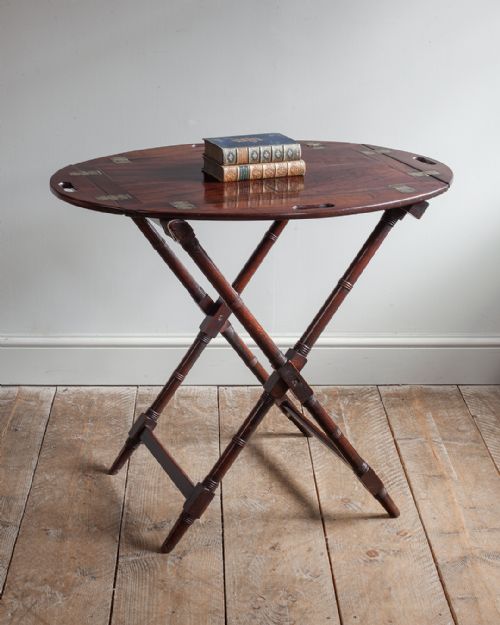
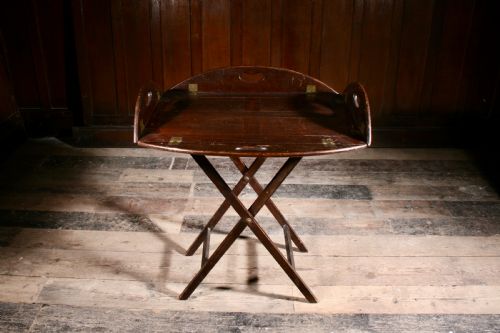


Campaign Tray Table
These campaign tray table pieces offer folding portability and timber warmth, making them practical portable furniture.

Campaign Tray Table
A campaign tray table combines a removable serving tray with a folding or dismantling stand, originally designed for portable military use. The form appears in styles ranging from Georgian and Regency to Victorian and 1930s revivals, capturing classic campaign utility.
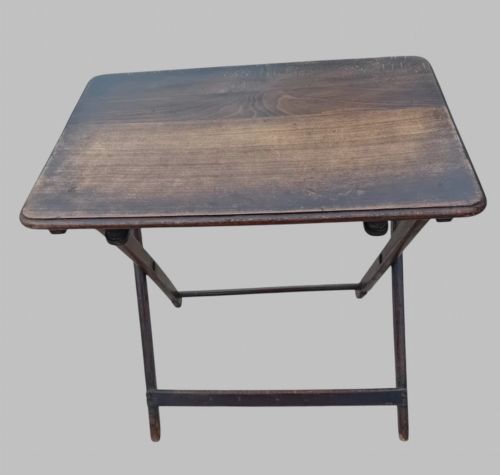
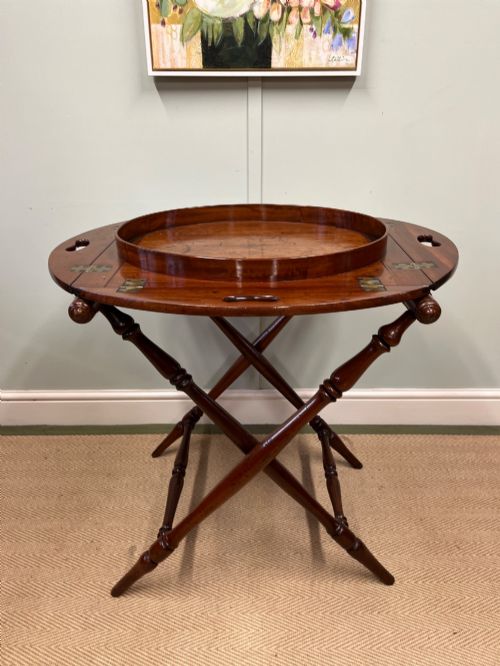
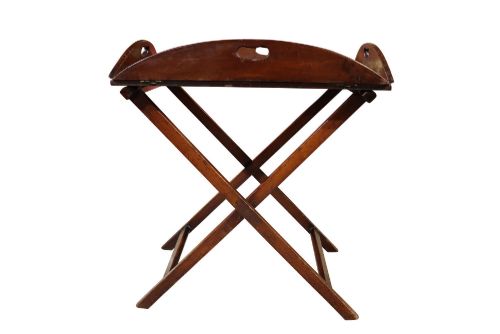
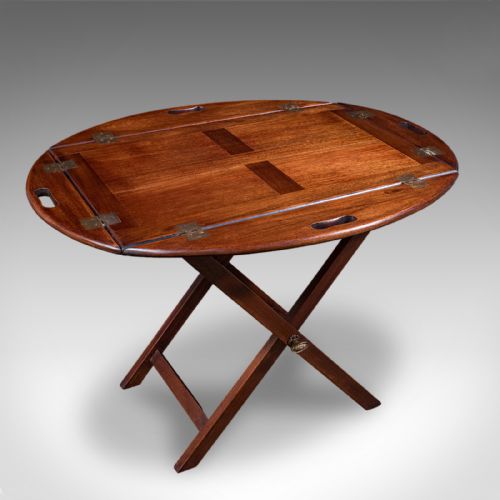
Most examples found on this page take the form of butler tray tables, occasional tables, or coffee tables. They usually comprise a timber tray top resting upon an intersecting X-frame stand or folding base.
The materials span mahogany and oak, often fitted with brass hinges or handles. Surviving pieces include nineteenth century originals alongside later twentieth century revivals.
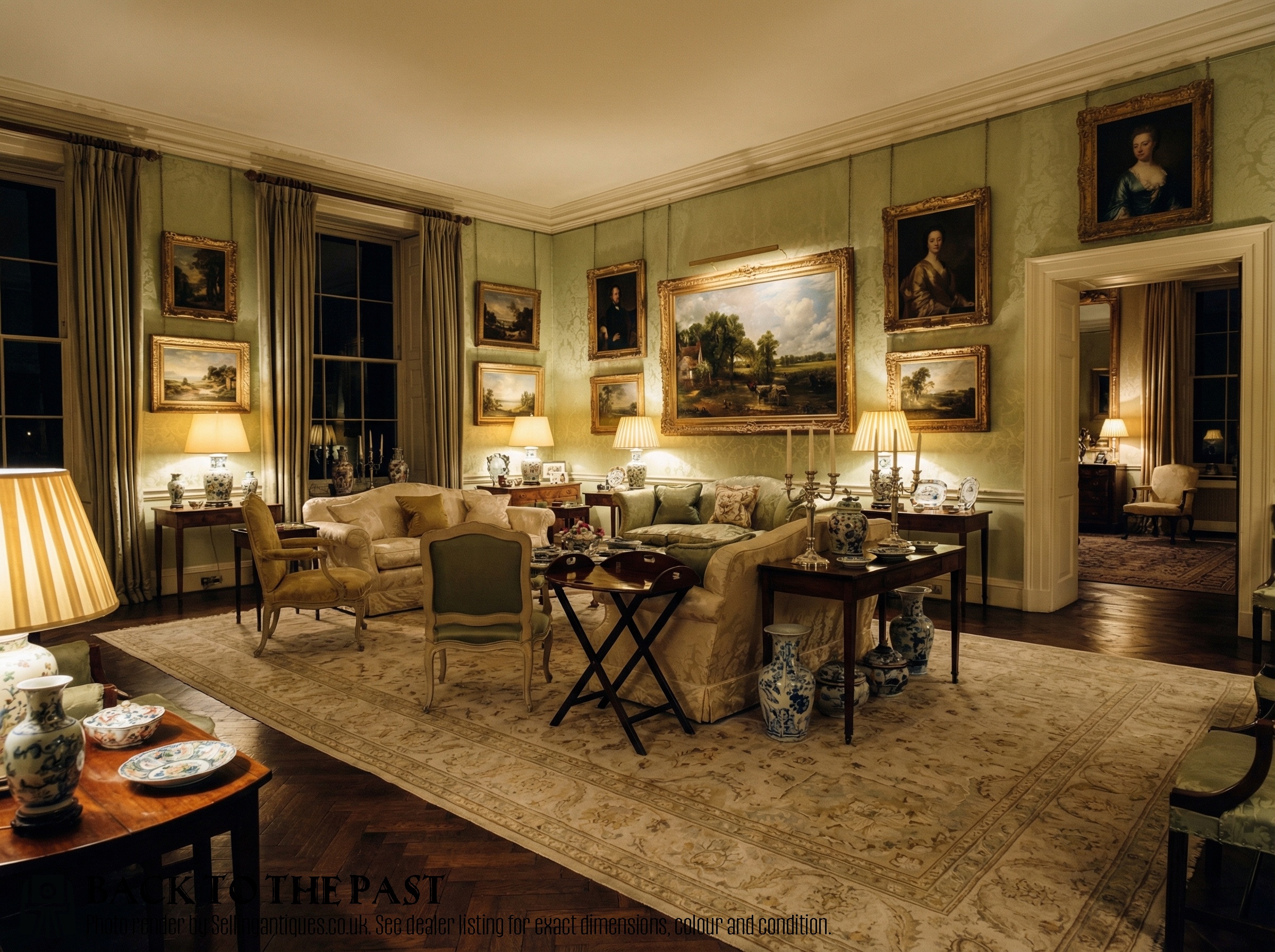
How they were made
Cabinetmakers constructed these trays and stands predominantly in solid mahogany or oak, selecting dense timbers capable of enduring travel. Joinery often included dovetailed tray corners and pegged joints for the folding stands.
Brass hardware such as inset handles and hinged corners provided structural reinforcement while allowing the stands to pack flat. These metallic elements were screwed or flush-fitted directly into the timber surfaces.
Campaign Tray Table Retail Price Guide 2026
Typical asking prices for campaign tray table among the pieces listed under this phrase on Sellingantiques today, from the lower quarter to the upper quarter. They describe what is for sale here now, not the wider market.
Listings feature mahogany and oak timbers across nineteenth century pieces and 1930s revivals.
What varies in quality
The distinction between standard examples and superior pieces rests on the weight of the timber and the precision of the brass fittings. Finer items display carefully selected mahogany grain and robust folding mechanisms that lock securely.
Period context also shapes desirability, with eighteenth and nineteenth century items demonstrating traditional hand-tool methods compared to later twentieth century revivals. The crispness of the joinery and the original patination of the wood set apart the most accomplished specimens.
Army & Navy CSL
The Campaign Tray Table Glossary
- Campaign tray table
- A portable furnishing featuring a detachable tray top paired with a folding or collapsible stand. This design originated to serve officers on military campaigns.
- Butler tray
- A shallow wooden tray, frequently featuring hinged sides that can lie flat or lock upright for carrying. These trays lift off their stands entirely.
- Regency revival
- A decorative style from the twentieth century that imitates the distinctive neoclassical aesthetic of the early nineteenth century Regency period. Pieces in this style often utilise traditional mahogany forms.
- X-frame stand
- A folding base constructed from two intersecting legs that cross in the middle like the letter X. This arrangement allows the stand to fold flat when the tray is removed.
Campaign Tray Table: Frequently Asked Questions
What is a campaign tray table?
A campaign tray table is a portable piece of furniture consisting of a removable wooden tray placed upon a folding stand. They were originally built for military officers who required easily transportable furnishings.
Today, these tables function well as occasional or coffee tables in living spaces, offering both surface area and historical character.
How do you fold the stand?
The stands are typically designed as intersecting X-frames that pivot at the centre to collapse flat. You simply lift the tray off the top and fold the wooden legs together.
This mechanism allows the entire assembly to be stored away compactly when floor space is needed.
What woods were used?
Maker workshops primarily constructed these tables using dense hardwoods such as mahogany and oak. These timbers provided the durability required for travel and daily service use.
Both woods develop a rich patination over the decades, highlighting the natural grain of the surface.
Are the trays fixed down?
The trays are intentionally removable rather than permanently fixed to the base. They rest securely within the frame or upon wooden supports so they can double as serving trays.
This dual functionality was essential for officers serving meals or drinks in temporary quarters.