


Campaign Chest Box
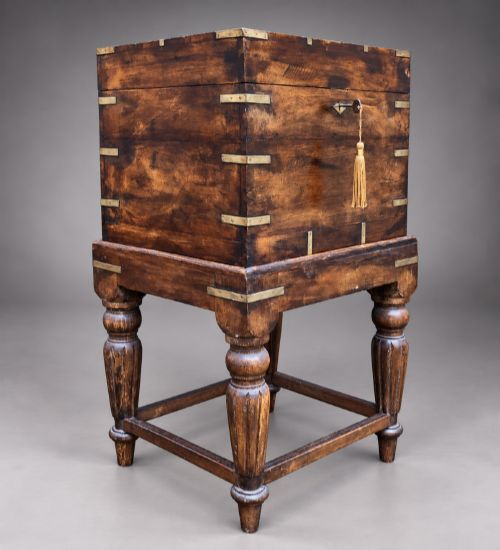
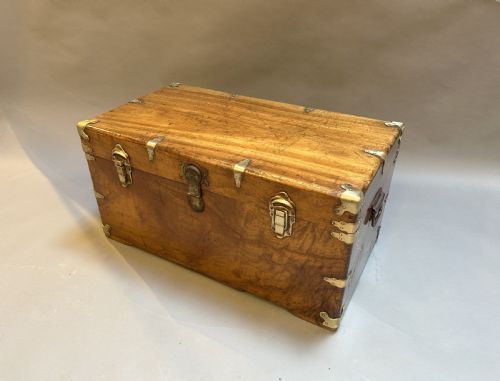
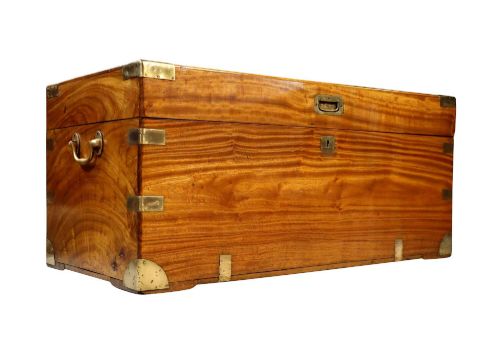
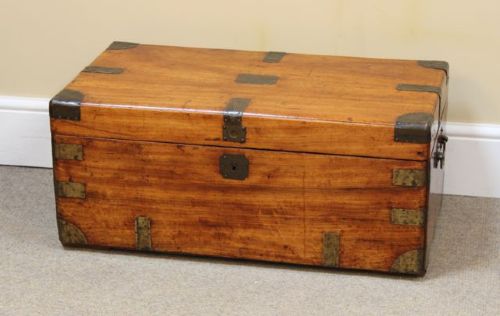
A campaign chest box is a portable trunk built for military life, offering robust storage fashioned with brass corners and recessed handles.
Campaign Chest Box
A campaign chest box serves as a portable container designed for travel and military service, appearing in forms such as storage trunks, blanket boxes, cellarettes, and apothecary boxes. These items originate primarily from the eighteenth, nineteenth, and early twentieth centuries, spanning the Georgian, Regency, and Victorian periods.
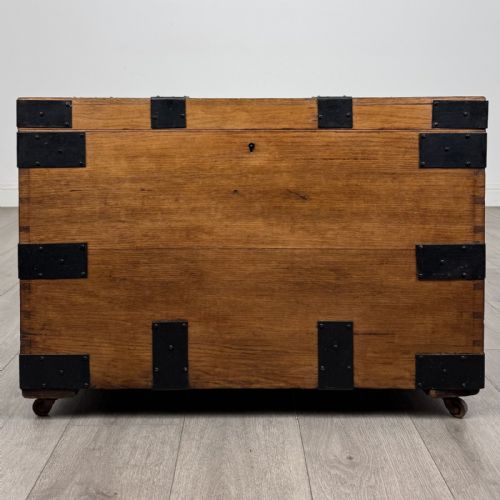
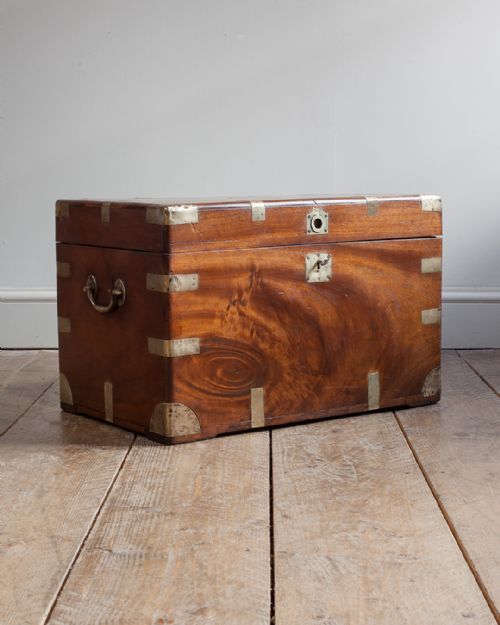
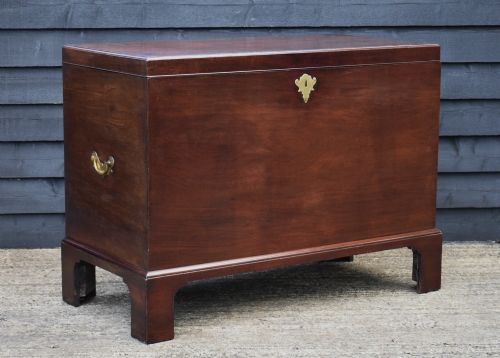
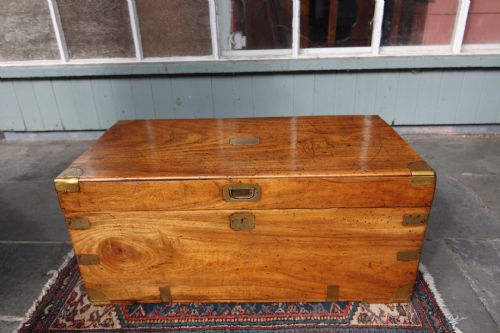
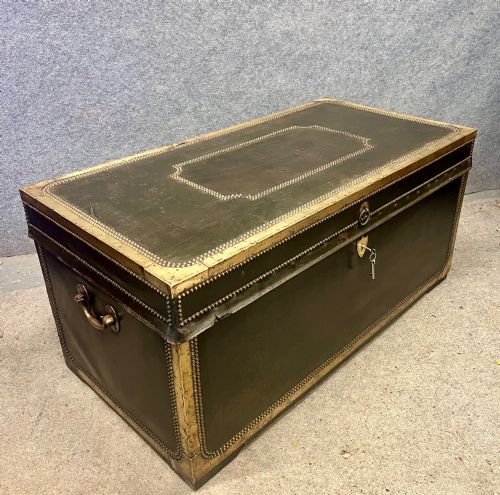
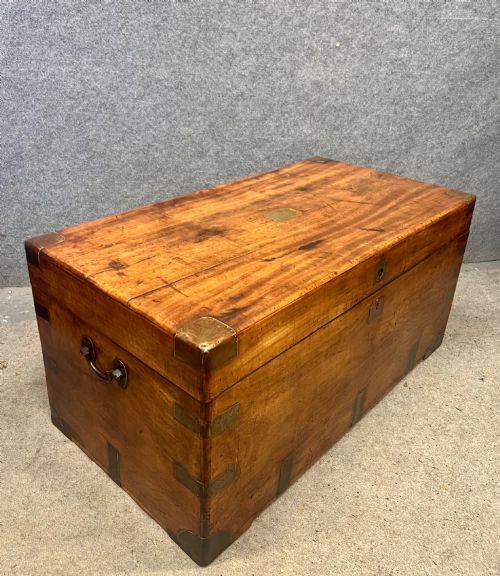
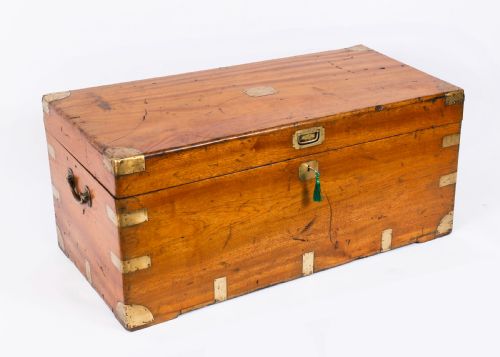
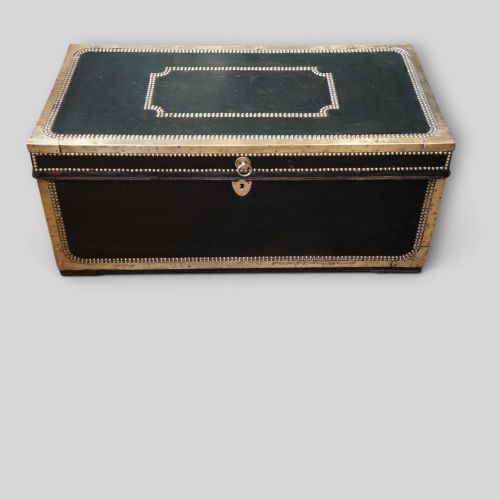
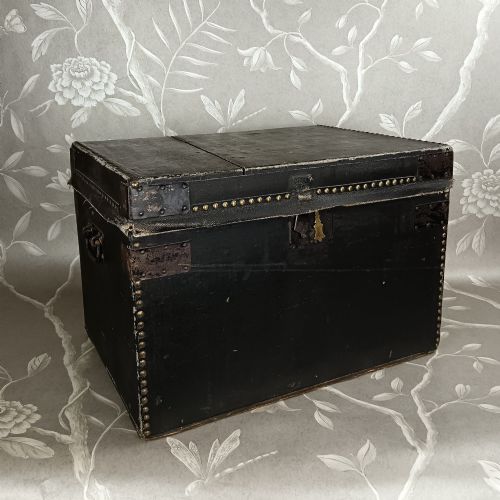
The version most commonly met on this page is the nineteenth-century camphor wood trunk, often bound in brass or iron for durability during transport. Buyers also encounter teak, pine, and mahogany variants alongside specialised pieces like leather-covered trunks and desktop boxes.
Origin details in the evidence extend beyond standard British manufacture to include Anglo-Indian and China Trade pieces. Such items reflect the global movement of officers and merchants who required sturdy containers to protect belongings across continents.
How they were made
Construction relies heavily on durable timbers suited to long journeys and varying climates, specifically camphor wood, teak, mahogany, walnut, and pine. Camphor wood served a practical purpose by repelling insects from stored garments and documents.
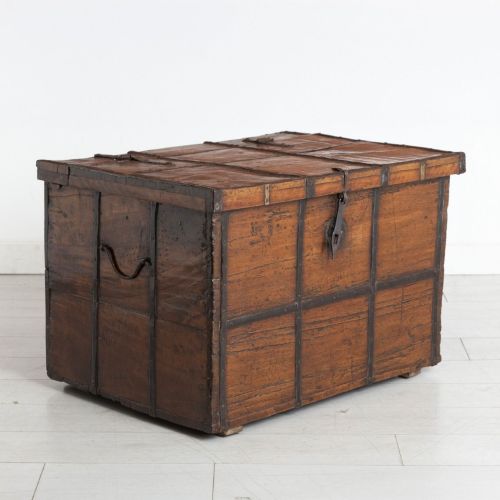
Metal reinforcement defines the technique of these pieces, utilising brass and iron bound edges, corner brackets, and studded leather to withstand rough handling. Recessed brass handles and flush hardware allowed trunks to pack tightly into ships and wagons without snagging.
One surviving trunk preserves the precise identity of its past owner, having belonged to Jessie Degan Cole of Dawn House in Winchester.
What varies in quality
Quality differentiates by the integration of hardware and the selection of timber, where flush-fitted brass work and solid secondary woods indicate higher skill. Superior pieces exhibit precise dovetail joinery and intact leather coverings that survive decades of transit.
The sophistication of internal compartments alters the standing of a box, distinguishing simple blanket chests from fitted writing slopes, correspondence boxes, and cellarettes with dedicated bottle partitions.
Samuel Pratt·Wm Insall of Bristol·Austin, William IV
The Campaign Chest Box Glossary
- Cellarette
- A lockable container designed for holding bottles of wine or spirits during travel. These often sit on dedicated stands or inside fitted boxes.
- Deed box
- A secure storage container intended for legal documents, titles, and correspondence. They frequently incorporate reinforced iron or brass bindings and heavy locks.
- Writing slope
- A desktop box that opens to reveal an angled writing surface and internal storage for stationery, inkwells, and pens.
- Campaign hardware
- Recessed brass handles, corner plates, and strap hinges designed to sit flush with the timber surface so nothing protrudes during transport.
Campaign Chest Box: Frequently Asked Questions
What is a campaign chest box?
A campaign chest box is a rugged trunk or container built for officers and travellers on the move. These pieces feature reinforced corners and flush handles for easy packing.
They encompass trunks, blanket chests, and smaller items like apothecary boxes originating from the eighteenth to the twentieth century.
Why use camphor wood?
Camphor wood was selected for campaign trunks because its strong natural scent repels moths and insects. This protected uniforms and blankets during long sea voyages.
It also provides a lightweight yet resilient structure for frequent transport.
How were these boxes used?
Officers utilised these boxes to transport clothing, documents, and personal valuables across military campaigns. Smaller desktop and correspondence boxes kept writing materials organised in the field.
Larger trunks doubled as furniture inside tents or temporary quarters.
How do I identify a Georgian piece?
Georgian campaign chests date from the eighteenth and early nineteenth centuries, often featuring mahogany timbers and traditional joinery. Evidence shows examples like military travelling chests from around seventeen fifty.
They share the practical brass bindings of later eras but display earlier cabinet-making proportions.