

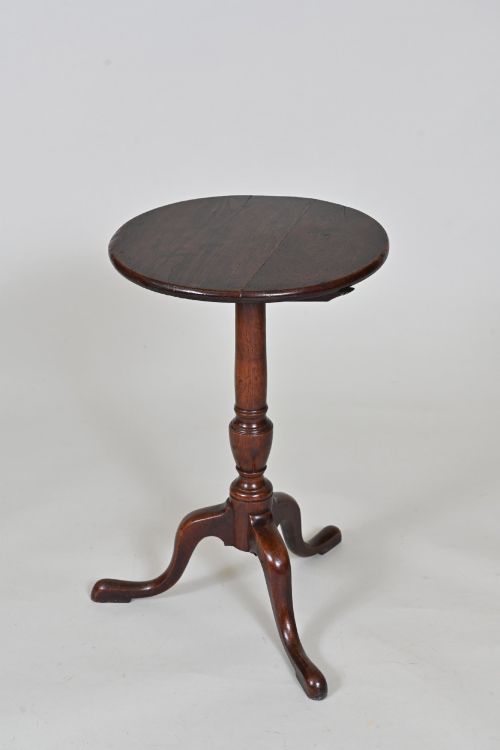
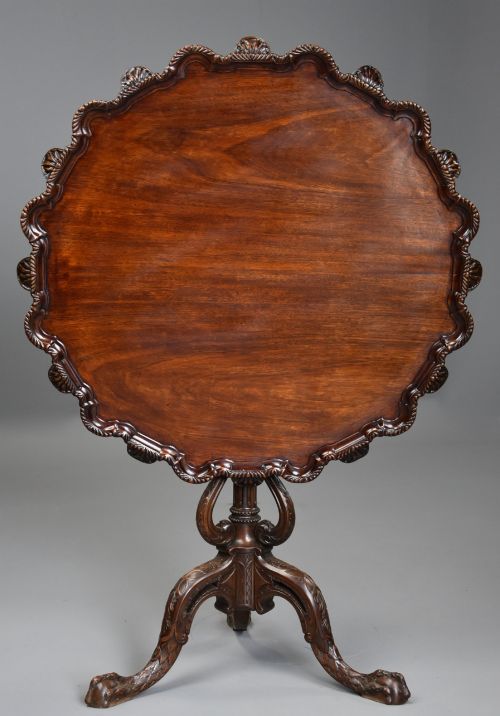
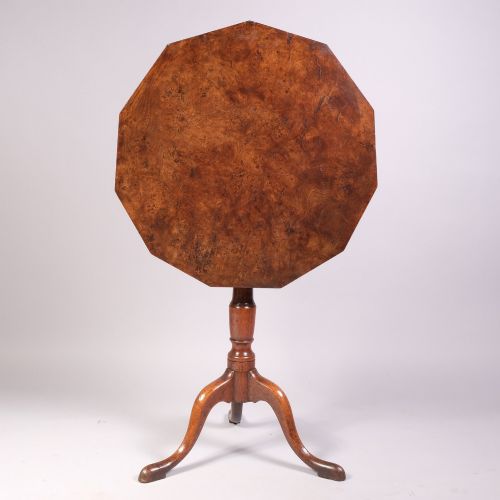
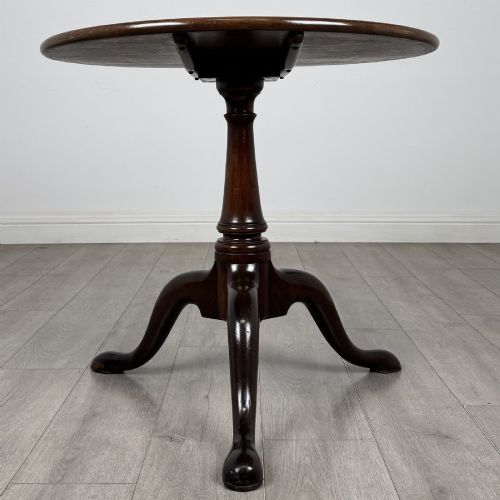
Cabriole Tripod Table
A cabriole tripod table brings proportion and movement to a room, resting on three slender legs beneath a central pillar.
Cabriole Tripod Table
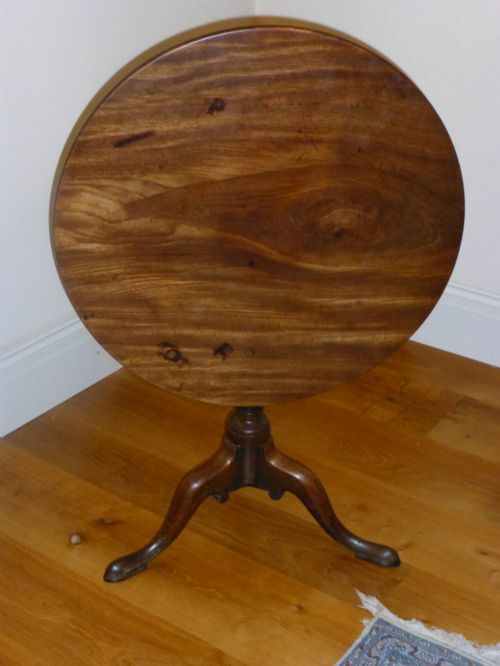
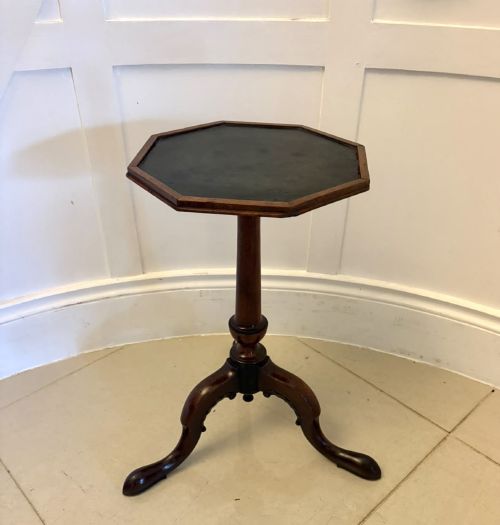
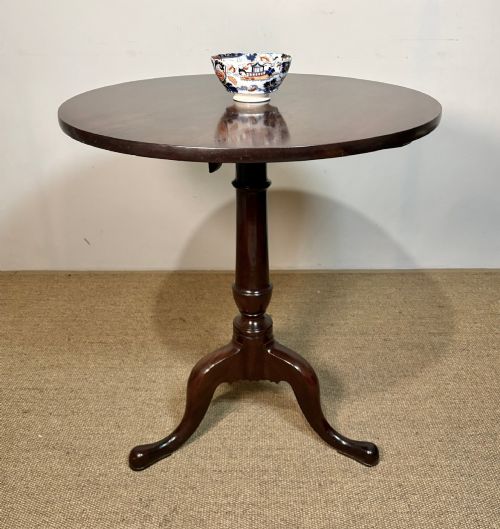
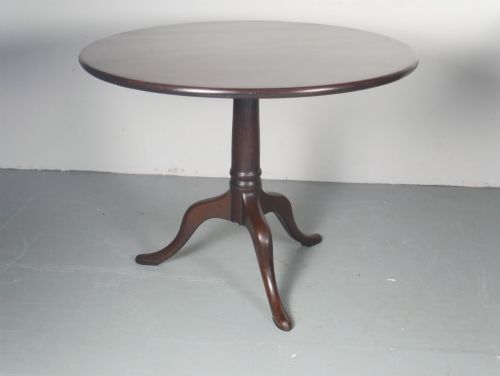
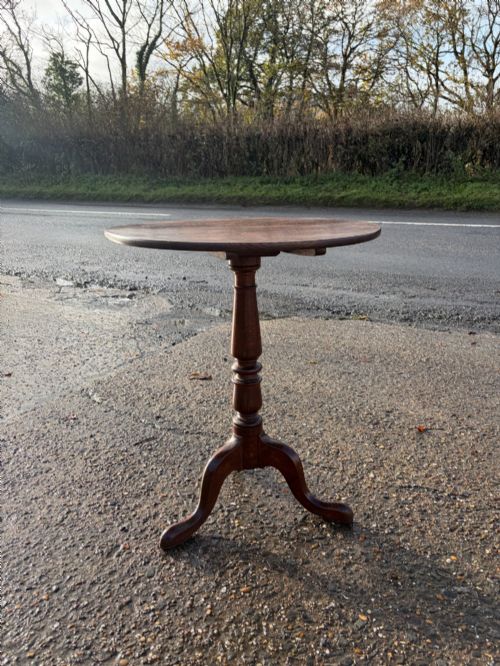
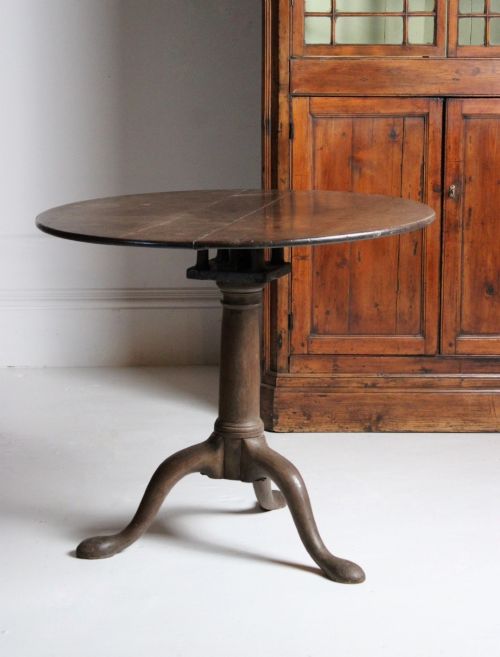
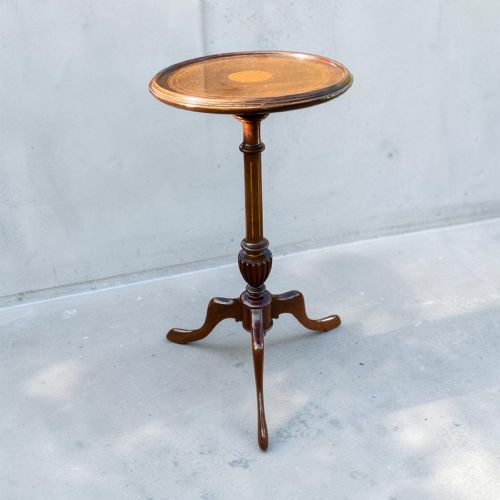
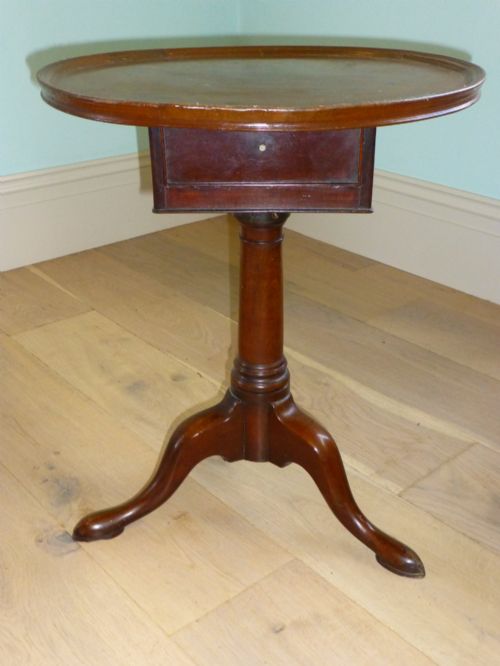
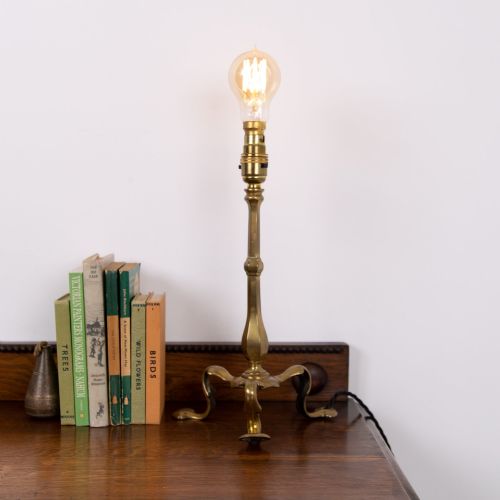
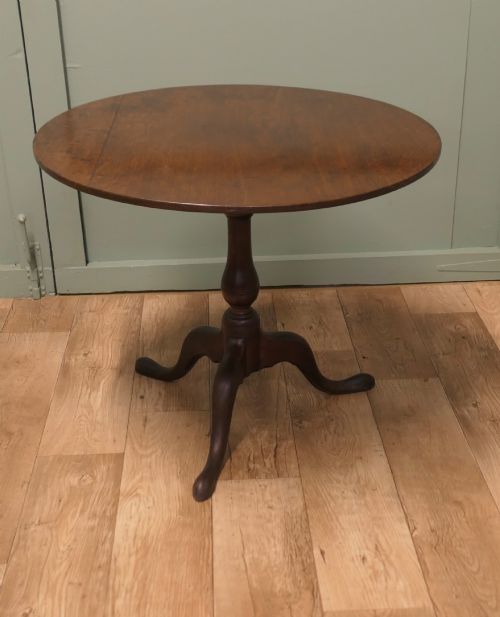
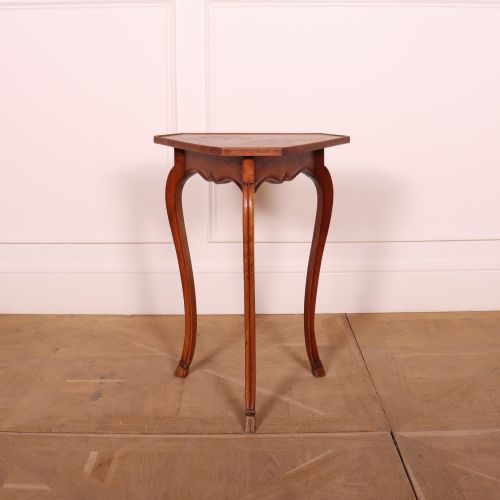
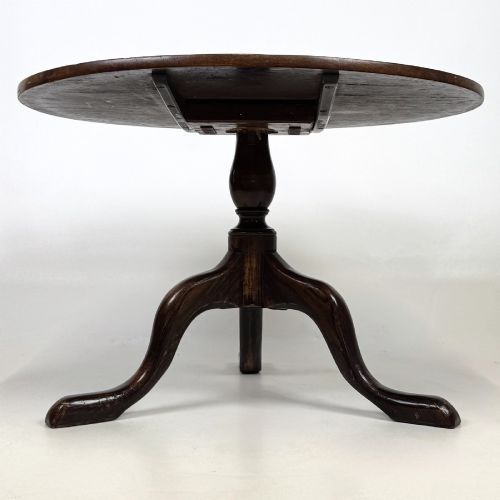
A cabriole tripod table stands on three legs that curve outward in a double S-shape before tapering to feet, supporting a central turned pillar and a circular, octagonal, or oval top. These small tables function as wine tables, lamp tables, tea tables, or tilt-top tables, designed to be moved easily beside seating or against walls.
The versions most commonly met on this page date from the Georgian and Victorian eras, alongside later Edwardian and revival pieces. Mahogany and oak dominate the offerings, appearing in forms ranging from simple country pieces to carved George III designs with birdcage actions.
Makers produced these pieces for versatile use in parlours and drawing rooms, often incorporating tilt-top or snap-top mechanisms so the surface could store flat when not in use. Proportions vary from petite candle stands to larger breakfast tables, maintaining the characteristic three-legged stability on uneven historical floorboards.
How they were made
Cabinetmakers constructed these tables using dense timbers such as mahogany, oak, walnut, and burr elm, often turning the central pillar on a lathe and shaping the cabriole legs by hand. Joinery relied on precise tenons, dowels, and dovetails to connect the pillar to the tripod base and top assembly.
Many examples incorporate a birdcage mechanism, consisting of a wooden frame with small vertical spindles that allows the tabletop to rotate and tilt independently of the pedestal. Turning, carving, and polishing completed the construction, utilising brass hardware and leather inserts where specified by the design.
Cabriole Tripod Table Retail Price Guide 2026
Typical asking prices for cabriole tripod table among the pieces listed under this phrase on Sellingantiques today, from the lower quarter to the upper quarter. They describe what is for sale here now, not the wider market.
Listings feature periods spanning Georgian, Victorian, and Edwardian eras, utilising materials including mahogany, oak, walnut, brass, and iron.
What varies in quality
The distinction between ordinary and superior examples lies in the harmony of proportions, the crispness of the wood carving on the knees and feet, and the quality of the timber selection. Figured mahogany or burr walnut veneers demonstrate careful stock selection by the original cabinetmaker.
Mechanical execution also separates pieces, visible in the smooth rotation and secure locking of a birdcage action or tilt-top mechanism. Stability in the tripod base depends upon tight, enduring joints where the legs meet the central pillar.
The Cabriole Tripod Table Glossary
- Cabriole leg
- A furniture leg that curves out at the top and inward down the road, mimicking an animal's natural leg shape. This form terminates in pad, claw-and-ball, or scroll feet.
- Birdcage
- A timber framework beneath the tabletop containing small turned columns that allows the surface to tilt and revolve. It provides structural stability and convenience for storage.
- Tilt-top table
- A table featuring a hinged mechanism allowing the top to swing into a vertical position. These pieces stood against walls when not in use to save floor space.
- Pad foot
- A simple, rounded foot shape sitting at the base of a cabriole leg. It distributes weight evenly without elaborate carving.
- Pie crust edge
- A raised, decorative tabletop rim carved with undulating curves resembling pastry work. This detail prevents small items or cups from sliding off.
Cabriole Tripod Table: Frequently Asked Questions
What is a cabriole tripod table used for?
These tables serve as flexible surfaces for lamps, drinks, books, or candles, easily repositioned around a sitting room as needed. Their compact footprint allows them to fit beside chairs or in tight corners without crowding the floor.
Historically, smaller variations functioned as tea tables or wine tables during evening gatherings. The tilt-top feature enabled owners to store them flat against the perimeter of a room when floor space was required for other activities.
What wood types are most common?
Mahogany and oak appear most frequently across these listings, representing both formal urban furniture and sturdy country pieces. Walnut and burr walnut also feature prominently in later periods, offering rich grain patterns.
Alternative materials like cherrywood, brass, and iron appear in specific regional or specialised utilitarian forms such as lamp stands and work tables.
How do I care for antique wood tables?
Maintain antique wood surfaces by keeping them away from direct heat sources and strong sunlight, which can dry out the timber and fade the polish. Dust regularly with a soft, dry cloth to prevent accumulation.
Apply a traditional beeswax polish occasionally to nourish the grain and protect the finish. Avoid using modern silicone sprays or excessive moisture.