


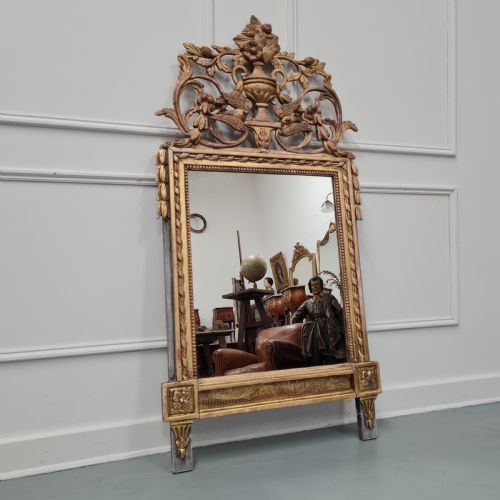

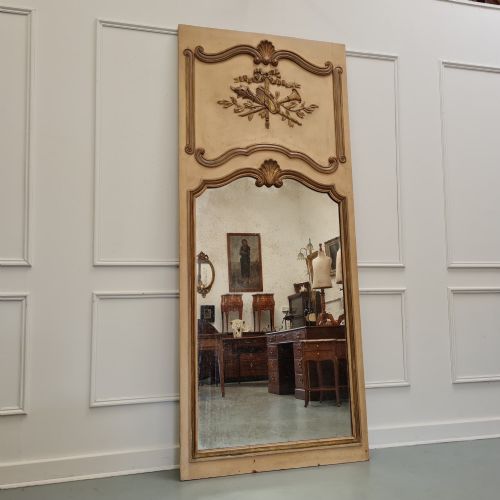


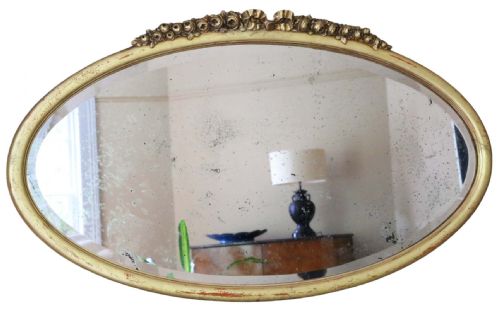


C1900 Gilt Mirror
A c1900 gilt mirror brings scale and reflected light to a room, offering the ornate character of revival styles from the turn of the twentieth century.
C1900 Gilt Mirror
When you search for a c1900 gilt mirror, you encounter large decorative objects designed to hang on walls or sit above mantelpieces. The overmantel format dominates this selection, often built to span the width of a fireplace.
The pieces on this page span the years 1900 to 1920, incorporating Edwardian sensibilities alongside revivals of French, Adam and Rococo styles. You also find trumeau panels, marriage mirrors and full-height floor dressing mirrors.
Makers of this era drew heavily on historical forms, producing wall mirrors and pier glasses in rectangular, oval and arched shapes. These items served both a functional purpose and a grand decorative role in period interiors.
How they were made
Carved wood and composition ornaments form the core of these frames, bonded to wooden carcasses to hold intricate relief work. Giltwood, gold leaf and applied gilt provide the bright metallic surfaces seen across the pieces.
Gesso layers beneath the gilding create a smooth base for crisp ornamentation, while glass and mirror glass complete the optical assemblies. Some examples incorporate painted wood, mahogany or ebonised details to contrast with the gold finish.
C1900 Gilt Mirror Retail Price Guide 2026
Typical asking prices for c1900 gilt mirror among the pieces listed under this phrase on Sellingantiques today, from the lower quarter to the upper quarter. They describe what is for sale here now, not the wider market.
French marriage mirrors carry tiny hidden symbols of union tucked into the gesso crests, meant to bring domestic luck to the newly wedded.
What varies in quality
The crispness of the gesso moulding and the depth of the gilding set the standard for these frames. Superior examples display sharply defined relief ornament rather than soft, blurred cast details.
The clarity and weight of the mirror glass also distinguish finer items, alongside the structural integrity of the timber frame holding heavy glass plates safely in place.
The C1900 Gilt Mirror Glossary
- Gesso
- A plaster-like mixture applied to wood frames to create a smooth surface for gilding. It allows craftsmen to carve or stamp intricate relief decorations before applying gold leaf.
- Trumeau
- A decorative wall mirror featuring an upper painted panel or carved motif paired with a looking glass below. These French-inspired pieces bring architectural symmetry to a room.
- Overmantel
- A large mirror specifically proportioned to hang on the wall directly above a fireplace mantel. They often feature horizontal formats designed to reflect light across the entire floor.
- Pier glass
- A tall, narrow mirror designed to hang on the section of wall between two windows. They make efficient use of narrow spaces to amplify natural daylight.
- Giltwood
- Timber that has been coated with gold leaf or metallic powder to resemble solid gold. This material defines the opulent appearance of turn-of-the-century decorative frames.
C1900 Gilt Mirror: Frequently Asked Questions
Where should I hang an overmantel mirror?
These mirrors sit naturally above a fireplace mantel, anchored securely to the wall to support their substantial weight.
Position them at a height that reflects eye-level artwork or ceiling details rather than empty floorboards.
How do I identify a c1900 mirror?
Look for construction traits characteristic of the early twentieth century, including composition ornament applied over timber frames and heavy backboards.
Stylistic revivals of Adam, Rococo and French designs dominate this period alongside Edwardian touches.
Can these mirrors stand on the floor?
Certain items in this group are designated as full-height floor dressing mirrors built for upright placement against a wall.
Ensure floor-standing pieces use appropriate wall fixings to prevent tipping in busy rooms.
How do I care for gilt frames?
Dust the ornate mouldings gently with a soft dry brush to avoid disturbing the delicate gold leaf surface.
Keep them away from direct moisture and strong heat sources that could crack the gesso foundation.