
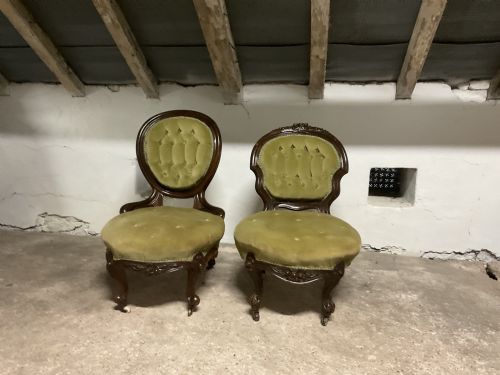
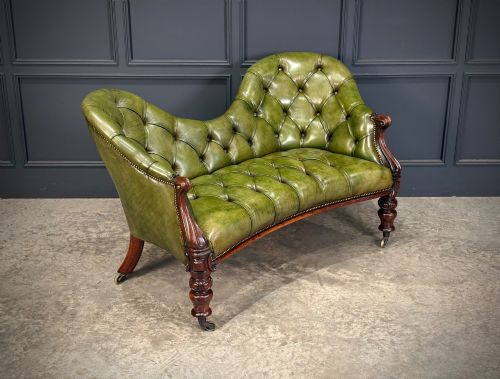
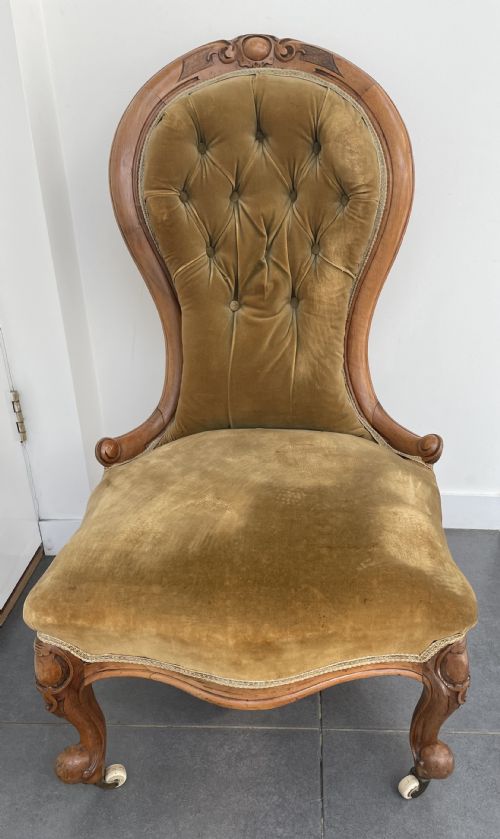
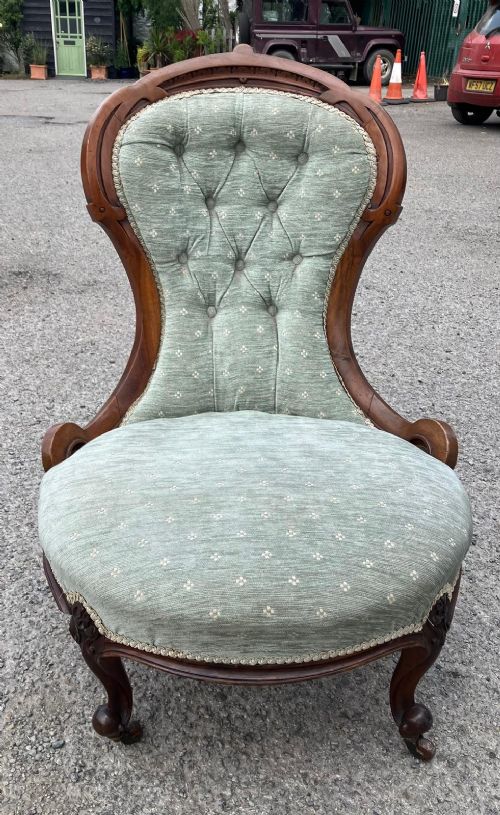
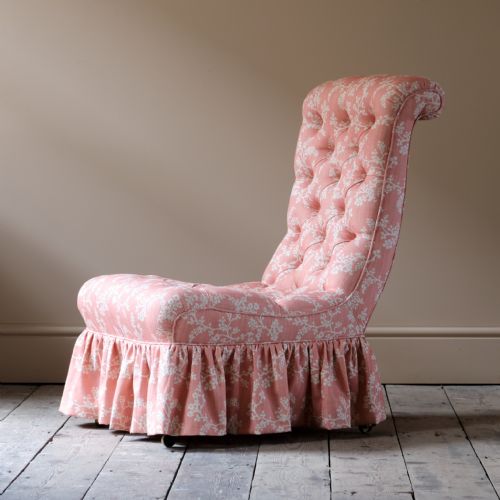
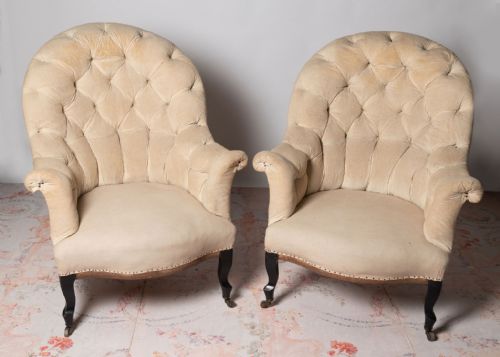


Buttoned Spoon Back Seat
A buttoned spoon back seat offers deep-sprung comfort and fluid, curvaceous woodwork, anchoring a Victorian interior with quiet elegance.
Buttoned Spoon Back Seat
A buttoned spoon back seat takes several forms, predominantly appearing as a nursing chair, ladies chair, gentleman's chair, or occasional chair. These pieces trace back to the nineteenth century, spanning periods from the early Victorian era through to the eighteen-eighties and nineteenth-century revivals.
The defining characteristic is the recessed, spoon-shaped backrest which is paired with deep button upholstery. Buyers frequently encounter walnut or mahogany frames, alongside occasional examples in iron or painted finishes.
Seating arrangements range from single salon chairs and slipper chairs to larger two-seat and three-seat settees, often accompanied by matching armchairs.
Materials and construction methods
Frames are constructed from hardwoods such as walnut and mahogany, carved to create the characteristic undulating contours of the spoon back. Metal components like brass and iron appear in structural or decorative capacities.
Upholstery relies on traditional textiles, including velvet, leather, and fabric, secured with deep buttoning techniques across the padded backrest. Showwood frames expose the polished timber grain around the perimeter of the upholstery.
Gentleman's chairs were built with wider arms to accommodate the voluminous skirts worn by Victorian ladies.
Distinctions in craftsmanship
The refinement of the timber carving sets individual pieces apart, distinguishing fluid hand-carved details on walnut and mahogany frames from simpler execution. The proportion of the spoon back relative to the seat depth influences the overall harmony of the piece.
The crispness of the buttoning and the choice of covering material, whether leather, velvet, or traditional fabric, reflect the original tier of production and subsequent restoration standards.
Gillows
The Buttoned Spoon Back Seat Glossary
- Spoon back
- A padded backrest recessed into a wooden frame to resemble the bowl of a spoon, designed to cradle the spine. This shape defines the silhouette of mid-nineteenth-century seating.
- Buttoning
- A method of securing upholstery by pulling ties or twine through the padding to form a geometric pattern of indentations. It provides both structural tension and decorative depth.
- Nursing chair
- A low-seated armchair historically designed for comfort during nursery duties. The shortened legs bring the sitter closer to the floor.
- Showwood
- Exposed timber framework on an upholstered chair or sofa that displays the polished grain and carved decoration around the padded sections.
- Slipper chair
- An upholstered chair with low legs, traditionally kept in a bedroom for changing shoes.
Buttoned Spoon Back Seat: Frequently Asked Questions
How do I date a Victorian armchair?
Dating relies on timber choices, such as mahogany in earlier decades and walnut during the eighteen-fifties and sixties, alongside carved stylistic cues. Rococo revival influences point toward the mid-nineteenth century.
Construction methods and upholstery remnants also help narrow down the decade of production.
Where should I place a salon chair?
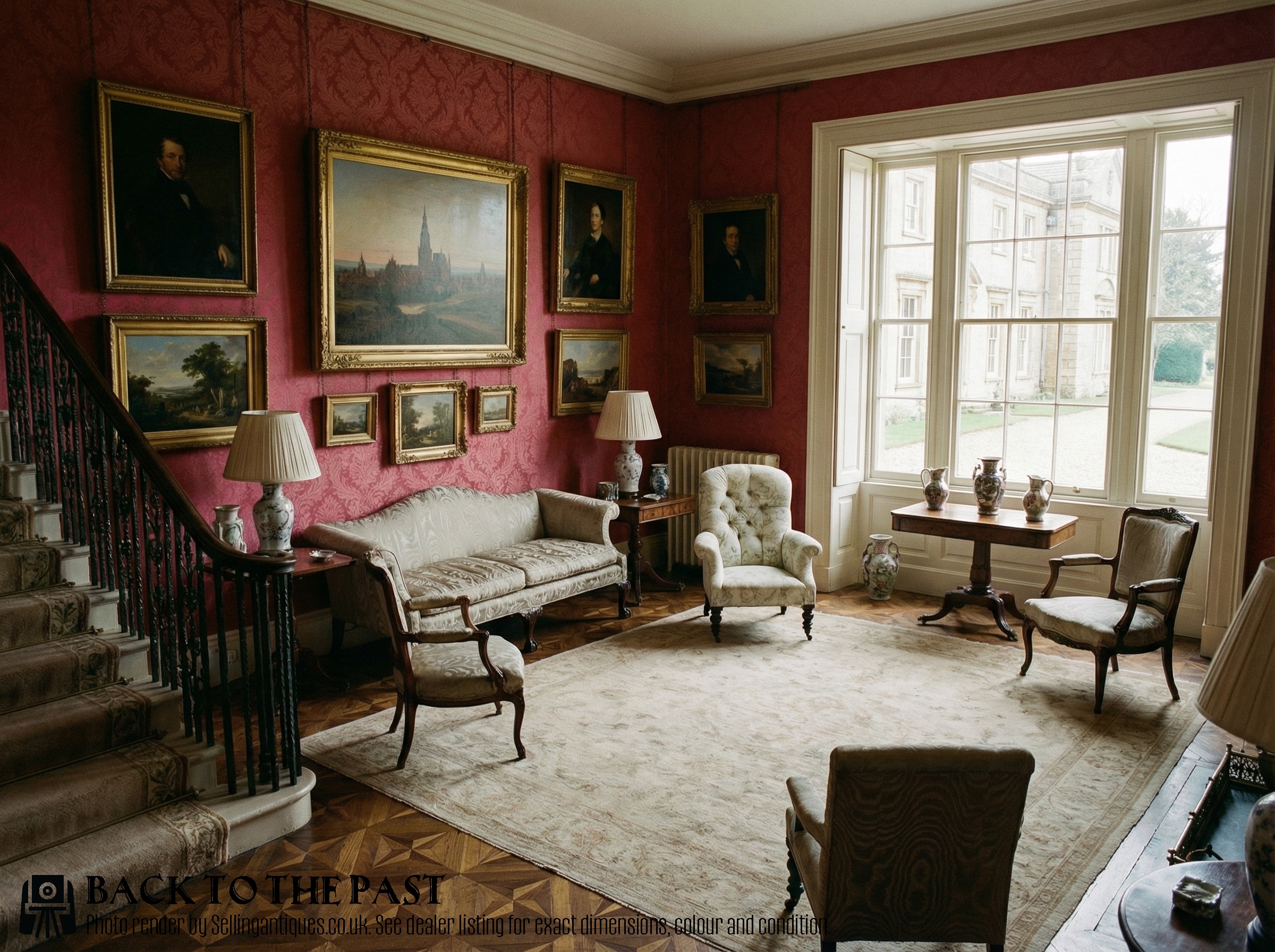
Salon chairs suit reception rooms, bedrooms, or reading corners where space allows for a freestanding silhouette. Their decorative carved frames look best when viewed from multiple angles.
Pairing a single chair with a larger sofa creates a cohesive nineteenth-century seating arrangement.
Can these seats be recovered?
Many examples are suitable for reupholstering in fabrics like velvet or leather to match modern interiors. Traditional methods ensure the buttoning and springs retain their original profile.
Some pieces arrive ready for restoration in calico or needing complete textile replacement.