



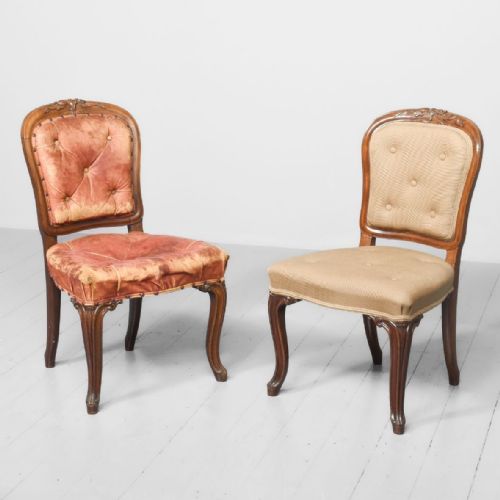


Button Tufted Dining Chairs
Button tufted dining chairs bring deep character and structured comfort to a room.
Button Tufted Dining Chairs
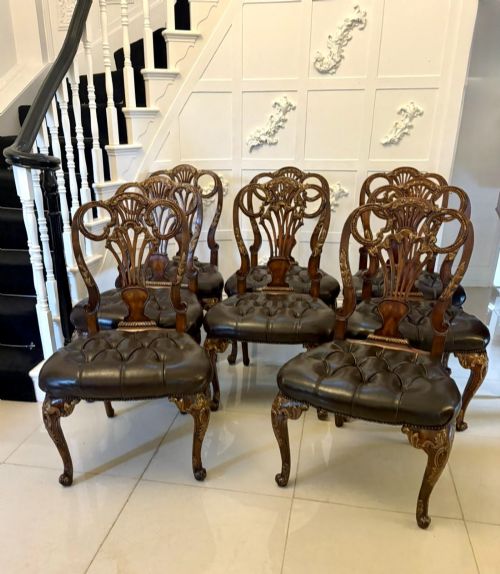
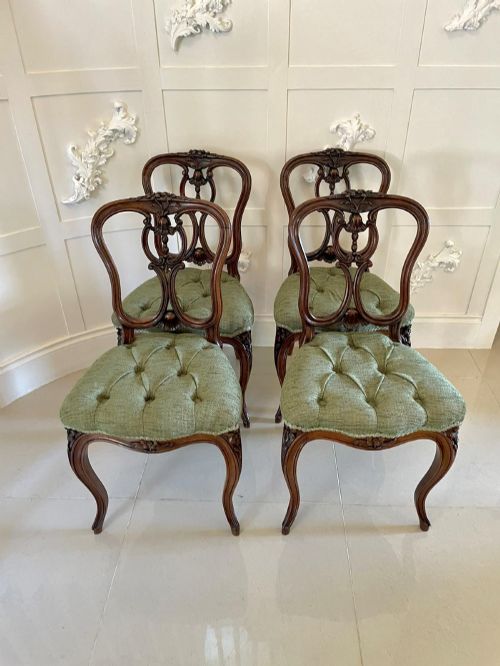
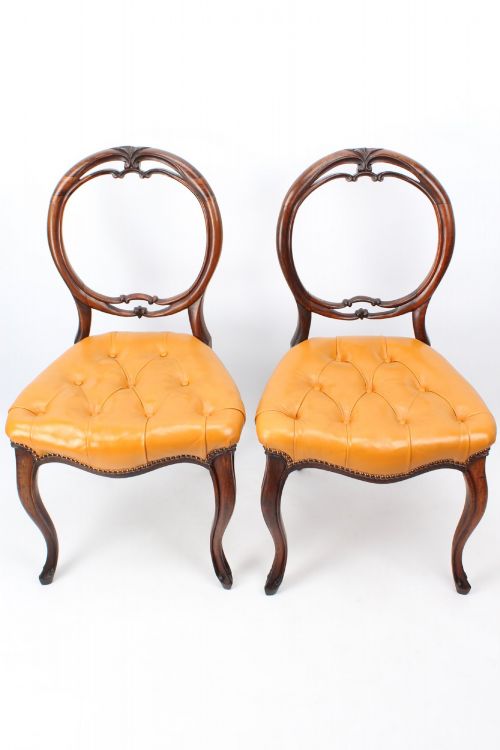
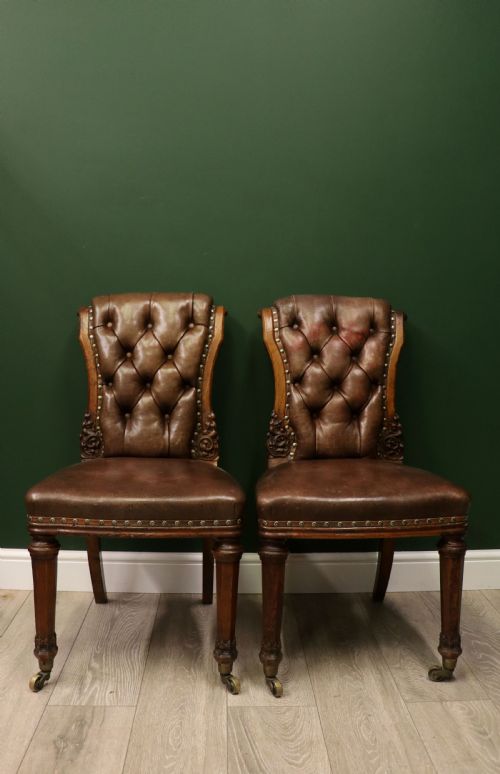
Button tufted dining chairs combine formal seating with deeply indented upholstery, appearing frequently in Victorian and nineteenth century designs. These pieces often feature carved walnut, rosewood, mahogany, or oak frames shaped into balloon backs or Chesterfield forms.
Buyers encounter sets ranging from pairs to groups of twelve, alongside individual side and children's chairs. The construction spans from mid nineteenth century examples to Edwardian iterations.
The aesthetic bridges traditional dining requirements with decorative woodwork, displaying carved details, gilded accents, and occasional claw and ball feet.
How they were made
Frames rely on dense hardwoods including walnut, mahogany, rosewood, and pollard oak, shaped through carving and turning. Artisans formed structural elements like balloon backs and lion carved details directly into the timber.
Upholstery involves securing leather, velvet, or textile fabric over internal padding with deep buttoning techniques. Brass elements often accent the leather or wood structures.
Button Tufted Dining Chairs Retail Price Guide 2026
Typical asking prices for button tufted dining chairs among the pieces listed under this phrase on Sellingantiques today, from the lower quarter to the upper quarter. They describe what is for sale here now, not the wider market.
One child's chair survives in rosewood, proving that nineteenth century toddlers dined with serious upholstery standards.
What varies in quality
The distinction between standard examples and the finest pieces rests in the ambition of the woodwork and the depth of the carving. Elaborate frames with French carved walnut, gilded touches, or figural details such as lion carvings represent higher tiers of craftsmanship.
The uniformity and scale of a matched set heavily influence desirability, particularly when larger groupings survive together.
Blyth and Sons·C Hindley and Sons
The Button Tufted Dining Chairs Glossary
- Button tufted
- A method of upholstery where buttons are pulled deep through the padding and secured to create a quilted, patterned surface. This technique provides both structural tension and a distinct visual texture.
- Balloon back
- A chair back shaped in a continuous oval curve resembling a balloon. This design is prevalent in nineteenth century seating.
- Pollard oak
- Timber taken from trees that have been cut close to the trunk to produce a gnarled, highly figured grain. It was utilised for distinctive cabinet work and chair frames.
- Chesterfield
- A style characterised by deep button tufting and padded arms or backrests. In seating contexts here, it denotes heavily padded, tufted leather upholstery.
- Rococo Revival
- A nineteenth century design movement drawing on seventeenth century French motifs with flowing, asymmetrical scrollwork and naturalistic carving. It appears frequently on walnut frames.
Button Tufted Dining Chairs: Frequently Asked Questions
How do I care for antique leather?
Antique leather benefits from gentle cleaning and occasional conditioning to maintain its flexibility.
Avoid placing these chairs near direct heat sources or strong sunlight to prevent the hide from drying out.
Are large sets difficult to find?
Large matching groupings of six to twelve chairs occur less frequently than pairs or small sets.
Surviving sets often reflect high initial commission costs and careful preservation over generations.
What wood types should I expect?
Frames are constructed predominantly from walnut, mahogany, rosewood, and oak.
Each timber offers distinct grain patterns and colour variations that shifted in popularity across the nineteenth century.
How do I distinguish Victorian from Edwardian examples?
Victorian pieces often feature heavier carved walnut or rosewood frames with ornate balloon or buttoned backs.
Edwardian iterations tend to incorporate lighter proportions while retaining traditional carving and gilding techniques.