
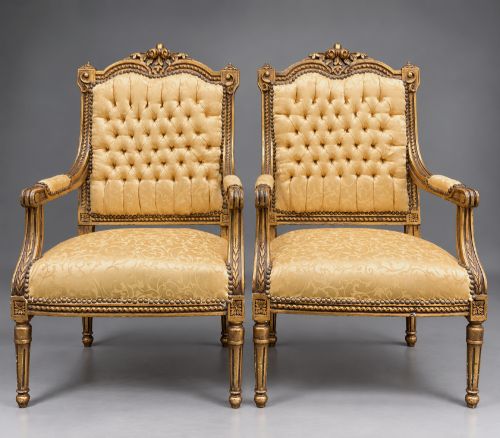
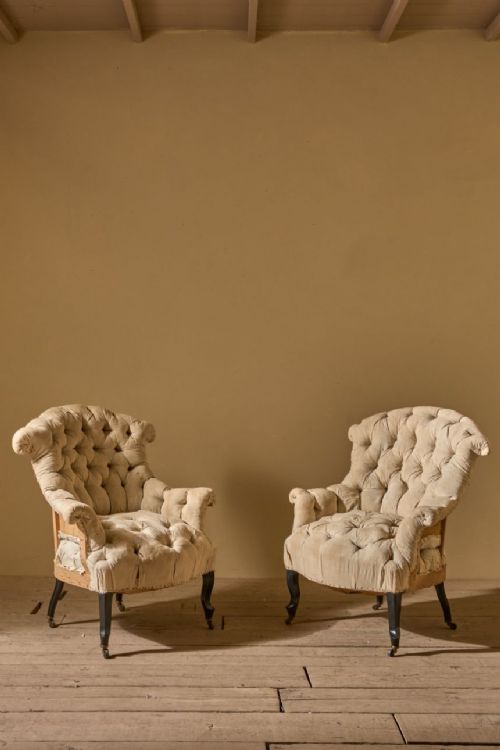
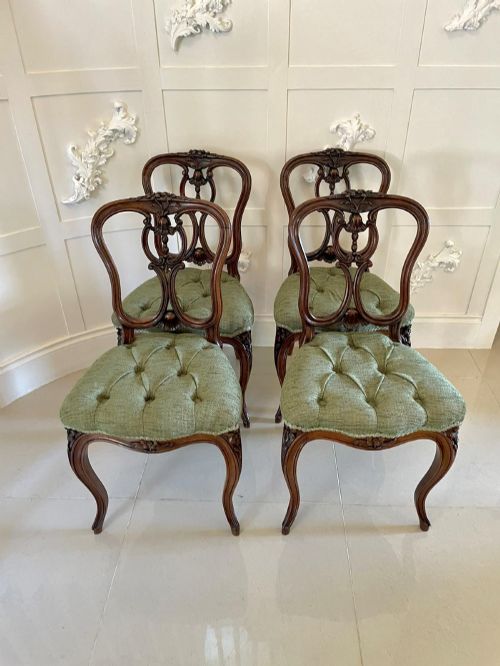
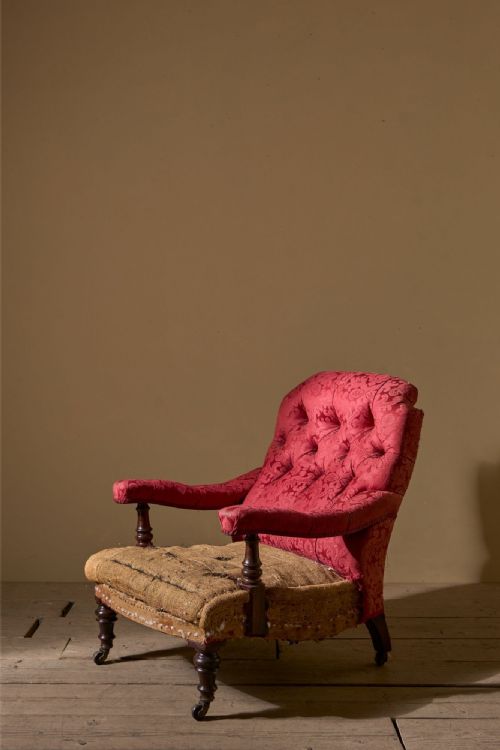
Button Tufted Accent Chair
These button tufted accent chair listings offer deep upholstery and gathered upholstery patterns, bringing tactile comfort and period character to sitting rooms.
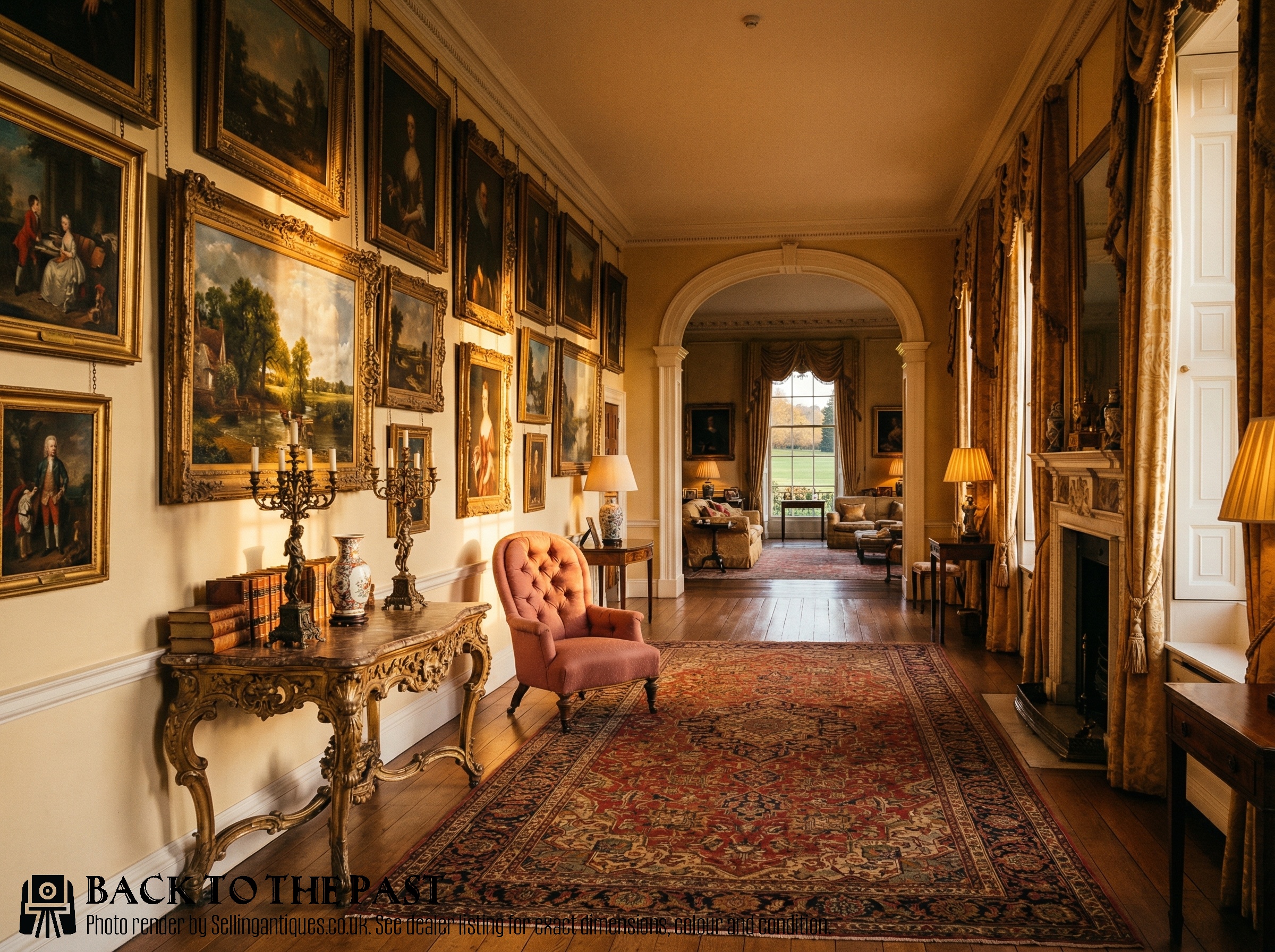
Button Tufted Accent Chair
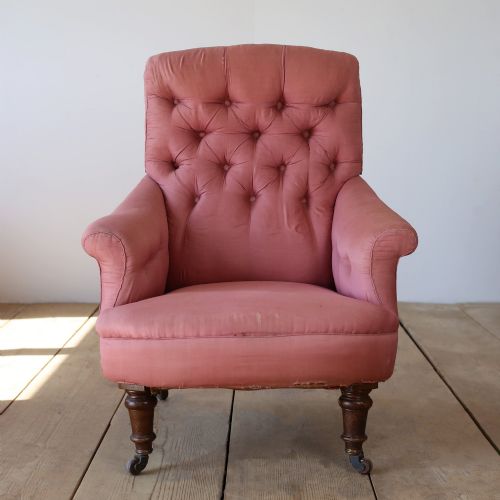
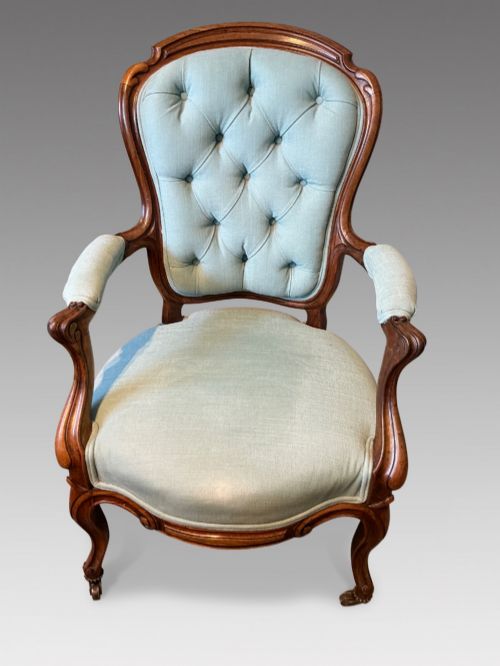
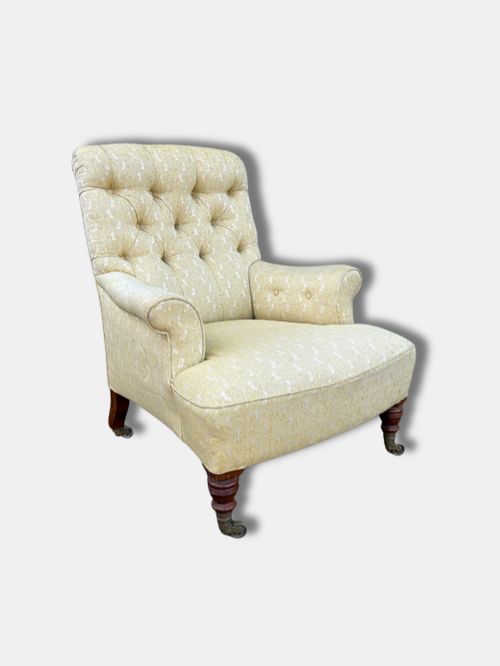
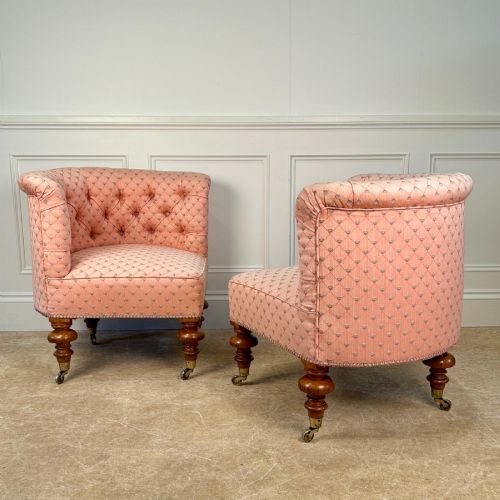
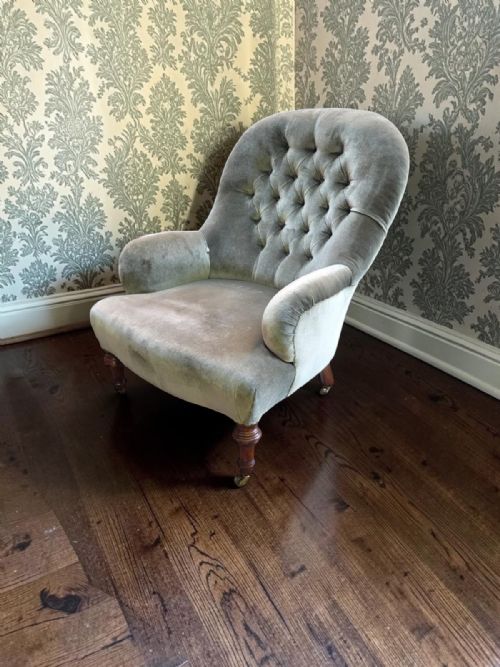
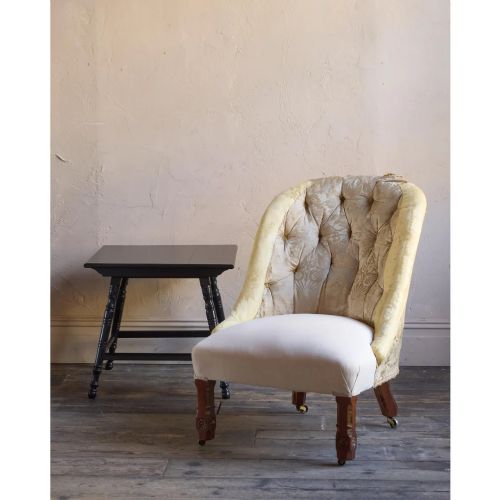
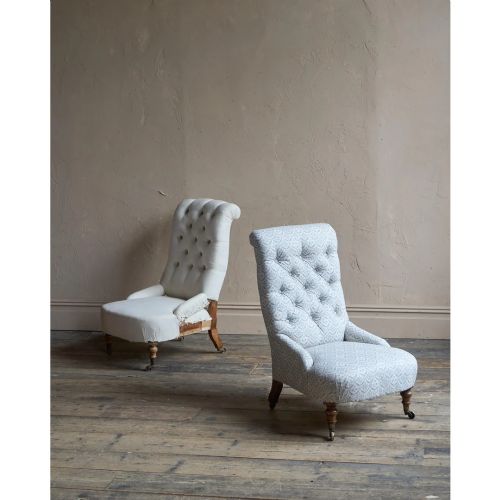
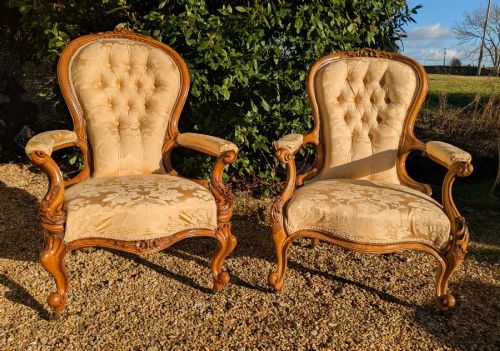
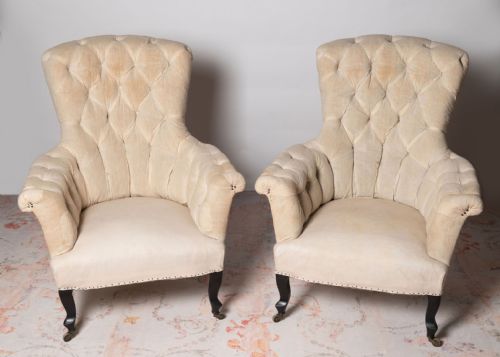
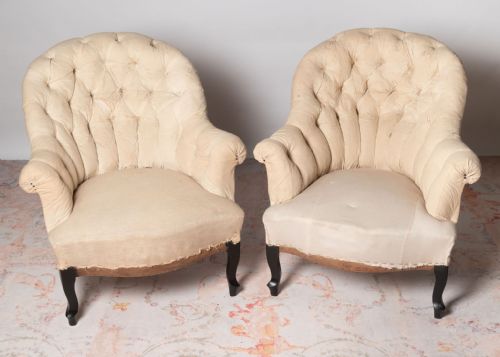
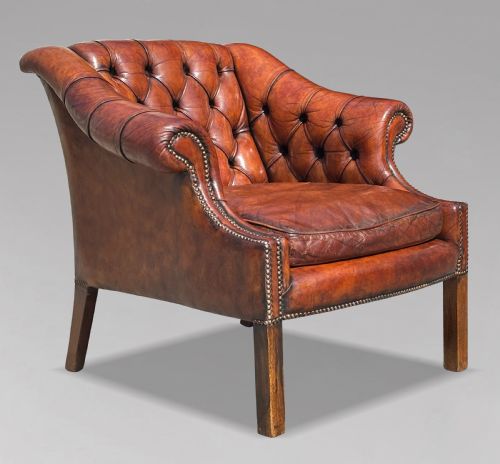
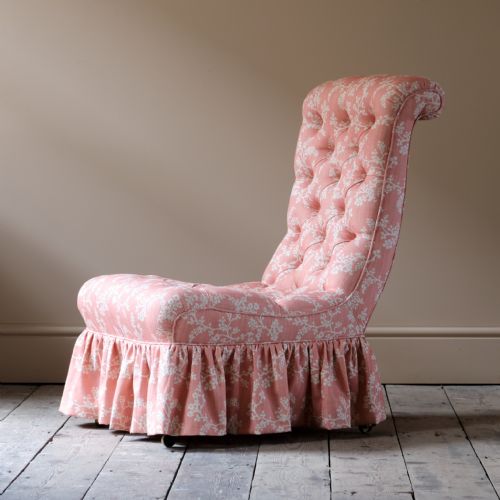
When you examine a button tufted accent chair on this page, you encounter seating shaped primarily by Victorian and Edwardian tastes from the nineteenth and early twentieth centuries. The selection encompasses various forms including open armchairs, slipper chairs, nursing chairs, and library chairs built for domestic comfort.
The visual identity relies on distinctive upholstery treatments where depressions are pulled tight and secured with buttons across the backrest or seat. These pieces draw from English country house traditions as well as French Napoleon III and revival styles.
Most examples date from the Victorian period, spanning the mid-nineteenth century through to Edwardian interpretations around nineteen-ten. The physical evidence demonstrates a persistent focus on low-slung seating and supportive cushioned backs designed for parlour and bedroom use.
Materials and construction methods
Makers built the structural frames of these seats using hardwoods such as mahogany, walnut, oak, and rosewood, often shaping the timber into cabriole legs, barley twists, or carved showwood frames. Brass details and visible wood grain appear frequently alongside the concealed joinery.
The distinctive upholstery relies on deep buttoning techniques that pull the textile tight against internal stuffing. Upholstery fabrics range from velvet, silk, and linen to durable brown and buttoned leather.
Some nineteenth-century slipper chairs arrived complete with delicate fringe trim, designed to sweep the floor while keeping drafts away from ankles.
Distinctions in quality
Quality rests in the articulation of the timber frame and the precision of the upholstery work. Hand-carving on walnut or rosewood showwood elements and sturdy joinery separate refined workshop production from simpler output.
The integrity of the buttoning and the choice of covering material dictate the refinement of the piece. Fine velvet, silk, or leather paired with balanced proportions and robust internal webbing distinguish the upper tier of these chairs.
Howard and Sons·Gillows
The Button Tufted Accent Chair Glossary
- Button tufting
- An upholstery technique where stitches pass through padding and fabric at regular intervals, secured with buttons to create a deeply indented pattern. This method holds internal stuffing firmly in place while adding texture to the backrest.
- Slipper chair
- A low-seated upholstered chair originally designed for bedrooms, allowing women to dress with ease. These chairs typically lack arms and sit close to the floor.
- Showwood
- Exposed wooden framing on an upholstered chair where carved or polished timber remains visible around the padded sections. It highlights the craftsmanship of the frame.
- Cabriole leg
- A furniture leg that curves outward at the knee and tapers inward toward the foot, drawing inspiration from animal forms. This leg style appears frequently on mid-nineteenth-century seating.
- Fauteuil
- An open-armed French armchair with an exposed wooden frame, typically featuring upholstered back and arm pads. These chairs reflect continental design influences found in nineteenth-century interiors.
Button Tufted Accent Chair: Frequently Asked Questions
Where did people use button tufted chairs?
These chairs served primarily in Victorian drawing rooms, libraries, and bedrooms as comfortable spots for reading or resting. Lower variants like slipper chairs and nursing chairs were specifically placed in private chambers.
In larger spaces, open armchairs and library chairs offered substantial seating near fireplaces or writing desks. Their upholstered construction provided warmth and prolonged comfort during daily domestic use.
How do I date a button tufted chair?
Dating relies on examining the timber frame, leg shape, and upholstery style alongside recorded periods. Mid-nineteenth-century examples often feature rosewood or walnut frames with cabriole legs and detailed carving.
Later Edwardian versions tend to display lighter proportions or specific revival characteristics. Comparing the woodwork and profile against documented nineteenth-century design markers helps narrow the manufacturing era.
What is the difference between an armchair and a slipper chair?
Armchairs feature supportive side rests and upright proportions designed for general sitting rooms and libraries. They offer substantial framing in woods like mahogany, oak, or walnut.
Slipper chairs are built lower to the ground and traditionally omit arms to allow freedom of movement. This compact form made them well-suited for bedrooms and dressing spaces.
How do I care for antique leather upholstery?
Historic leather requires gentle maintenance to preserve its texture and prevent cracking over time. Keeping the material away from direct heat sources helps maintain the natural hide.
Light dusting and appropriate conditioning keep the surface stable. Avoiding harsh chemical cleaners ensures the original finish remains intact.