


Linen Button Back Armchair
A linen button back armchair brings tactile warmth and deep upholstery comfort to a room.
Linen Button Back Armchair
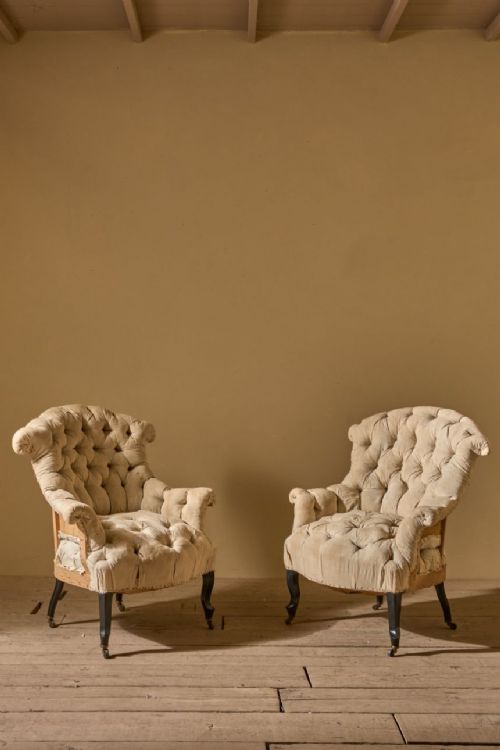
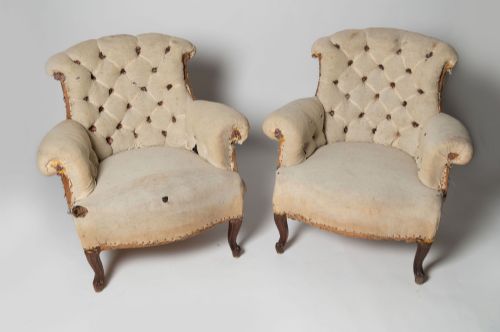
A linen button back armchair encompasses seating forms designed for comfort and parlor use, predominantly originating in the nineteenth century and the Edwardian period. Buyers browsing this selection encounter distinctive French Napoleon III designs alongside English styles.
Origins span English workshops and French ateliers, with several pieces displaying specific stylistic influences such as the Howard and Son aesthetic. These chairs frequently arrive upholstered in vintage linen, mulberry linen, or prepared in calico fabric ready for final covering.
How they were made
Frames rely on sturdy timbers such as walnut, beech, and general wood construction to support heavy internal stuffing and upholstery. Joinery and structural integrity depend on traditional carpentry methods suited to the period.
Upholstery techniques involve securing heavy linen or cotton fabrics over deep sprung or padded interiors, punctuated by brass tacks where appropriate. Buttoning requires skilled hand-pulling to create the characteristic indented pattern across the back and sometimes the seat.
Materials recorded across these items include walnut, beech, brass, timber, calico fabric, and mulberry linen.
What varies in quality
Quality rests in the proportional elegance of the wooden frame and the precision of the upholstery work. Finer examples show careful attention to the tension of the buttoning and the drape of the linen over the curves.
The integrity of the underlying timber frame and the condition of the exposed wood components distinguish standard pieces from superior examples. Original fabric choices, such as vintage mulberry linen, add distinct character compared to plain calico preparation.
The Linen Button Back Armchair Glossary
- Button back
- An upholstery technique where buttons are pulled deep into the padding to form a geometric pattern of tufts and folds. This method secures the internal stuffing while adding texture to the chair back.
- Slipper chair
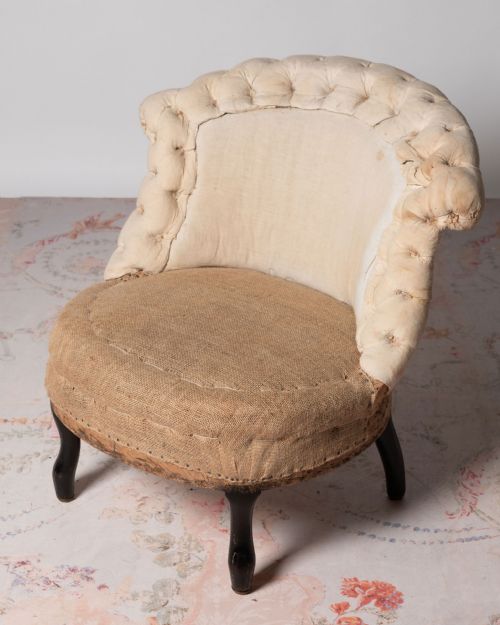
- A low-seated bedroom chair traditionally designed without arms to allow easier dressing. These pieces feature compact proportions suited to smaller spaces.
- Wing armchair
- A comfortable seating form featuring protective side panels attached to the backrest to block drafts. The Edwardian variations often combine this shape with deep buttoning.
- Calico fabric
- A plain-woven cotton textile frequently used as an initial upholstery layer or under-cover on antique seating. Many restored pieces are sold in this state so buyers can apply their own top fabric.
Linen Button Back Armchair: Frequently Asked Questions
What is a linen button back armchair?
It is a traditionally upholstered seat featuring a tufted, buttoned backrest covered in linen fabric. These pieces typically date from the nineteenth century or the Edwardian era.
They appear in various forms including open armchairs, slipper chairs, and wing chairs. Each style offers a distinct silhouette suited to different interior settings.
How do I care for vintage linen?
Vintage linen requires gentle treatment and regular light vacuuming with a soft brush attachment to remove surface dust. Avoid harsh chemical cleaners that can weaken natural fibres over time.
Professional specialist cleaning is recommended for deeper marks to preserve the textile integrity. Keeping the chair away from direct sunlight prevents uneven fading of the fabric.
Are these chairs comfortable for daily use?
Nineteenth-century and Edwardian armchairs are built with deep padding and sprung interiors designed for relaxation. Their ergonomic proportions support upright sitting as well as lounging.
Support levels depend on the condition of the internal webbing and stuffing. Many period examples retain a high level of comfort due to traditional sprung construction.
How do I distinguish French and English styles?
French Napoleon III armchairs often feature flowing lines, exposed polished wood frames, and distinct fishtail or open arm configurations. English counterparts from the same era frequently emphasise heavier upholstery and structural wing or deep buttoned designs.
Looking at the woodwork and frame shaping helps identify the likely regional origin. Comparing proportions clarifies whether a piece follows a continental or British tradition.