

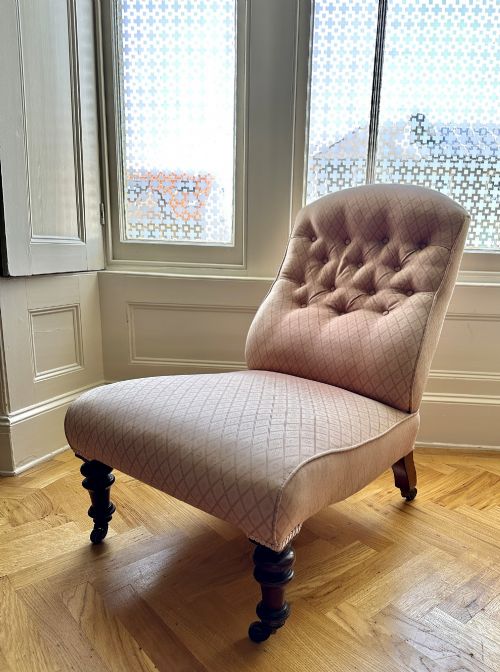
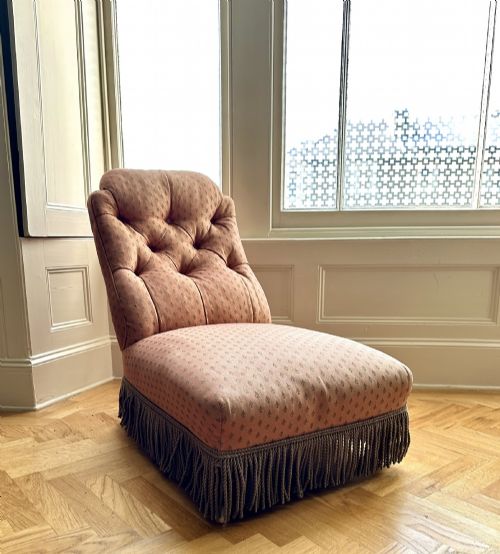


Rose Pink Victorian Chair
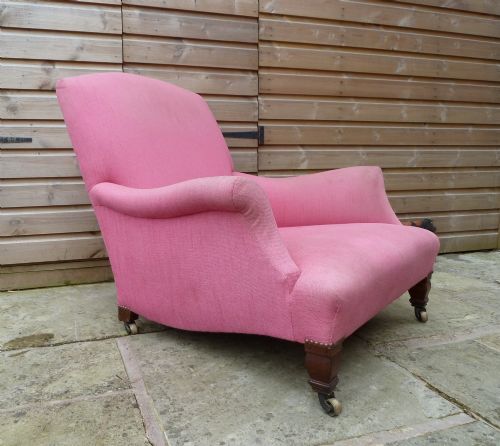
A rose pink victorian chair brings soft nineteenth-century upholstery and carved timber into a room, offering deep seating and period character.
Rose Pink Victorian Chair
When searching for a rose pink victorian chair, buyers encounter nineteenth-century seating upholstered in velvet and fabric, spanning armchairs, slipper chairs, nursing chairs, and chaise longues. These pieces date from the 1850s through to 1900, reflecting the various decades of the Victorian era.
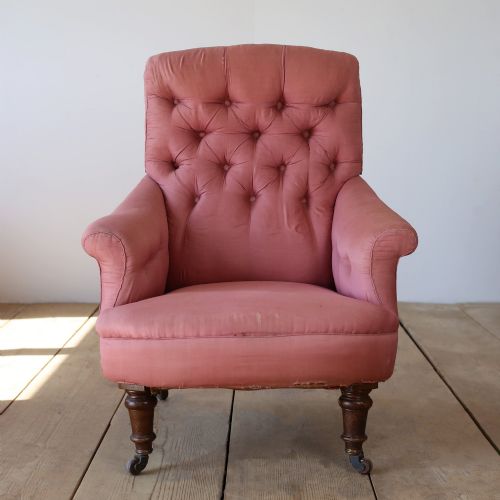
The most common forms on this page are walnut and mahogany framed armchairs, often featuring button backs and low seats designed for fireside or drawing room use. Alongside these, dining chairs and occasional chairs appear in sets or as single statement pieces.
Materials and construction methods
Frames are constructed from solid timbers such as walnut, mahogany, and general wood or timber, frequently shaped with carved details and supported by brass castors or ceramic components. Upholstery utilises velvet and traditional fabric over sprung interiors, finished with button-backed detailing or fringes.
Joinery methods of the nineteenth century rely on sturdy hardwood frames designed to endure decades of heavy domestic use, with show frames exposing polished walnut or mahogany around the upholstered core.
Distinguishing quality across the range
The distinction between standard production and the upper tier rests upon the crispness of the timber carving and the architectural ambition of the show frame. Finer examples display deeply moulded walnut or mahogany structures with balanced proportions and maker stamps.
Upholstery finish and the integrity of the underlying frame construction further separate ordinary examples from superior pieces, particularly where sprung buttoning and turned or ionic column legs are executed with precision.
Gillows·Holland and Sons·Howard and Sons·CVS
The Rose Pink Victorian Chair Glossary
- Button back
- An upholstery technique where depressions are formed in the padding by stitching through to the frame, securing tufts in a geometric pattern. This method adds structural tension and visual texture to Victorian seating.
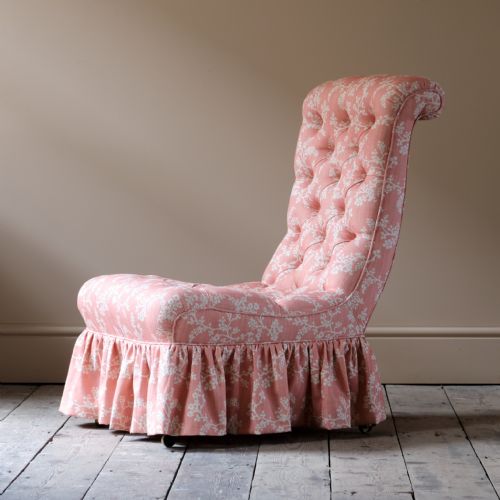
- Slipper chair
- A low-set bedroom or boudoir chair traditionally utilised for sitting while putting on shoes or garments. These pieces feature shortened legs to sit close to the floor.
- Show frame
- A wooden structural surround left visible around the upholstered portions of a chair. Walnut and mahogany were frequently selected for this purpose.
- Spoonback
- A chair back curved in three dimensions to resemble the bowl of a spoon, conforming to the human spine. This form is characteristic of mid-nineteenth-century drawing room seating.
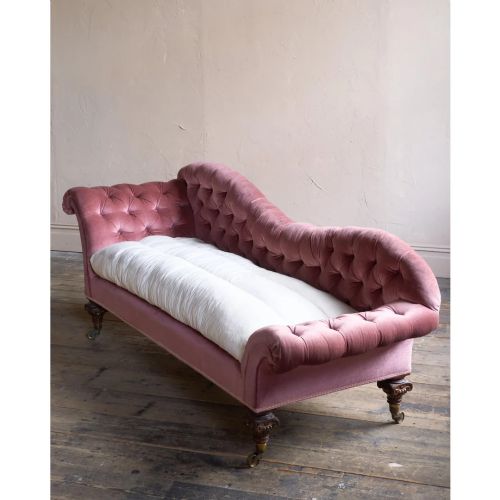
- Chaise longue
- An elongated upholstered seat intended for reclining, combining the attributes of a chair and a sofa. Nineteenth-century versions often incorporate carved mahogany or walnut frames and scrolled ends.
Rose Pink Victorian Chair: Frequently Asked Questions
How do I date a victorian chair?
Dating relies on timber selection, frame style, and structural hardware such as iron supports or brass castors. Mid-century pieces often favour walnut show frames, while later examples incorporate broader upholstered shapes.
Secondary clues include upholstery techniques and maker stamps or paper labels tucked beneath the seat rails.
Where should I place a nursing chair?
Nursing chairs suit bedrooms, dressing rooms, and fireside corners where a lower seat height creates an intimate seating arrangement. Their compact proportions allow them to fit into tighter spaces than standard armchairs.
Pinned against a bedroom wall or beside a fireplace, they add nineteenth-century texture without dominating the room.
Are these chairs comfortable for daily use?
Victorian upholstered seating was built for formal drawing rooms and sitting rooms, offering sprung support and padded backrests. Many feature deep seats and cushioned armrests suited to modern relaxation.
Comfort depends on the condition of the internal webbing and springs, which can be maintained or restored by a traditional upholsterer.
What is a slipper chair used for?
Slipper chairs were originally designed for nineteenth-century bedrooms, providing a low seat for dressing and putting on footwear. Their absence of arms and shortened legs made bulky garments easier to manage.
Today they function well as accent seating in hallways, dressing rooms, or corners where space is limited.