
Button Back Lounge Chairs
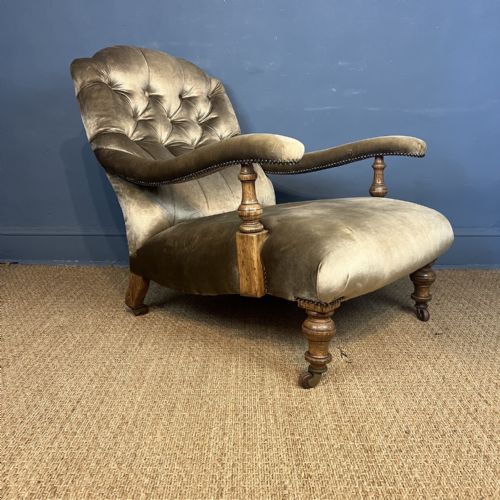
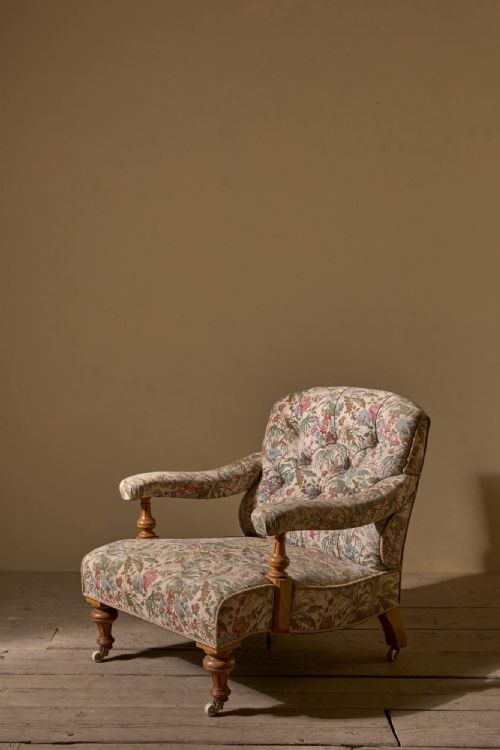
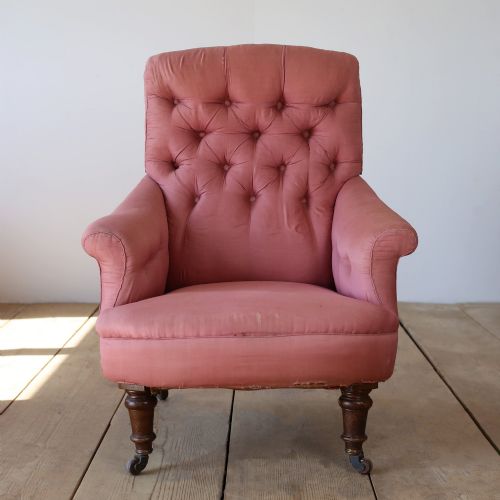
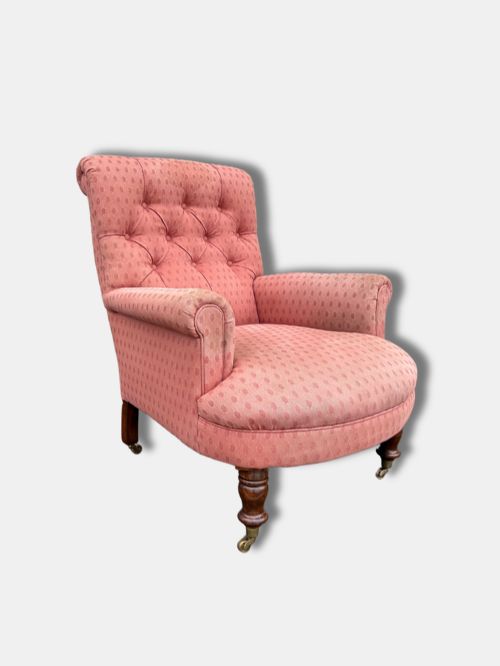
Button back lounge chairs bring deep buttoned upholstery and low seating together across nineteenth-century and Victorian styles.
Button Back Lounge Chairs
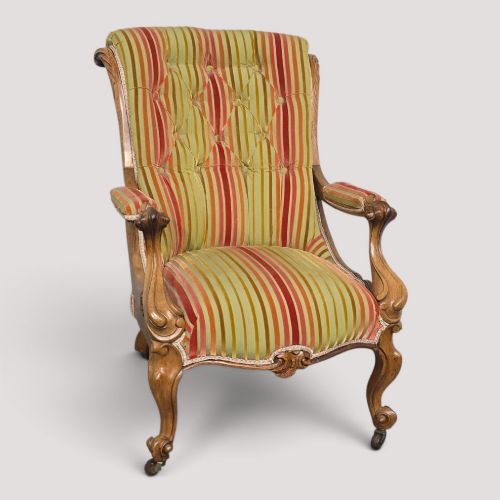
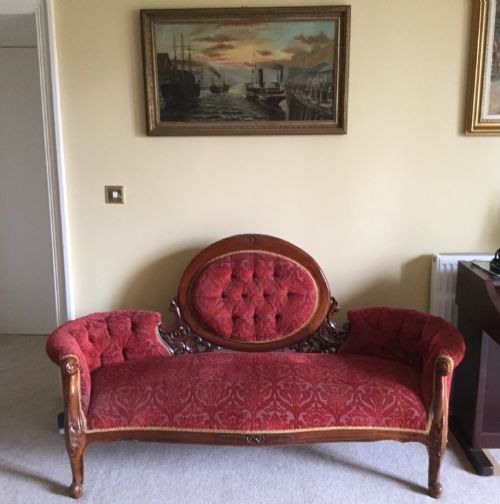
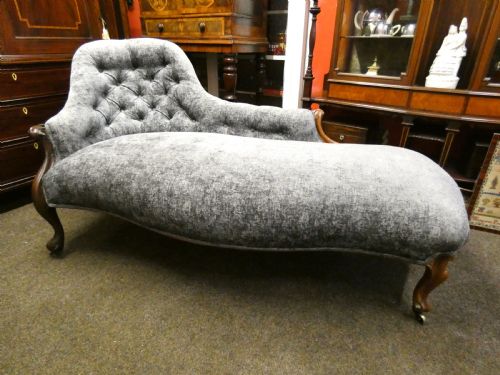
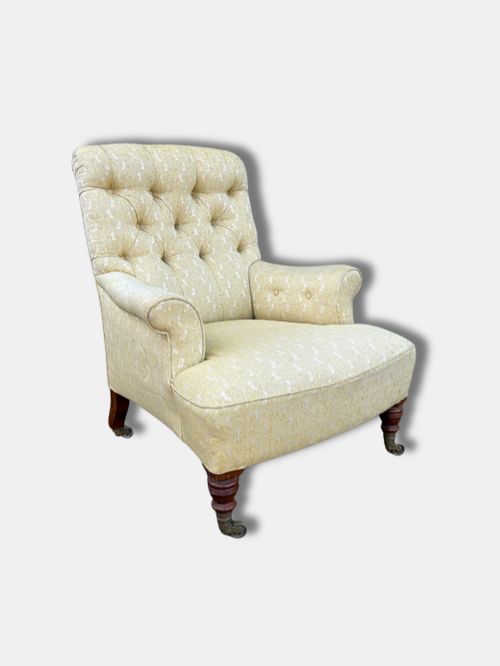
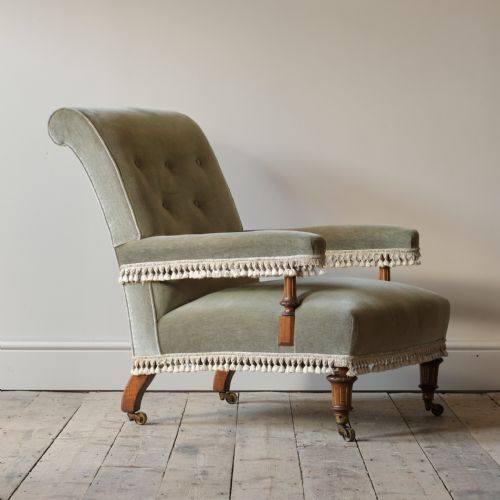
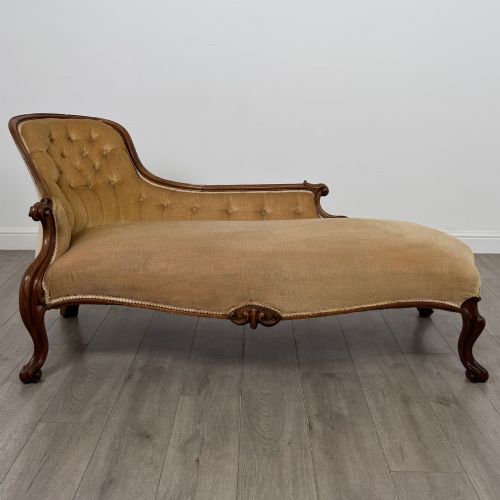
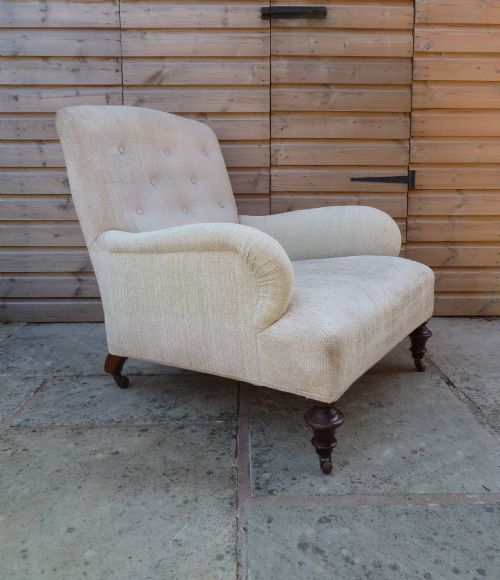
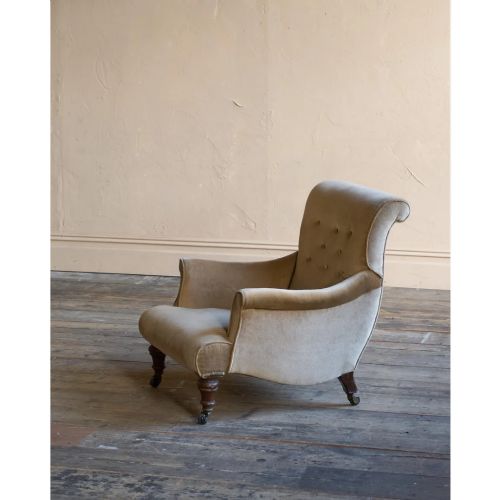
When you search for button back lounge chairs, you encounter a selection of nineteenth-century armchairs, library chairs, and chaise longues designed for comfort. The Victorian examples dominate, often showing deep tufting across the back and seat.
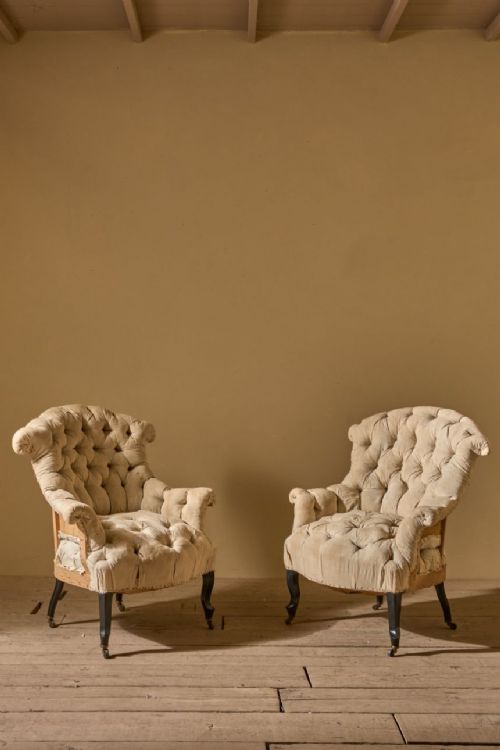
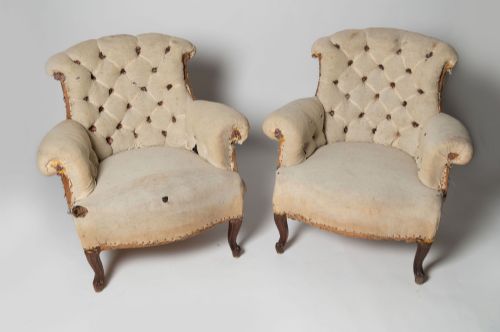
The form stretches from English country house seating to French Napoleon III designs. Many pieces combine traditional timber frames with low profiles suited to nineteenth-century parlours and libraries.
The selection includes variations such as slipper chairs, nursing chairs, and larger gentleman's chairs. These seating options reflect the diverse domestic requirements of the Victorian period.
Materials and Construction
Frames rely on hardwoods including mahogany, walnut, oak, and rosewood, providing robust support for heavy upholstery. Wood turnings, brass details, and carved elements appear across various styles.
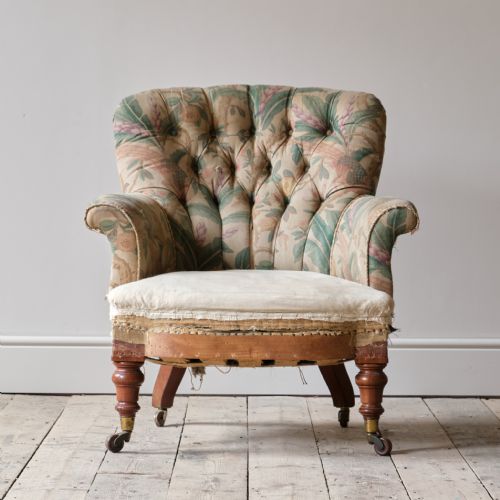
Upholstery materials range from velvet and brocade to leather and fabric. Sprung seats and deep buttoning techniques define the construction, requiring skilled tensioning of interior webbing and stuffing.
Listings feature Victorian and nineteenth-century pieces alongside Regency and 1930s examples, utilising walnut, mahogany, rosewood, velvet, leather, and brass.
Judging Quality and Execution
The fineness of the timber carving and the integrity of the frame separate standard pieces from exceptional examples. Cabinetmakers of the period employed precise joinery that remains rigid through centuries of use.
The execution of the buttoning and the choice of textile dictate the overall refinement. Sympathetic reupholstery using deep-pile brocade, velvet, or leather preserves the character established by nineteenth-century makers.
Howard and Sons·Gillows·Holland and Sons·Hindley and Sons
The Button Back Lounge Chairs Glossary
- Button back
- An upholstery technique where buttons are pulled deep into the padding to form a geometric tufted pattern. This method secures the internal stuffing while creating a cushioned, textured surface.
- Chaise longue
- An elongated upholstered chair designed for reclining, combining a chair seat with a footrest extension. These pieces often feature a single scrolled armrest and ornamental wooden legs.
- Library chair
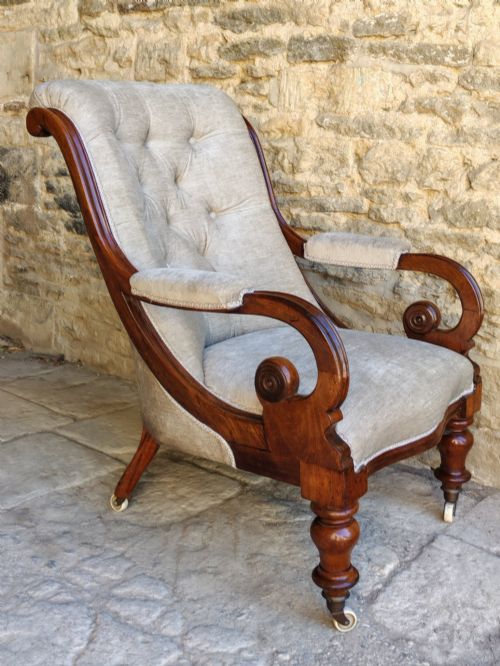
- A sturdy nineteenth-century armchair built for reading rooms, typically featuring upholstered arms and a supportive high back. Mahogany and walnut frameworks predominate in these functional seats.
- Slipper chair
- A low-framed bedroom chair without arms, originally designed to assist ladies with putting on shoes. Their compact proportions make them versatile for modern interiors.
- Bergère
- An enclosed upholstered armchair with wooden frames where the sides are often closed with cane or upholstery. French variants frequently showcase polished walnut or giltwood.
Button Back Lounge Chairs: Frequently Asked Questions
What defines a button back lounge chair?
Button back lounge chairs feature deep tufted upholstery secured with fabric or leather covered buttons across the backrest and sometimes the seat. This technique creates a distinctive padded surface that dates predominantly to the nineteenth century.
These pieces encompass various seating forms, including library armchairs, gentleman's chairs, and low parlor seats. The style prioritizes deep comfort alongside formal nineteenth-century interior aesthetics.
How do I identify a Victorian piece?
Victorian button back chairs typically display dense hardwoods such as walnut, mahogany, or rosewood in their exposed frames. Common indicators include turned wooden legs, ceramic castors, and robustly sprung seats.
Stylistic cues such as spoon backs or carved scroll arms help distinguish mid-Victorian production from later revivals. Maker stamps on the wooden frame or brass castors can also confirm the era.
Were these chairs used in libraries?
Library armchairs were built with sturdy oak, mahogany, or walnut frames to withstand daily study use. They frequently incorporated low profiles and supportive upholstered arms for long periods of reading.
English country house libraries often housed these substantial armchairs alongside writing tables. Their durable construction ensured they survived centuries of domestic use.
What is a Napoleon III chair?
Napoleon III chairs originate from the French Second Empire period during the mid-nineteenth century. They often feature elaborate buttoned upholstery, sometimes incorporating French leather or rich velvet textiles.
These chairs display a flair for decorative comfort, often utilising sprung seats and serpentine wooden frames. Their design influenced subsequent Victorian seating trends across Europe.