

Country House Easy Chairs
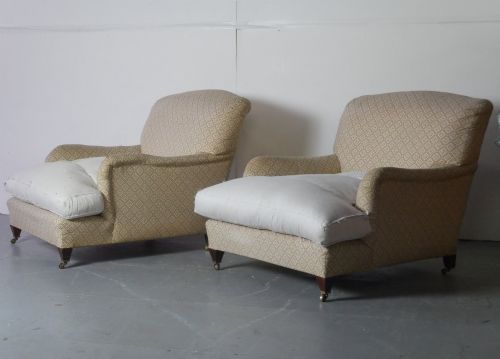
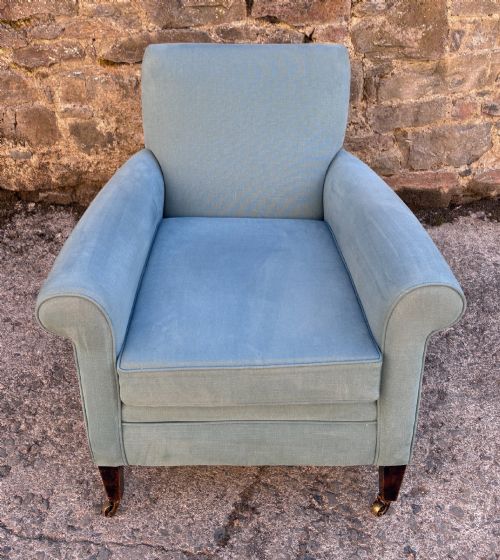
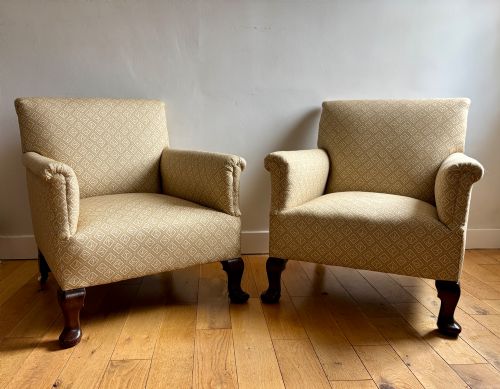
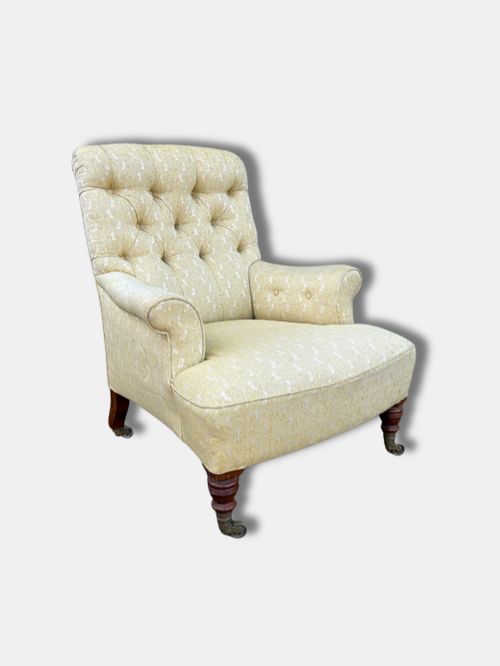
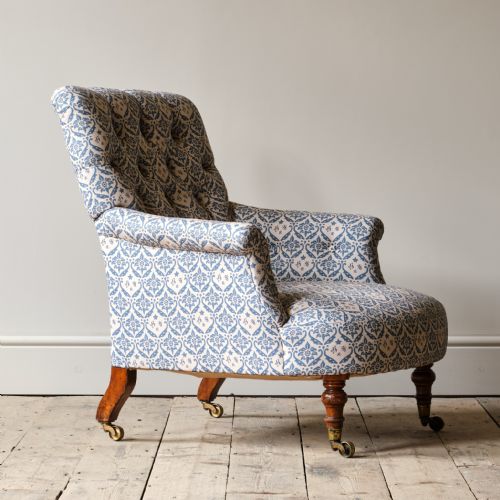
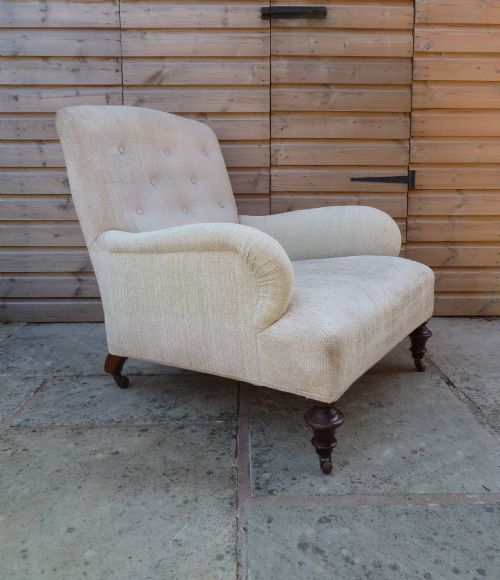
Country house easy chairs combine deep, low-slung seating with robust frames, built for long hours of reading and repose by the hearth.
Country House Easy Chairs
Country house easy chairs emerge primarily from the Victorian and Edwardian eras, spanning the nineteenth and early twentieth centuries. These armchairs prioritise deep, generous proportions designed for relaxation rather than formal posture.
The selection here encompasses upholstered armchairs, wingback forms, and club chairs shaped by English and Scottish country house traditions. Makers such as Howard and Sons, Gillows, and Whytock and Reid dominate the higher forms.
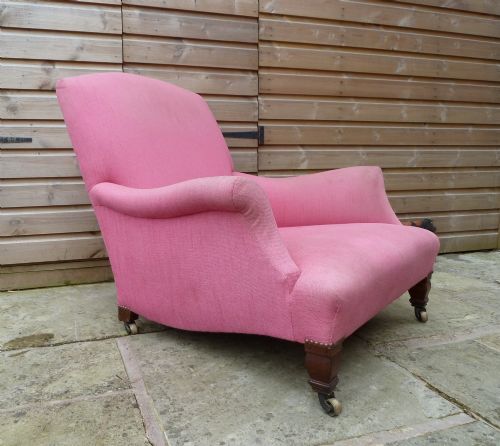
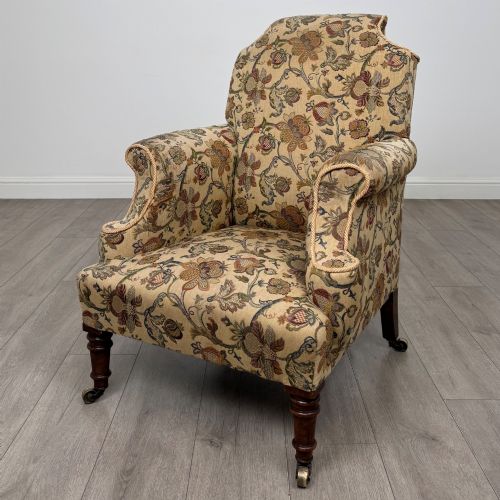
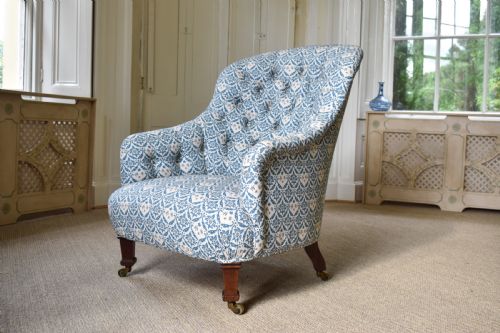
Frames draw on styles including Victorian, Edwardian, William IV, and the influential Howard style, often set on low timber or brass-castor legs. Upholstery ranges from traditional ticking and cotton to heavy leather and patterned fabric.
Materials and construction
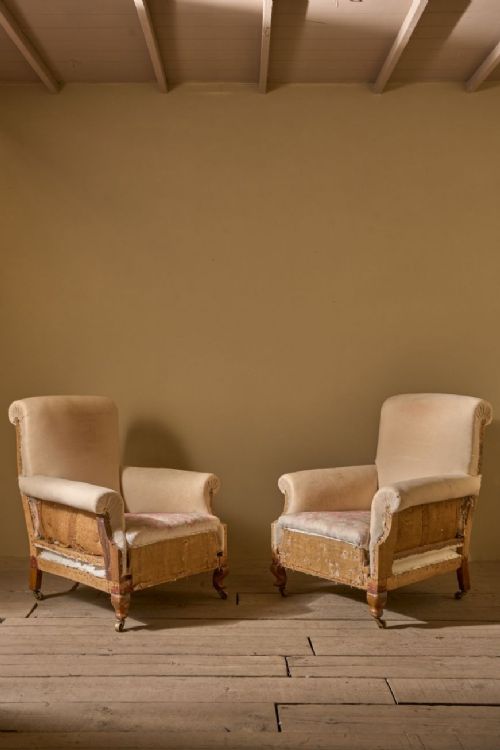
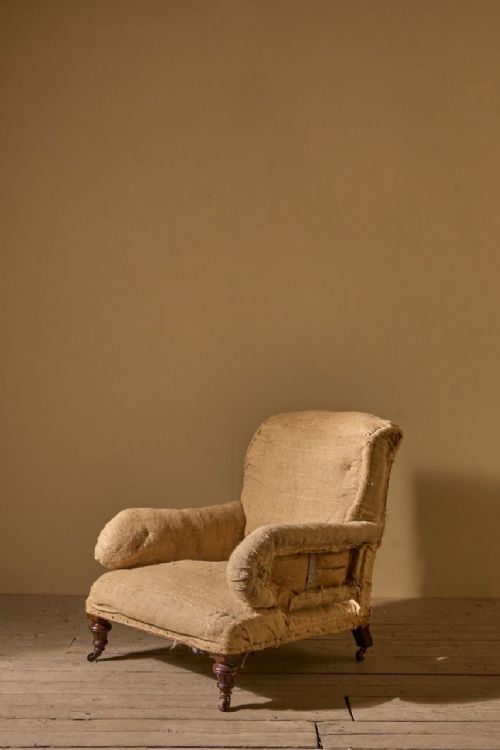
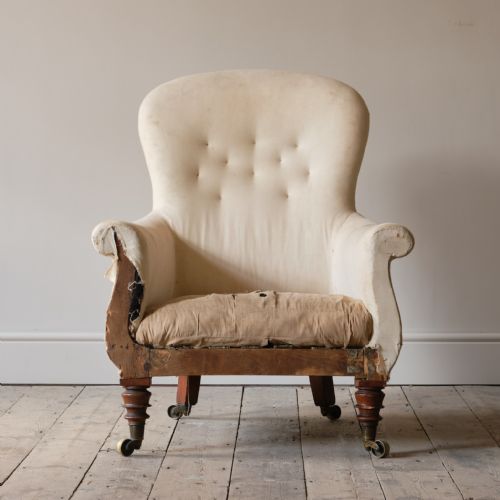
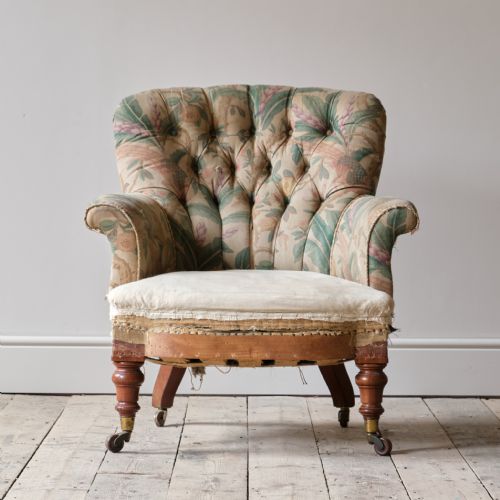
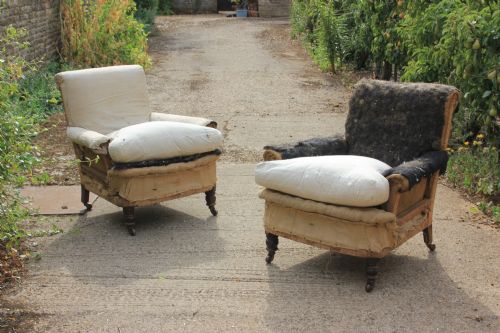
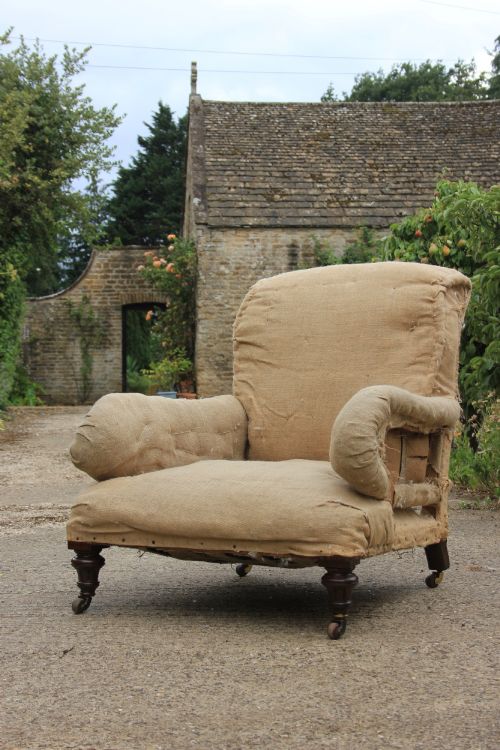
Carrying timber frames built from mahogany, walnut, and general wood, these chairs rely on substantial underlying joinery to support deep seating. Traditional stuffing involves materials like hessian and cotton beneath outer layers of fabric or leather.
Hardware details include brass castors that allow movement across heavy carpets and floorboards. Leather finishes appear alongside woven textiles and horse racing theme covers, reflecting varied domestic and library settings.
A surprising number of nineteenth-century seats hide beneath upholstery decorated with horse racing themes.
Assessing quality and pedigree
Distinction in these chairs rests on maker attribution, with stamped signatures and original stamped castors elevating certain pieces significantly. Maker provenance from workshops like Howard and Sons or Gillows sets specific benchmarks for form and upholstery execution.
Proportion and scale dictate the visual weight of the chair, with large deep-seated variants commanding particular attention. The integrity of the original frame and the retention of period elements, such as specific leg configurations and brass work, define the upper tier.
Whytock and Reid·Howard and Sons·SF Cullen·Gillows
The Country House Easy Chairs Glossary
- Howard style
- A deep-sprung armchair design originating in the nineteenth century, known for low arms and exceptional comfort. This form became a standard for English domestic seating.
- Castor
- A small wheel attached to the base of furniture legs for ease of movement. Brass versions are typical on nineteenth-century upholstered seating.
- Wingback
- An armchair with high sides attached to the back to shelter the sitter from drafts. Early examples frequently feature timber frames clad in leather or heavy fabric.
- Ticking
- A tightly woven cotton or linen fabric traditionally used as a durable mattress or upholstery cover. Grey ticking is frequently found on country house seating.
- Hessian
- A coarse woven fabric made from jute fibres, utilised as foundational webbing and stuffing containment within traditional upholstery.
Country House Easy Chairs: Frequently Asked Questions
What defines a country house easy chair?
These armchairs are characterised by deep seats, low profiles, and heavy upholstery designed for domestic comfort. They reflect nineteenth and early twentieth-century British craftsmanship.
Their forms range from club chairs to wingbacks, often associated with country estates and large libraries.
How do I identify a Howard style chair?
Howard style chairs feature low, rolled arms and deeply sprung seats intended for prolonged relaxation. Original pieces often carry maker stamps on the frame or brass castors.
Later interpretations replicate these proportions, maintaining the distinctive low-slung silhouette.
Were these chairs used in libraries?
Many examples, particularly leather variants, were placed in libraries and studies for reading. Their robust timber frames and durable coverings suited heavy daily use.
Red and green leather finishes frequently appeared in these formal yet comfortable spaces.
What materials were used for upholstery?
Upholstery materials included cotton, heavy fabric, leather, and practical ticking. Internal construction relied on hessian webbing and traditional stuffing techniques.
Selection depended on whether the chair was destined for a formal room or a private sitting area.