


Button Back Leather Couch
A button back leather couch brings tactile warmth and deep seating comfort to a room, offering enduring artisanal character through traditional upholstery.
Button Back Leather Couch
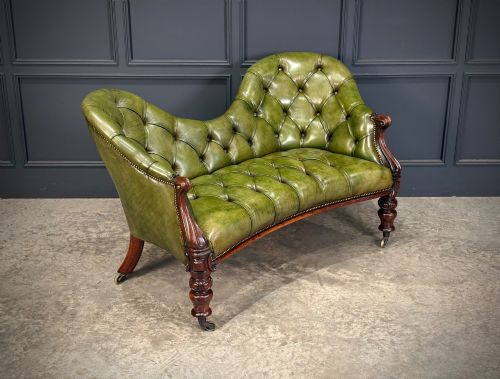
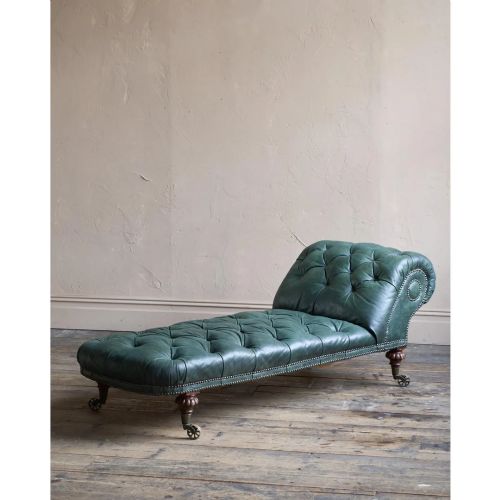
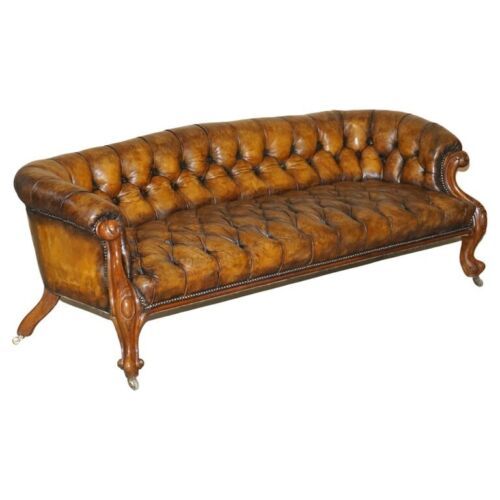
When you search for a button back leather couch, you encounter substantial seating options spanning the Victorian, Edwardian, and Regency periods alongside later twentieth-century iterations. These pieces range from classic Chesterfield sofas and deep-buttoned settees to corner sofas, wing back sofas, and chaise longues.
The version you are most likely to meet on this page is a nineteenth-century Victorian Chesterfield upholstered in brown or green leather. Makers constructed these frames in mahogany, walnut, rosewood, and general hardwood, often incorporating show frames, carved details, and low arms suited to domestic reception rooms.
How they were made
Craftsmen built these seating frames using solid timbers such as mahogany, walnut, rosewood, and mixed hardwoods to ensure structural integrity under deep upholstery. They shaped structural supports into spoon-backs, show frames, serpentine fronts, and open arms, frequently integrating brass hardware.
Upholsterers applied natural leather over supportive stuffing, securing the hides with deep buttoning techniques to create the characteristic tufted surface. Many pieces utilise hand-dyed leathers in brown, whisky, or custom shades applied during restoration or original manufacture.
What varies in quality
The distinction between tiers rests upon the caliber of the timber frame and the integrity of the original or restored leather hides. Pieces retaining untouched original leathers or precise hand-dyed finishes command attention, whereas utilitarian replacements alter the character.
Refinement appears in the carving of the walnut, mahogany, or rosewood show frames and the precision of the deep buttoning across the backrests. Proportions also vary from compact two-seater settees to large nineteenth-century Chesterfields and conversational sofas.
Howard & Sons·Hampton & Sons of Pall Mall
The Button Back Leather Couch Glossary
- Chesterfield
- A traditional style of sofa characterised by low back and arms of the same height, featuring deep button tufting. This form remains a staple of nineteenth-century seating.
- Chaise Longue
- An upholstered sofa in the shape of a chair that is long enough to support the legs. These pieces often feature a single raised end for reclining.
- Show Frame
- A wooden structural frame left partially exposed around the upholstery to display carved details and fine timber. Walnut and mahogany were frequently chosen for this purpose.
- Spoon-Back
- A padded chair or sofa back shaped like the bowl of a spoon, providing ergonomic support. It is particularly common in Victorian seating designs.
- Buttoning
- An upholstery technique where buttons are pulled tight through the padding to create a diamond pattern and secure the leather. This method defines the tactile surface of the pieces.
Button Back Leather Couch: Frequently Asked Questions
What is a button back leather couch?
A button back leather couch is a traditional seating piece defined by deep tufted buttoning across the backrest and upholstered leather surfaces. These items include nineteenth-century Chesterbacks, settees, and chaise longues constructed from hardwoods like mahogany and walnut.
Such furniture combines robust timber framing with tactile animal hides designed for formal reception spaces and studies. They appear in variations ranging from compact two-seaters to large conversational arrangements.
How do I date a leather couch?
Dating relies on examining the timber frame construction, the style of the legs, and the upholstery methods beneath the leather. Victorian examples often show distinct walnut or mahogany show frames and hand-dyed hides.
Later twentieth-century versions display modifications in internal stuffing materials and frame assembly. Comparing the specific silhouette, such as a serpentine front or spoon-back, helps narrow the period of origin.
How do I care for antique leather?
Antique leather requires maintenance using appropriate conditioning treatments to keep the hide supple and prevent cracking. Keeping the furniture away from direct sunlight and excessive heat preserves the natural dyed colours.
Gentle dusting with a soft cloth protects the surface without disturbing the original patina or distressed finish. Regular care maintains the structural and visual integrity of the historic material.
Where were these couches used?
These couches served primarily in nineteenth-century drawing rooms, libraries, and formal reception spaces where guests gathered. Their substantial size and deep seating provided both status and comfort for domestic interiors.
Smaller variants like chaise longues and corner sofas suited boudoirs and specialised parlours. Today, they transition easily into contemporary living rooms as statement seating.
What is a Howard and Sons sofa?
Howard and Sons was a prominent nineteenth-century upholstery firm known for producing high-quality Chesterfield sofas and chairs. Their pieces utilised robust frames and superior padding materials suited to luxury interiors.
Items bearing this association command attention for their precise craftsmanship and historical provenance. They represent the upper tier of Victorian seating manufacture.