
Button Back Couch
A button back couch brings deep tufted comfort and period character to a room, offering enduring seating with classic sprung support.
Button Back Couch
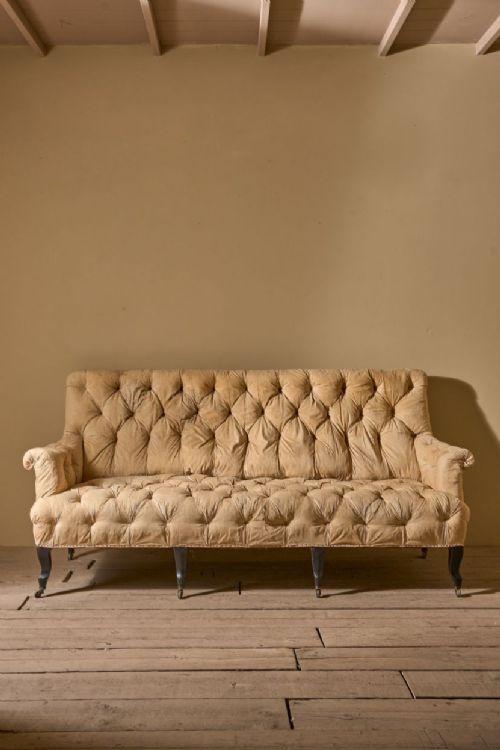
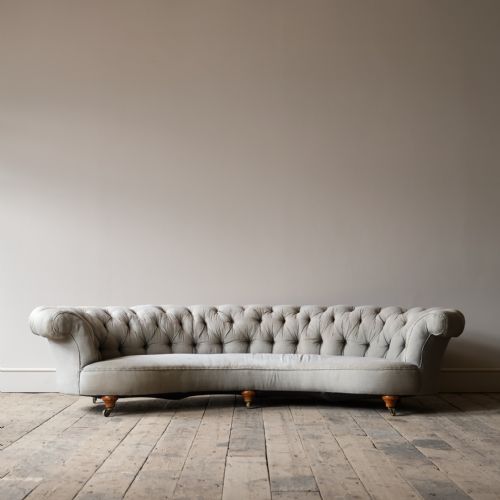
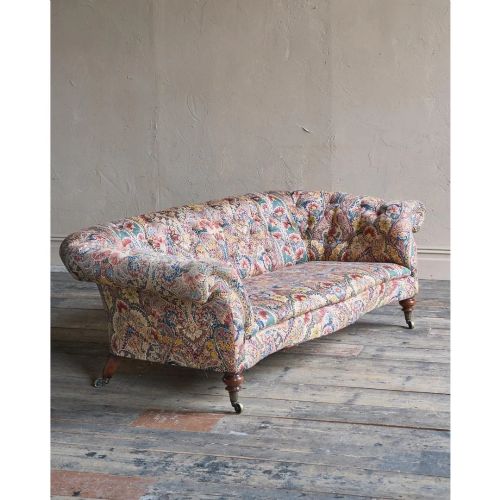
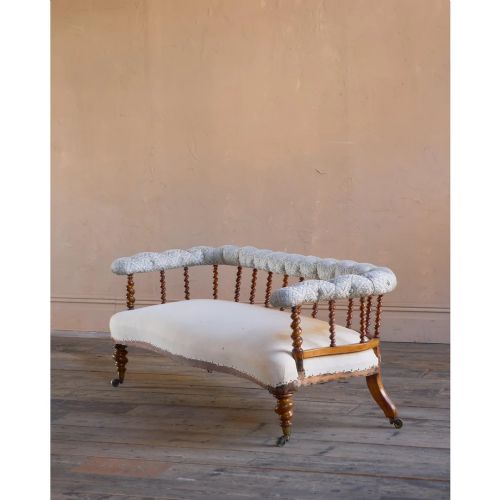
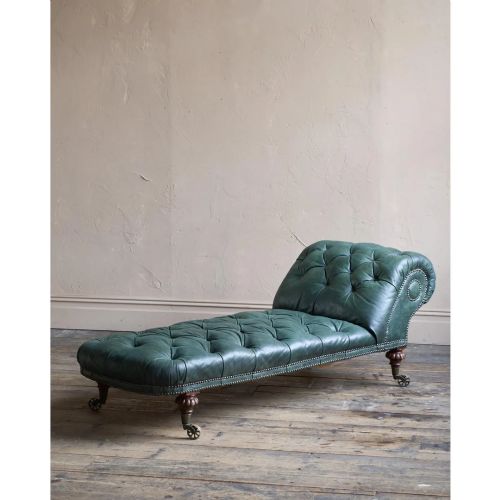
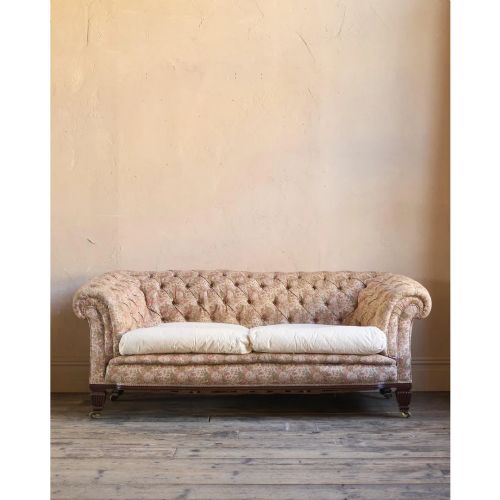
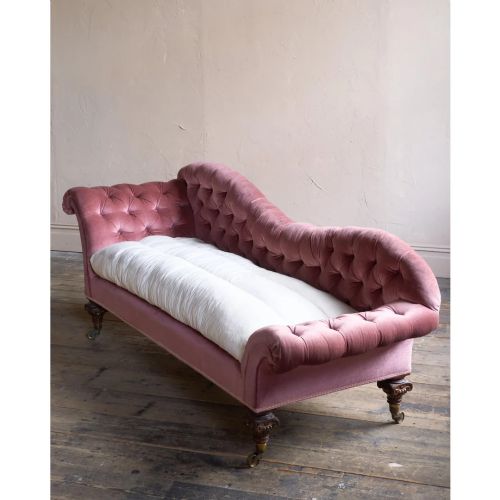
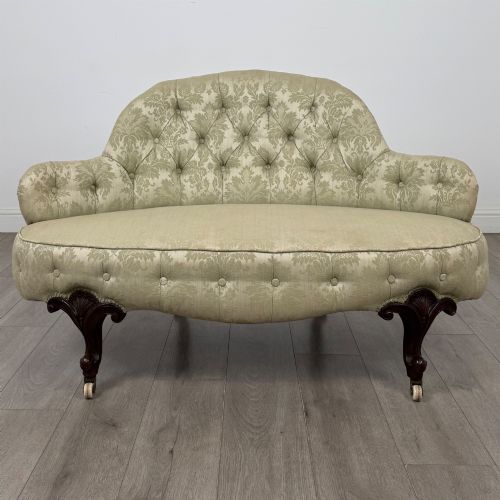
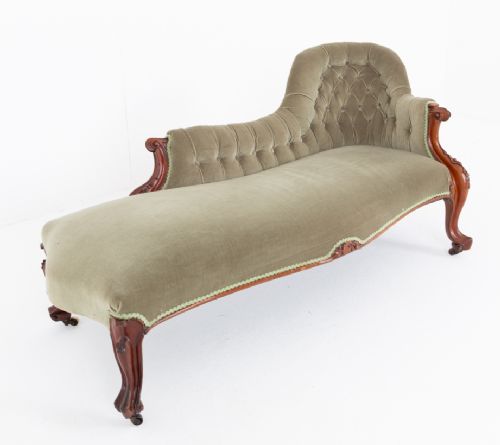
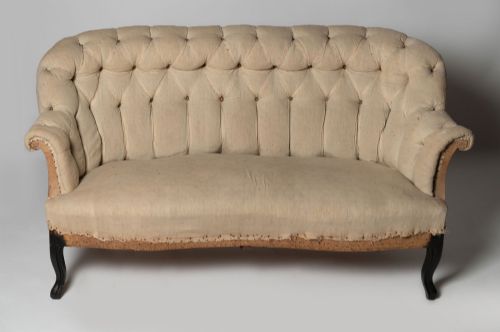
A button back couch spans nineteenth century styles, including Victorian chesterfields, Napoleon III settees, and French daybeds. These seating forms range from double ended sofas and corner settees to chaise longues and salon seating.
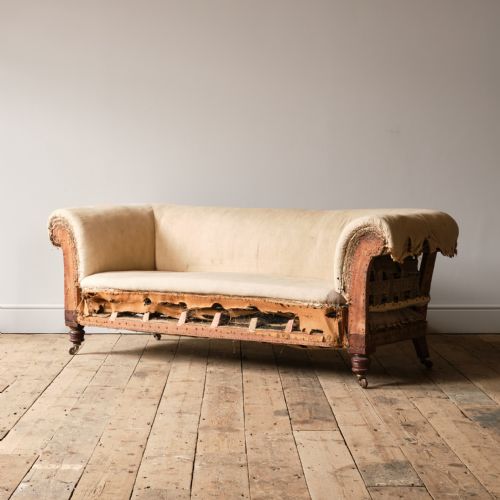
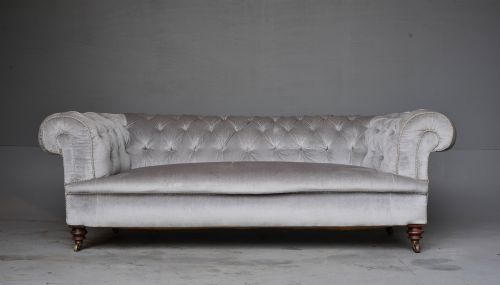
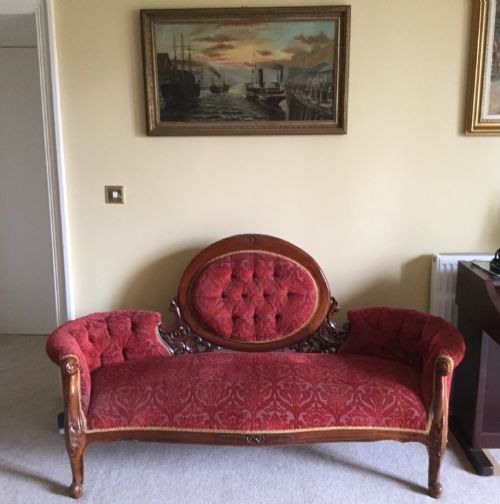
Victorian examples dominate the selection, often rendered in mahogany, walnut, or rosewood frames paired with traditional upholstery. Buyers encounter pieces upholstered in leather, velvet, and fabric, alongside frames awaiting new textile treatment.
Construction and Materials
Frames rely on solid timbers such as mahogany, walnut, rosewood, and ebonised wood, often augmented by brass castors and decorative carvings. Joinery supports robust sprung bases designed for sustained weight and deep seating.
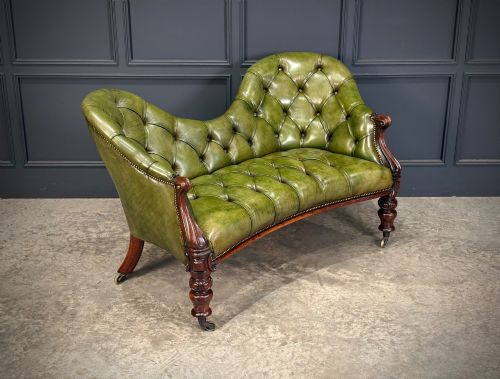
Upholstery techniques involve traditional deep buttoning secured through fabric or leather layers, paired with heavy brocade, velvet, or raw leather ready for hand dyeing.
Several pieces arrive in raw leather, waiting patiently for a bespoke hand dyeing session to match an eccentric colour scheme.
Assessing Quality
Quality rests in the integrity of the timber frame, the precision of the deep button tufting, and the resilience of the sprung base. Finer examples retain original show-wood frames with crisp carving and substantial proportions.
The choice of covering material, from antique leather to deep pile brocade, alters the character of the piece. Frames retained for reupholstering depend entirely on the underlying woodwork and spring integrity.
Howard and Sons·C. Hindley and Sons·Holland and Sons
The Button Back Couch Glossary
- Chesterfield sofa
- A deep-buttoned upholstered sofa traditionally featuring arms and back of the same height. This form remains a staple of nineteenth century seating.
- Chaise longue
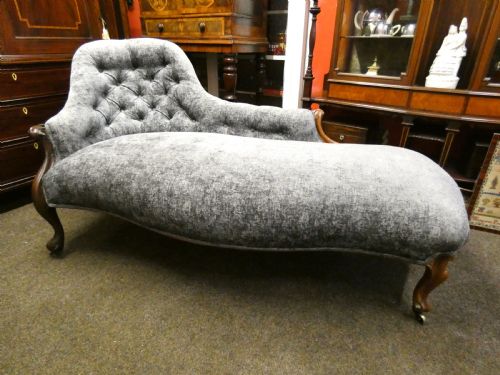
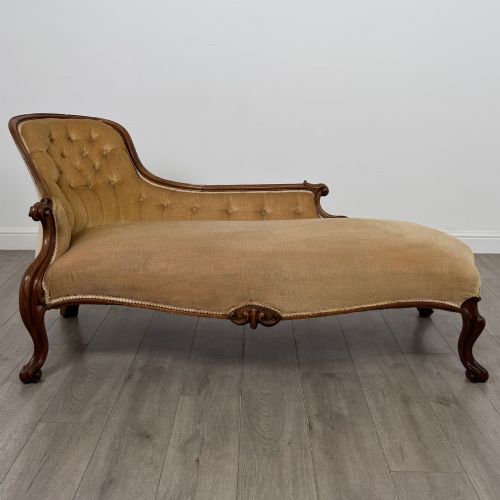
- An upholstered couch shaped like a chair with a long seat for reclining. Nineteenth century versions often feature single scrolled ends or carved wooden frames.
- Double ended sofa
- A settee featuring scrolled or raised ends at both sides, allowing reclining from either direction. These pieces frequently incorporate mahogany or rosewood structures.
- Settee
- A medium sized upholstered seat with a back and arms, designed for multiple occupants. The term overlaps closely with sofa across Victorian and Edwardian listings.
Button Back Couch: Frequently Asked Questions
How do I style a button back couch?
Place the couch as a centrepiece in a drawing room or study to showcase its deep buttoning and timber frame. Pair it with complementary nineteenth century occasional tables and subtle lighting.
Allow sufficient floor space around larger chesterfields or chaise longues to let the proportions breathe. The varied upholstery options, from green leather to burgundy brocade, dictate the surrounding colour palette.
What is the difference between a sofa and a chaise longue?
A sofa provides upright seating for multiple people with a continuous backrest and two arms. Listings show styles ranging from salon settees to deep seated chesterfields.
A chaise longue is designed for reclining, featuring a single backrest section that extends along part of the length. These pieces function as day beds with distinct architectural ends.
Are these couches suitable for daily use?
Nineteenth century couches rely on robust timber frames and traditional sprung bases built for longevity. Many surviving pieces continue to offer durable support.
Original leather or fabric may require careful maintenance or professional restoration. Pieces listed for reupholstering allow owners to install modern internal padding while retaining the antique frame.
How do I identify a Victorian piece?
Victorian couches typically feature dense hardwoods like mahogany, walnut, and rosewood. Look for characteristic details such as spoon backs, turned legs, and brass castors.
Stylistic markers include aesthetic movement ebonising or heavy button tufting. Construction methods reflect nineteenth century joinery and traditional upholstery techniques.